Cheshire Antiques Consultant Ltd has dated this piece to the Victorian era.
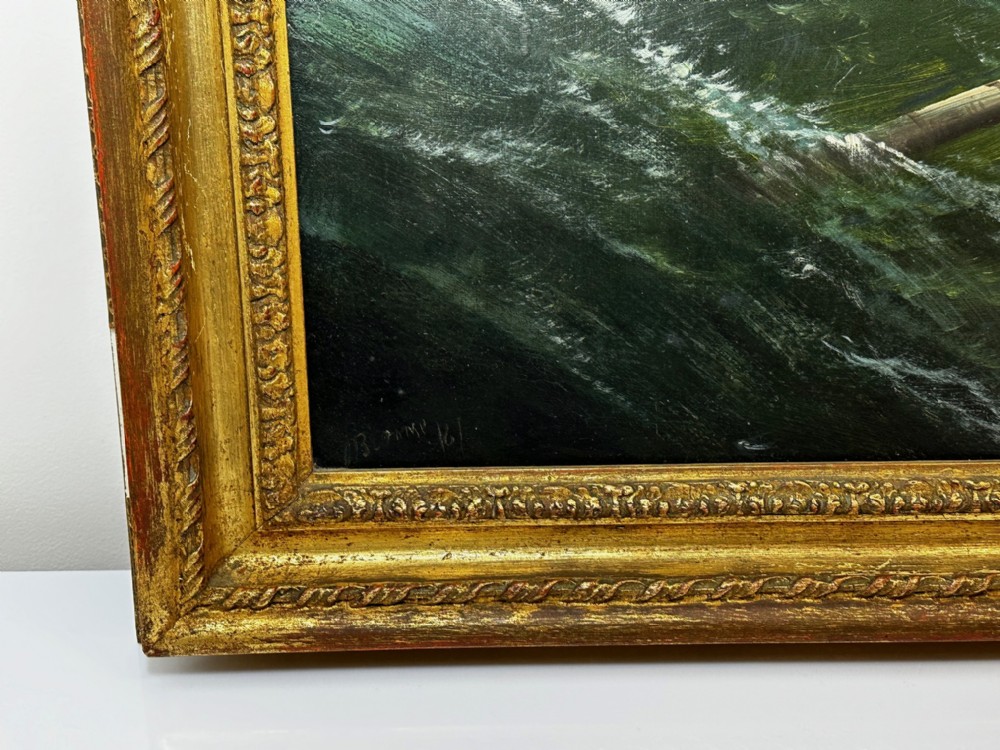
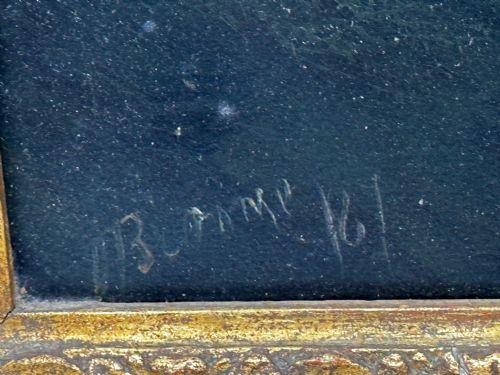
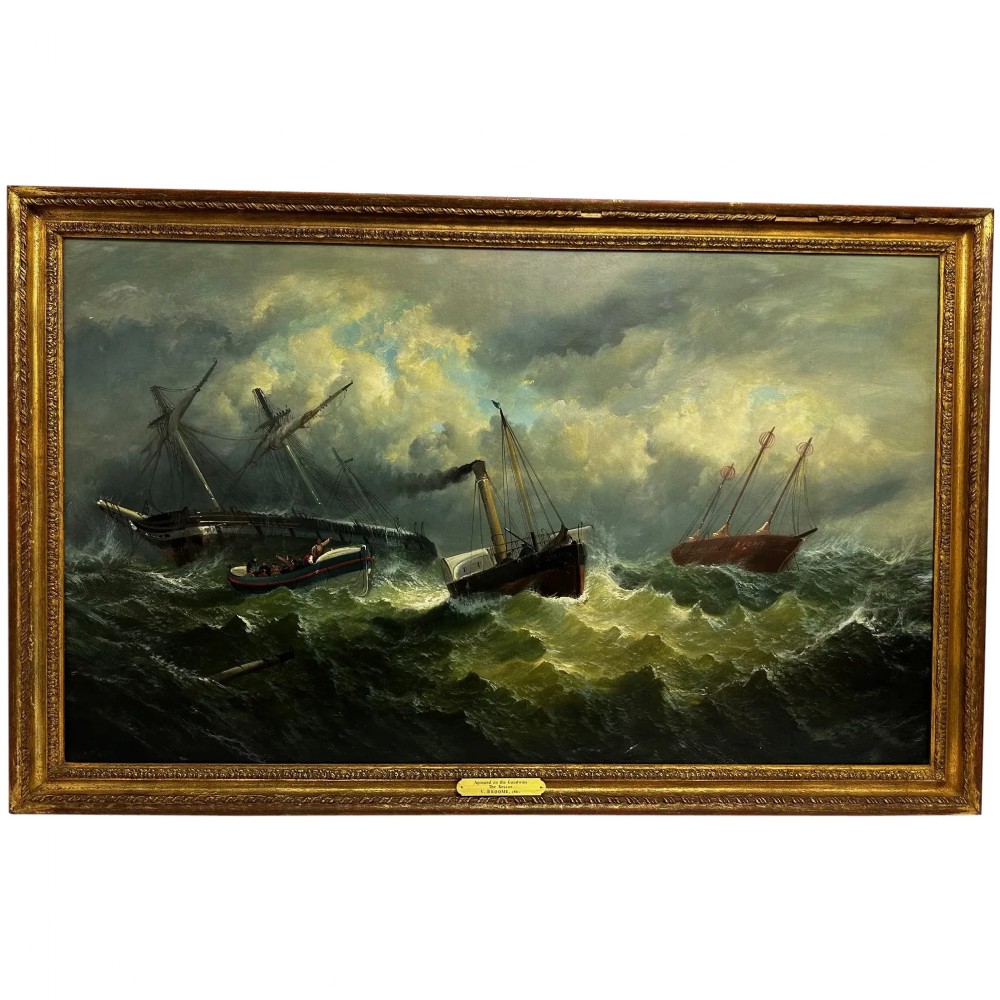
Signed at the bottom by the known listed marine British artist William Broome & dated 61 for 1861.
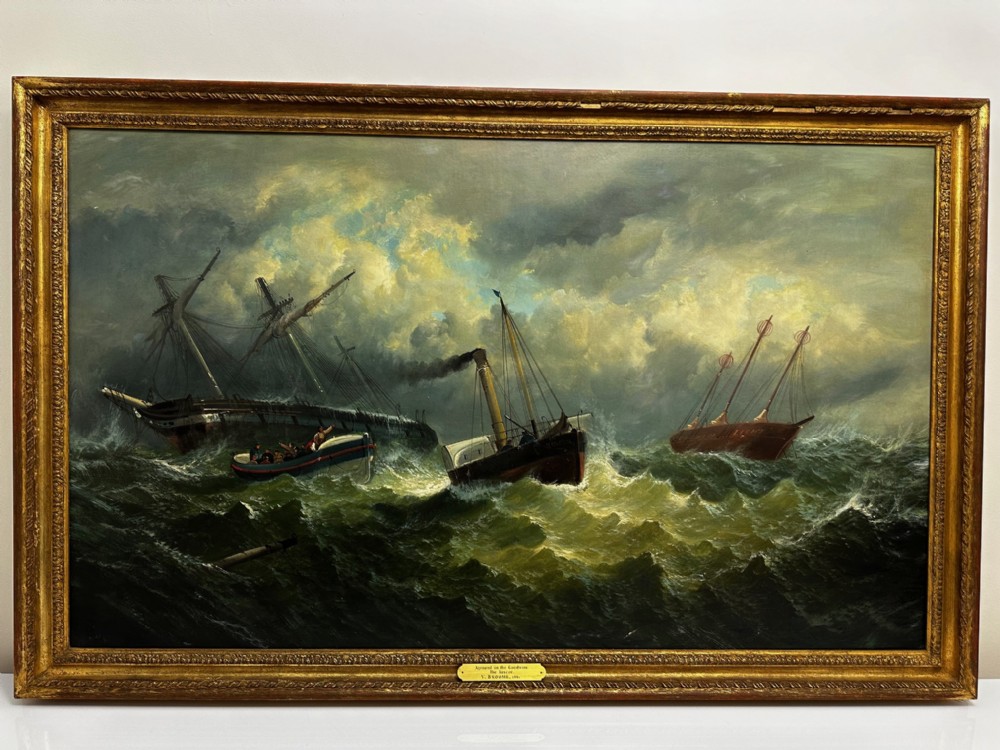
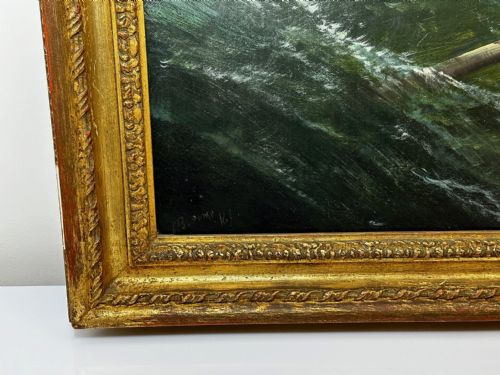
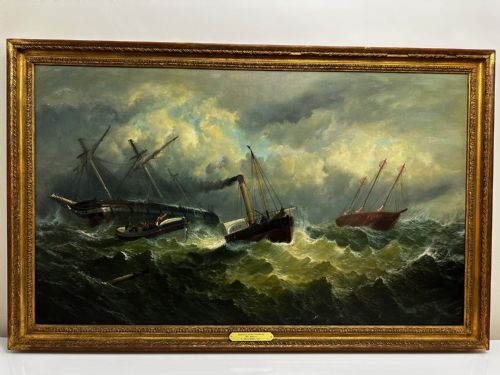
Oil on canvas set in a fine decorative gilt frame.
Huge proportion sized frame being 139cm wide and 88.5cm tall.
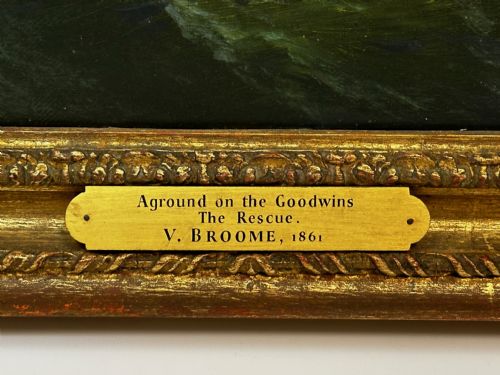
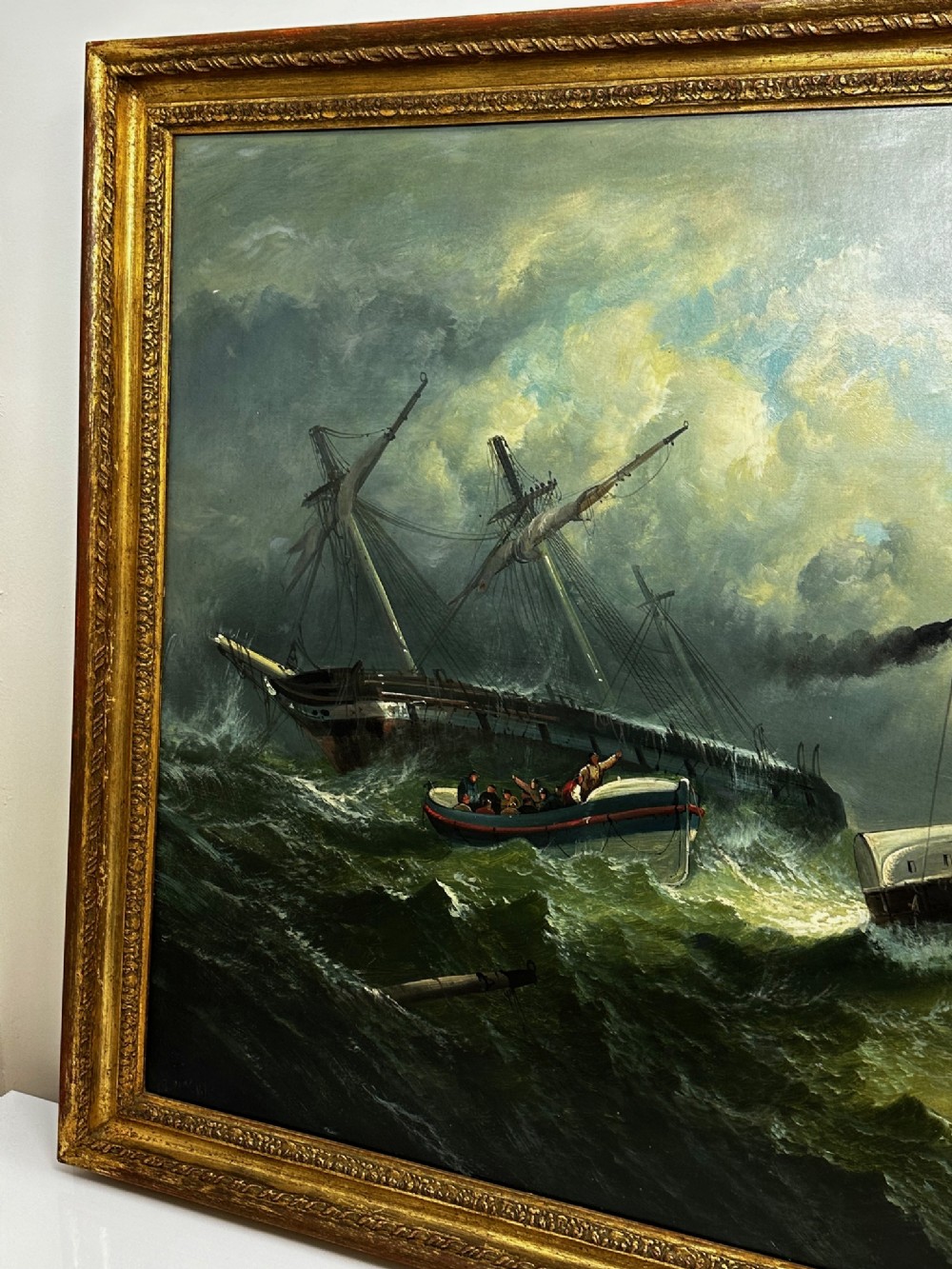
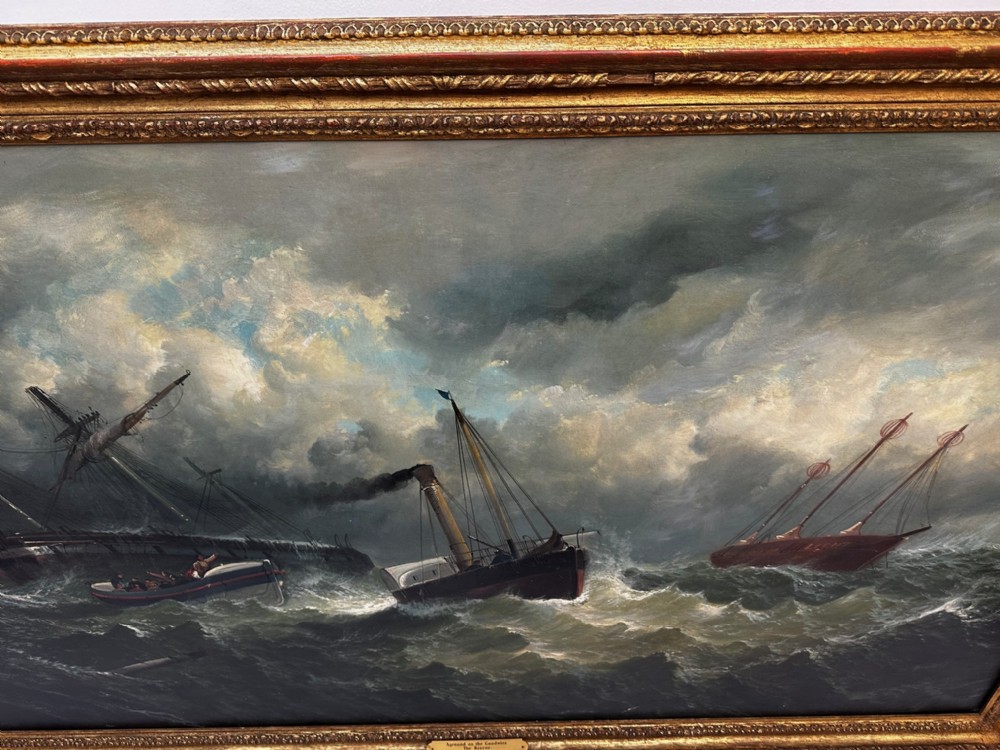
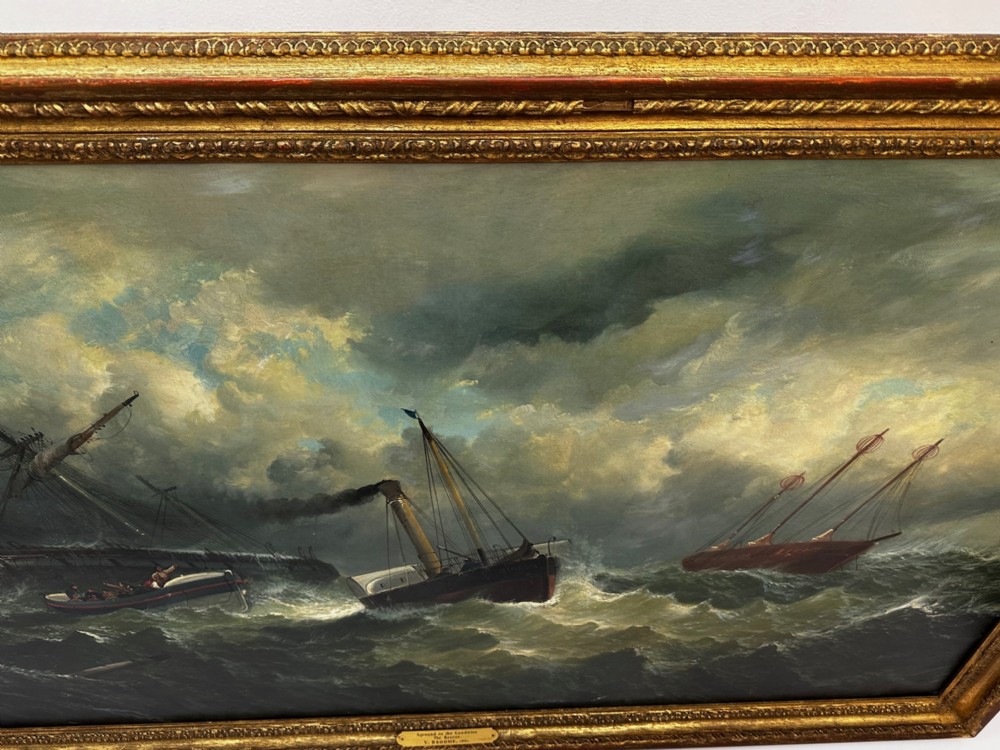
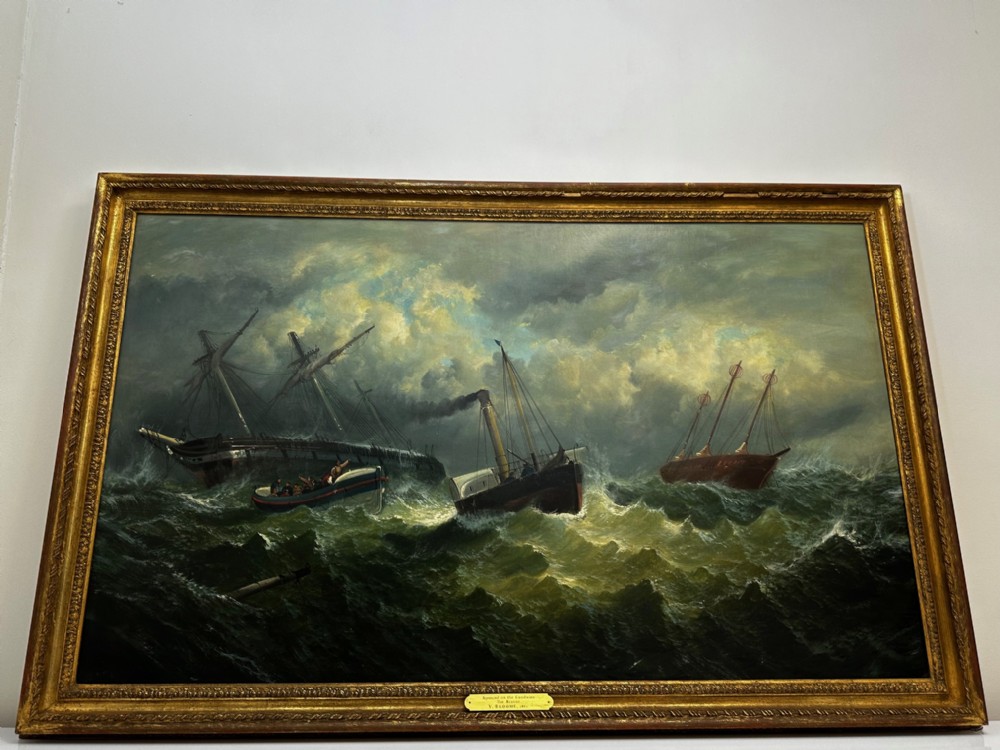
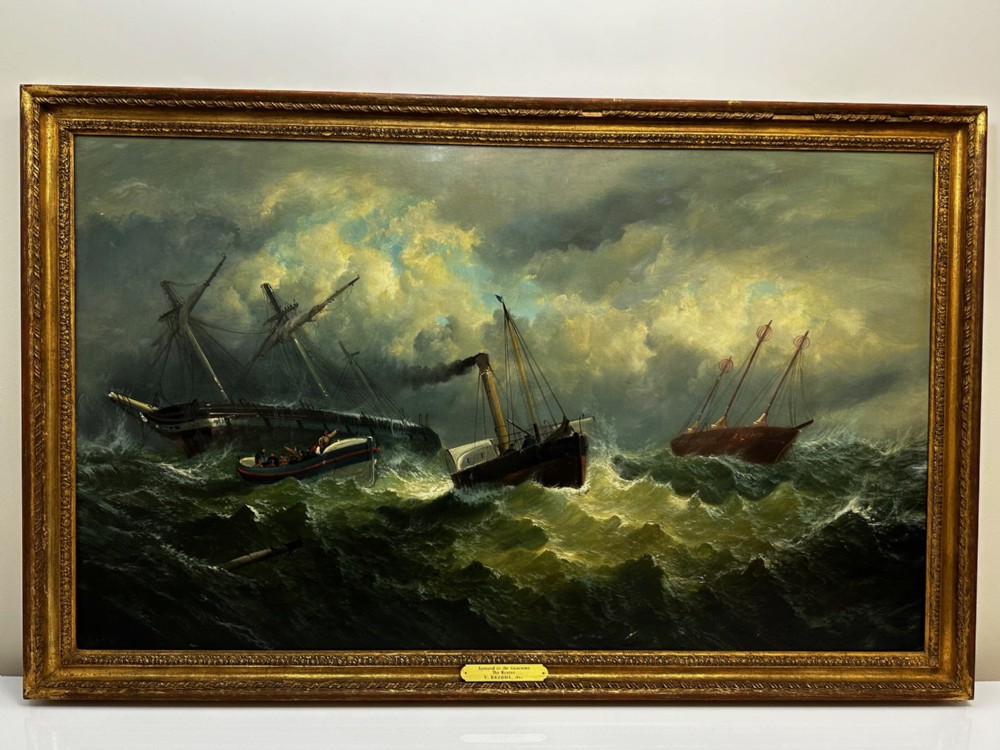
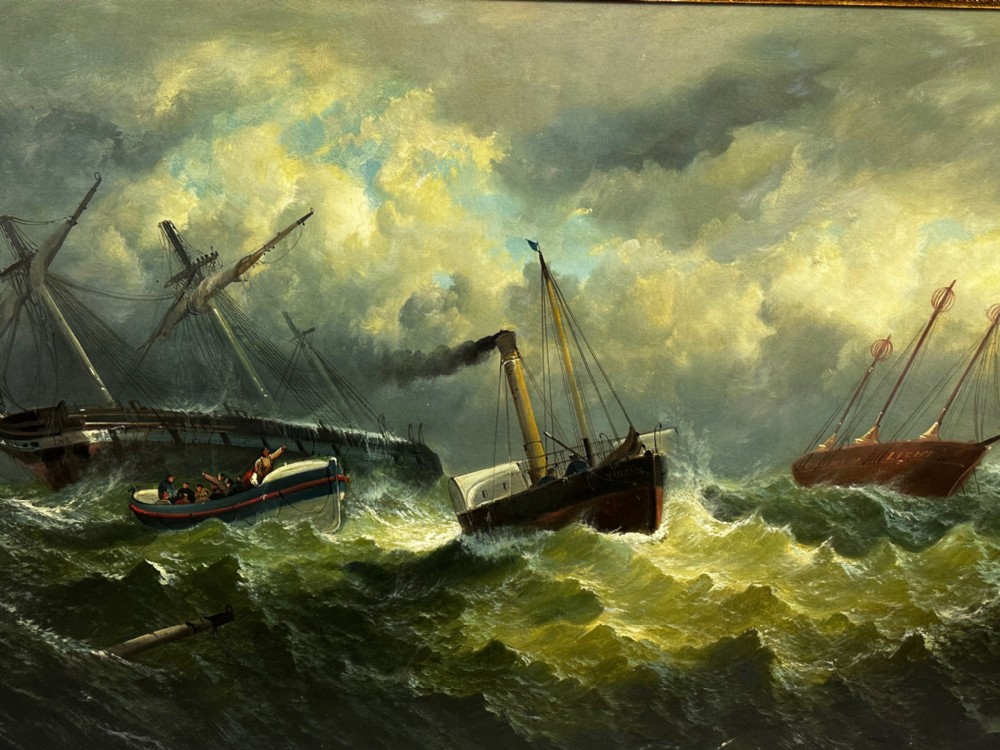
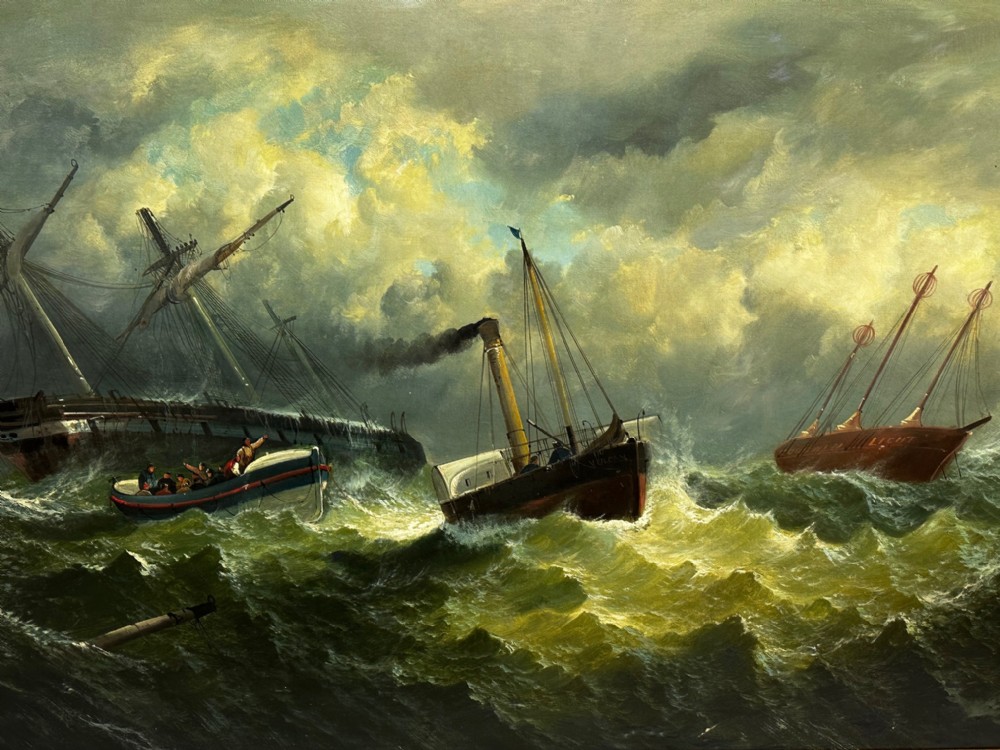
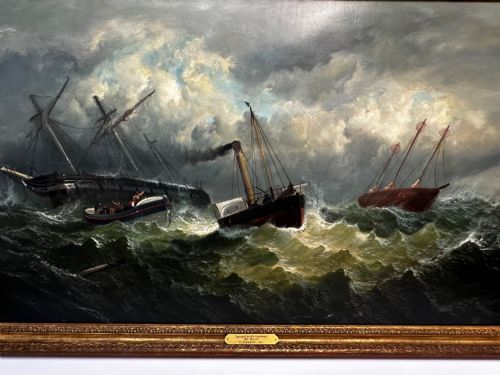
Title "Aground on the Goodwins The Rescue".
Inscribed verso "On the Goodwin Sands, the Return of the Life Boat" to label verso.
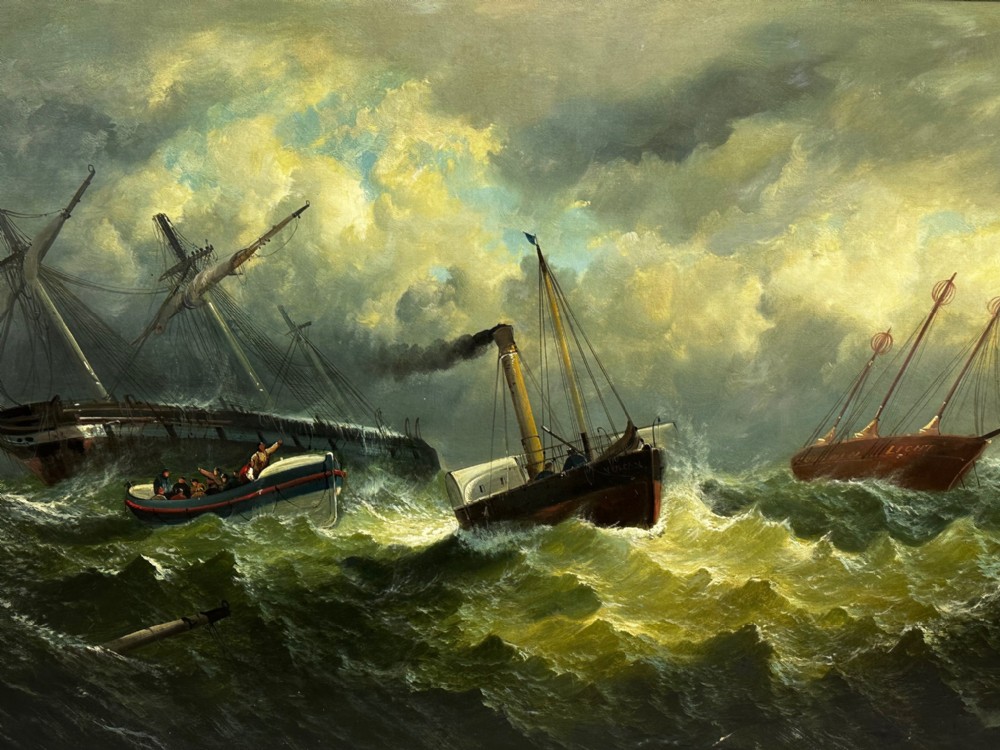
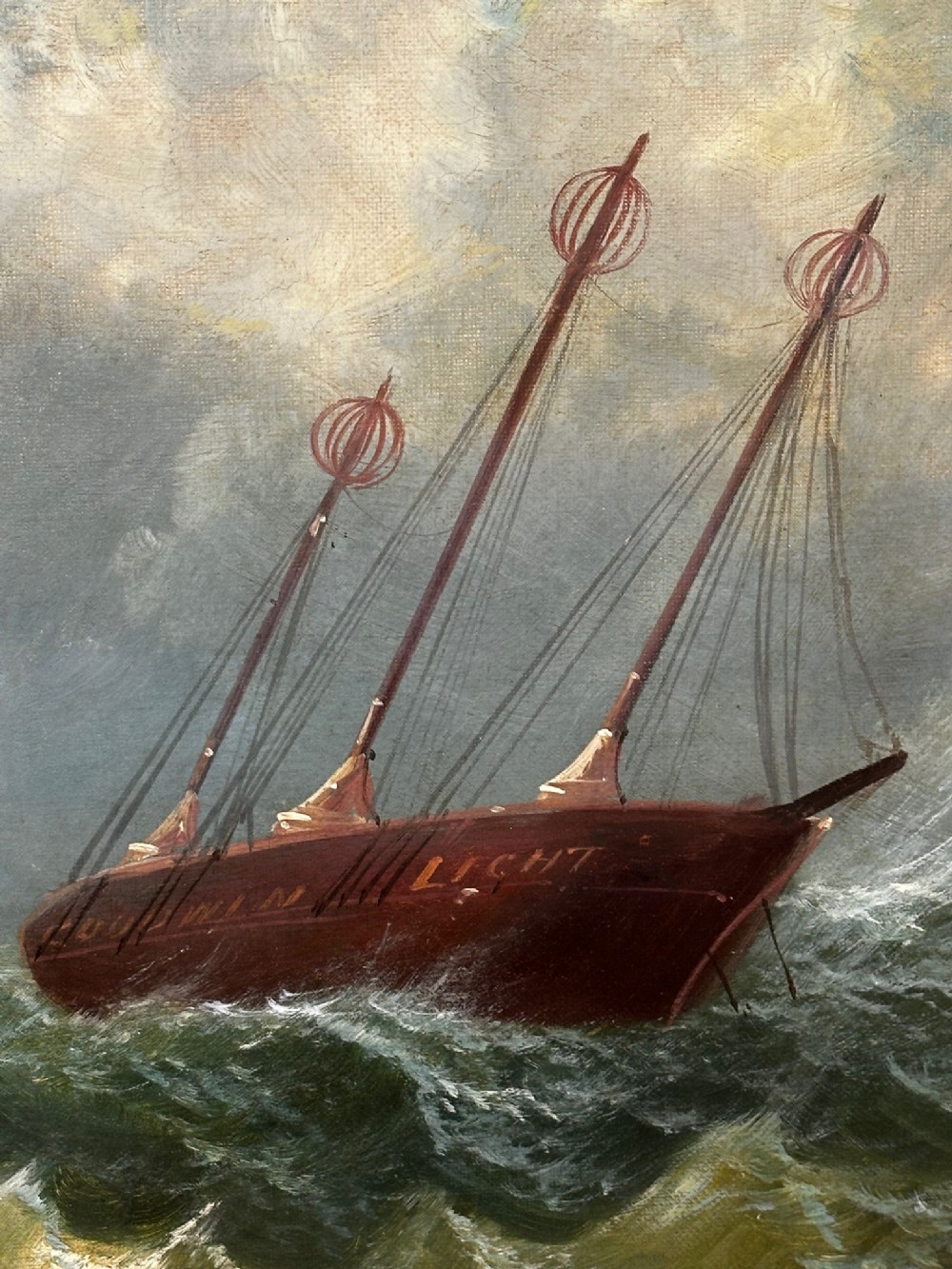
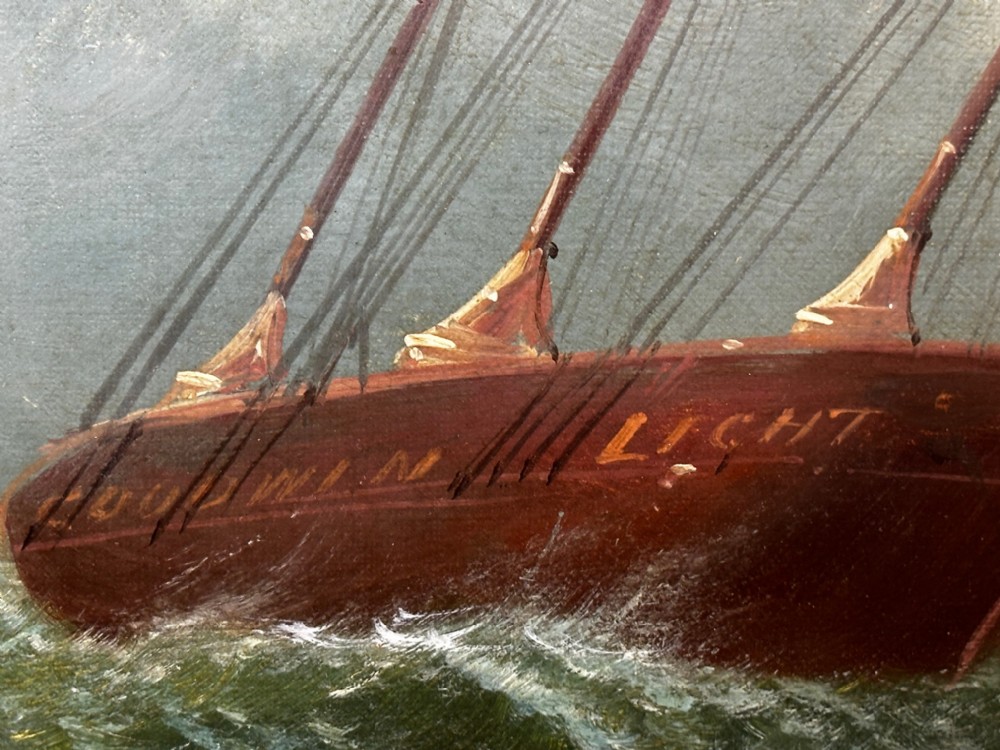
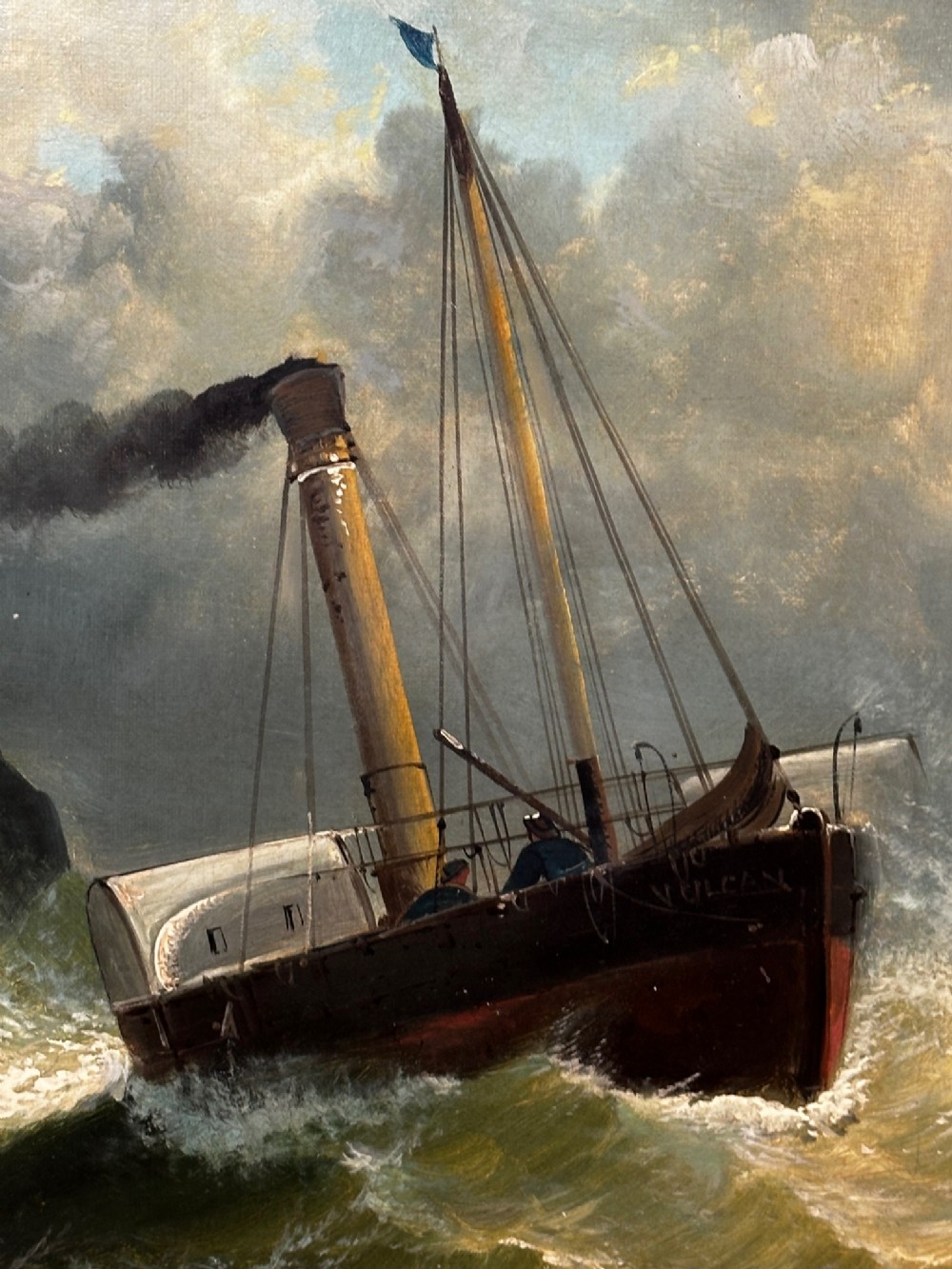
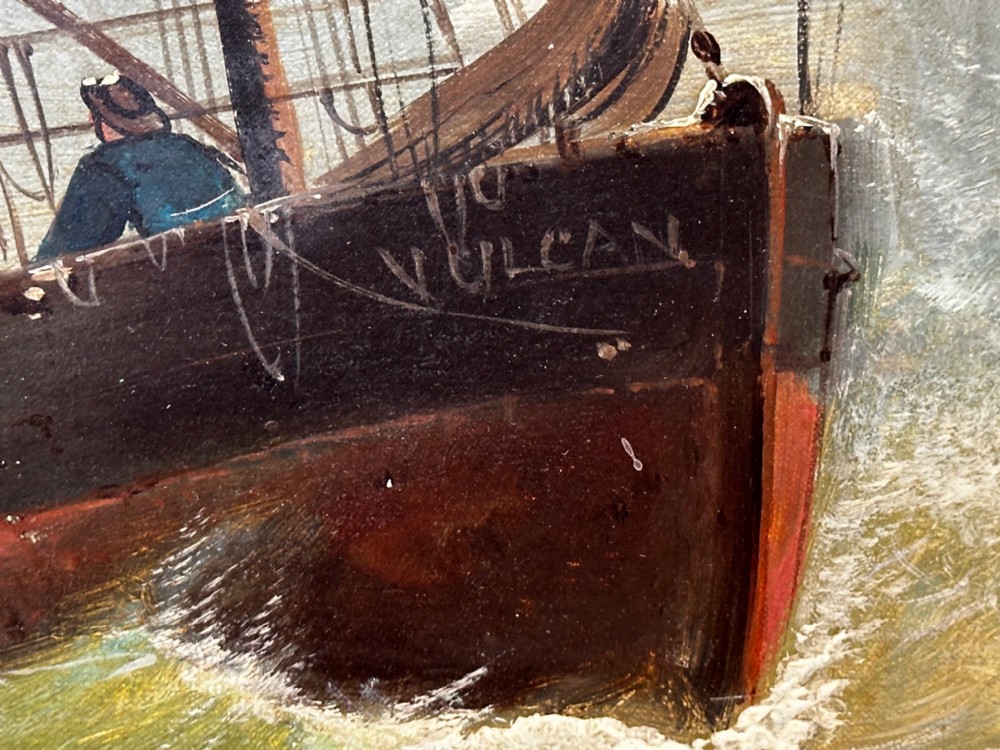
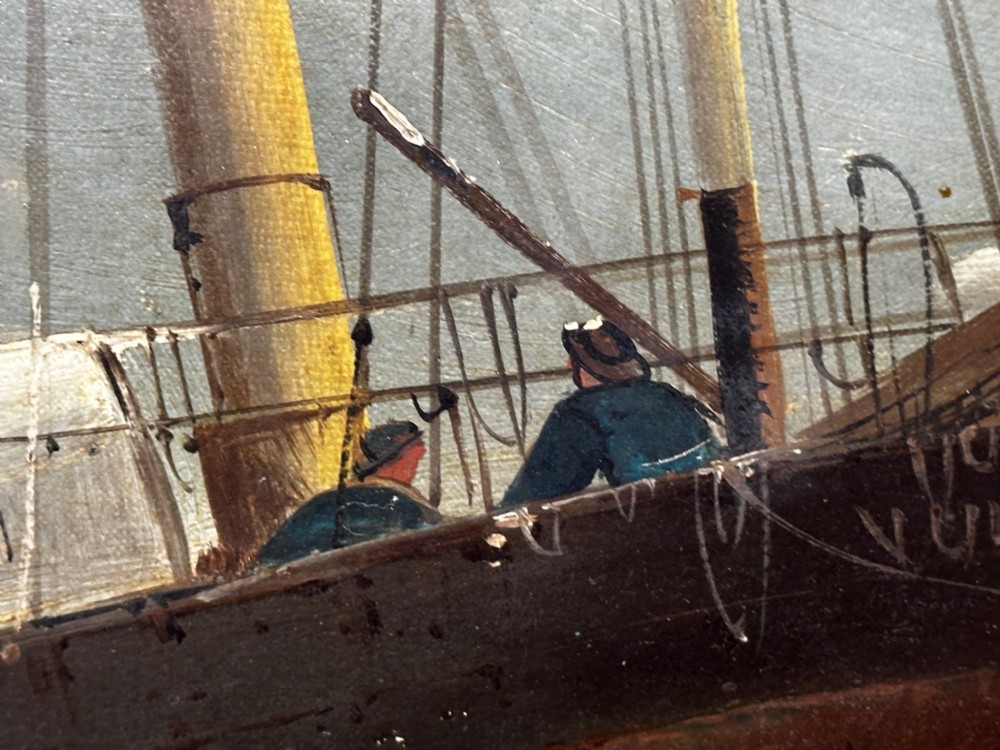
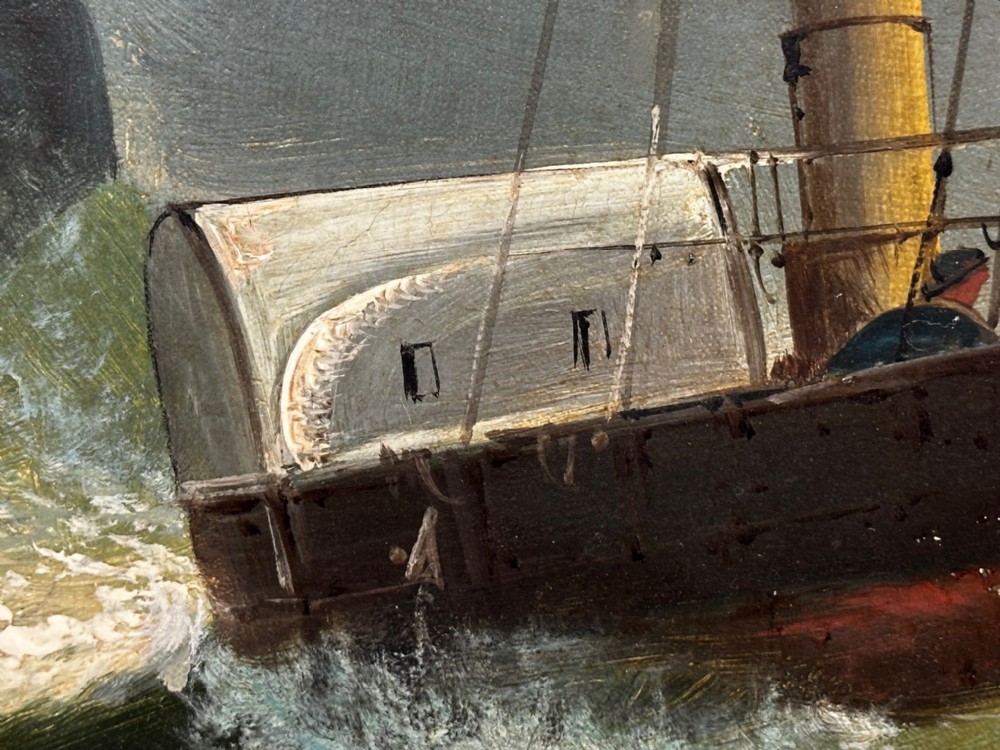
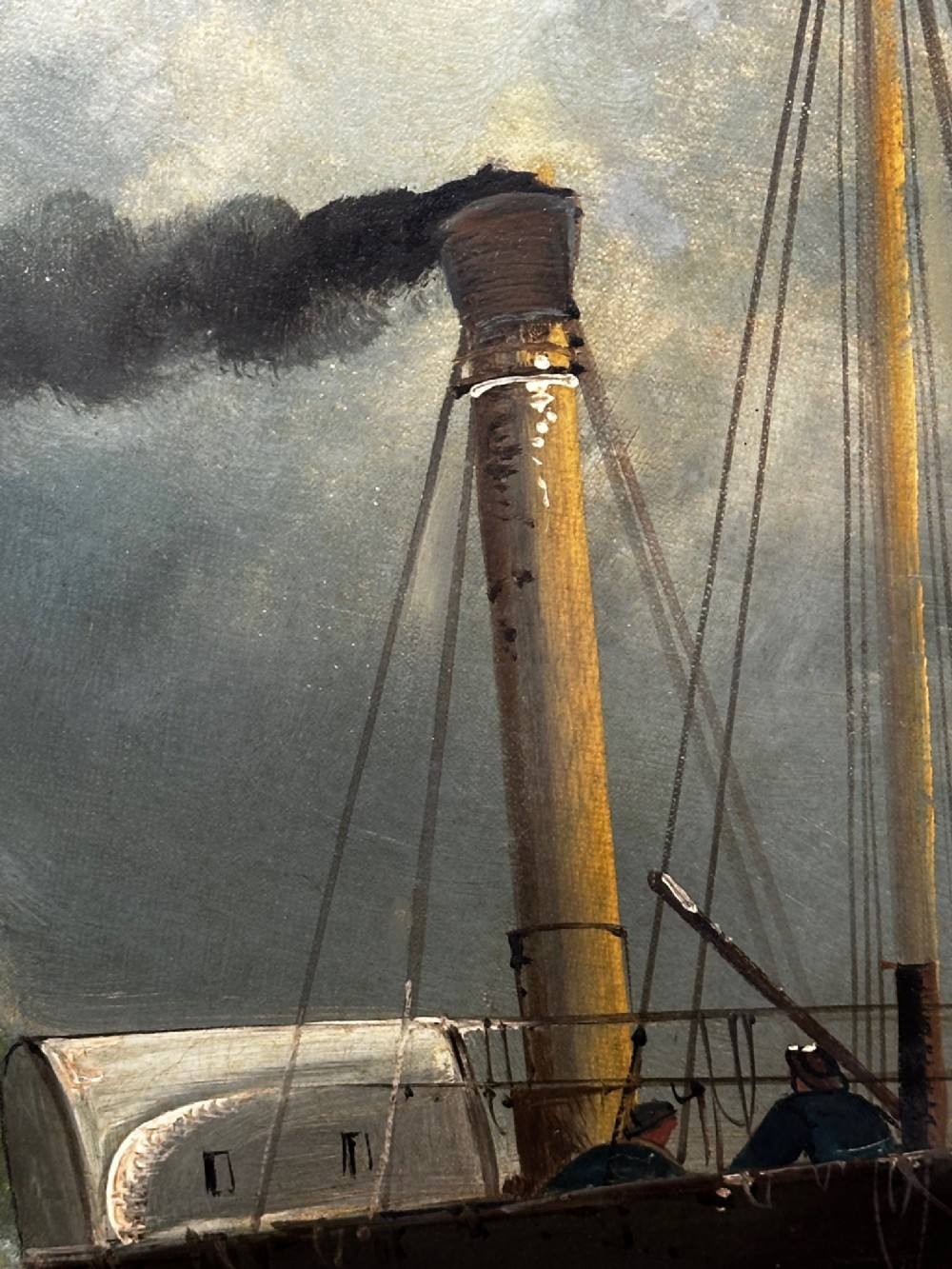
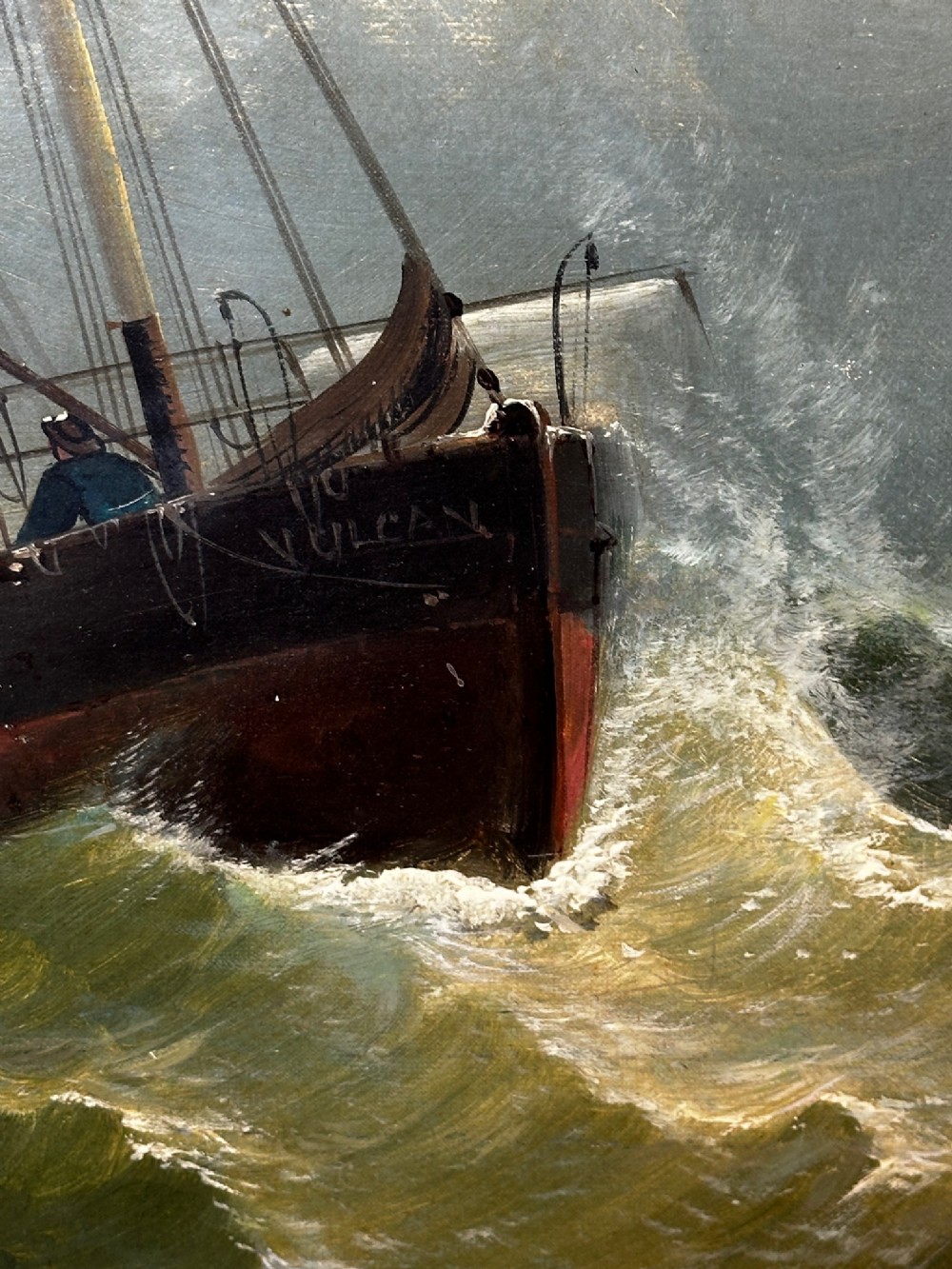
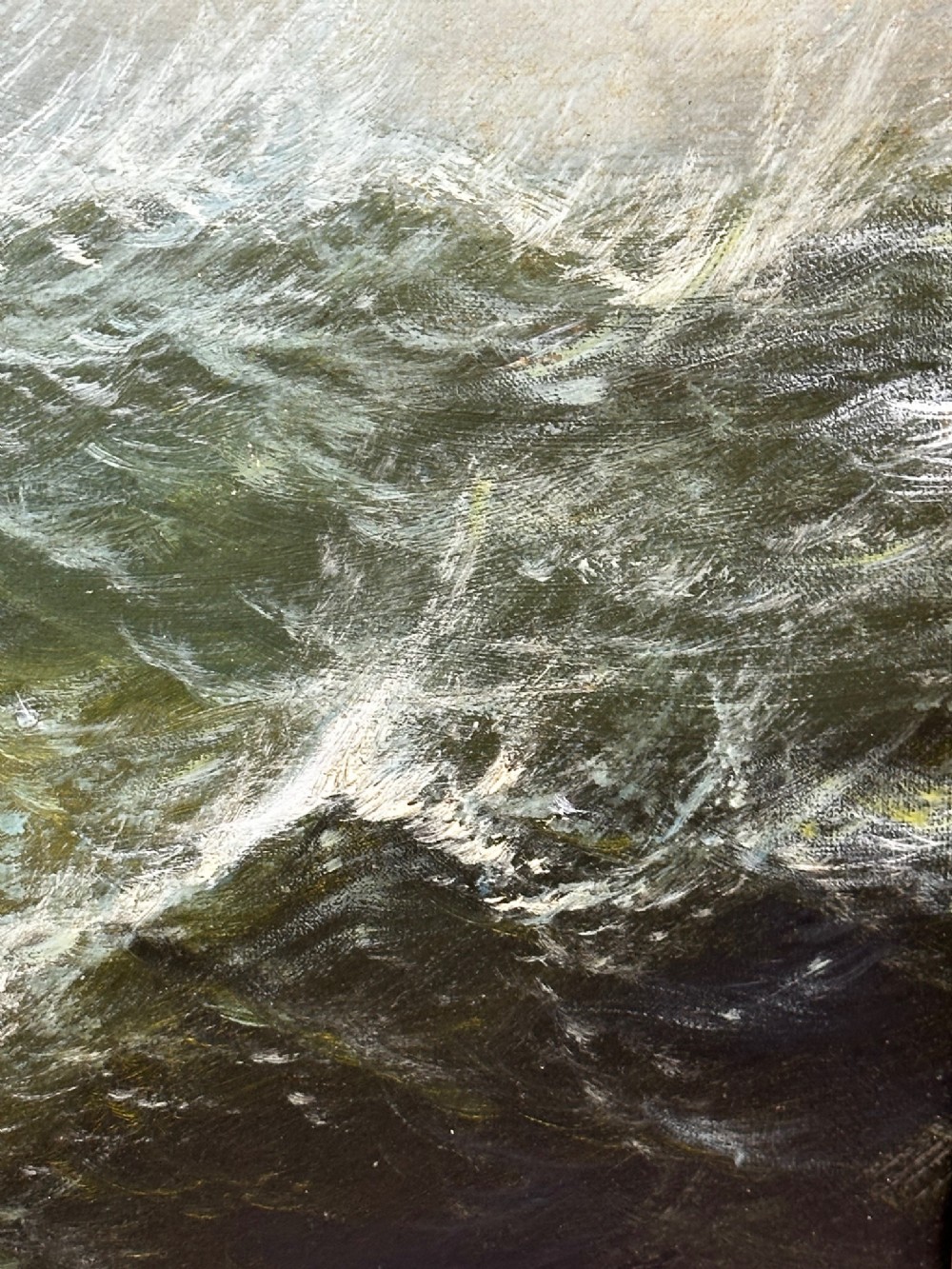
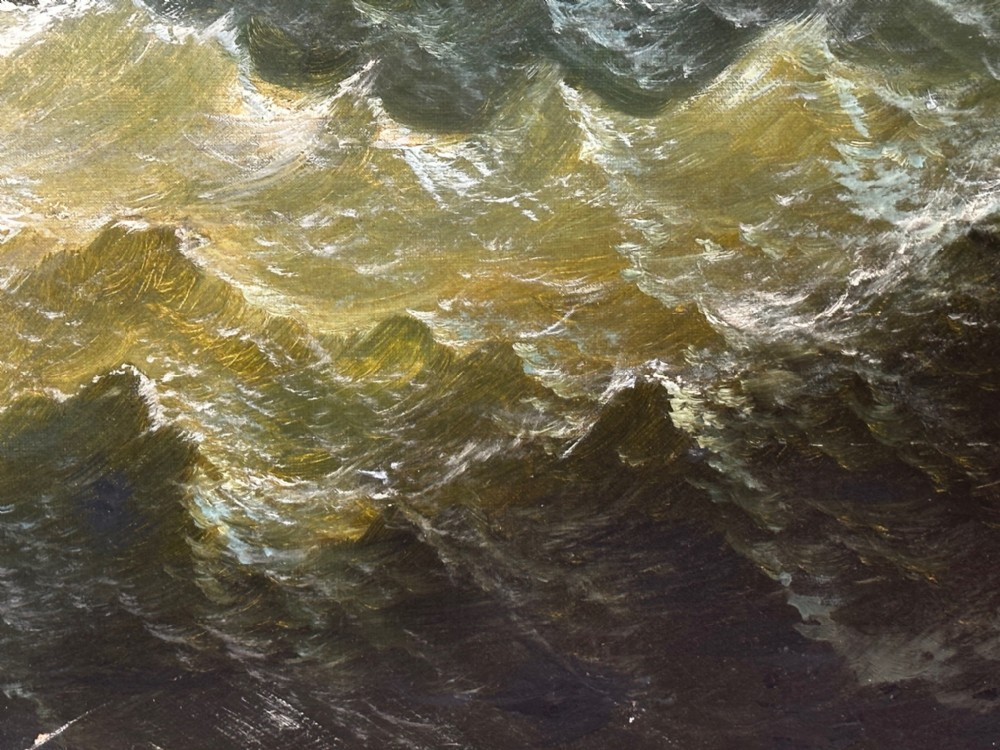
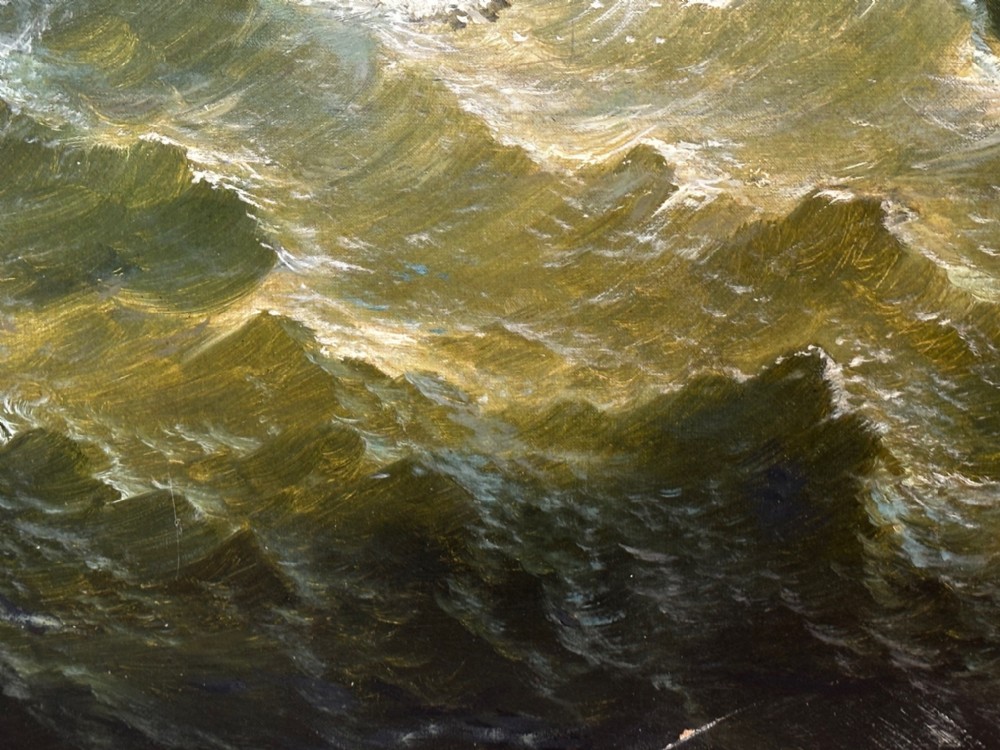
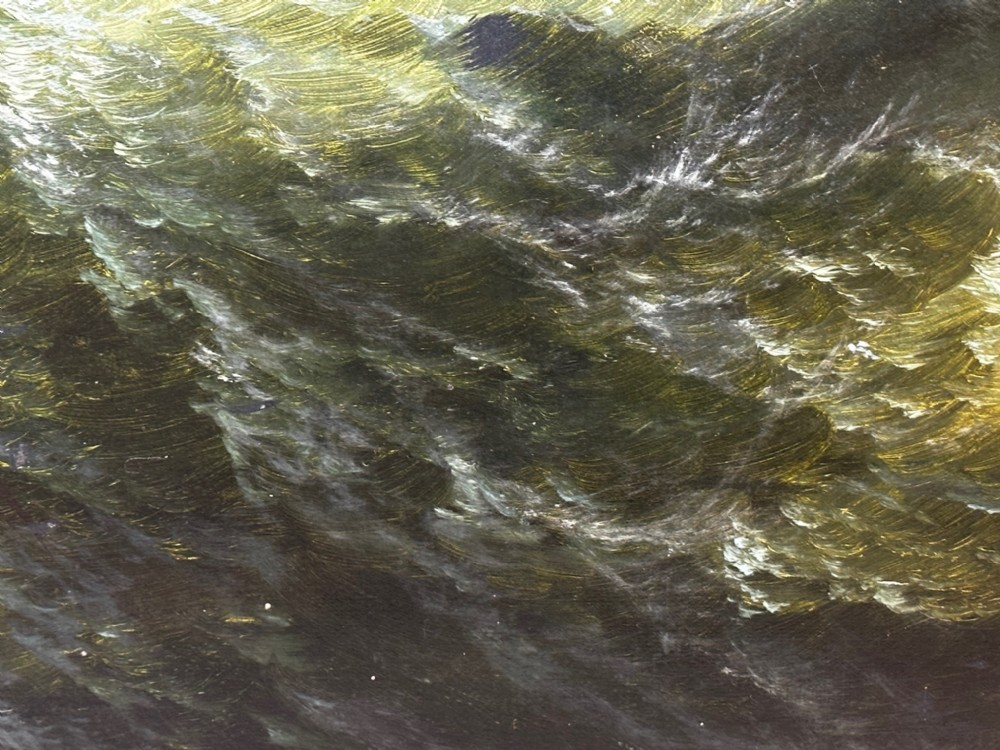
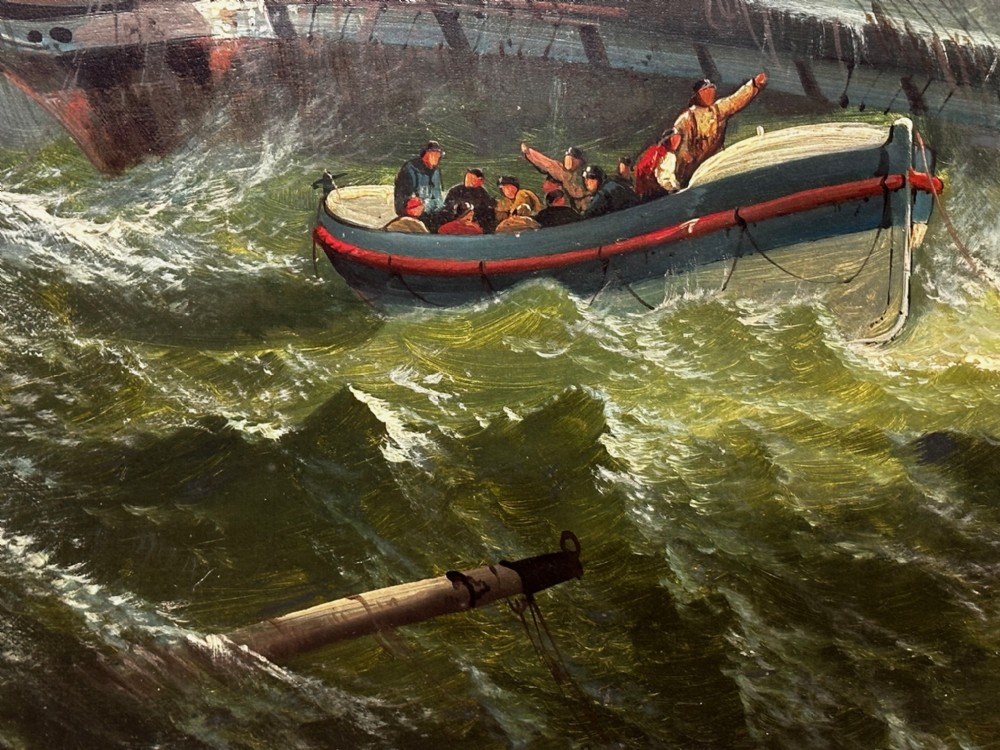
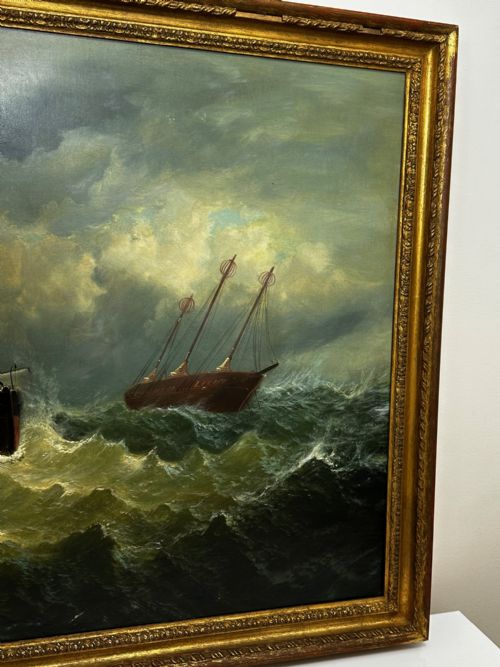
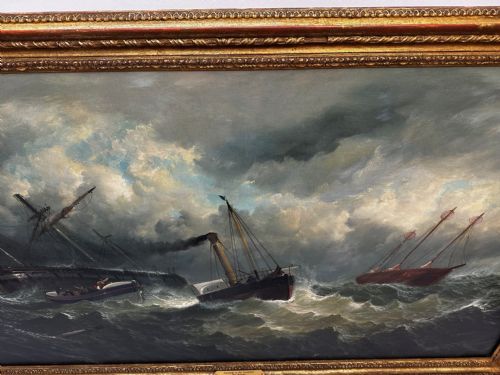
Your focus is first drawn to thelarge 3 masted floundering ship which has run aground & has a severe list shown on the the left. In dramatic rough choppy heavy storm seas. A large section of the front bowsprit and been ripped off the ship and can be seen floating in the seas towards the bottom area. You then notice a life boat filled with crew member sailors, one figure is pointing back towards the sticken ship expressing concern for others trapped on the ship. In the centre is a steam tug boat the Vulcan, it is steaming along with black smoke coming out of its single funnel, the Captain is trying to hold his position wating to rescue the men in the lifeboat, you can see the ships name on the bow, it is an iron steam paddle tug of 140 tons which was built at Blackwall and delivered to Ramsgate in 1858, which was in service & helping during this rescue. Crashing seas are rising up hitting the bow and sides. Over to the right is a third ship and you can also view its name on its portside which is the Goodwin Light. The Goodwin light was one of 5 ships which once guarded the sands.
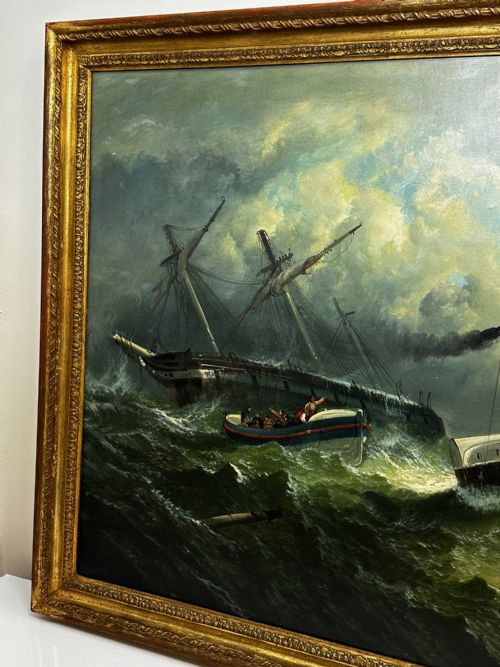
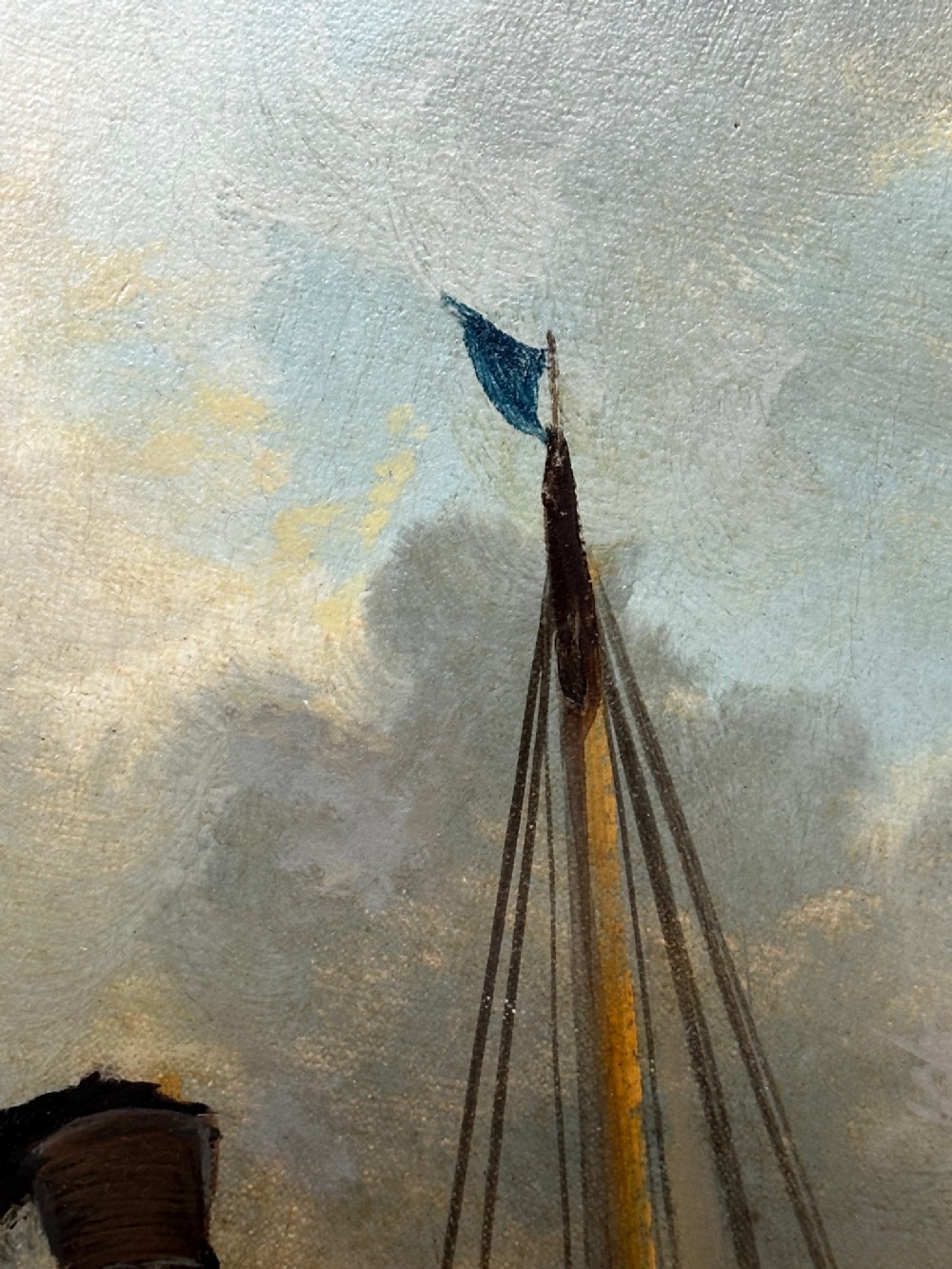
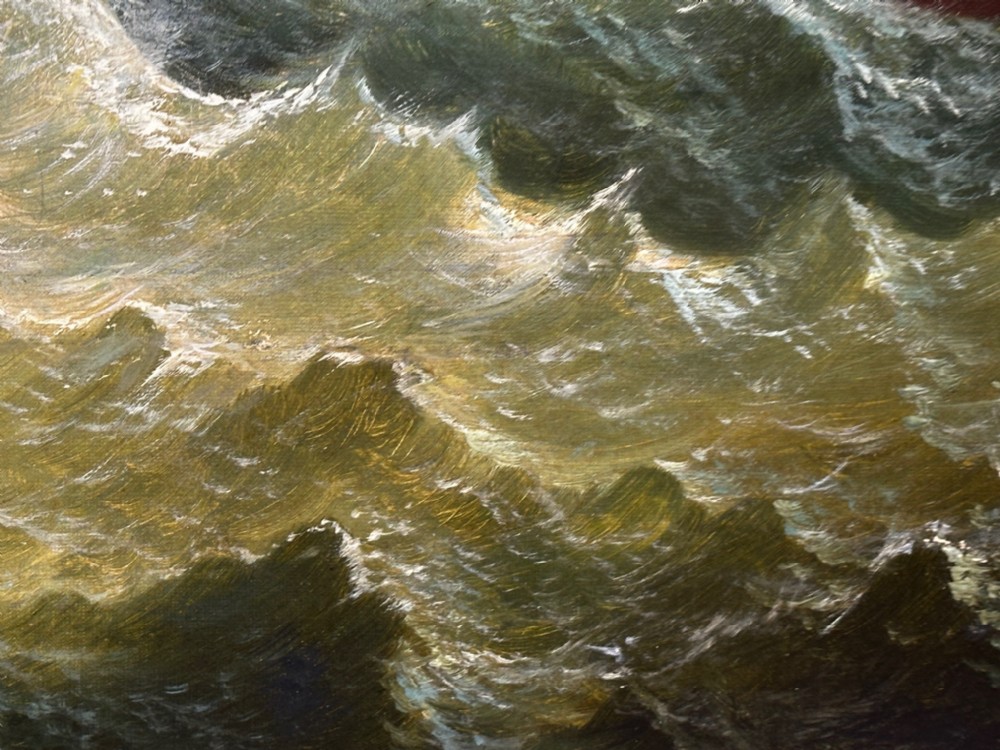
An interesting combination of mainly dark storm cloud skies above with some small areas of calm blue shining through, with various crashing rolling seas all around the floundering vessel that has run aground on the notorious dangerous Goodwin Sands sandbank which is around 6 miles off the Deal coast in Kent in England. Having such perspective & emotion you can feel the distress the sailors have and the sense of urgency to escape.
The Ramsgate tugs were a series of tugboats used at Ramsgate harbour since the 19th century. The harbour's development coincided with the growing use of the steam tugs that were then being built for the shipping industry.
During this era a considerable amount of the work undertaken by the local boatmen was carried out by these tugs. The benefits of this in regard to the heavier ships in distress was inestimable, but nevertheless the salvage of wrecks soon became an intense and contested undertaking, offering substantial monetary rewards to the boatmen and the tugmen, who were otherwise ill-paid.
Ramsgate's tugs became a regular feature in the harbour; unlike the lifeboats they were able haul ships out into open waters against an unfavourable wind or in dead calm conditions. In the 19th century the tugs were kept with "crew on board and steam up, ready to put to sea at a moment's notice.
Goodwin Sands is a 10-mile-long (16 km) sandbank at the southern end of the North Sea lying 6 miles (10 km) off the Deal coast in Kent, England.[1] The area consists of a layer of approximately 25 m (82 ft) depth of fine sand resting on an Upper Chalk platform belonging to the same geological feature that incorporates the White Cliffs of Dover. The banks lie between 0.5 m (1 ft 8 in) above the low water mark to around 3 m (10 ft) below low water, except for one channel that drops to around 20 m (66 ft) below. Tides and currents are constantly shifting the shoals.
More than 2,000 ships are believed to have been wrecked upon the Goodwin Sands because they lie close to the major shipping lanes through the Straits of Dover. The few miles between the sands and the coast is also a safe anchorage, known as The Downs, used as a refuge from foul weather
Cheshire Antiques Consultant Ltd has dated this piece to the Victorian era.
Source the historic in 17th, 18th, 19th & 20th century fine arts, painting, sculptures & collectibles
You can view the stock and full dealer information on the Cheshire Antiques Consultant Ltd Profile Page
Oil Painting Ship Aground Rescue Goodwin Sands by William Broome