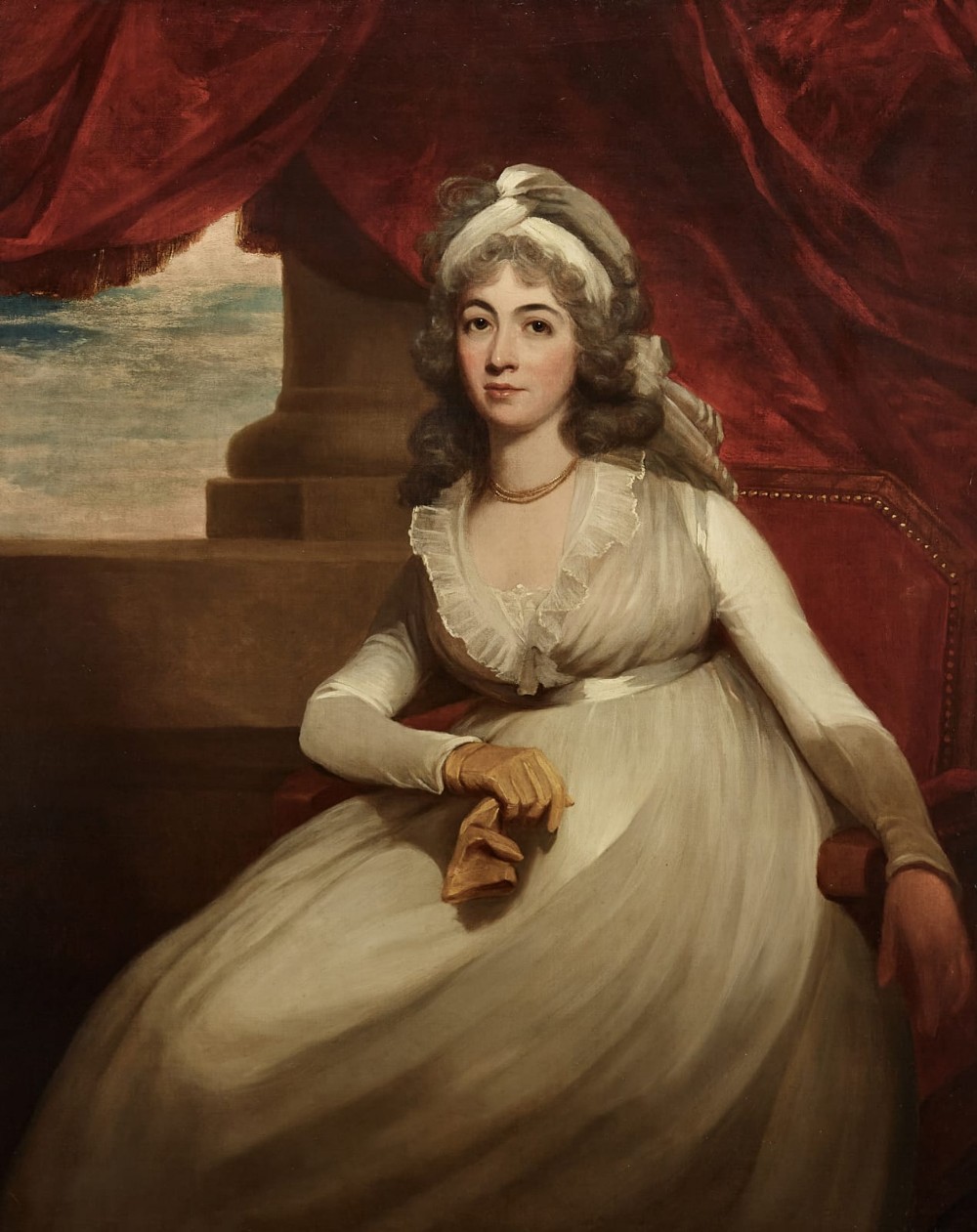
It was listed by Isherwood Fine Art. Sold pieces stay on Sellingantiques as a record of what has passed through, and the next one is rarely far away.
Isherwood Fine Art has dated this piece to the 18th Century.
Oil on canvas in a giltwood frame.
Dimensions: 141 x 114cm (in frame)
Provenance:
Edmund de Rothschild (1916-2009), Exbury House, Hampshire, UK
Sotheby's London, 4 September 1997, lot 35
Sotheby's London, 14 March 1990, lot 68
Old Hall Gallery Ltd, Iden, Rye, Sussex (according to label on reverse)
Anne (née Luttrell; first married name Horton] Duchess of Cumberland and Strathearn (1743–1808), was born in Marylebone on 24 January 1743, the daughter of Simon Luttrell, Baron Irnham (1713–1787), and his wife, Judith Maria Lawes (d. 1798). Anne Luttrell's first husband was Christopher Horton (bap. 1741), the son of Christopher Horton and his wife, Frances, of Catton Hall, Derbyshire. They married on 4 August 1765, but Horton died on 5 August 1769.
The Duke broke the news to George III on 2 November by presenting him with a letter announcing the marriage; the couple then departed for Calais. The marriage horrified George III, not only because of the Duchess's politically controversial family, but also because a marriage between a prince and a commoner was unequal in imperial law, barring any children from inheriting the electorate of Hanover. In Britain:
Cumberland refused to disavow the marriage and in consequence was barred from the king's presence. His mother, who was by now terminally ill, also refused to see him and they remained unreconciled at her death. Cumberland's failure to seek the King's permission for his marriage led to the King's forcing the Royal Marriages Act through parliament. It stipulated that no descendant of George II, other than the descendants of princesses who married into foreign families, could marry without the sovereign's consent.
Horace Walpole described the Duchess to Sir Horace Mann as 'Coquette beyond measure, artful as Cleopatra, and completely mistress of all her passions and projects' (Walpole, Corr., 23.345). It was probably her determination to be recognized as a princess that drove the couple forward, whereas the Duke was more relaxed about his social status. Excluded from the court of George III, the Cumberlands established a rival centre at Cumberland House in Pall Mall, which Cumberland acquired from the duke of Gloucester in 1772. They staged lavish entertainments, patronized musicians, had a succession of portraits painted, and travelled conspicuously in their state coach. Cumberland was still living on his original financial settlement and, beset by debts, the couple spent the period from summer 1773 to summer 1774 travelling in France and Italy. To the frustration of British diplomats attempting to execute George III's instructions that the Cumberlands should be allowed no precedence, the Duchess's claims to royal status were enhanced when she was received privately by Empress Maria Theresa at Vienna.
On their return to Britain the Duke and Duchess renewed their attempt to provide a livelier alternative to the court of George III. In 1775 Cumberland became patron of a boat club, the Cumberland Fleet, giving the Duke and Duchess the opportunity to sail down the Thames in a barge flying the royal standard at the centre of a well-attended social occasion. The society evolved into the Royal Thames Yacht Club. In the navy, the Duke was promoted to admiral in 1778, but was forbidden to assume a command. In summer 1779, suffering from ulcers on his lungs, he moved to Brighthelmstone (Brighton), Sussex, which he had first visited in September 1771. Cumberland was the f
Isherwood Fine Art has dated this piece to the 18th Century.
16th to 19th century old master, british and european paintings and sculpture, specialising in period portraiture. Member BADA, LAPADA.
You can view the stock and full dealer information on the Isherwood Fine Art Profile Page
Isherwood Fine Art is a registered member of LAPADA BADA
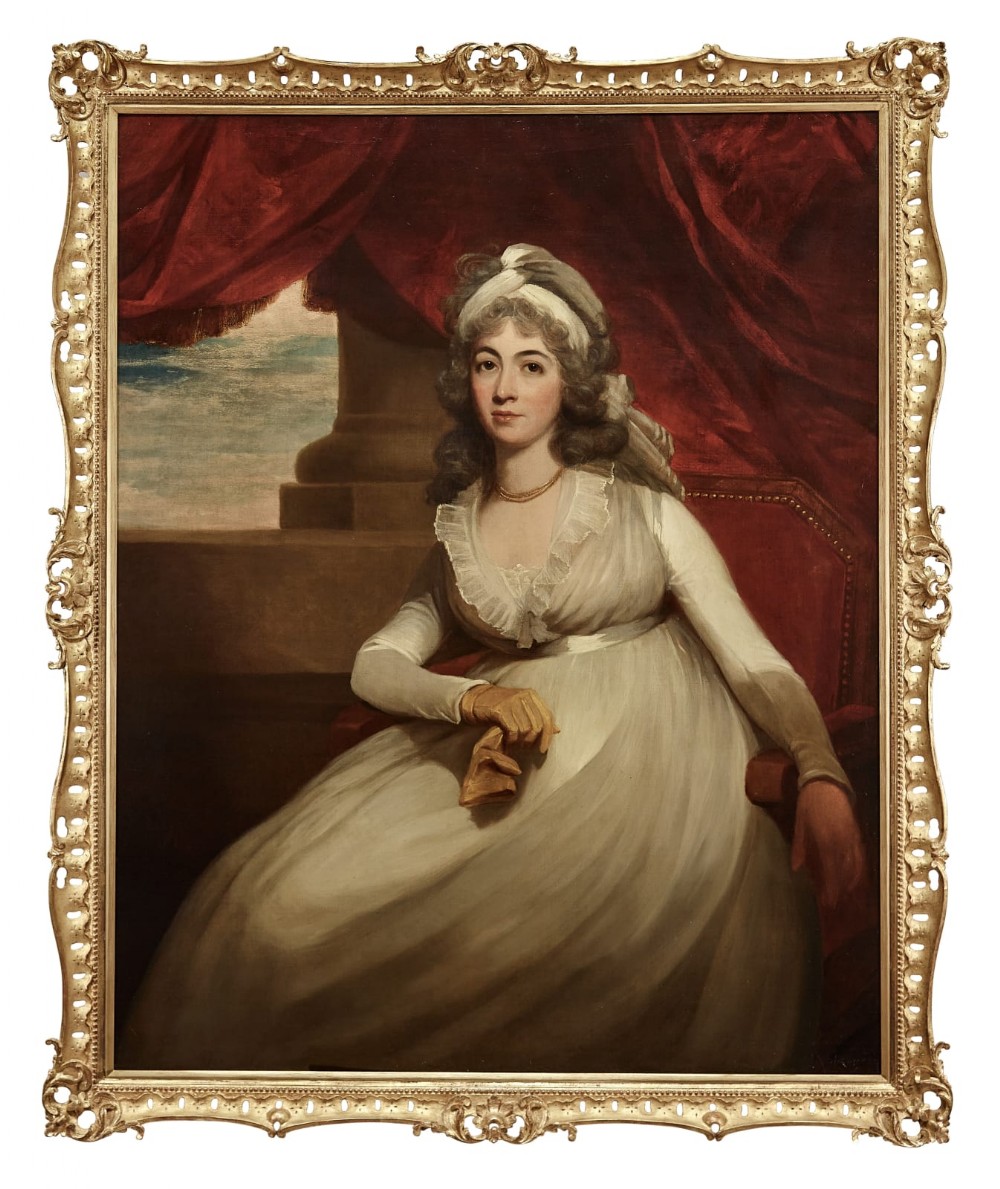
18th Century Portrait Oil Painting of the Duchess of Cumberland, Attributed to Martin Archer Shee