Cheshire Antiques Consultant Ltd has dated this piece to the 19th Century.
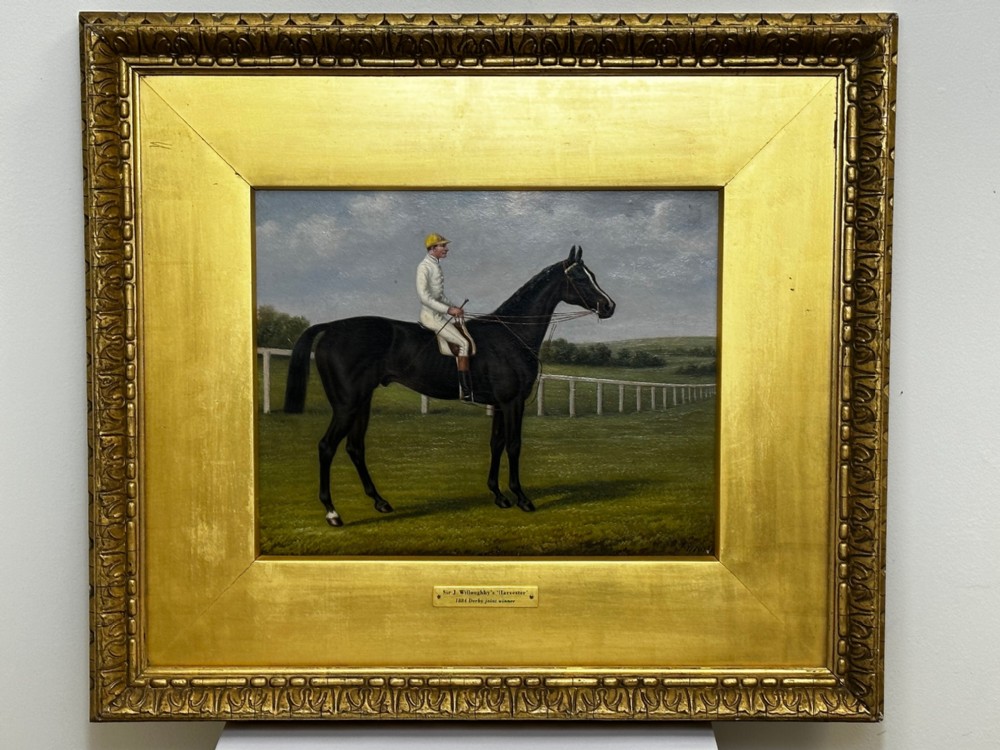
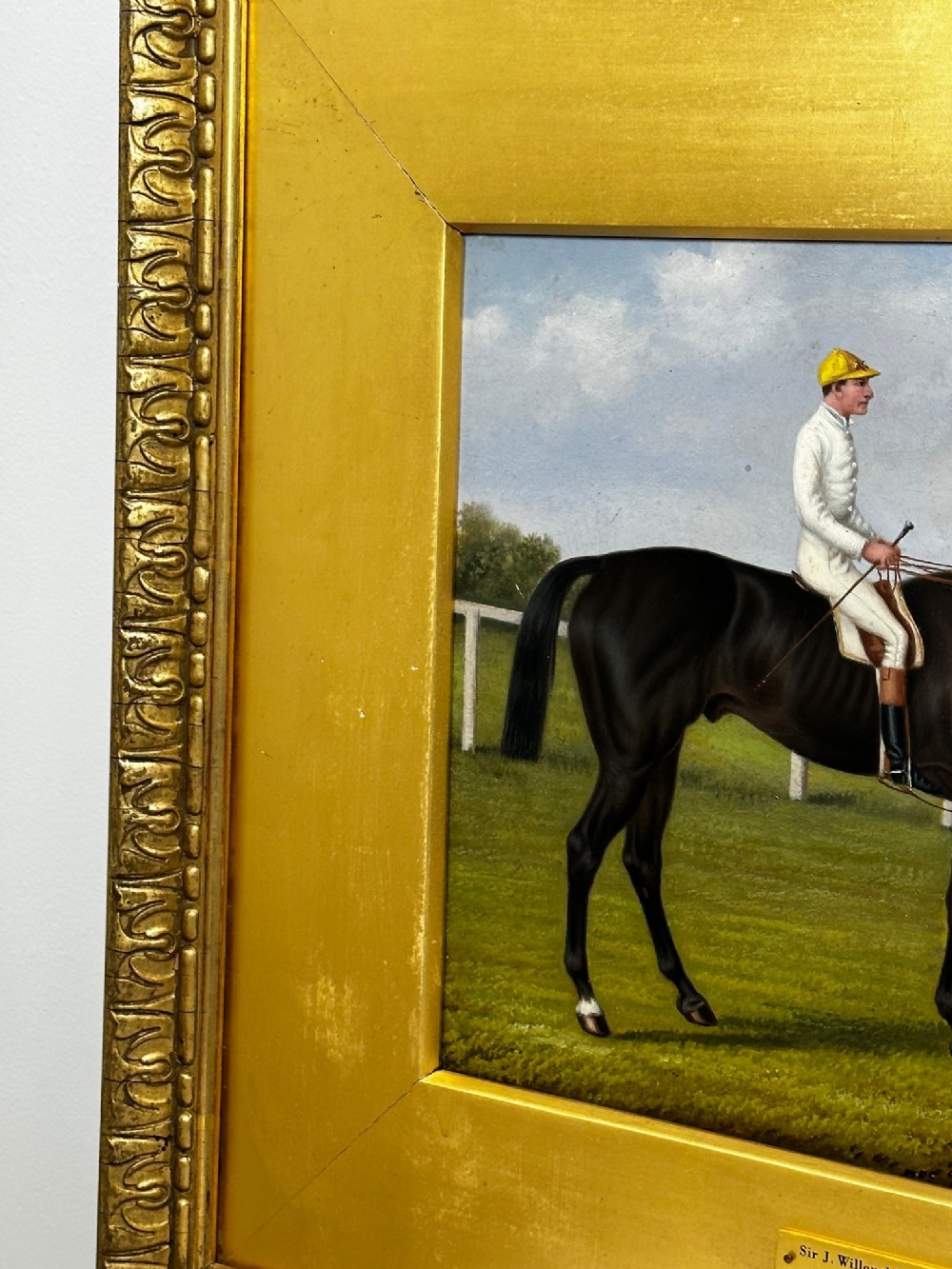
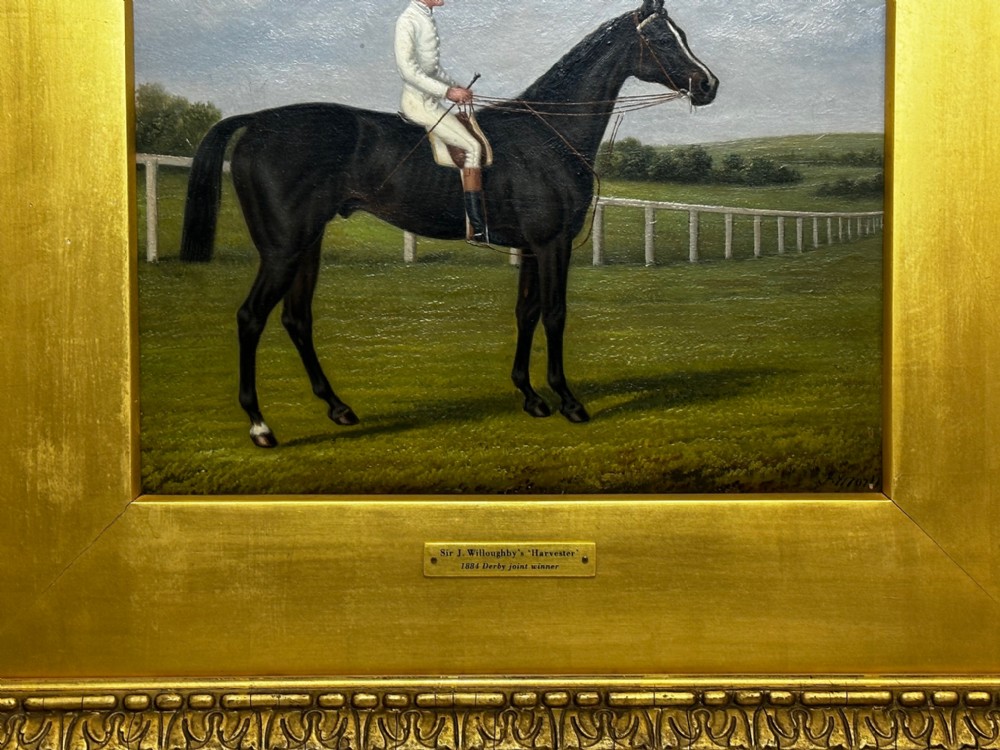
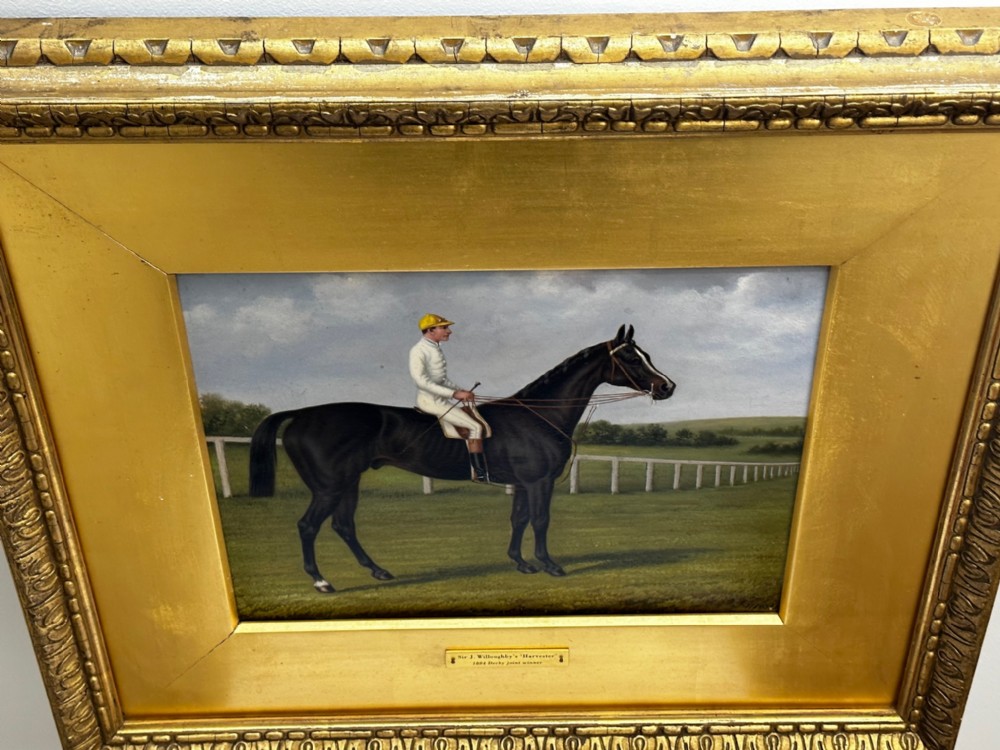
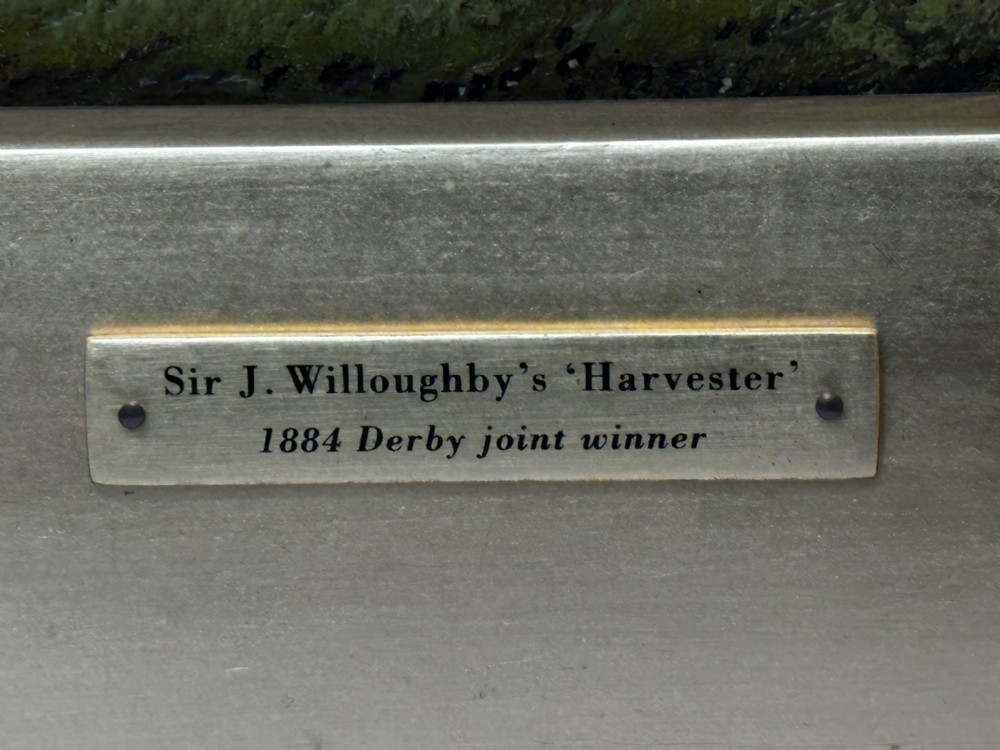
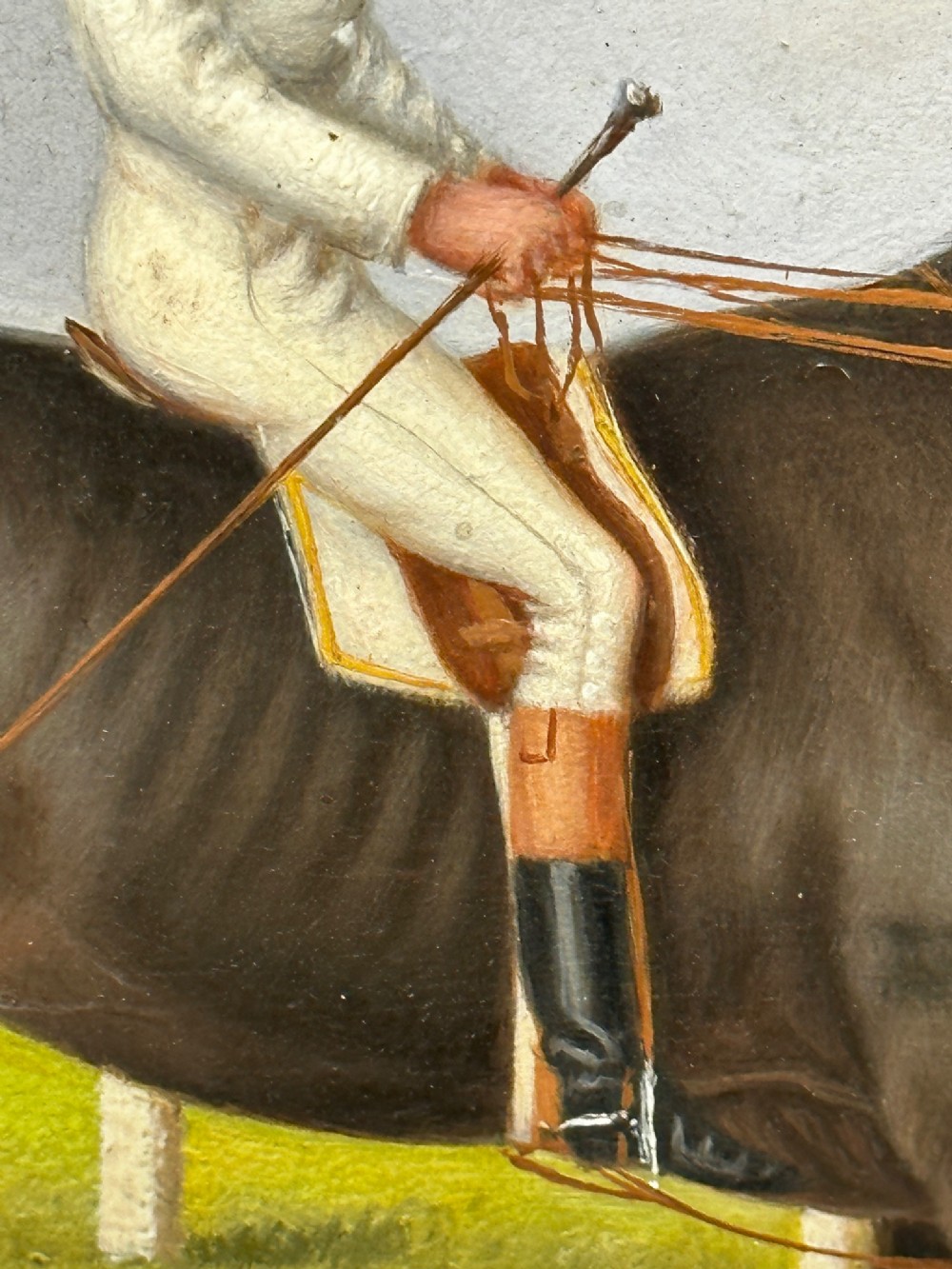
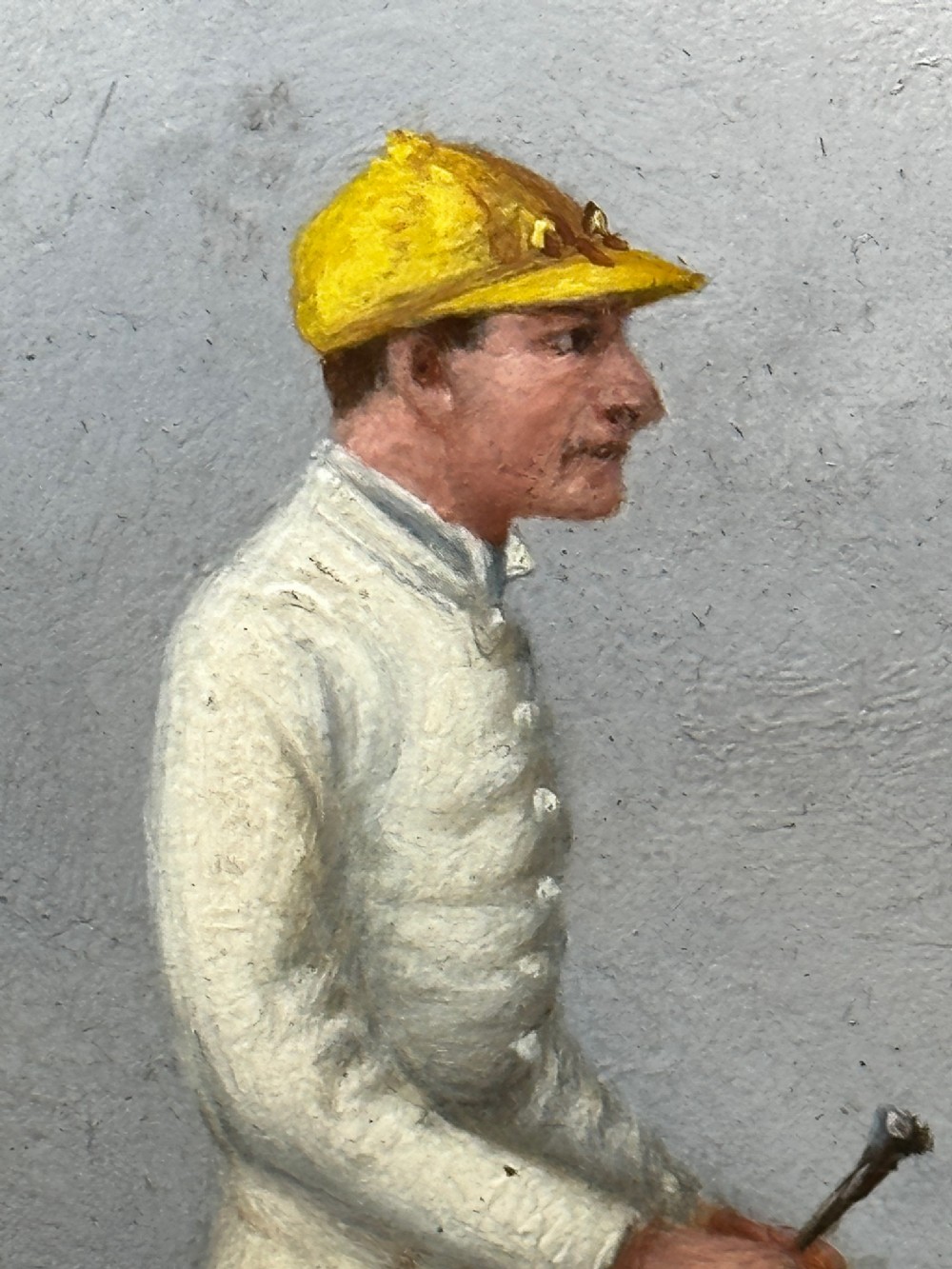
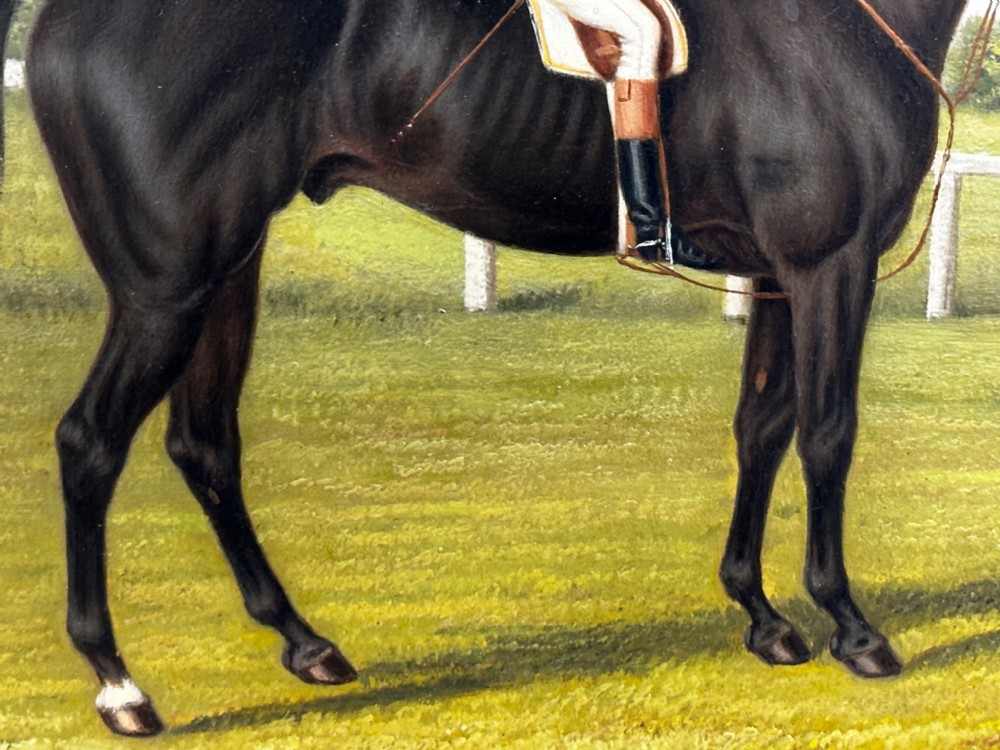
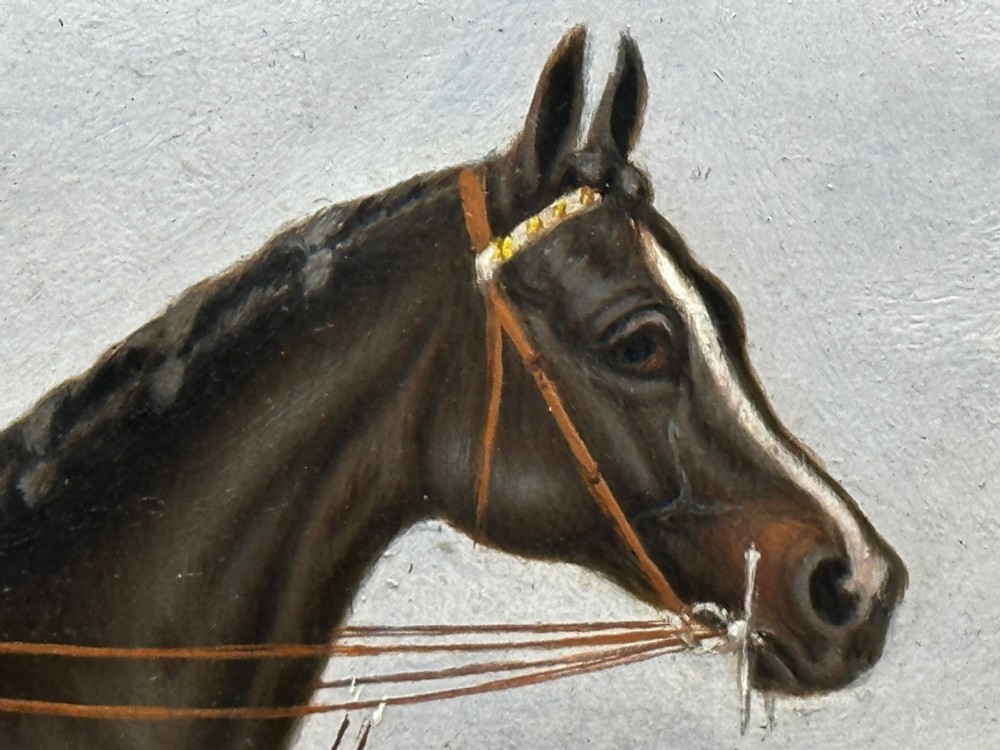
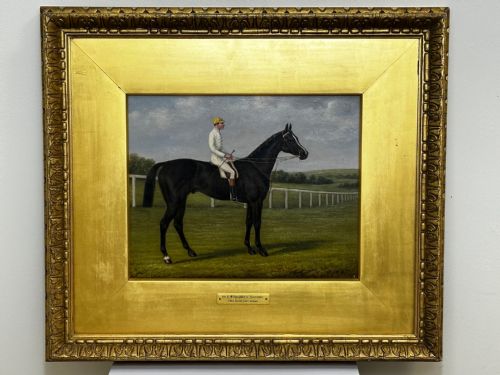
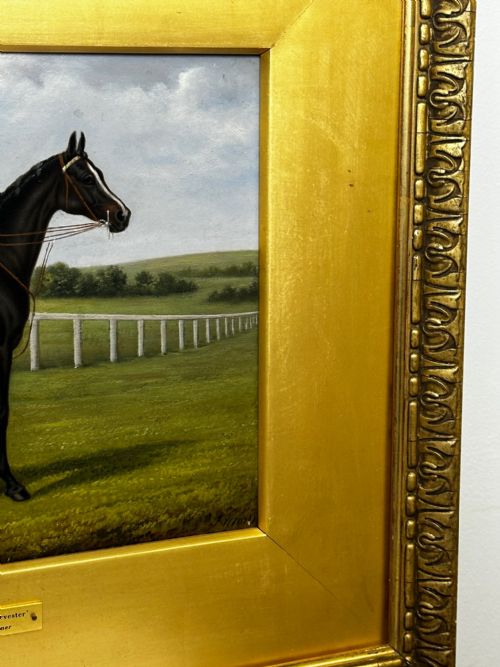
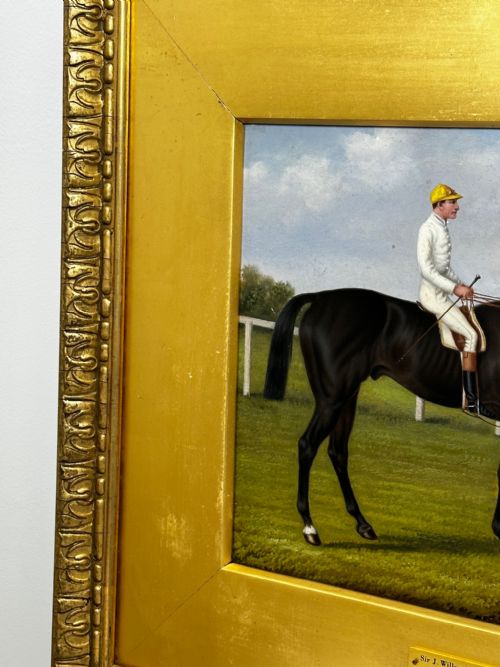
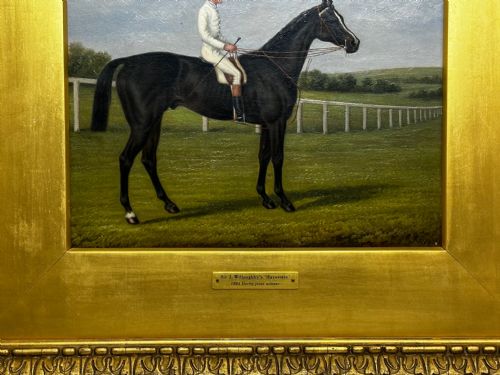
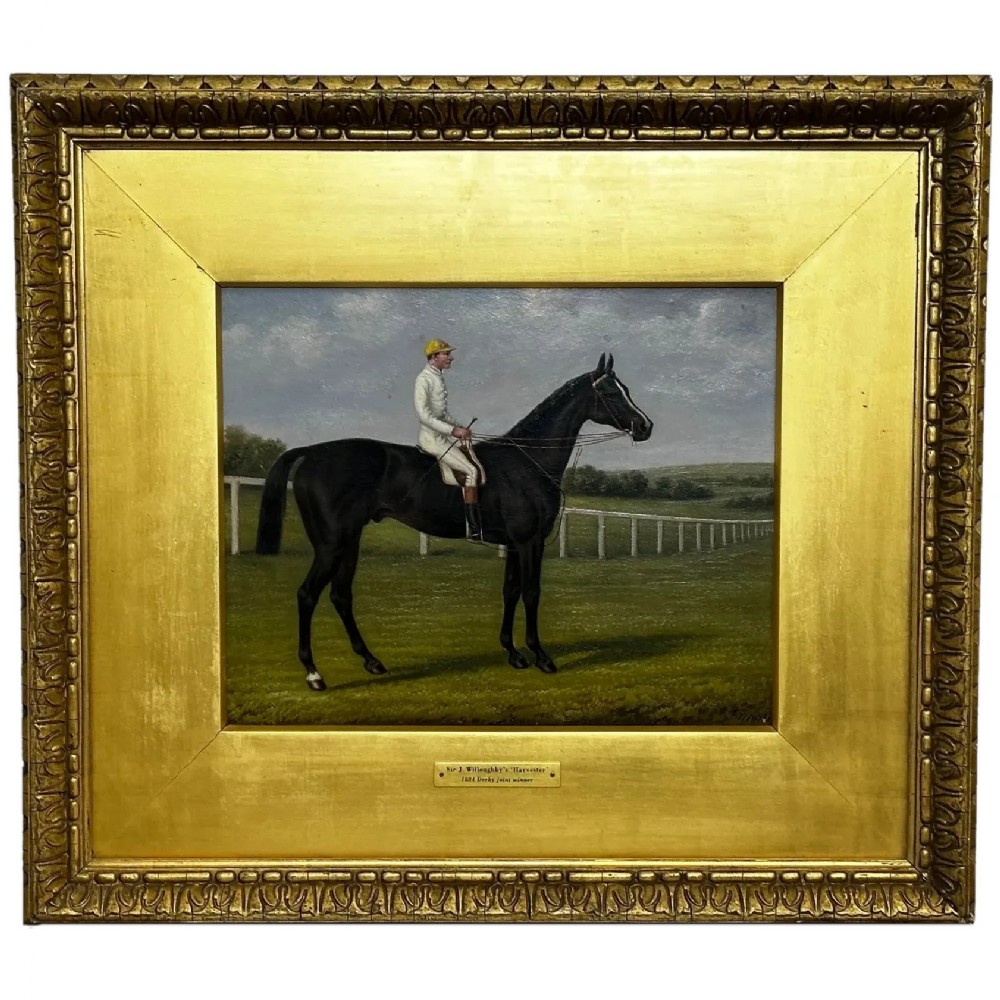
Title "Sir J Willoughby's Harvester" 1884 Derby joint winner. Plaque shown attached along the bottom front.
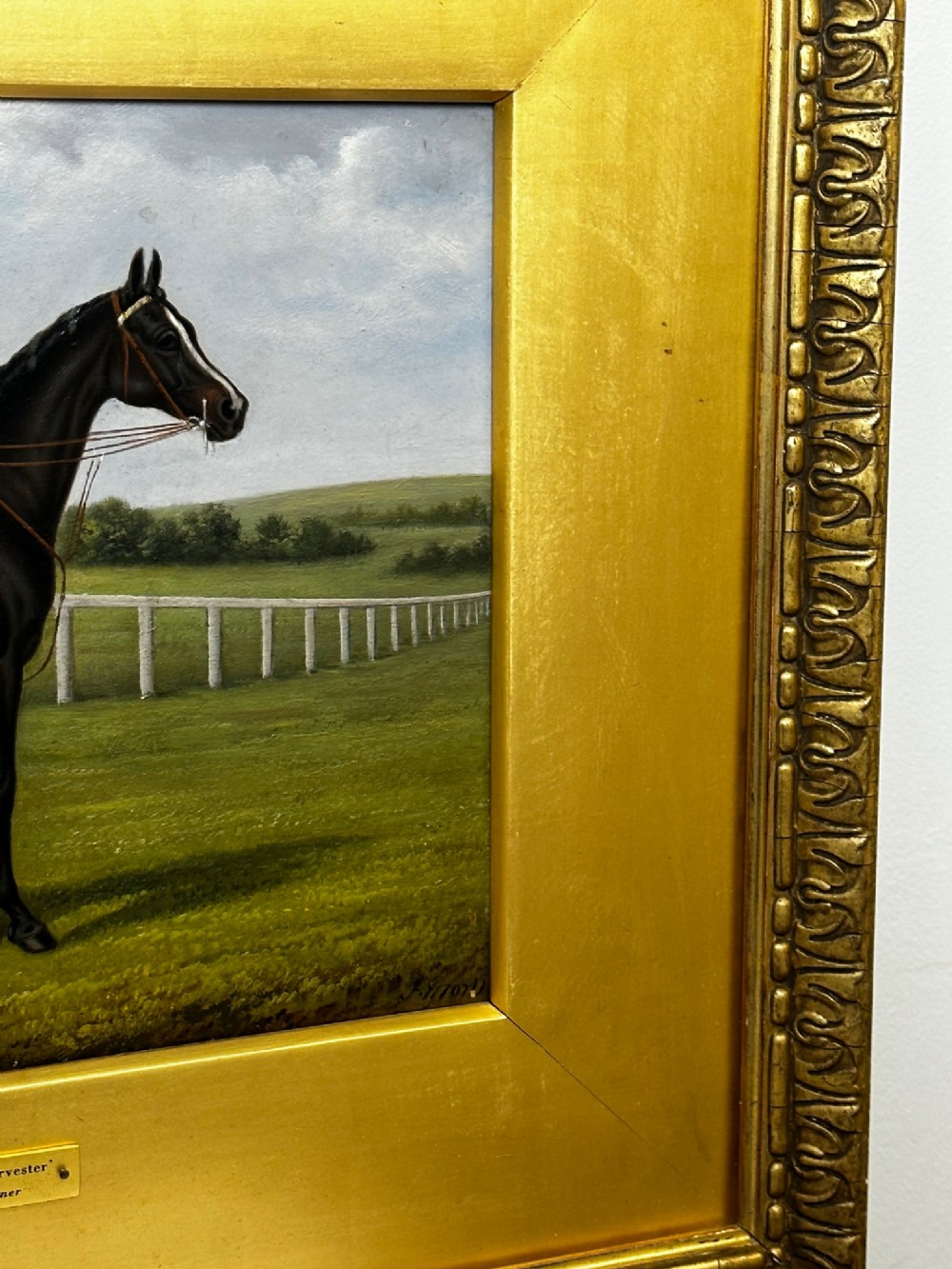
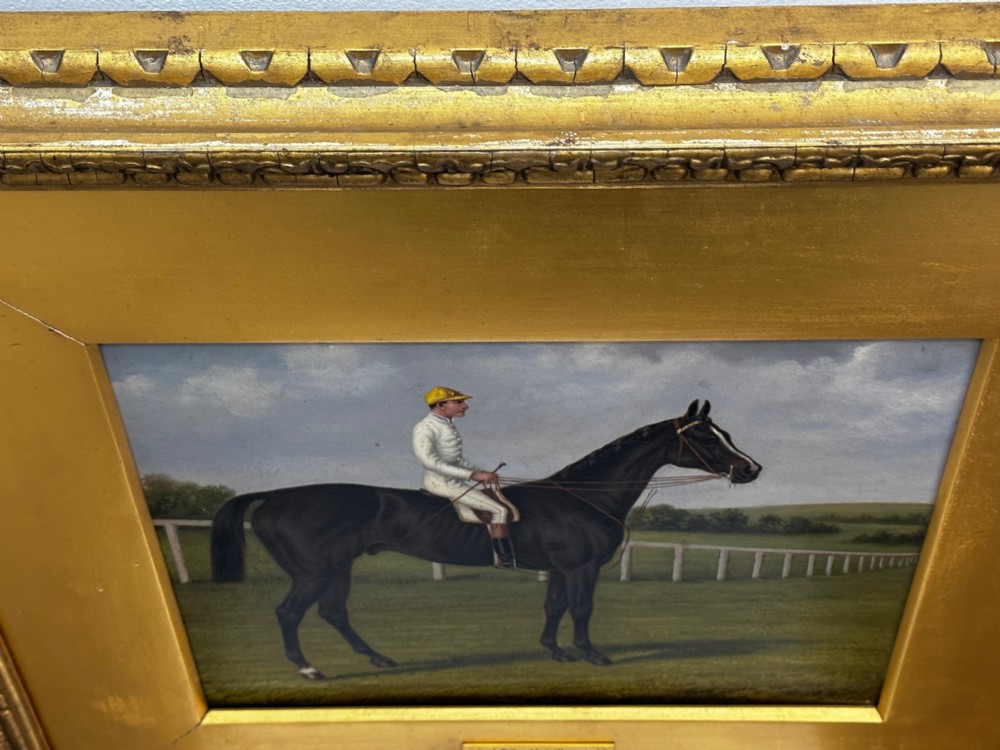
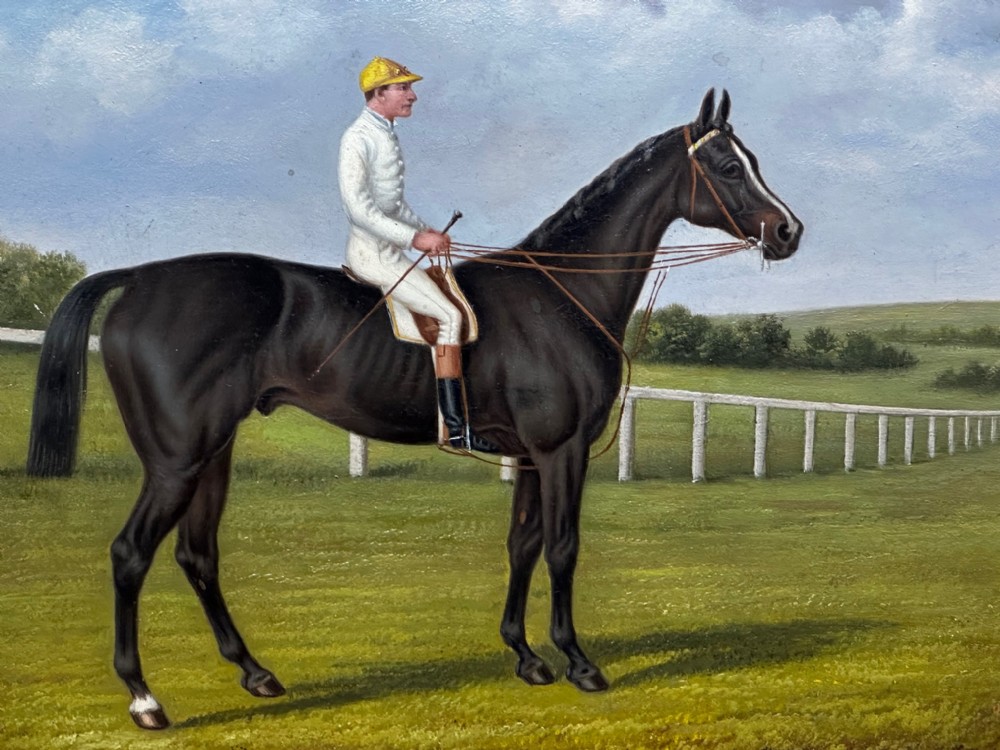
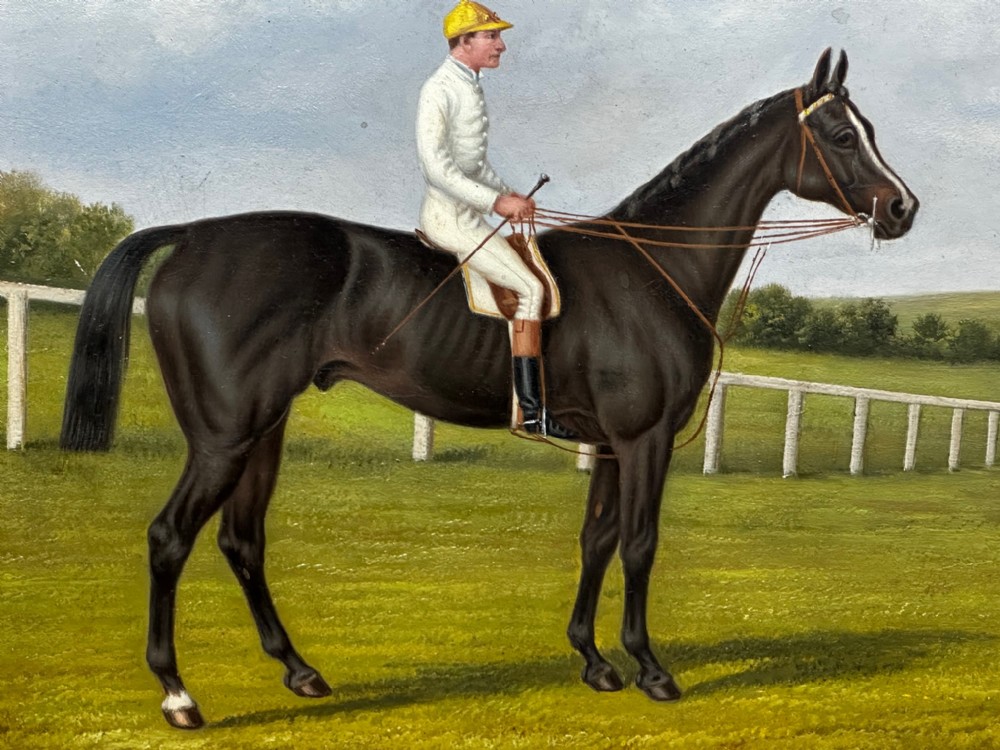
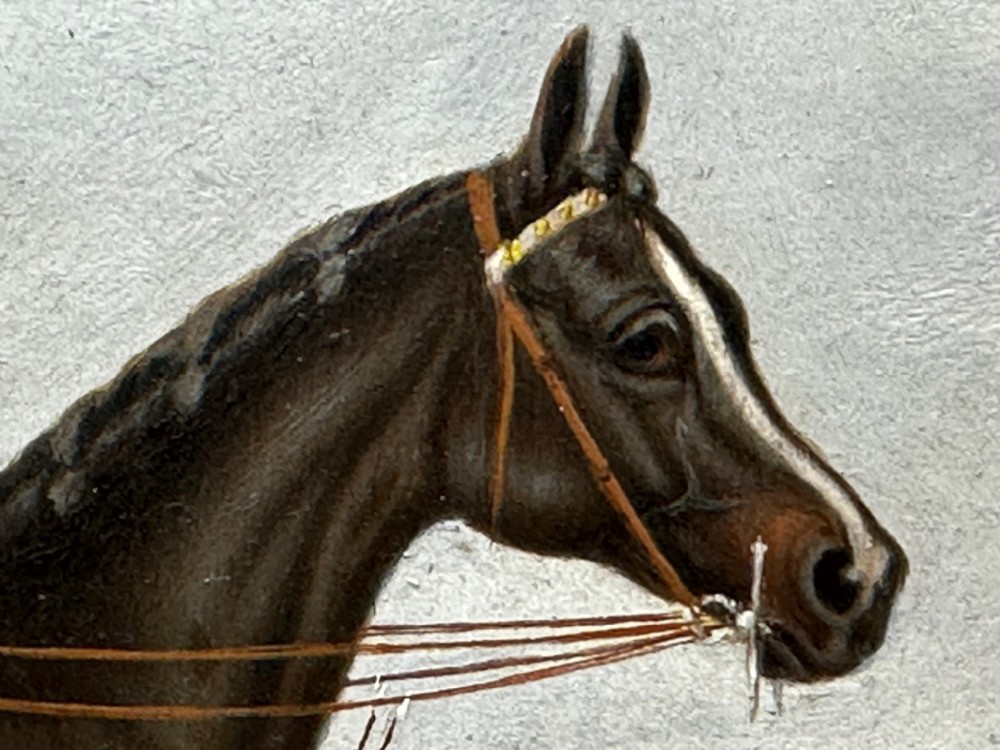
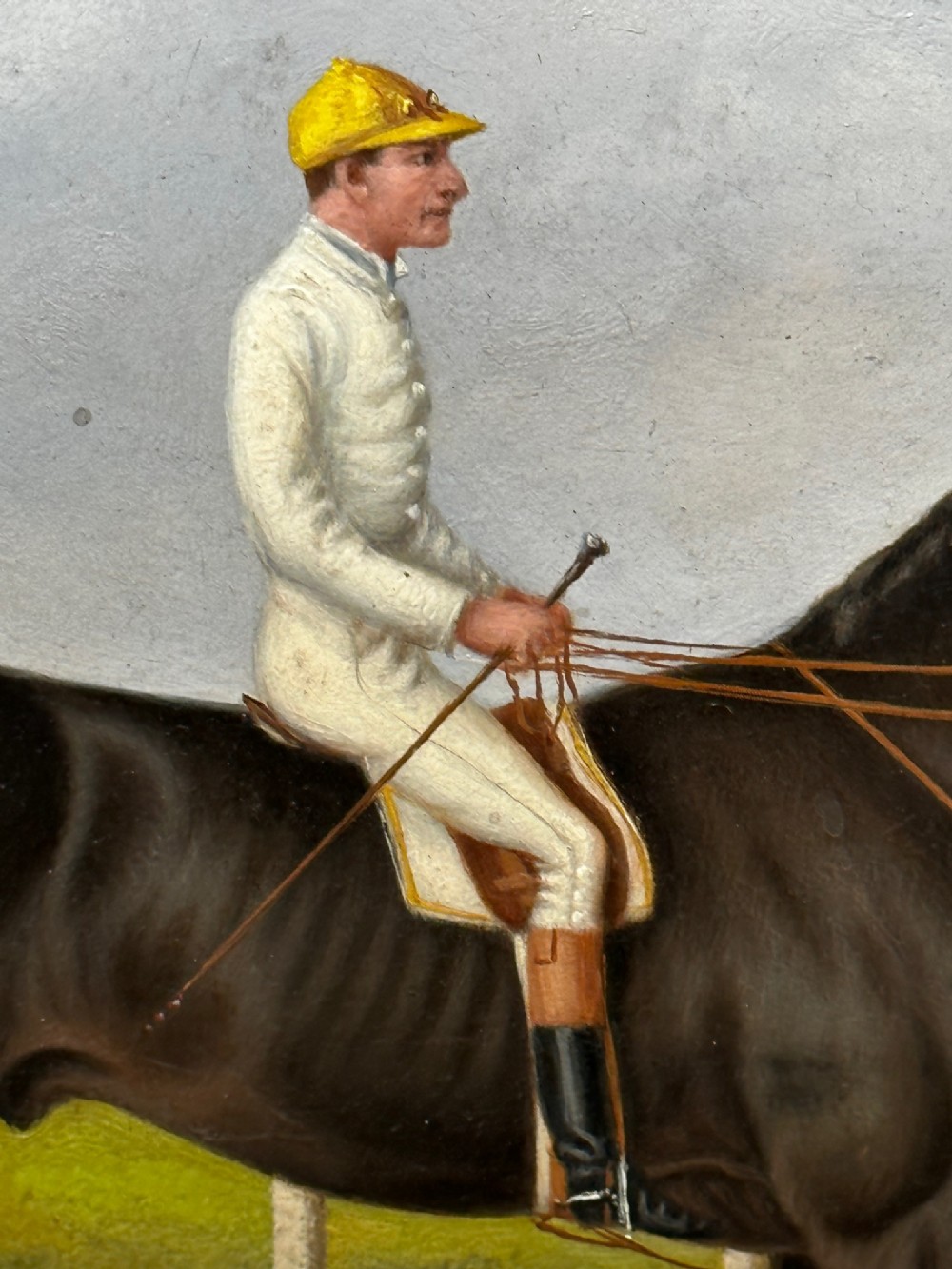
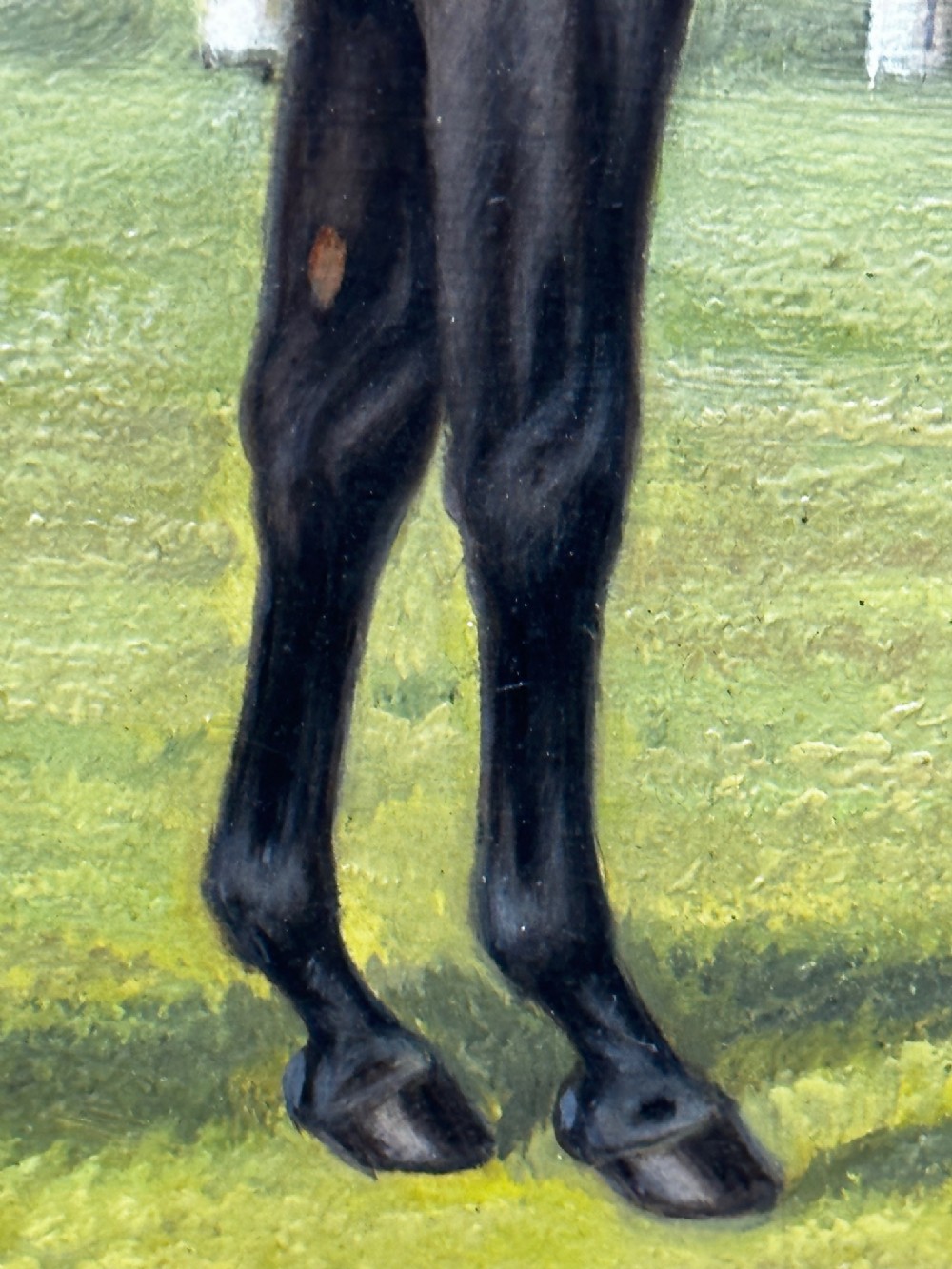
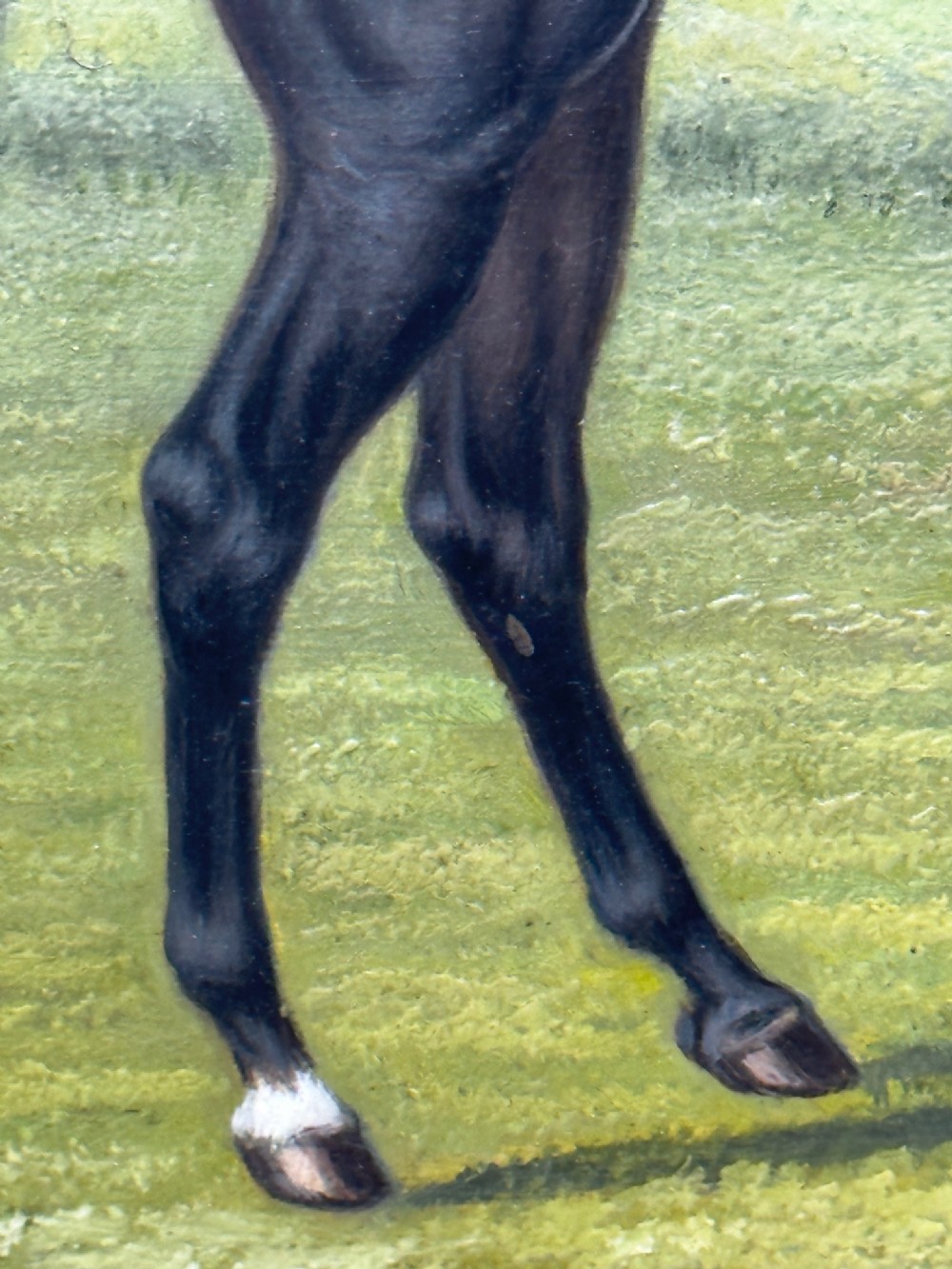
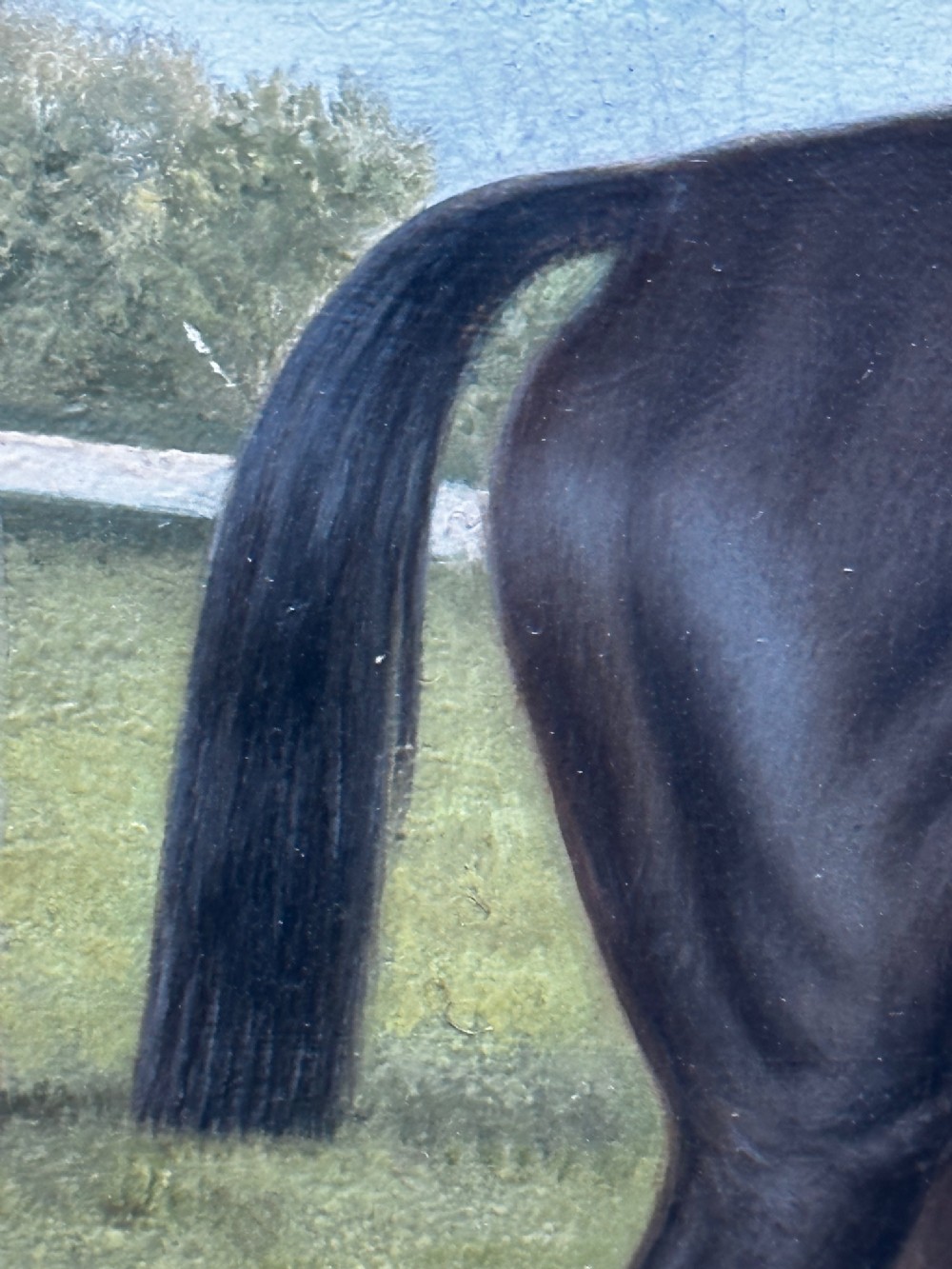
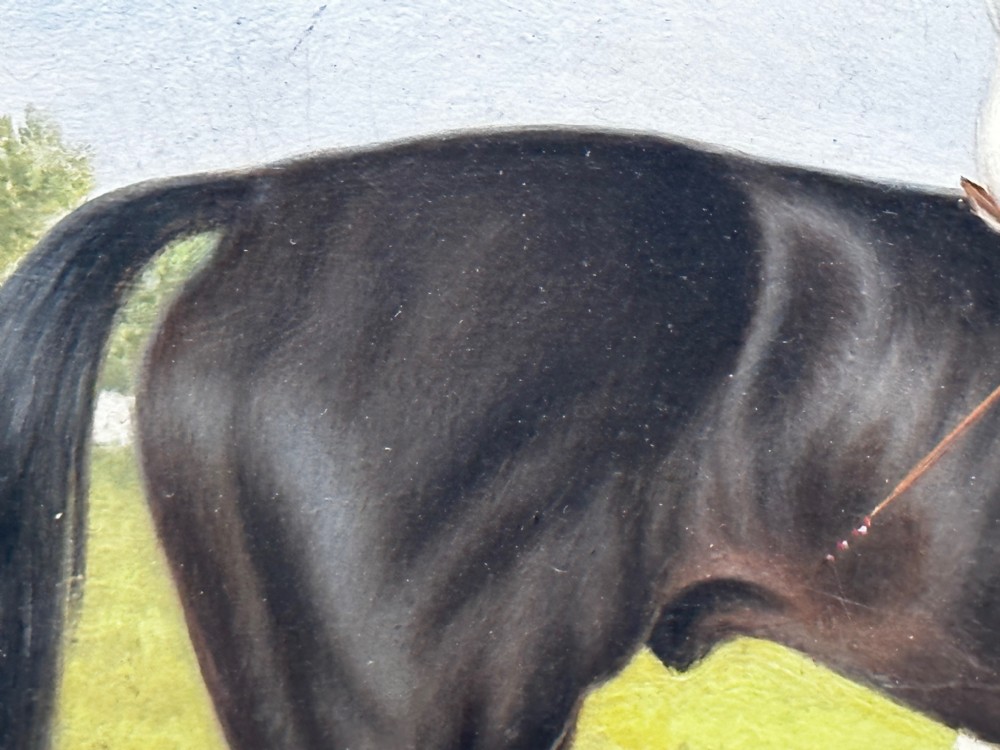
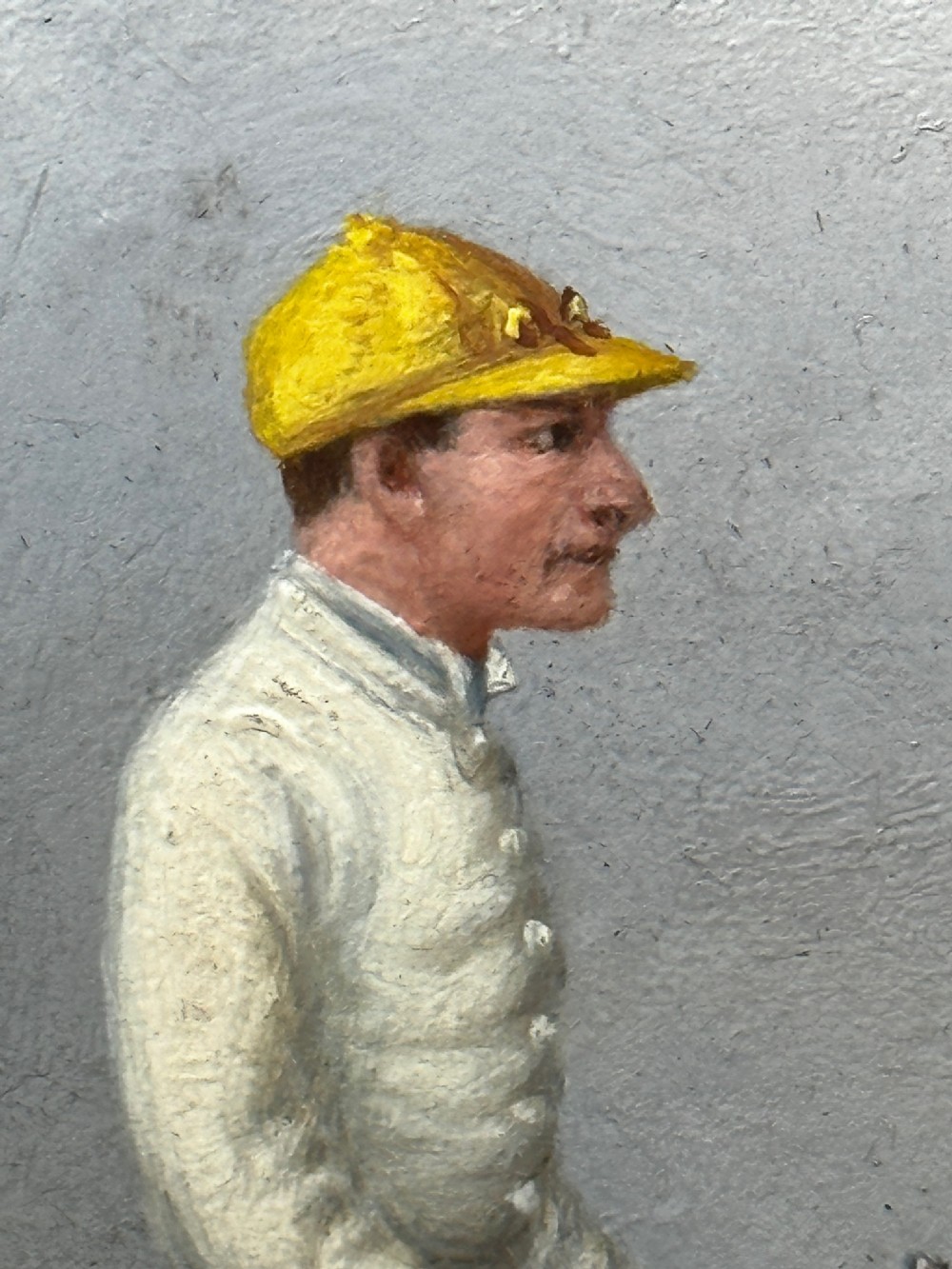
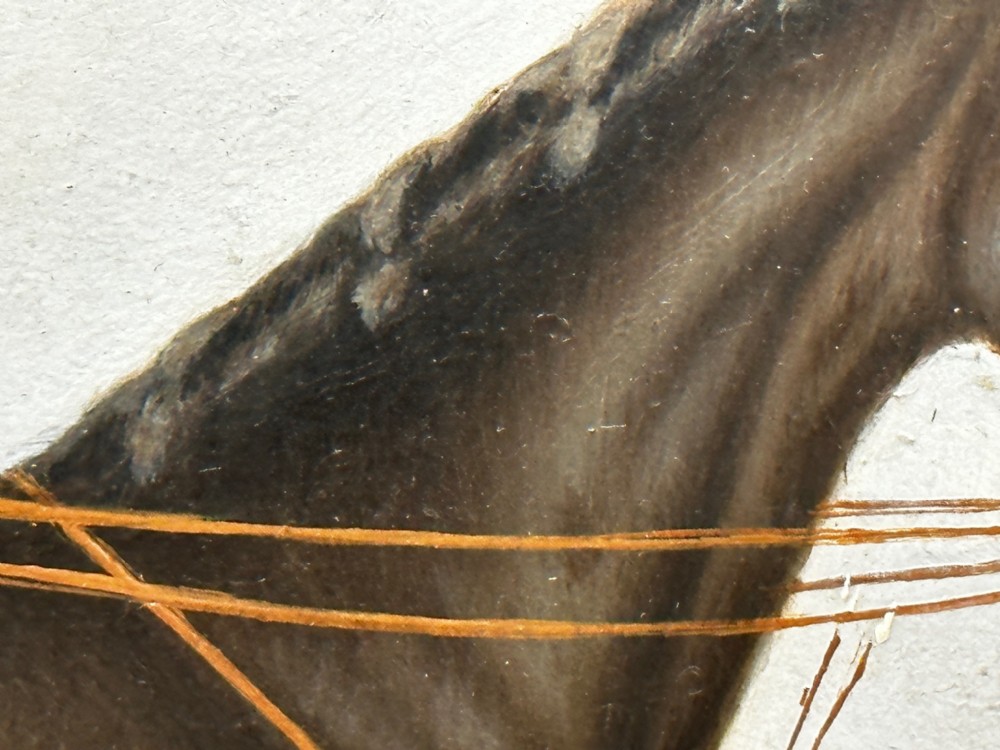
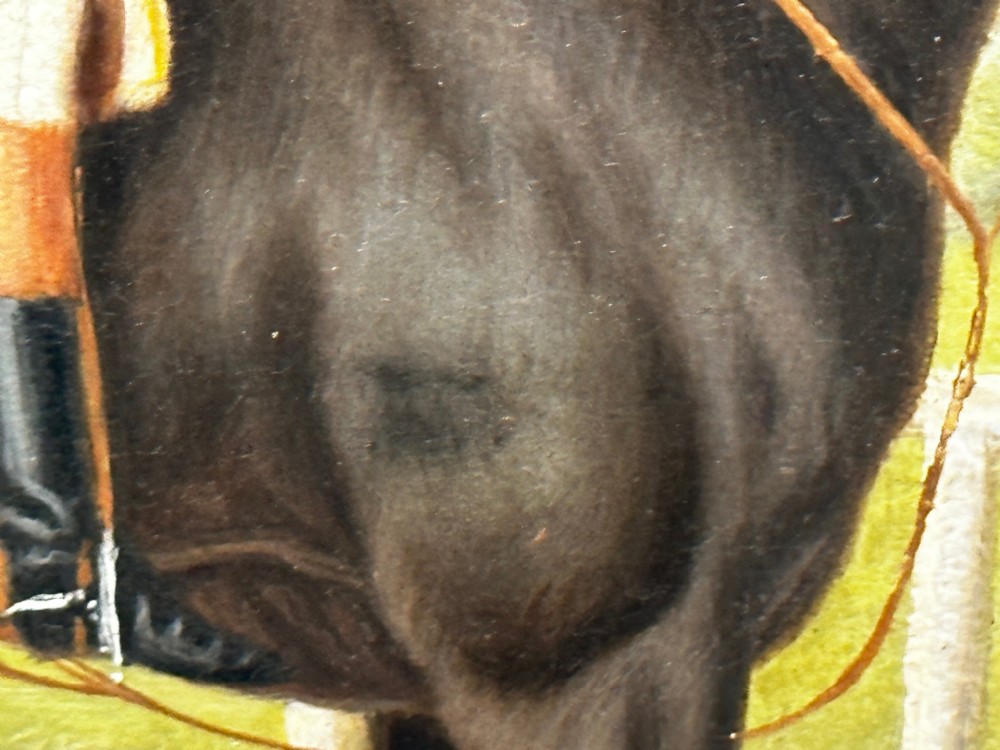
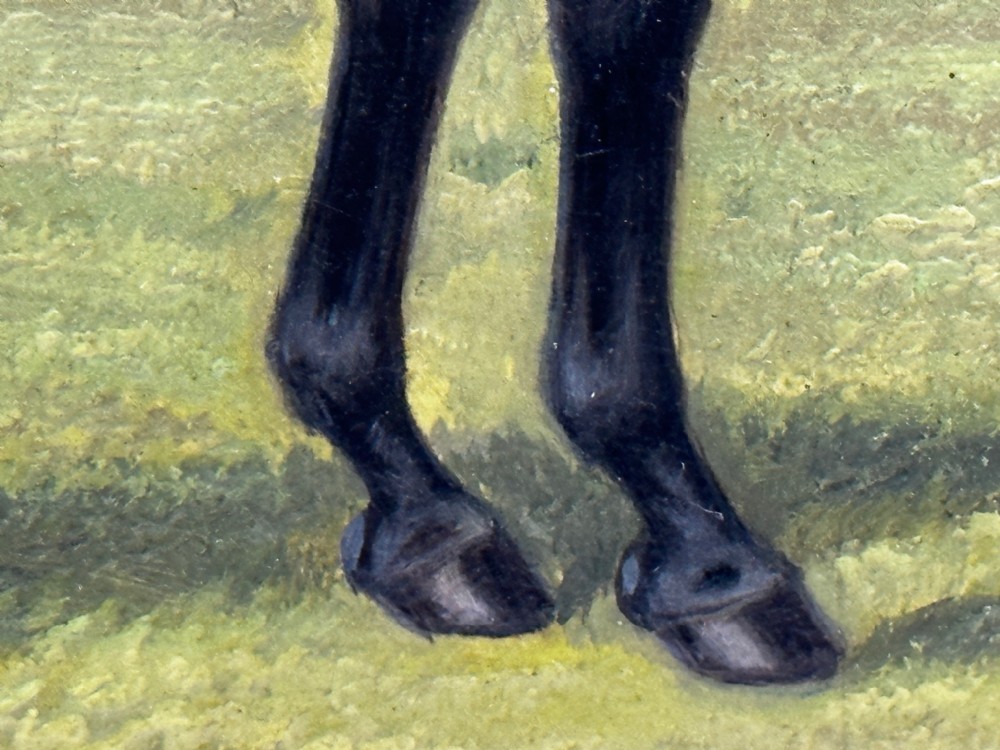
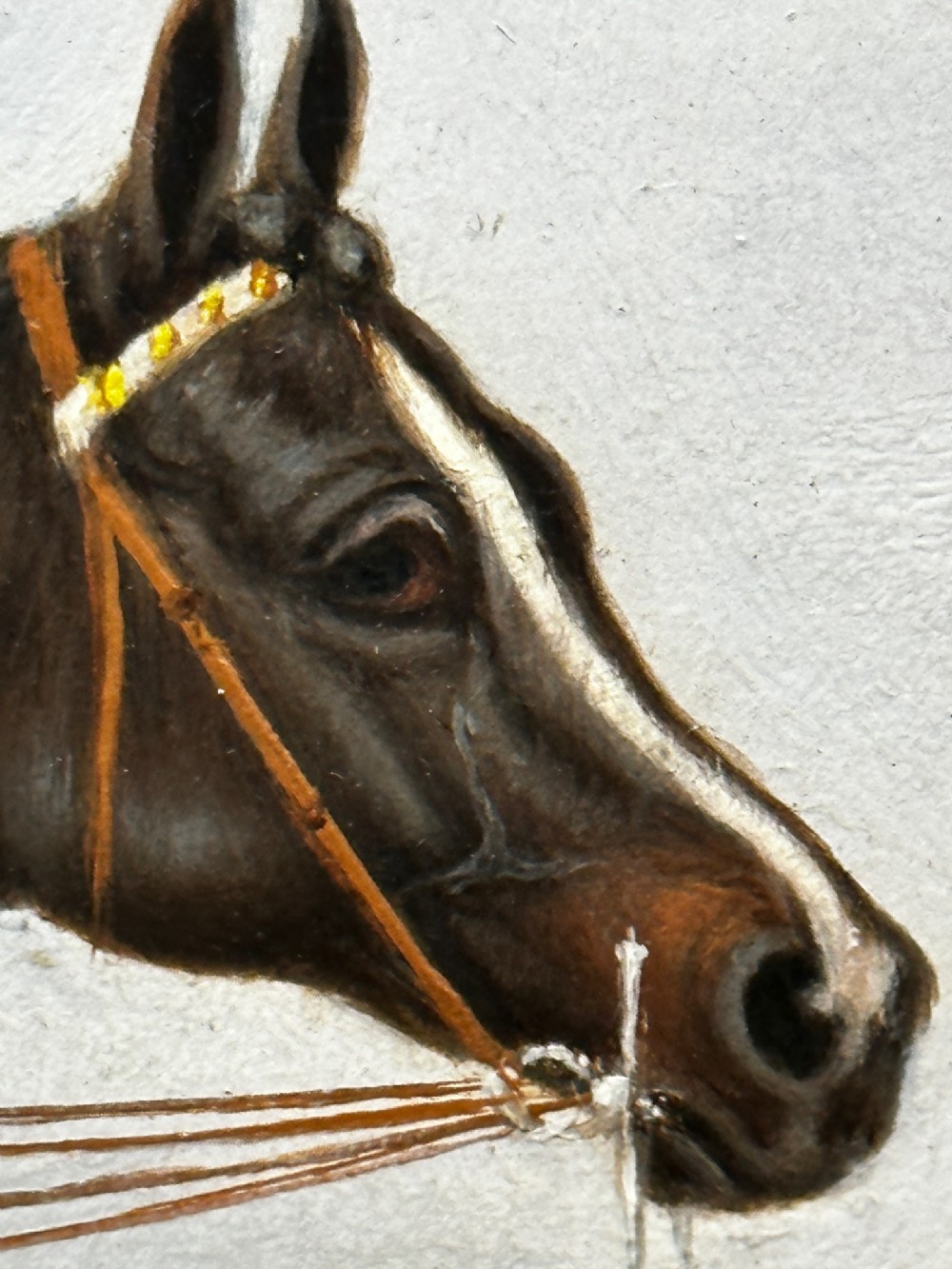
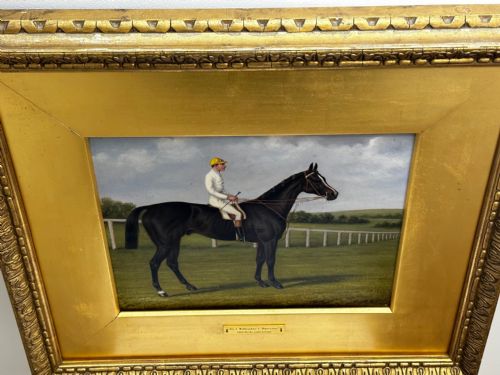
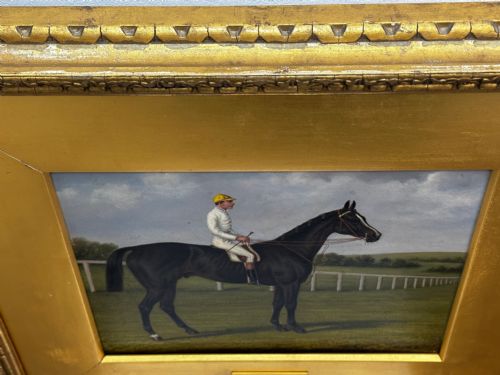
Subject beautiful portrait of a British sporting horse racing scene in side profile of the known 19th century race horse Harvester, shown in side profile facing right with jockey rider who is wearing traditional smart white jockey race uniform with a yellow cap hat and he us holding his whip cane.
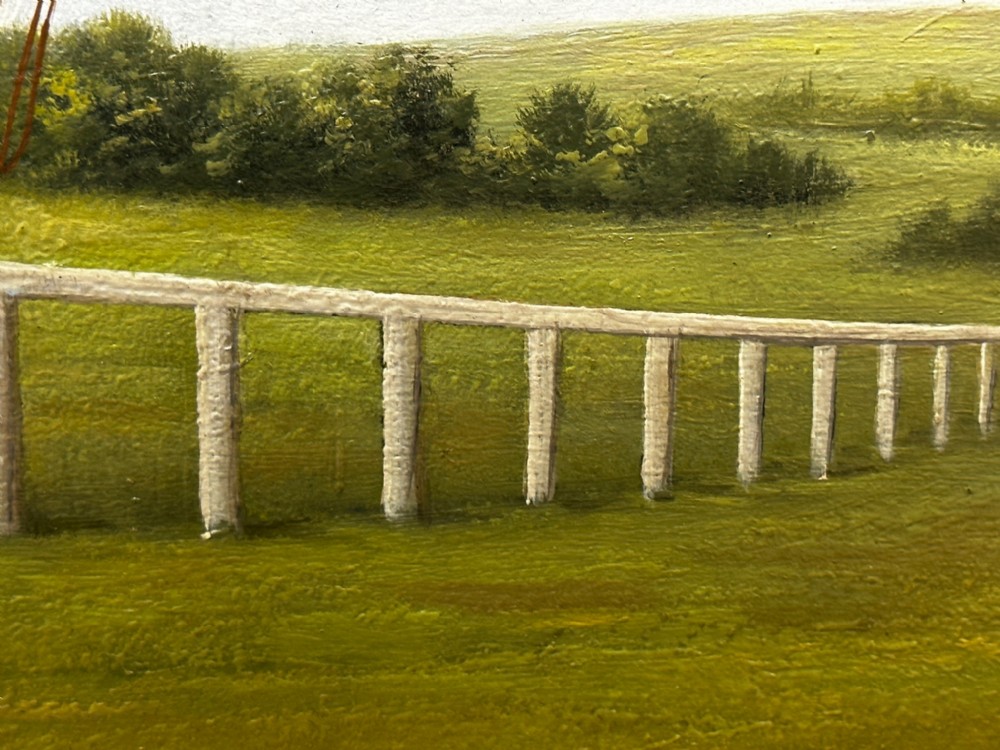
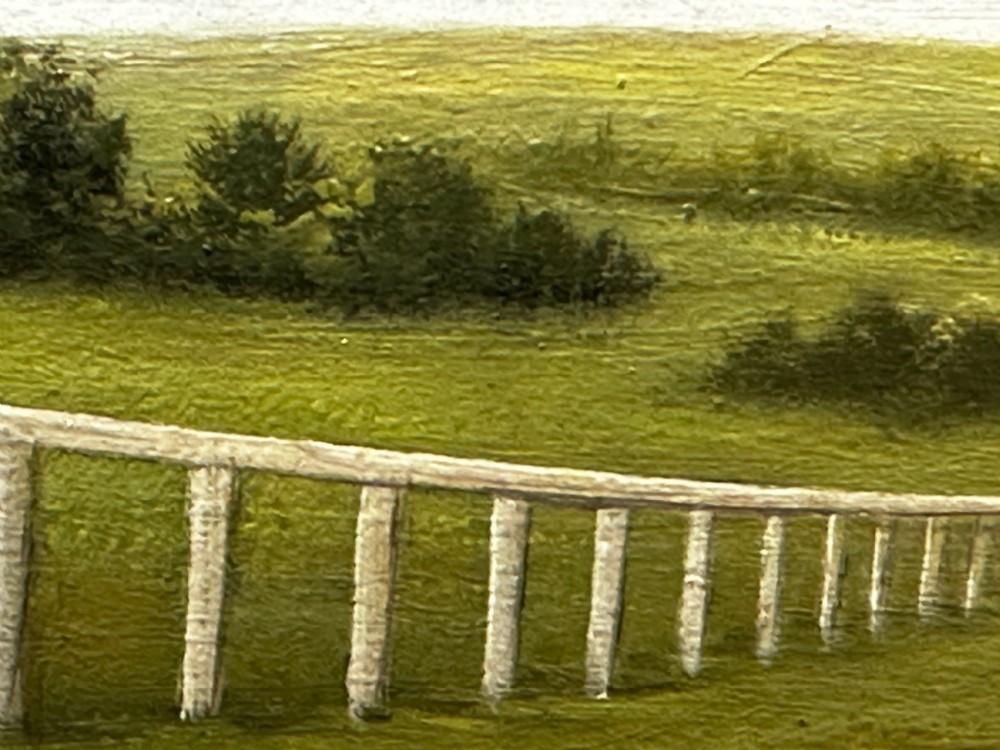
Further back open countryside fields with lines of trees and bushes. Overhead a mainly overcast sky with some spots of blue shining through.Oil on board.
British School artist.
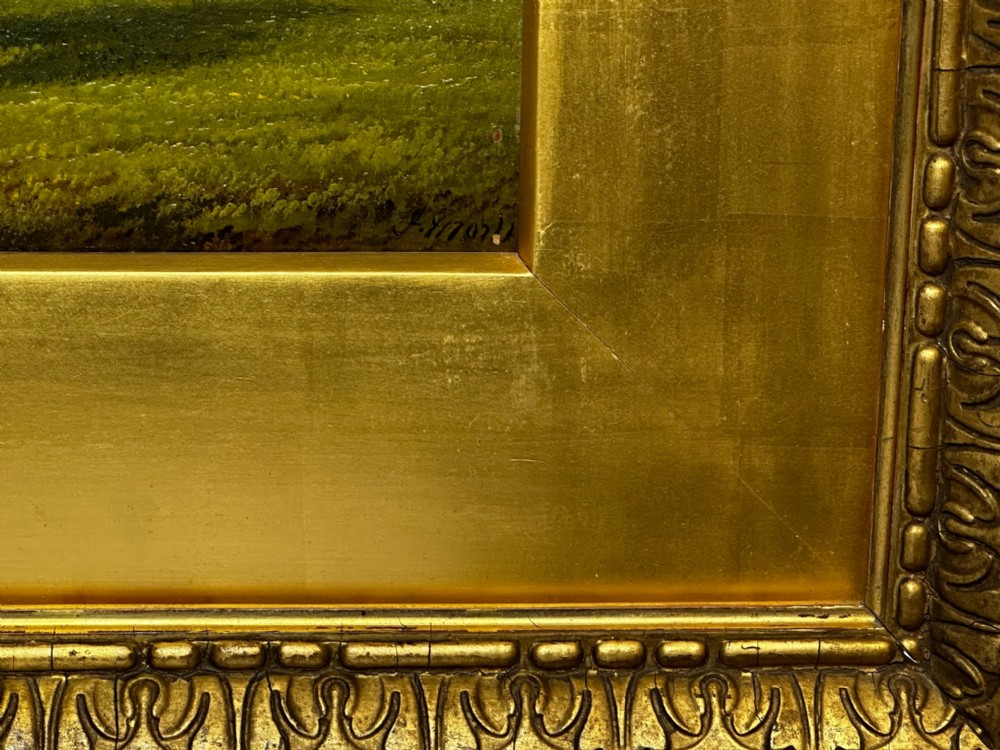
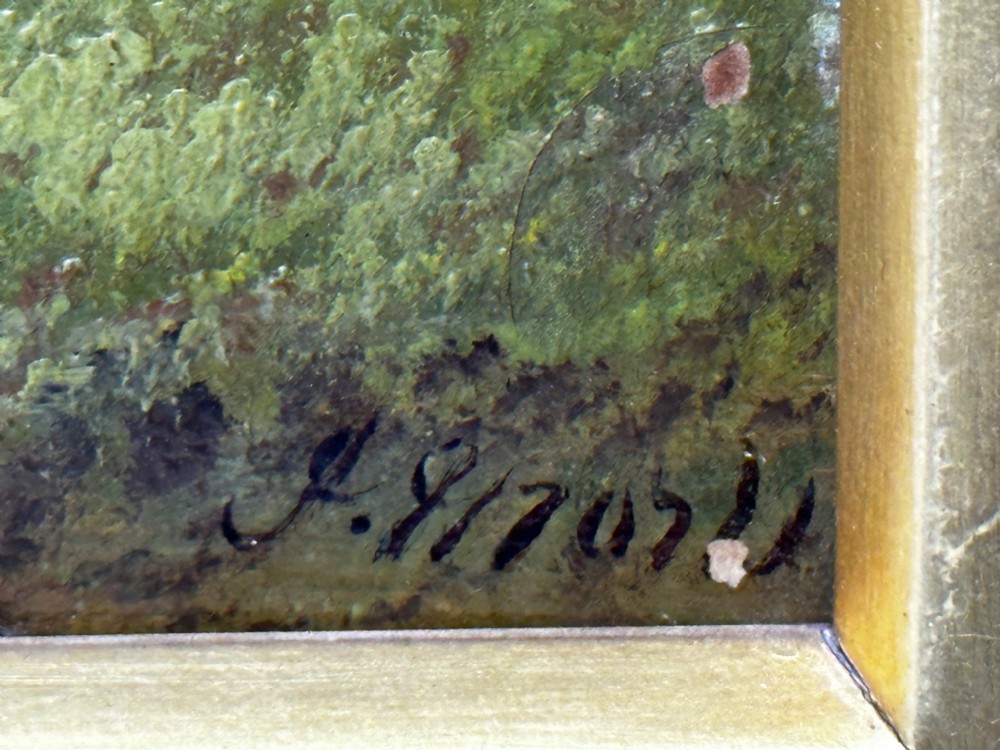
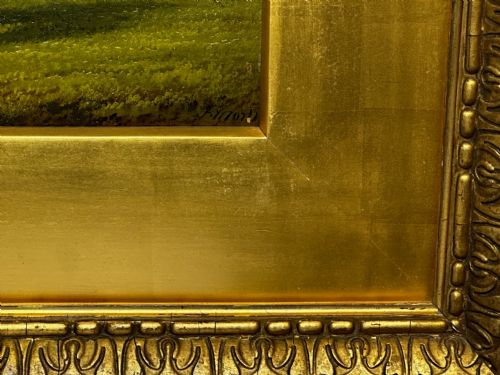
It is signed but we cannot make out the signature bottom right.
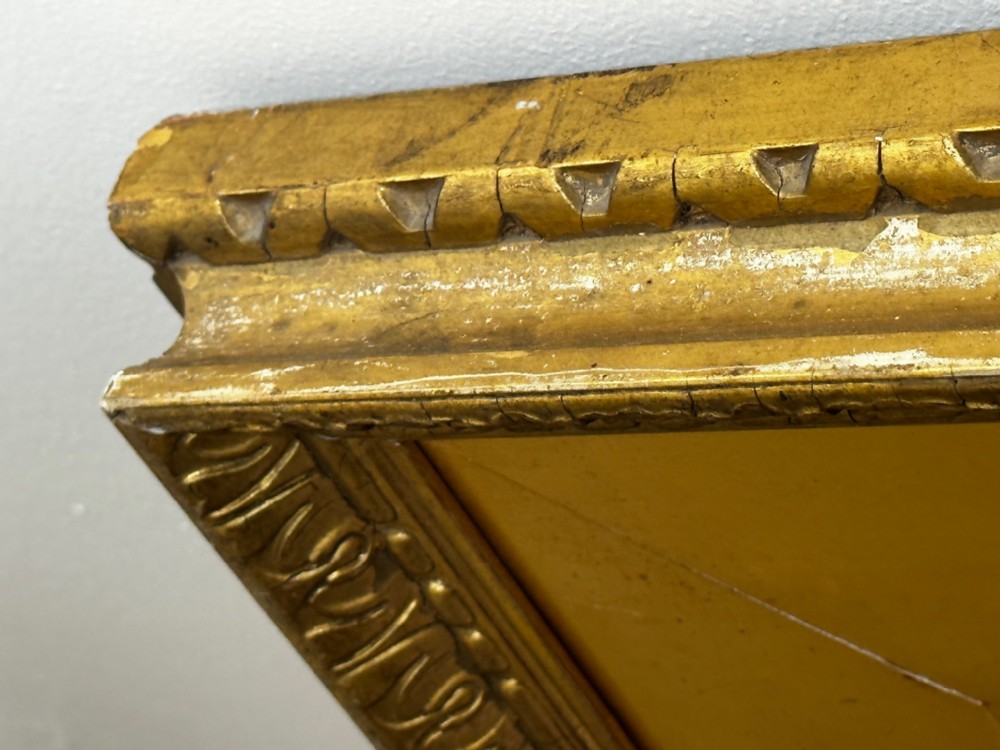
Set in a traditional original stylish gilt frame.
Circa late 19th century Victorian era.
Provenance labels verso Caelt Gallery Westbourne Grove.
A nice size with the frame being 49 cm width and 43 cm high.
Harvester (1881–1906) was a British Thoroughbred racehorse and sire. In a career that lasted from 1883 to 1884 he ran thirteen times and won five races. In 1884 he was involved in the second, and most recent dead heat in the history of The Derby. At the end of his racing career, Harvester was sold and exported to stand as a stallion in Austria. He died in 1906 in Hungary.
Harvester was a brown colt with "dicky-looking forelegs" bred by Evelyn Boscawen, 6th Viscount Falmouth. He raced in Lord Falmouth’s colours as a two-year-old and was then bought by Sir John Willoughby. As a result of his sale, Harvester was moved from the stable of Mathew Dawson to be trained at Bedford Lodge, Newmarket, Suffolk by James Jewitt[2] and managed by Captain James Machell.
Harvester’s sire, Sterling was a successful racehorse who became an excellent sire. Apart from Harvester, he sired the 2000 Guineas winners Enterprise and Enthusiast, and the outstanding stayer Isonomy. Harvester’s dam, Wheat-ear was a top class racemare who won The Oaks in 1870.
Racing careerLord Falmouth, Harvester's breeder and first owner 1883: two-year-old season
As a two-year-old, Harvester ran six times and won twice. He first appeared at Newmarket at the start of July when he started at 8/1 for the Chesterfield Stakes.
1884: three-year-old season Spring By the end of the winter, Harvester, who had made excellent physical progress,was 12/1 second favourite for the Derby behind Queen Adelaide and well-fancied for the 2000 Guineas. Before the season began, Lord Falmouth decided to retire from the turf and sell all of his horses at a public auction. As a leading Derby fancy, Harvester was expected to attract considerable interest, and it was predicted that he would fetch at least £5,000. At Newmarket on 28 April Harvester was sold for 8,600 guineas to Sir John Willoughby, a young Guards officer who had also bought Queen Adelaide
Epsom Derby The finish of the 1884 Derby from the Illustrated London News. Harvester is on the near side
At Epsom on 28 May, on a "cold and cheerless day", Harvester started at odds of 100/7 in a field of fifteen. He was regarded as his trainer’s third string behind Queen Adelaide, who started 5/2 favourite and St Medard (6/1). Harvester was held up in the early stages before moving into contention as Borneo led the field into the straight. St. Gatien took the lead a quarter of a mile from the finish but was soon joined by Harvester and the two colts were "locked together" throughout the final furlong in a "tremendous race". A hundred yards from the post, St Gatien appeared to have the advantage, but Loates rode a vigorous finish and drove Harvester forward in the last strides.
The two leaders crossed the line together, just
Cheshire Antiques Consultant Ltd has dated this piece to the 19th Century.
Source the historic in 17th, 18th, 19th & 20th century fine arts, painting, sculptures & collectibles
You can view the stock and full dealer information on the Cheshire Antiques Consultant Ltd Profile Page
19th Century Oil Painting Race Horse Harvester & Jockey Derby Winner