3,768  PAGES BROWSED TODAY PAGES TODAY 0 ANTIQUES UPLOADED TODAYNEW ARRIVALS
LATEST STOCK
Sort Order
Items Per Page
Browse Categories
Sort order
Items per page
ID #SA62540
SOLD
Email
Save
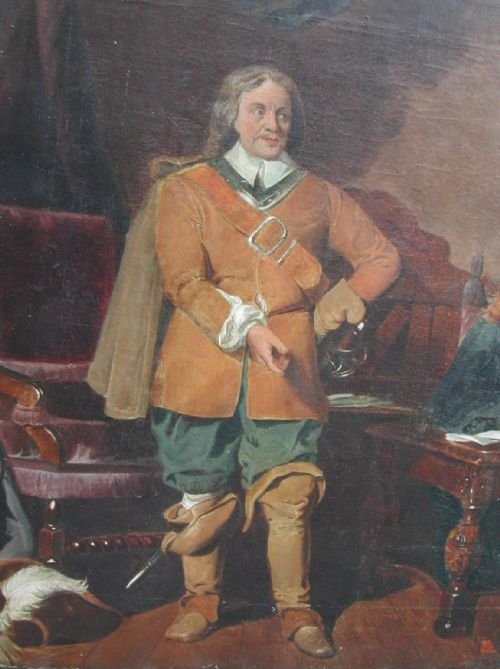
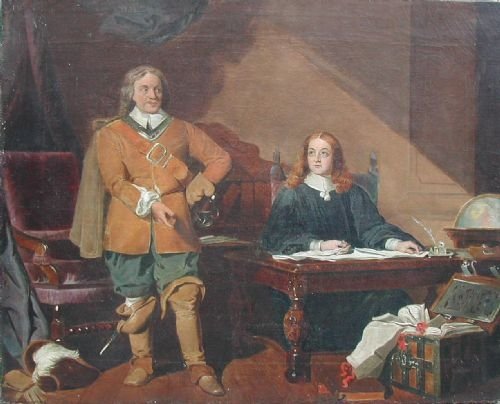
The Protector Dictating the Letter to John Milton, 1a655 by Frederick Newenham (1807–1859)
Artware Fineart
sold SA62540
Sorry, but this item has been sold.

Artware Fineart

Sellingantiques Verified Since Sep 2008
View Dealers Stock Page
Id #SA62540
PDF SHARE
SAVE

The Protector Dictating the Letter to John Milton, 1a655 by Frederick Newenham (1807–1859)

19th century
Description

oil on canvas, sixe: 26.00 x 20.50 ins;

Engraved by John Sartain

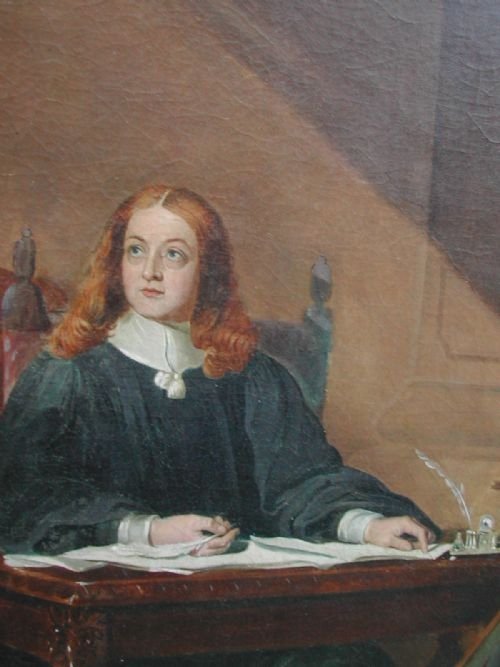
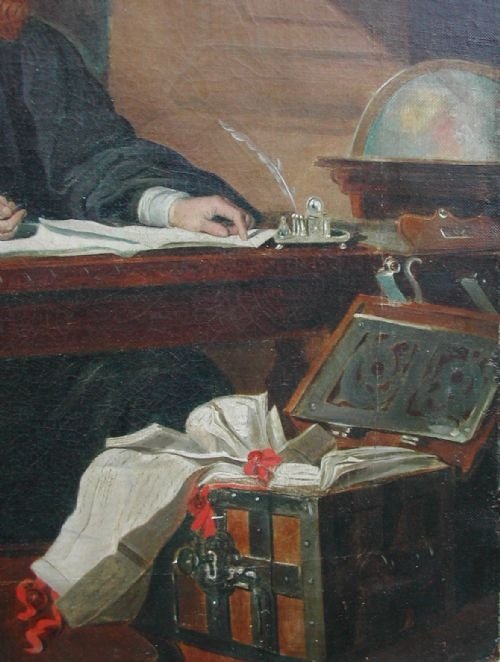
The historical scene portrays the occaission when Cromwell dictated a letter to Milton for the Duke of Savoy to urge him to stop the persecution of the Protestants of Piedmont, 1655.

The chiefs of the new republic saw the importance of securing the services of a distinguished man who had so powerfully spoken out in favour of their tremendous act. In March 1649, accordingly, Milton was offered at the age of 40, and accepted, the secretary ship for foreign tongues to the council of state of the new Commonwealth. The council held its sittings for the first few weeks in Derby House, close to Whitehall, but afterwards regularly in Whitehall itself, he removed at once to temporary lodgings at Charing Cross. In the very first meetings of council which Milton attended he must have made personal acquaintance with President Bradshaw, Fairfax, Cromwell himself, Sir Henry Vane, Whitelocke, Henry Marten, Haselrig, Sir Gilbert Pickering and the other chiefs of the council and the Commonwealth.His special duty was the drafting in Latin of letters sent by the council of state, or sometimes by the Rump Parliament, to foreign states and princes, with the examination and translation of letters in reply. As Latin was the language employed in the written diplomatic documents, his post came to be known as the secretaryship for foreign tongues. In that post, however, his duties at first, were very light in comparison with those of his official colleague, Walter Frost, who had to be present in every meeting of the council, keeping the minutes, and conducting all the general correspondence, Milton's presence was required only when some piece of foreign business turned up. The council looked to him for everything in the nature of literary vigilance and literary help in the interests of the struggling Commonwealth. He was employed in the examination of suspected papers, and in interviews with their authors and printers; and he executed several great literary commissions expressly entrusted to him by the council. The first of these was his pamphlet entitled Observations on the Articles of Peace (between Ormonde and the Irish). It was published in May 1649, and was in defence of the republic against a complication of Royalist intrigues and dangers in Ireland.
Frederick Newenham was an exceptional Cork artist, who has escaped critical attention due to the rarity of his works. Just over two hundred years after his birth it seems appropriate that he finally be given his just deserts as one of the remarkably talented group of artists to emerge from Cork in the nineteenth century. Although he is not mentioned in standard works such as Crookshank and Glin's Ireland's Painters, he is noted in Peter Murray's history of Cork art as one of the immensely talented artistic family whose members also included Robert O'Callaghan Newenham, the landscape painter and William Newenham of Coolmore, County Cork who combined his role as Superintendent General of Barracks with an active career as a topographical artist. According to Strickland, Frederick Newenham was born in Cork in 1807. Like Daniel Maclise and James Barry he made his name in London where `he achieved some success, becoming a fashionable painter of ladies' portraits'. However he also painted history and anecdotal pictures which he exhibited at the Royal Academy from 1838 to 1885. He died on 21 March 1859.

Declaration

Artware Fineart has dated this piece to the 19th Century.

Reference Numbers
Sellingantiques Reference
SA62540
Dealers Internal Reference
3275
Description
Oil on canvas, sixe: 26.00 x 20.50 ins;

Engraved by John Sartain

The historical scene portrays the occaission when Cromwell dictated a letter to Milton for the Duke of Savoy to urge him to stop the persecution of the Protestants of Piedmont, 1655.
Artware Fineart
fig 1. The Protector dictating the letter to John Milton, 1a655 by Frederick Newenham (1807–1859)
fig 1. The Protector Dictating the Letter to John Milton, 1a655 by Frederick Newenham (1807–1859)

The chiefs of the new republic saw the importance of securing the services of a distinguished man who had so powerfully spoken out in favour of their tremendous act. In March 1649, accordingly, Milton was offered at the age of 40, and accepted, the secretary ship for foreign tongues to the council of state of the new Commonwealth. The council held its sittings for the first few weeks in Derby House, close to Whitehall, but afterwards regularly in Whitehall itself, he removed at once to temporary lodgings at Charing Cross. In the very first meetings of council which Milton attended he must have made personal acquaintance with President Bradshaw, Fairfax, Cromwell himself, Sir Henry Vane, Whitelocke, Henry Marten, Haselrig, Sir Gilbert Pickering and the other chiefs of the council and the Commonwealth.His special duty was the drafting in Latin of letters sent by the council of state, or sometimes by the Rump Parliament, to foreign states and princes, with the examination and translation of letters in reply. As Latin was the language employed in the written diplomatic documents, his post came to be known as the secretaryship for foreign tongues. In that post, however, his duties at first, were very light in comparison with those of his official colleague, Walter Frost, who had to be present in every meeting of the council, keeping the minutes, and conducting all the general correspondence, Milton's presence was required only when some piece of foreign business turned up. The council looked to him for everything in the nature of literary vigilance and literary help in the interests of the struggling Commonwealth. He was employed in the examination of suspected papers, and in interviews with their authors and printers; and he executed several great literary commissions expressly entrusted to him by the council. The first of these was his pamphlet entitled Observations on the Articles of Peace (between Ormonde and the Irish). It was published in May 1649, and was in defence of the republic against a complication of Royalist intrigues and dangers in Ireland.

fig 2. The Protector dictating the letter to John Milton, 1a655 by Frederick Newenham (1807–1859)
fig 2. The Protector Dictating the Letter to John Milton, 1a655 by Frederick Newenham (1807–1859)

Frederick Newenham was an exceptional Cork artist, who has escaped critical attention due to the rarity of his works. Just over two hundred years after his birth it seems appropriate that he finally be given his just deserts as one of the remarkably talented group of artists to emerge from Cork in the nineteenth century. Although he is not mentioned in standard works such as Crookshank and Glin's Ireland's Painters, he is noted in Peter Murray's history of Cork art as one of the immensely talented artistic family whose members also included Robert O'Callaghan Newenham, the landscape painter and William Newenham of Coolmore, County Cork who combined his role as Superintendent General of Barracks with an active career as a topographical artist. According to Strickland, Frederick Newenham was born in Cork in 1807. Like Daniel Maclise and James Barry he made his name in London where `he achieved some success, becoming a fashionable painter of ladies' portraits'. However he also painted history and anecdotal pictures which he exhibited at the Royal Academy from 1838 to 1885. He died on 21 March 1859.

Date of Manufacture

Artware Fineart has dated this piece to the 19th Century.

Reference Numbers
Sellingantiques Ref
SA62540
Dealers Internal Ref
3275
Artware Fineart
Sellingantiques verified Since Sep 2008
Dealer Profile

You can view the stock and full dealer information on the Artware Fineart Profile Page
PDF SHARE
SAVE
The Protector dictating the letter to John Milton, 1a655 by Frederick Newenham (1807–1859)
1 / 4
Archive I The Protector dictating the letter to John Milton, 1a655 by Frederick Newenham (1807–1859)

The Protector Dictating the Letter to John Milton, 1a655 by Frederick Newenham (1807–1859)

Archive II The Protector dictating the letter to John Milton, 1a655 by Frederick Newenham (1807–1859)  View II
Archive III The Protector dictating the letter to John Milton, 1a655 by Frederick Newenham (1807–1859)  View III
Archive IV The Protector dictating the letter to John Milton, 1a655 by Frederick Newenham (1807–1859)  View IV
Enlarged Archival View
Telephone 07958 699 645
Location
18 La Gare
51 Surrey Row
London
SE1 0BZ
United Kingdom
Verified Since Sep 2008
Items For Sale 243
Items Sold 223
Artware Fineart
Verified Since Sep 2008
View Dealer Info
Location: 18 La Gare , 51 Surrey Row , London , SE1 0BZ , United Kingdom
Verified
Sep 2008
For Sale
243
Sold
223
The Protector dictating the letter to John Milton, 1a655 by Frederick Newenham (1807–1859)
Ref: SA62540
The Protector dictating the letter to John Milton, 1a655 by Frederick Newenham (1807–1859)
Detail View 1
Detail View 2
Detail View 3
Archival Detail
Every single antique dealer on our platform is individually approved by our internal team. We verify their professional trade history, ethical standards, and photographic quality to ensure a secure, high-standard buying environment. Upon joining, every dealer agrees to a strict 9-point code of conduct. While issues can occasionally arise, our dealers typically resolve them swiftly and directly with the buyer. In fact, since our founding in 2002, Sellingantiques has only had to step in to help resolve an issue on roughly five occasions—a true testament to the quality of our dealers and their dedication to your happiness.
Our dealers are highly experienced in packing and shipping fragile, high-value antiques. Because you are in direct contact with the dealer, you will be able to easily go through all available shipping and insurance options together to ensure your item arrives safely.
Antiques are the ultimate green purchase. By choosing historical pieces over newly manufactured goods, you completely eliminate the carbon footprint of modern mass production while preserving exceptional, timeless craftsmanship.
items
Add keywords to the filter
Price
£100
£250000
Era
Movements
Material
Origin
Stock Location
Freshness
Online Payments
Categories