






Yorkshire River Watercolour Art
Yorkshire river watercolour art captures northern waterways through pigment on paper, offering historic scenes of the Wharfedale and River Esk.
Yorkshire River Watercolour Art
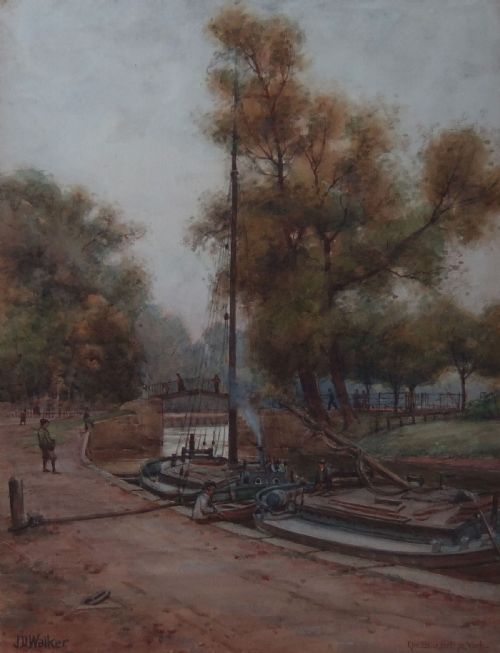
These works present regional waterways, from Whitby Harbour and the River Esk to Wharfedale and Bolton Abbey, captured by artists working across the nineteenth and twentieth centuries.
The selections on this page span the Victorian, Edwardian, and early twentieth-century periods, showing shifts from mid-nineteenth-century topographical precision to looser British Impressionism.
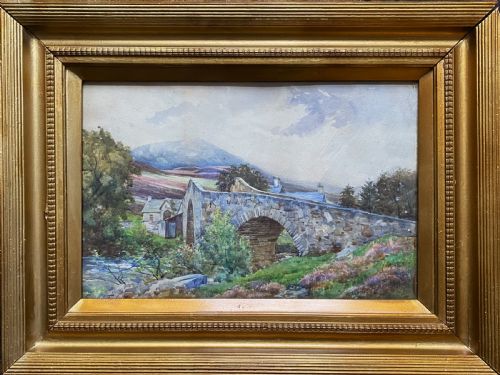
Collectors encounter named views such as the River Hull, Grinton Bridge in Swaledale, and Aysgarth Falls, executed as original watercolour paintings on paper.
Factors of quality
Quality rests upon the handling of light and water by the painter, distinguishing atmospheric works by known artists from simpler topographical records.
Condition of the paper and the preservation of the original pigments determine the visual impact of each landscape.
Listings span the 19th Century, 1800, 1890, 1900, 1910, 1920, 1930, and 1940, employing watercolour, ink, gold leaf, and paper.
Alfred George Morgan·Arthur Reginald Smith·William Joseph Boyes·Henry Barlow Carter·Frederick Williamson·William Bradley·Amos Green·Fred Stead·Fred Lawson·Walter John Bayes·John D Walker·Tom Dudley·Bernard Walter Evans·Joseph Newington Carter
The Yorkshire River Watercolour Art Glossary
- Watercolour
- A paint consisting of a pigment suspended in a water-soluble vehicle, applied to paper to create translucent washes. It forms the primary medium for these regional landscapes.
- British Impressionism
- A painting style focusing on light and everyday subjects, developing in Britain around the turn of the twentieth century. It informs several works from the later period on this page.
- Topographical art
- Artwork depicting specific geographical locations with accuracy and detail. Many nineteenth-century river scenes serve this documentary function.
- Wash
- A thin, transparent layer of diluted watercolour pigment applied across paper. Artists use it to render skies and river surfaces.
Yorkshire River Watercolour Art: Frequently Asked Questions
What periods do these watercolours cover?
The works span from the early nineteenth century through the Georgian and Victorian eras into the Edwardian period and the 1930s and 1940s.
Most pieces date from the nineteenth century up to the early twentieth century, showing changing stylistic approaches to Yorkshire landscapes.
Which Yorkshire locations appear most often?
Subjects include specific northern rivers and towns such as Whitby Harbour, the River Esk, Wharfedale, Bolton Abbey, and the River Wharfe.
Other named views feature Richmond, the River Hull near Beverley, Grinton Bridge in Swaledale, and Aysgarth Falls.
How should I frame and display them?
Because these works are executed in watercolour on paper, they require protection behind glass to prevent atmospheric damage.
Keep them out of direct sunlight to preserve the fugitive pigments standard to nineteenth and early twentieth-century watercolours.
How do I identify a Victorian river watercolour?
Victorian examples often display detailed brushwork and precise topographical recording of Yorkshire scenes before the looser approaches of the twentieth century.
Signatures, framing materials, and paper characteristics help align pieces with periods like the mid-nineteenth century.