





Brown Green Watercolour Landscape
A brown green watercolour landscape captures rural tranquility through muted earth tones, offering buyers a window into historic pastoral scenes.
Brown Green Watercolour Landscape
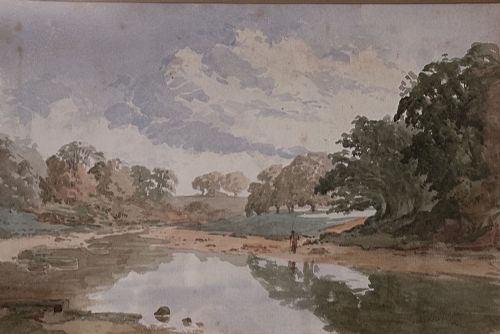
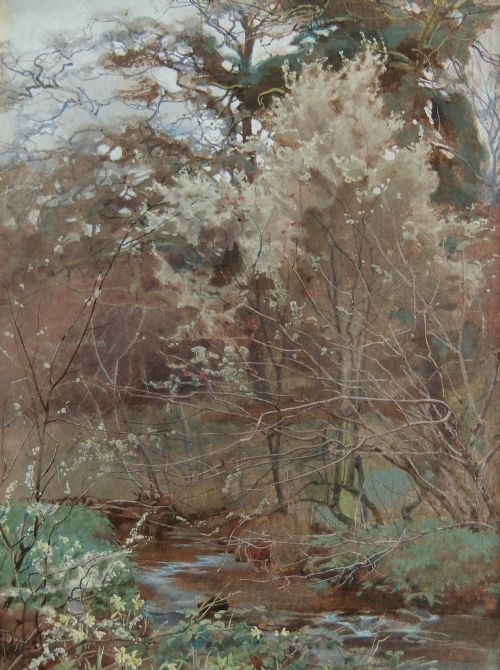
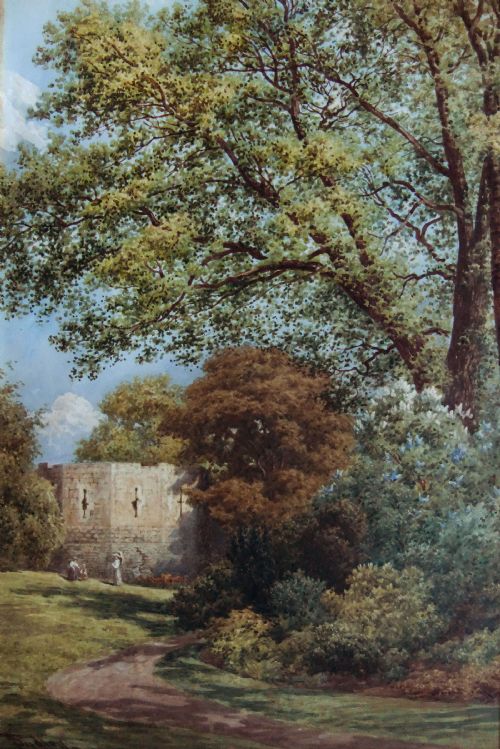
A brown green watercolour landscape portrays open countryside, riverbanks, and rustic cottages through natural earth pigments applied to paper. These works capture pastoral life, rural labour, and scenic topography across Britain and Ireland.
The version most commonly encountered on this page originates from the Victorian period through the early twentieth century. These paintings reflect prevailing interests in regional topography, rural realism, and British Impressionism.
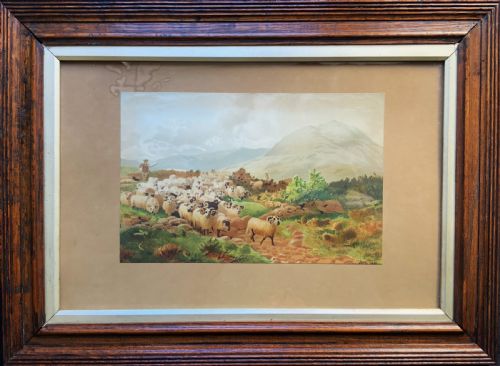
Works typically depict specific named locations, ranging from Yorkshire valleys and Welsh rivers to Sussex cottages and Scottish highlands. Artists recorded these scenes directly on paper, employing restrained palettes dominated by natural greens and browns.
Materials and technique
Artists applied watercolour paint and pigment directly onto paper supports, often framed beneath glass within wooden surrounds. Some compositions incorporate subtle touches of gilt highlights or mixed media such as pastel alongside traditional watercolour.
Makers utilised fluid washes to establish atmospheric skies and distant terrain, building foreground detail through controlled brushwork. The absorbent paper surface allowed pigments to blend naturally, preserving luminosity within the muted brown and green tones.
The selection includes regional views from Yorkshire, Wales, and Sussex executed by established British and Irish painters.
Distinctions in quality
Superior examples demonstrate confident handling of light and atmospheric depth, where fluid pigment application creates convincing distance and movement. Lesser works rely on stiff draughtsmanship and mechanical repetition without engaging the natural qualities of the medium.
The distinction lies in the artist's ability to render organic textures like foliage, water, and earth with economy and precision. Strong compositions balance tonal contrast effectively, ensuring the brown and green hues structure the entire scene.
Alfred Grey RHA·Harold Lawes·William Joseph Boyes·Harry Sylvester Stannard·Henry Charles Fox·Thomas Pyne·Charles Branwhite·Fred Lawson
The Brown Green Watercolour Landscape Glossary
- Watercolour
- A paint consisting of pigment suspended in a water-soluble binder, applied to paper to create translucent colour washes.
- Pastoral
- A genre of art depicting rural life, shepherds, cottages, and agricultural landscapes in an idealized or realistic manner.
- Gilt
- A thin layer of gold applied to wood frames to ornament the presentation of the artwork.
- Impressionism
- An artistic approach focusing on light, atmosphere, and spontaneous brushwork rather than rigid academic detail.
Brown Green Watercolour Landscape: Frequently Asked Questions
What subjects appear in these paintings?
Paintings frequently depict rural cottages, river valleys, livestock farming, and historic town architecture across British and Irish locations.
Artists focused on natural scenery, capturing specific topographical views from Yorkshire, Wales, Devon, and Sussex.
How should these works be framed?
Works on paper require mounting beneath glass to protect the delicate pigment from airborne moisture, dust, and direct sunlight.
Traditional wooden frames, sometimes accented with gilt detailing, complement the historic character of Victorian and Edwardian watercolours.
How do I date a watercolour?
Dating relies on recorded artist biographical dates, stylistic markers associated with Victorian realism, and occasional inscribed signatures or location notes on the paper.
Costume details in figures and architectural elements within the landscape also provide reliable chronological indicators.
Where were these artists active?
Painters worked across various regional British and Irish schools, frequently travelling to rural locales to paint outdoors or record specific country scenes.
Many exhibited through established regional academies and societies during the nineteenth and early twentieth centuries.