
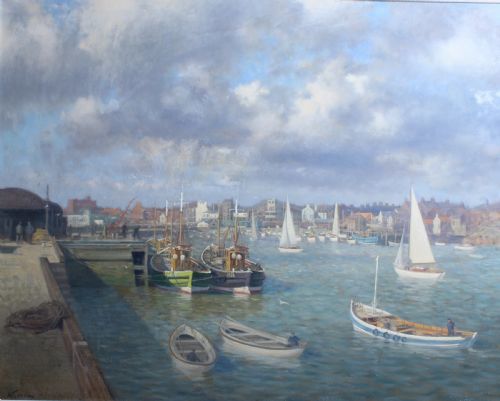


Yorkshire Landscape Oil Artwork
These works capture the changing light and rugged terrain of northern England through paint.
Yorkshire Landscape Oil Artwork
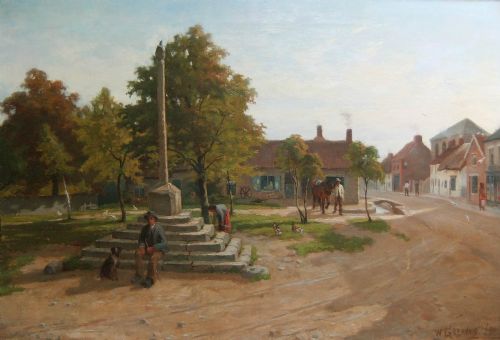
When you examine a yorkshire landscape oil artwork, you are looking at framed representations of northern England executed in pigments bound in drying oils. These pieces span from the late nineteenth century through to the mid twentieth century, recording rural valleys, coastal harbours, and moorland scenes.
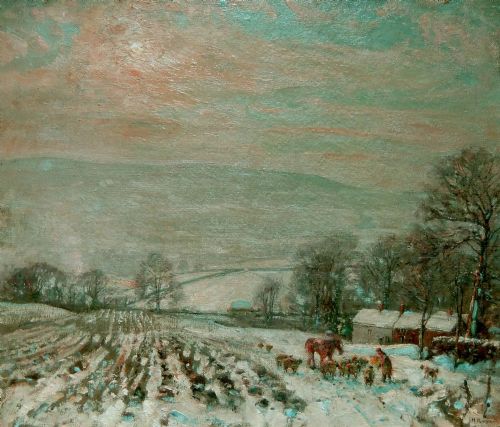
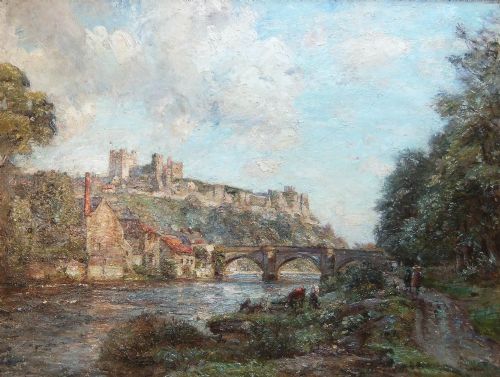
The examples most commonly met on this page range from Victorian realism and naturalism through to British impressionism and mid-century modern interpretations. Painters focused on specific local subjects, such as Wharfedale farmsteads, Staithes cottages, and coastal views towards Ravenscar.
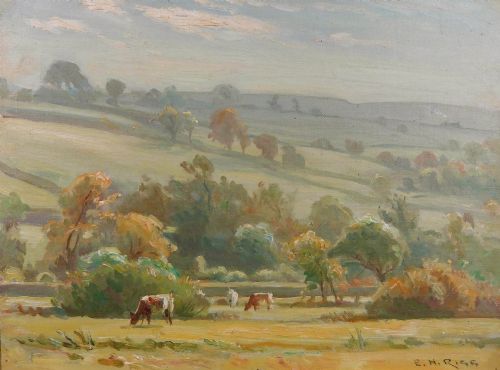
Makers recorded in these works include established regional figures such as Herbert Royle, Owen Bowen, and Ernest Higgins Rigg. Their canvases and boards map the changing seasons, from winter feeding near Nesfield to summer light over Low Row.
Materials and methods
Artists painted primarily with oil paint on stretched canvas or wooden board and panel supports. The application ranges from smooth nineteenth-century realism to the more visible, textured brushwork characteristic of British impressionism.
Substrates were prepared with grounds to receive the oil pigments, which allowed creators to build up rich impasto for water, foliage, and cloud formations. Works on wooden board often reveal the direct, plein-air approach favoured by regional studio artists.
Listings feature works created on canvas, board, and panel supports using oil paint, spanning from the late nineteenth century to the 1960s.
Variations in standard
Quality in these paintings rests upon the artist's handling of atmospheric light, local topography, and tonal balance. Stronger works convey a distinct sense of place and weather, whether depicting winter snow in Wharfedale or bright morning sun on the coast.
Compositional confidence and direct brushwork distinguish superior pieces from more routine topographical records. The best examples balance accurate draughtsmanship with expressive paint application that captures the distinct mood of the Yorkshire landscape.
Herbert Royle·Ernest Higgins Rigg·William Greaves·Walter Goodin·William JB Jenkins·Reginald Grange Brundrit·Owen Bowen·William Mellor·Frederick W Jackson·Florence Hess·Fred Stead·John Frederic Greenwood·Kershaw Schofield·Peter Jackson·William Manners
The Yorkshire Landscape Oil Artwork Glossary
- Oil paint
- A slow-drying medium consisting of pigments suspended in a drying oil, typically linseed. This formulation allows for rich colour blending and textured application.
- Impasto
- Paint applied thickly to a canvas or board, standing visibly above the surface. This technique creates a sense of physical depth and catches actual light in the room.
- Plein air
- Painting executed outdoors directly in front of the subject. This approach encouraged rapid observation of changing weather and natural light conditions.
- British Impressionism
- A painting style that developed in the late nineteenth and early twentieth centuries, focusing on loose brushwork and the play of light. Practitioners sought to capture immediate visual impressions rather than rigid academic detail.
- Board
- A rigid wooden or composition support used as an alternative to stretched canvas. It provides a firm surface favoured for outdoor sketching and smaller studio works.
Yorkshire Landscape Oil Artwork: Frequently Asked Questions
What subjects do these paintings show?
The artworks depict recognizable northern scenes including dales, farmsteads, moorland streams, and coastal fishing villages. Painters focused on local landmarks and rural labour.
Common motifs feature sheep grazing in Wharfedale, boats in harbours like Bridlington, and seasonal views of rivers and mills.
How should I display an oil painting?
Hang paintings away from direct sunlight and steady sources of artificial heat to protect the canvas and pigments. Stable room environments prevent the wood and canvas supports from warping.
Ensure the piece has a secure hanging wire attached to a sturdy frame that supports the weight of the work.
How do I date these artworks?
Dates are often indicated by the painting style, costume of any figures depicted, or signatures and inscriptions left on the reverse of the canvas or board. Victorian works tend toward tighter realism, while later pieces show looser impressionistic brushwork.
Examine the stretcher bars, framing materials, and old labels on the back for clues regarding the period of execution.
What is the difference between canvas and board?
Canvas consists of woven fabric stretched over a wooden frame, offering some flexibility and a traditional textured surface. Board provides a completely rigid flat panel for the paint layers.
Many artists used boards for smaller outdoor studies because they were durable and easy to carry on location.