


Yorkshire Impressionist Artwork
Yorkshire impressionist artwork captures northern landscapes through light and brushwork, bringing rural scenes into domestic spaces.
Yorkshire Impressionist Artwork
When you search for yorkshire impressionist artwork, you encounter regional paintings depicting local geography, rural farmsteads, and coastal villages. These pieces emerge predominantly from the early twentieth century, reflecting the output of regional artists recording northern light and terrain.
The works on this page span oil paintings on canvas and board alongside watercolours on paper. Subjects frequently focus on recognisable locations such as Wharfedale, Wensleydale, and the coastal settlements associated with the Staithes group.
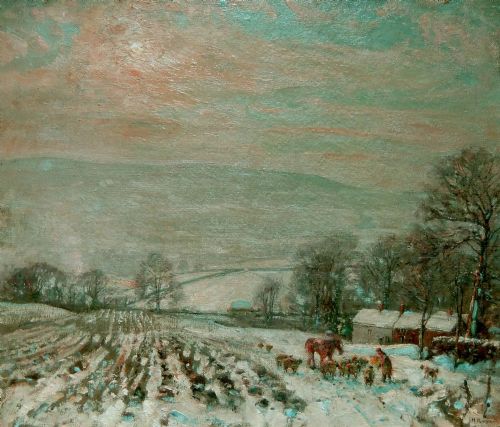
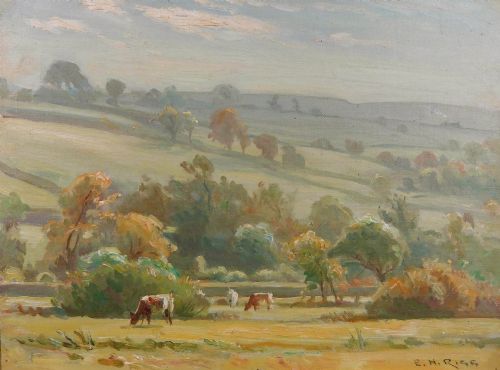
Compositions range from intimate pastoral watercolours to substantial oils depicting winter feeds, haytime, and moorland streams. The material evidence shows production continuing through successive decades into the mid-twentieth century.
Materials and construction
Artists on this page applied oil paint to stretched canvas, wooden board, or prepared panel to achieve rich surface texture. Watercolours on paper provide lighter, fluid representations of regional weather and open skies.
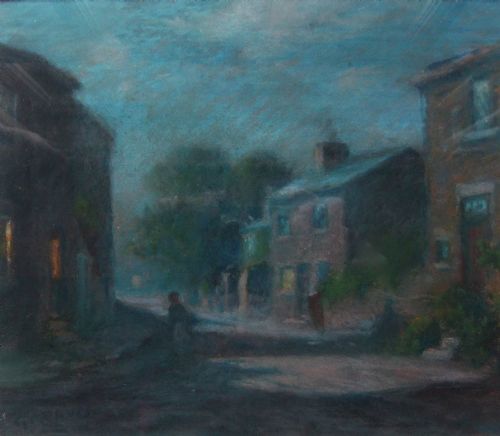
Brushwork remains loose and expressive, capturing transient atmospheric effects across rural landscapes, snow scenes, and coastal views without excessive academic finish.
Several canvases record local sheep quietly grazing through Wharfedale winters while artists braved the northern chill.
Distinctions in quality
Quality rests upon the confidence of brush handling and the artist's ability to render northern light effectively. Stronger examples demonstrate assured composition and atmospheric depth within the chosen medium.
The treatment of specific local topography and seasonal weather conditions distinguishes accomplished pieces from more formulaic topographical records.
Herbert Royle·Ernest Higgins Rigg·William Greaves·Fred Lawson·Arthur Reginald Smith·William J B Jenkins·Reginald Grange Brundrit·Arthur Tucker·Owen Bowen·Florence Hess·James Watson·Frederick W Jackson·Fred Stead·Kershaw Schofield·Rowland Henry Hill·Peter Jackson
The Yorkshire Impressionist Artwork Glossary
- Oil on canvas
- Pigment suspended in drying oil applied to a woven fabric support stretched over a wooden frame. This method permits rich layering and textural manipulation.
- Watercolour
- Paint consisting of colour suspended in a water-soluble binder, traditionally applied to paper. It relies on the white of the paper showing through translucent washes.
- Board
- A rigid wooden or composition substrate used as a firm support for painting instead of flexible canvas. It provides a stable, flat surface for direct application.
- Staithes group
- A loose association of painters working on the Yorkshire coast who adopted impressionist techniques. Their output defined much of the regional coastal subject matter.
Yorkshire Impressionist Artwork: Frequently Asked Questions
What subjects appear in these works?
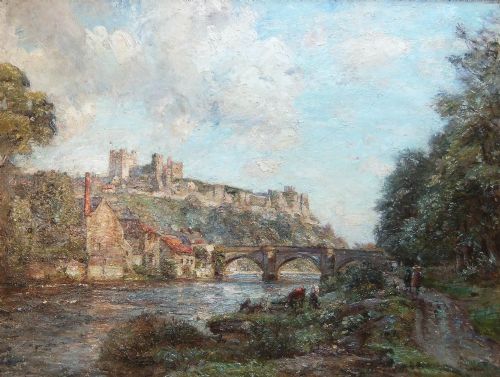
Paintings depict local rivers, snowbound farmsteads, moorland streams, and coastal villages across northern landscapes. Artists concentrated on familiar rural tasks like harvesting and winter feeding.
Views frequently centre on recognisable northern valleys and coastal cliffs under changing seasonal light.
How do oils and watercolours differ?
Oils utilise thick pigment on canvas or board to build heavy textures and rich atmospheric depth. Watercolours apply translucent washes to paper for lighter tonal effects.
Both mediums capture similar regional topography but produce distinct visual finishes.
When were these paintings created?
The available listings date primarily from the early twentieth century, spanning decades from nineteen hundred to the nineteen fifties. Regional painters worked actively across this period.
Victorian watercolours also appear, representing earlier traditions of local landscape recording.
How should I display these paintings?
Works on canvas or board suit traditional frames that complement the heavy pigment and painterly surface. Watercolours require framing behind glass with appropriate mounts to protect the paper.
Placement away from direct sunlight preserves the stability of both paint layers and paper supports.