




Impressionist Plein Air Oil
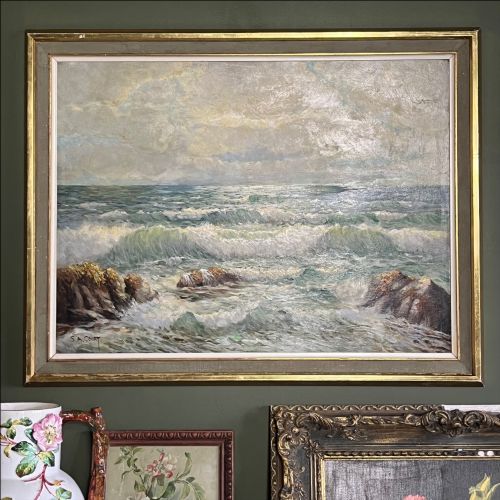
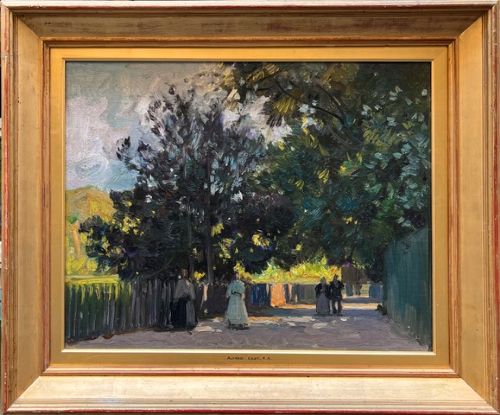
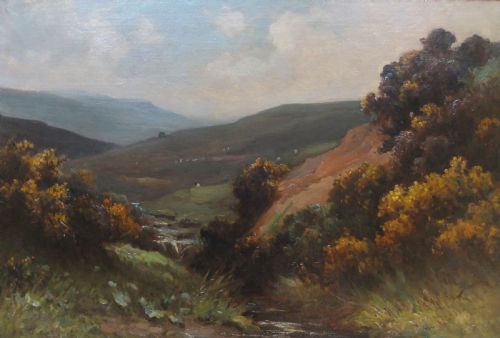
Impressionist plein air oil paintings capture shifting light and atmosphere quickly outdoors, offering buyers a direct connection to the artist's immediate surroundings.
Impressionist Plein Air Oil
An impressionist plein air oil represents landscape, coastal, river, and cityscape subjects painted directly out of doors. These works record natural light, weather, and seasonal changes across British, French, and Californian locations.
The pieces on this page span the Victorian era, the nineteenth century, and the early decades of the twentieth century, including specific dates such as 1870, 1878, 1887, 1890, 1904, 1910, 1920, 1927, 1928, 1930, and 1950.
Buyers will encounter oil paintings on canvas, panel, and board, often housed in gilt wood frames. Formats range from rapid sketches of marine views and country lanes to detailed river scenes and park picnics.
Materials and Technique
Artists painted with oil paint applied to prepared canvas, wooden panels, or boards, utilising quick brushwork to capture transient effects of light. This direct method required rapid application before the paint dried or the weather changed.
Supports frequently sat within gilt wood frames that complemented the luminous palettes of the paintings. The combination of oil on panel or canvas with traditional framing preserved these outdoor studies for collectors.
The selection includes British Impressionism, French Impressionism, Post-Impressionism, and California Impressionism styles.
Assessing Quality
Quality rests in the economy of brushstrokes and the successful capture of atmosphere, light, and movement. Stronger works convey depth and immediacy with minimal pigment.
The handling of natural colour and the composition of light distinguish accomplished plein air studies from rigid academic compositions.
Sidney A. Court·Sir Alfred East·Honore Cavaroc·Ernest Higgins Rigg·Edmond Defonte·Fred Stead·Pierre Peltier·Kershaw Schofield·Kenneth Washburn
The Impressionist Plein Air Oil Glossary
- Plein air
- Painting outdoors in direct natural light to capture immediate atmospheric conditions. This method defined much of late nineteenth and early twentieth century impressionist practice.
- Impressionism
- An art movement focusing on accurate depiction of light in its changing qualities, ordinary subject matter, and visible brushstrokes. Artists prioritized general visual effect over fine detail.
- Post-Impressionism
- A subsequent artistic development that extended impressionism while rejecting its limitations. Painters explored vivid colours and expressive forms.
- Gilt wood frame
- A wooden picture frame coated with gold leaf or metallic paint. These frames enhance the visual warmth of oil paintings.
Impressionist Plein Air Oil: Frequently Asked Questions
What is an impressionist plein air oil?
It is an oil painting executed outdoors to capture natural light and atmosphere directly.
Artists worked rapidly on canvas, panel, or board to record landscapes, rivers, and coastal scenes.
How were these paintings created?
Painters applied oil paint swiftly to canvas, wood, or board while observing their subject in the open air.
This technique preserved spontaneous brushwork and transient effects of weather and sunlight.
How do I care for an oil painting?
Keep the artwork away from direct sunlight, high humidity, and extreme temperature fluctuations.
Dust the surface gently with a soft, dry brush and avoid using water or chemical cleaners.
How do I identify the period of a piece?
Examine the materials of the support, the style of the brushwork, and any framing or signatures.
Victorian and early twentieth century works often use specific types of canvas preparation and gilt wood frames.