




Impressionist Cattle Artwork
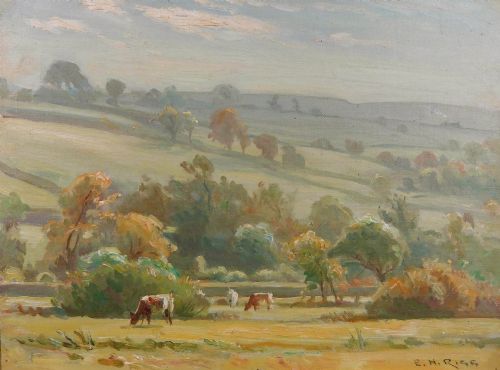
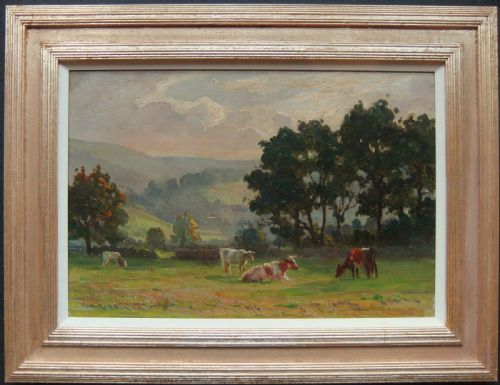
Impressionist cattle artwork brings pastoral quiet and loose brushwork into a room through scenes of cows grazing in Yorkshire, Scotland, and Wales.
Impressionist Cattle Artwork
Impressionist cattle artwork captures rural life through pastoral scenes of cows in pastures, riverbanks, and dales. These paintings focus on natural light and atmospheric weather rather than stiff botanical precision.
The pieces on this page span from the late nineteenth century through to the mid-twentieth century. Works frequently originate from British and Scottish artists working in regional landscapes.
Common formats include oil on canvas and watercolour on paper, often presented in traditional frames. Subjects range from milking time to quiet herds resting by water.
Materials and methods
Artists painted primarily with oil paint on canvas or board, applying pigment with confident brushwork to capture shifting light. Watercolour and pastel appear on paper for works that rely on lighter washes and softer tone.
Pigments were worked directly onto the surface to build texture, particularly in depicting the heavy coat of cattle and the uneven ground of pastures. Canvases are stretched over wooden frames and often housed in gilt or wood mouldings.
Friesian cows appear in Scottish impressionist works, proving that black-and-white hides provide excellent subjects for loose brushwork.
Quality and execution
Superior works demonstrate a confident handling of light and shadow that defines the atmosphere of the pasture. The best pieces integrate the cattle into the landscape naturally rather than placing them as isolated studies.
Surface preservation affects the overall standard, with stable paint layers and minimal retouching marking a better-kept canvas. Stronger compositions use brush direction to lead the eye across the valley and through the herd.
Ernest Higgins Rigg·Ernest Pile Bucknall·Frederick William Jackson·Owen Bowen·William Greaves·Joshua Anderson Hague·George Smith·John J. Hamer·Thomas E. Francis·Angus Rands·James Kay·Henri Joseph Harpignies
The Impressionist Cattle Artwork Glossary
- Oil paint
- A slow-drying medium made by mixing pigments with oils such as linseed. This allowed artists to build rich textures and blend colours directly on the canvas.
- Watercolour
- A paint consisting of water-soluble pigments used on paper. It creates luminous washes that rely on the white of the paper to reflect light through the colour.
- Pastoral
- A genre of art that idealises rural life and agricultural scenes. These works typically feature farm animals, shepherds, and agricultural labourers in quiet countryside settings.
- Canvas
- A heavy woven fabric stretched tightly over a wooden frame to form a rigid support for oil painting. It remains the standard ground for many regional landscape works from this period.
Impressionist Cattle Artwork: Frequently Asked Questions
What is impressionist cattle artwork?
Impressionist cattle artwork comprises paintings and watercolours depicting cows in rural landscapes, executed with loose, expressive brushwork.
These pieces focus on the play of natural light across fields, riverbanks, and valleys rather than strict academic realism.
How do I date these paintings?
Dating relies on stylistic clues, framing, artist signatures, and recorded exhibition histories from the late nineteenth and early twentieth centuries.
Changes in clothing style, brush technique, and stretcher construction also help place a work within a specific decade.
Where were these scenes painted?
Artists painted across various British and European regions, with particular concentrations in Yorkshire dales, Scottish landscapes, and Welsh valleys.
Many titles reference specific locations, allowing buyers to trace the exact terrain that inspired the composition.
How should I care for oil on canvas?
Keep oil paintings away from direct sunlight and dramatic fluctuations in temperature or humidity to prevent cracking in the paint layer.
Dust the surface gently with a soft, dry brush and avoid using water or chemical cleaners on the canvas.