




Yorkshire Dales Art
Yorkshire dales art captures northern landscapes through paintings and drawings, offering buyers a direct connection to historic Dales scenery.
Yorkshire Dales Art
When you search for yorkshire dales art, you encounter regional landscapes depicting specific northern locations such as Wensleydale, Swaledale, and Wharfedale. These works document local rivers, castles, farms, and fells through historical views.
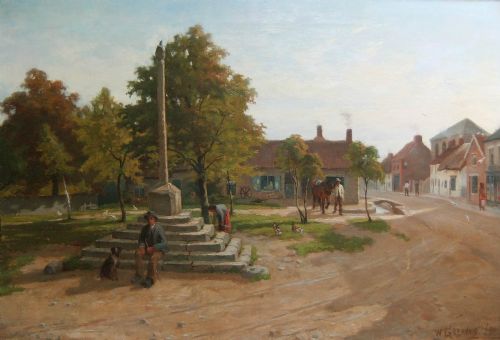
The version you are most likely to meet on this page is a watercolour painting or an oil painting on canvas or board. These pieces typically date from the late nineteenth century through to the mid-twentieth century.
Materials and technique
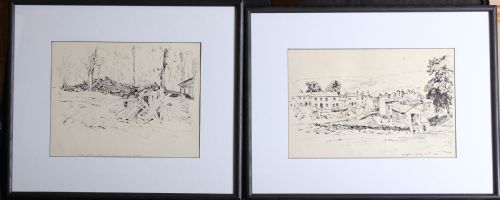
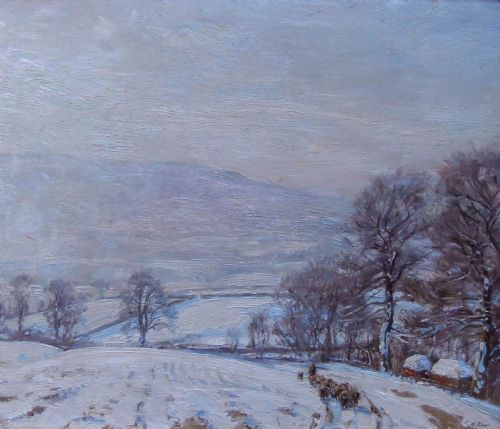
Artists record the northern landscape using traditional mediums such as oil paint on canvas or board, and watercolours combined with ink on paper. These materials determine the texture and visual weight of each piece, whether capturing winter snow or evening light.
Watercolour works rely on fluid washes and precise ink lines to map valley details, while oil paintings utilise heavier pigment application to build up the substance of fields, stone barns, and fells.
Several watercolours document the exact spot where winter weather trapped local travellers near Crackpot Ghyll.
Factors of quality
The distinction between standard works and exceptional pieces rests upon the artist's handling of light, atmosphere, and local topography. Stronger compositions capture the specific meteorological conditions of the Dales, such as winter snow or evening light, rather than relying on generic formulas.
Material preservation also differentiates the range, with well-preserved paper supports, stable canvas grounds, and clear signatures maintaining the integrity of the original creation.
Fred Lawson·William Greaves·Arthur Reginald Smith·Reginald Grange Brundrit·John Frederic Greenwood·Herbert Royle·Fred Stead·Ernest Higgins Rigg·Walter H Allcott·James Lawson Stewart
The Yorkshire Dales Art Glossary
- Watercolour painting
- A work created using water-soluble pigments on paper supports. This technique allows for translucent washes that suit atmospheric landscape views.
- Oil painting
- An artwork produced with pigments bound in a drying oil medium, applied to canvas or board. This method provides rich colour depth and textured surface detail.
- British Impressionism
- An artistic approach focusing on light and everyday subjects through visible brushstrokes. This style appears in landscapes capturing specific times of day.
- Victorian realism
- A nineteenth-century movement depicting subjects with unidealised accuracy. Works in this mode record topography and rural structures with careful observation.
Yorkshire Dales Art: Frequently Asked Questions
What periods do these paintings date from?
The listed works span from the late Victorian era through the Edwardian period and into the mid-twentieth century. This timeline covers decades of regional landscape painting.
Most examples originate in the first half of the twentieth century, reflecting active periods of British regional art production.
Which Dales locations appear in the art?
Common locations include Wensleydale, Swaledale, Wharfedale, and Nidderdale. Specific landmarks such as Bolton Castle, Aysgarth Falls, and various local rivers feature repeatedly.
Artists frequently recorded specific villages, bridges, and farms across the Yorkshire landscape.
How should I hang these watercolours?
Watercolours require placement away from direct sunlight to prevent fading of the pigments on paper supports. UV-protective glass and professional framing help preserve the original condition.
Maintain stable indoor humidity levels to protect both the paper and the surrounding mount board.
How do I identify different art styles?
Styles range from detailed Victorian realism to looser British impressionism and mid-century modernism. Examining brushwork and colour choices reveals the artistic movement.
Earlier works lean towards descriptive realism, while later pieces incorporate broader modernist interpretations of the terrain.