

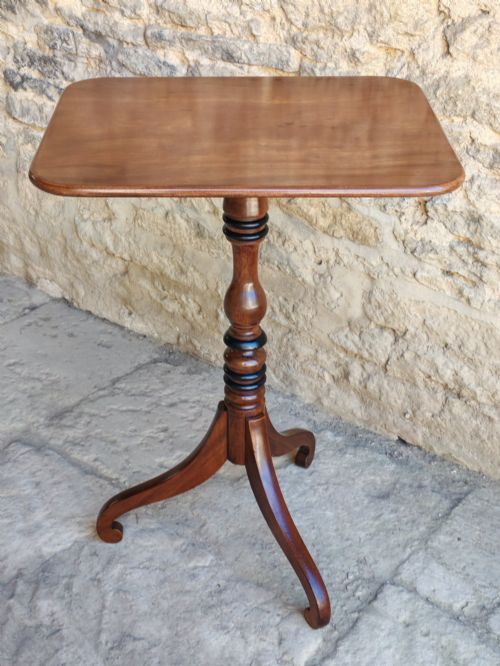


Yew Wood Table Stands
Yew wood table stands bring rich grain and warm tone to a room, offering compact surfaces crafted in Georgian and Regency workshops.
Yew Wood Table Stands
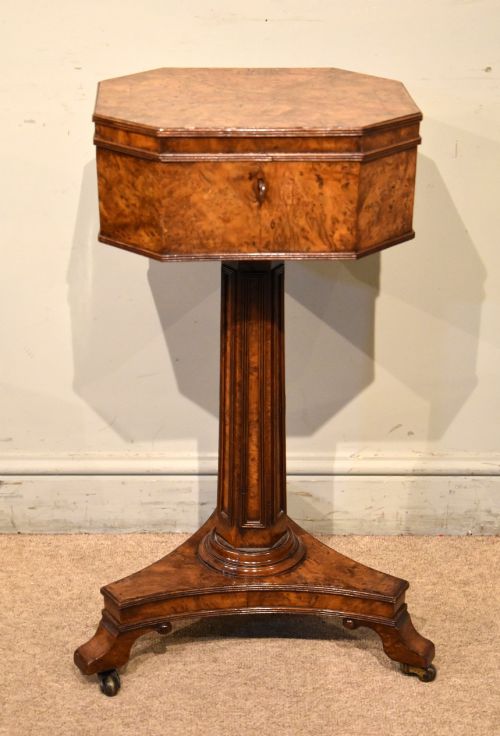
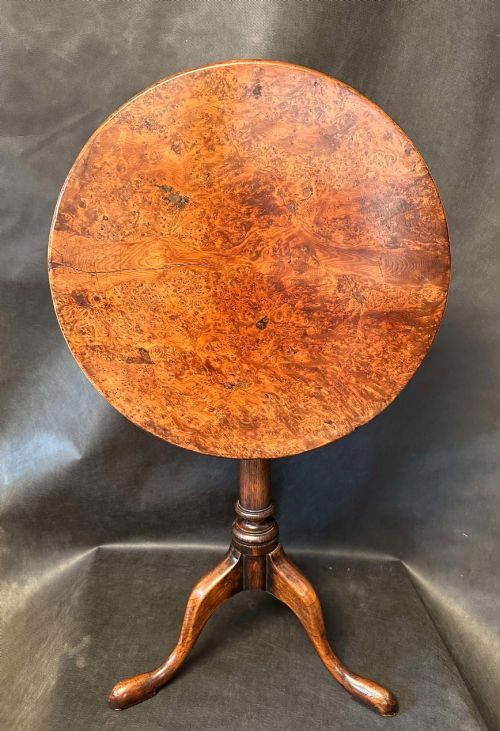
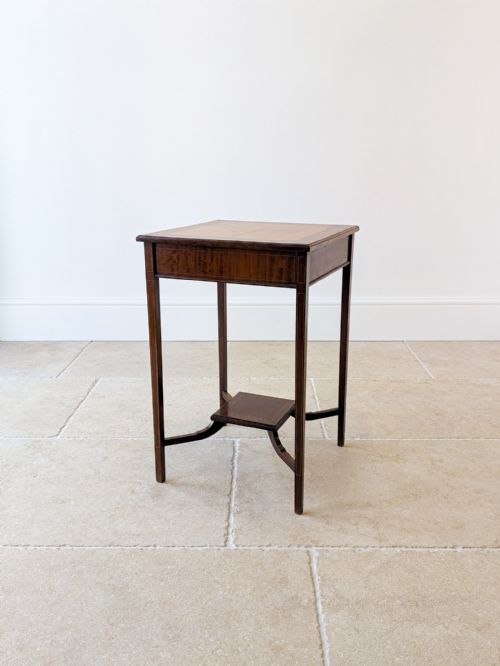
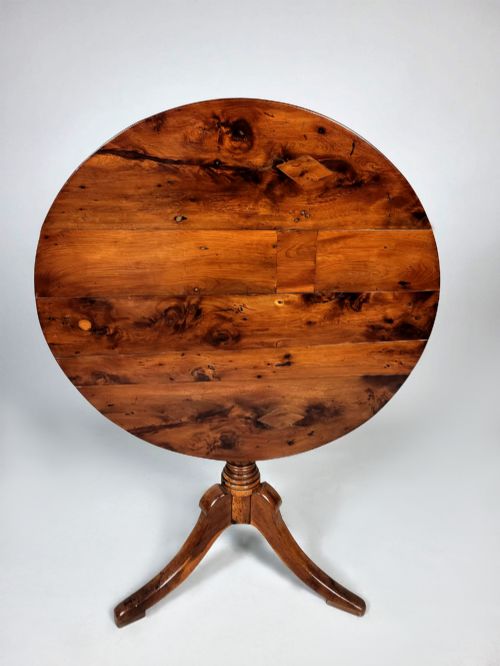
When searching for yew wood table stands, a buyer encounters a focused selection of small furniture built primarily during the Georgian and Regency periods. The most common forms met on this page are occasional tables, wine tables, and tripod stands featuring circular or rectangular tops supported by three legs. These pieces range from simple utilitarian stands to refined items incorporating satinwood, burr oak, and brass details.
Beyond standard occasional tables, the listings include specialised forms such as torchere stands, kettle stands, and teapoys. Originating mostly from the eighteenth and nineteenth centuries, these items demonstrate how timber was utilised for specific domestic tasks. A buyer will also find occasional variations like bureaux on stands and luggage racks, reflecting the adaptability of yew timber in period cabinet making.
How they were made
Cabinet makers constructed these stands using solid yew wood and burr yew veneers, prized for their complex, swirling grain patterns. Workshops often combined yew with contrasting timbers such as oak, satinwood, and ebonised timber to create visual borders and banding. Brass components, including castors or mounts, appear on select Regency examples to add structural refinement.
Construction techniques typically involved traditional joinery, with tripod bases turned on lathes and fixed to central pillars. The timber was selected for its decorative figure rather than uniform appearance, requiring skilled hand shaping to stabilize the dense wood. Surface finishing relied on polishes that deepened the natural reddish-orange tone of the grain.
Yew Wood Table Stands Retail Price Guide 2026
Typical asking prices for yew wood table stands among the pieces listed under this phrase on Sellingantiques today, from the lower quarter to the upper quarter. They describe what is for sale here now, not the wider market.
Listings feature items spanning the Georgian, Regency, and Victorian periods, constructed from yew wood, oak, satinwood, and brass.
What varies in quality
Quality in these stands rests largely on the choice and figure of the timber, particularly the density and movement within the burr yew. Superior pieces display carefully matched veneers and subtle secondary timbers like satinwood or oak, whereas simpler examples use plain yew boards. The proportion between the top and the supporting tripod also dictates the visual balance of the piece.
The finesse of the turning on the central pillar and legs separates workshop standards. Crisp, sharp turnings and well-fitted joints indicate a higher grade of manufacture, while heavier or coarser proportions point to more utilitarian origins. Original surface patination further distinguishes a well-preserved piece from one altered by later restoration.
Gillows
The Yew Wood Table Stands Glossary
- Burr yew
- The knotty growth found on yew trees that produces a highly figured, swirling grain pattern when sliced into veneer.
- Tripod table
- A small freestanding table supported by a central pillar resting on three legs.
- Torchere stand
- A tall, slender freestanding stand originally designed to hold a candle or lamp.
- Teapoy
- A small box on a stand used for storing and serving tea, often featuring interior caddies.
- Treen
- Small handmade wooden domestic objects produced in domestic or workshop settings.
Yew Wood Table Stands: Frequently Asked Questions
What is a yew wood table stand used for?
These compact stands served various domestic functions, from holding wine glasses and lamps to supporting tea caddies or candles in period reception rooms.
Today, buyers use them as occasional side tables or lamp stands in living spaces where floor space is limited.
How do I date a yew wood table?
Dating relies on stylistic clues such as the profile of the tripod legs, the turning of the central column, and the integration of secondary timbers like oak or satinwood.
Georgian examples tend to show simpler, robust lines, while Regency pieces often incorporate finer turned details and contrasting wood inlays.
Where were these stands made?
The pieces originate primarily from British cabinet making traditions, utilising native timbers sourced across English estates and workshops.
Regional vernacular makers and prominent cabinet makers alike produced these stands for domestic use throughout the eighteenth and nineteenth centuries.
How do I care for yew wood furniture?
Maintaining yew wood involves keeping the surface away from direct heat sources and strong sunlight to prevent the timber and polish from drying out.
Routine dusting with a dry cloth and occasional application of traditional wax helps preserve the natural sheen of the grain.