


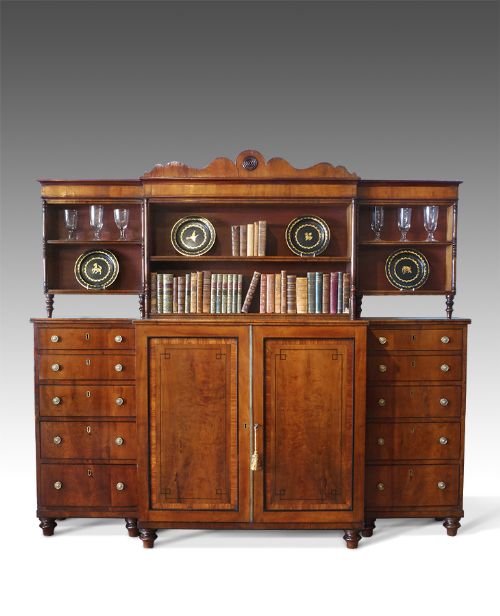

Yew Wood Storage Chest
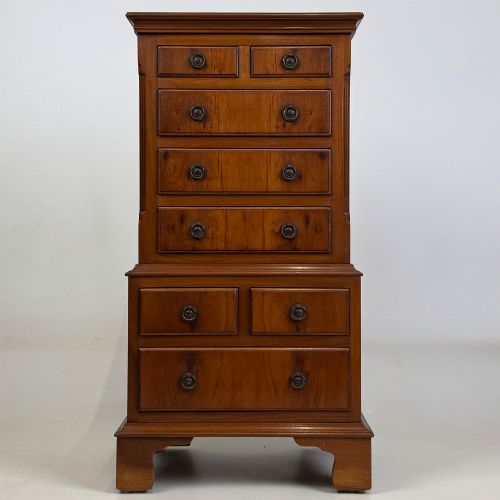
These yew wood storage chest examples combine rich timber figure with practical utility, offering collectors enduring forms from the eighteenth century onwards.
Yew Wood Storage Chest
The selection reflects both formal household storage and smaller container vessels designed for precious commodities like tea. Pieces span multiple periods including Georgian, Regency, Victorian, and Arts and Crafts, demonstrating how makers adapted the timber to different scales and domestic uses over centuries.
Materials and construction
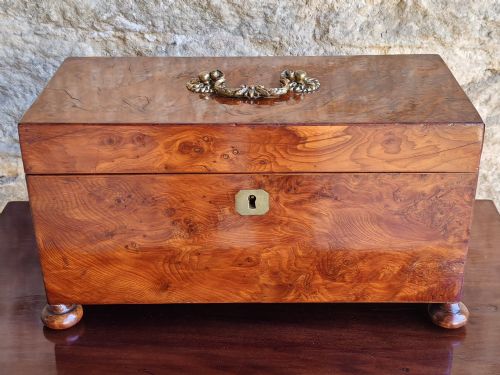
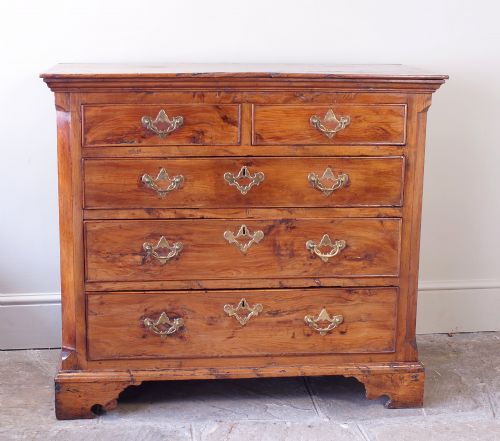
Maker construction relies heavily on yew wood and burr yew, often selected for dramatic grain patterns and warm tones. Artisans occasionally incorporated wood inlay, bone elements, and brass mounts, such as brass binding on serving cabinets or carrying handles on tea caddies.
Cabinet makers utilised solid yew wood as well as veneers, fashioning compact drawer structures, hinged tea chests, and breakfront cabinetry. The integration of contrasting timbers like walnut appears in Victorian music cabinets, pairing structural stability with decorative surface patterning.
Tea was once so valuable that early caddies required tiny working locks to keep household servants from sampling the leaves.
Assessing quality and character
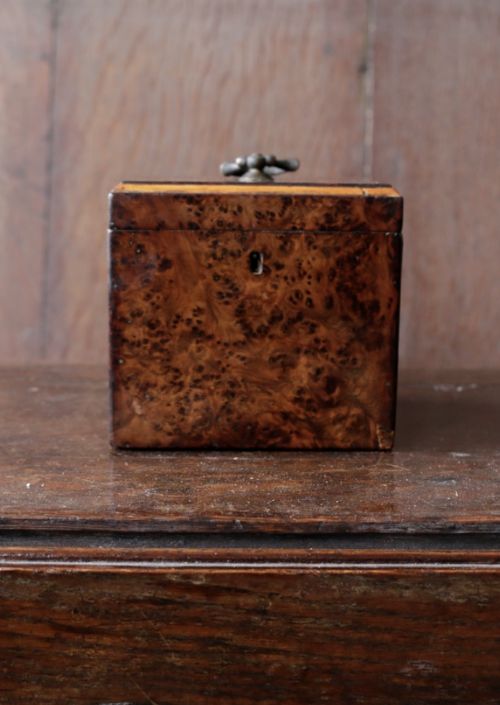
Quality in these pieces rests primarily on the selection of the timber, particularly the choice of burr yew figure, which displays dense swirling patterns across the surface. Finer examples exhibit precise joinery, well-executed wood inlay, and the retention of original brass hardware or fitted interior compartments.
Proportion and scale also dictate distinction, seen clearly in miniature chests of drawers and cube tea caddies where precise miniature scaling requires high technical proficiency. The integrity of the original surfaces and the subtlety of period styling further distinguish standard utility items from masterwork pieces.
The Yew Wood Storage Chest Glossary
- Burr yew
- A growth on a yew tree that produces intricate, highly figured wood grain. Cabinet makers prized this material for decorative veneers on tea caddies and fine cabinets.
- Teapoy
- A small stand or table featuring a top container designed for storing tea. These pieces often sat in drawing rooms during the Georgian and Victorian eras.
- Tea caddy
- A small box or chest intended for the secure storage of loose tea leaves. They frequently include internal compartments and locking lids.
- Breakfront
- A cabinet design where the central section projects forward from the flanking sections. This architectural form adds depth and visual interest to larger storage furniture.
Yew Wood Storage Chest: Frequently Asked Questions
What is a yew wood storage chest?
A yew wood storage chest is a piece of furniture or lidded container fashioned from yew timber for domestic storage.
Items range from small tea caddies and miniature chests to full-sized drawers and cabinets.
How were tea caddies used?
Tea caddies served to store expensive tea leaves securely under lock and key in the home.
Inside compartments separated different tea varieties before blending.
How do I identify George III pieces?
George III items typically date from the late eighteenth century and display classical proportions.
Markers include cube forms in burr yew and precise wood inlay.
Where does burr yew come from?
Burr yew comes from wart-like growths on yew trees that create dense swirling patterns.
Woodworkers sliced these growths into veneers for decorative surfaces.