
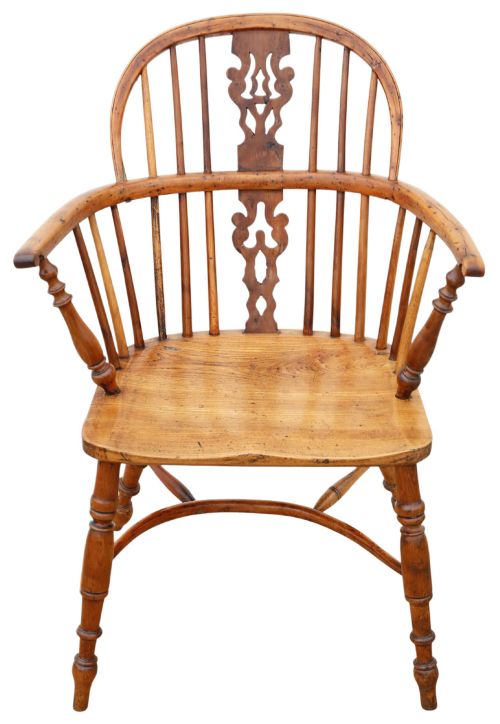
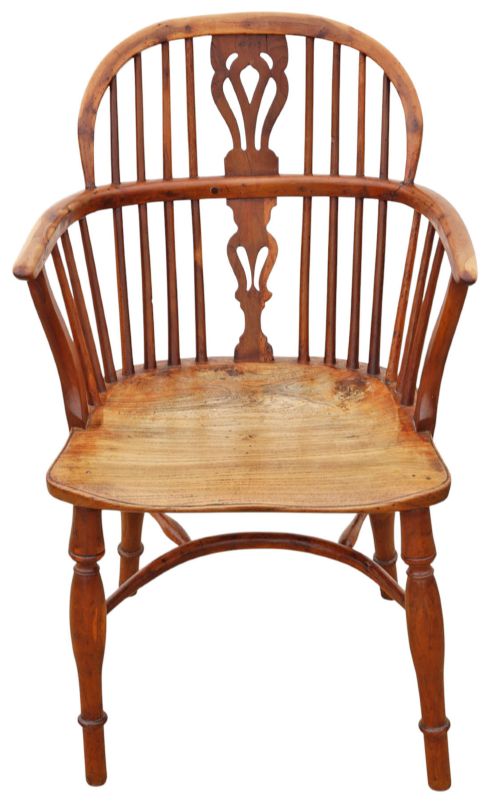
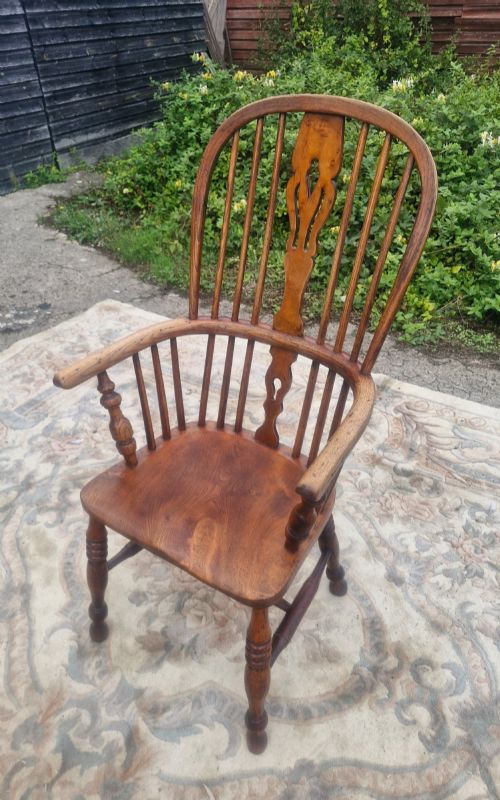


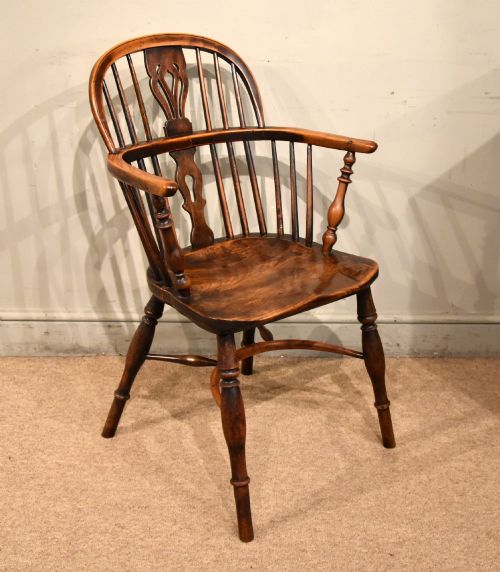
Yew Country Chair
A yew country chair brings the rich grain and sturdy comfort of English vernacular seating straight into a modern interior.
Yew Country Chair
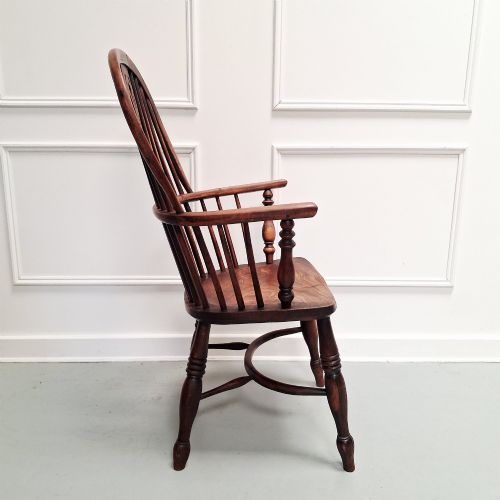
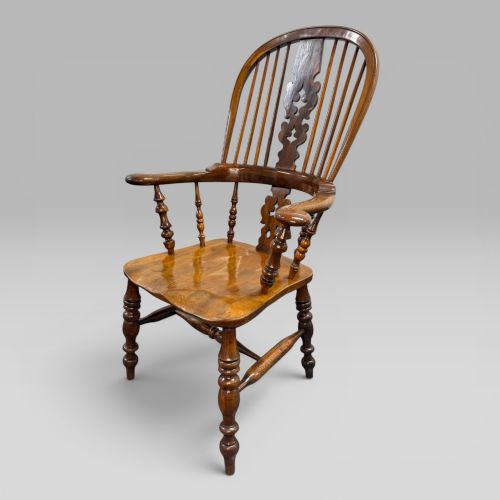
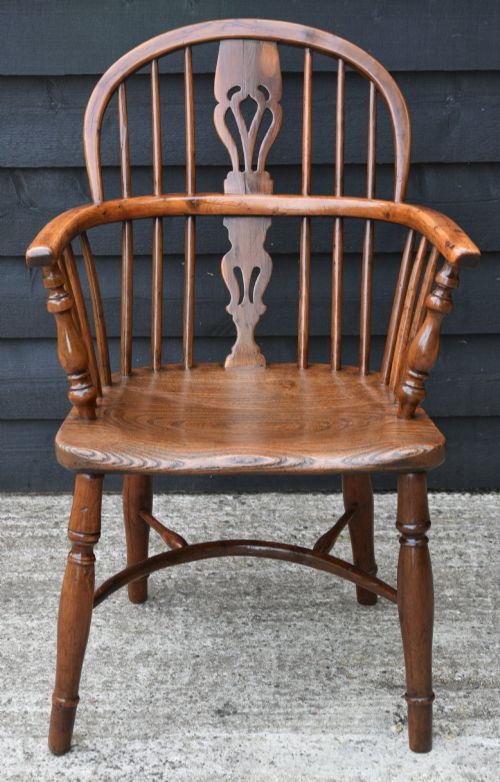
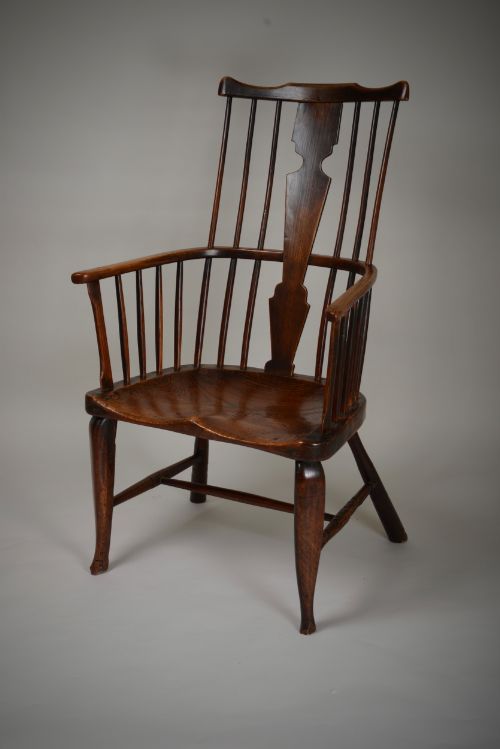
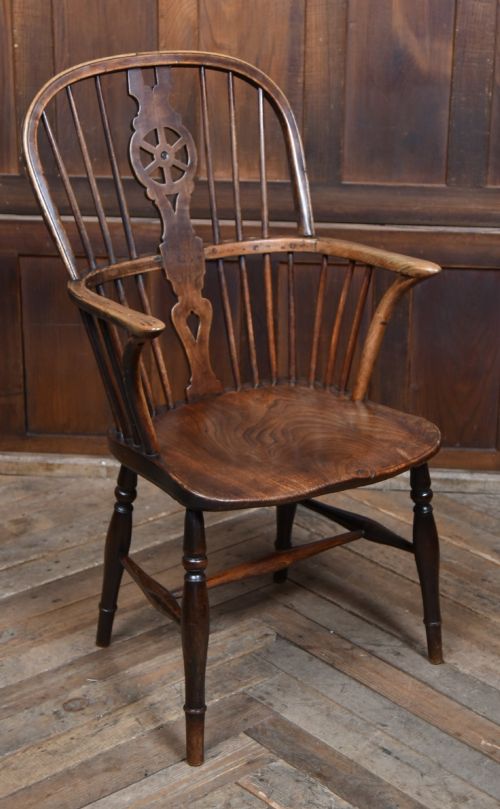
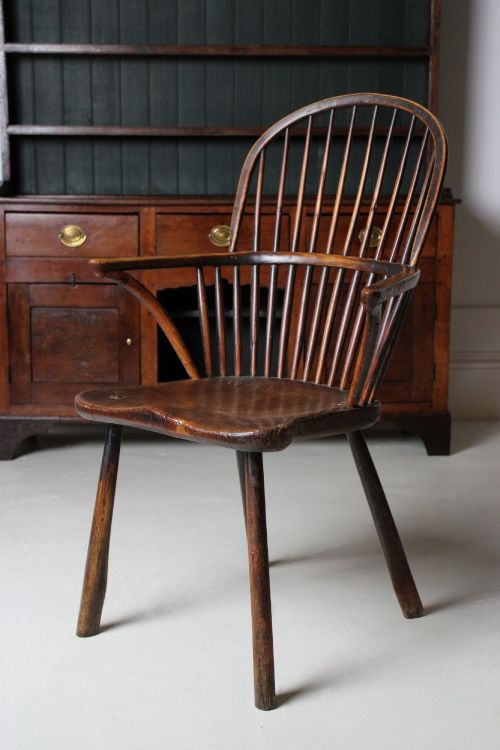
A yew country chair typically manifests as a Windsor armchair, featuring an ergonomic wooden seat carved from a single block of timber with spindles and a bentwood back inserted directly into it. These pieces originate predominantly from 18th-century and 19th-century English provincial workshops, spanning Georgian and Victorian eras.
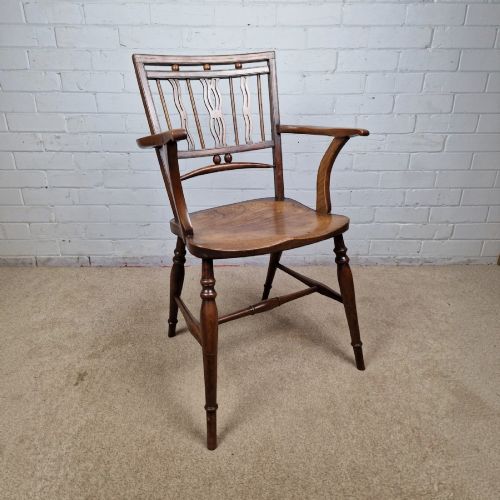
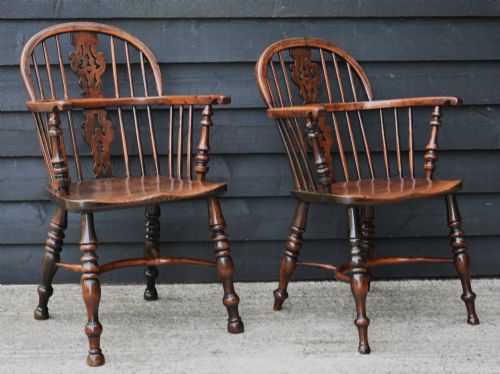
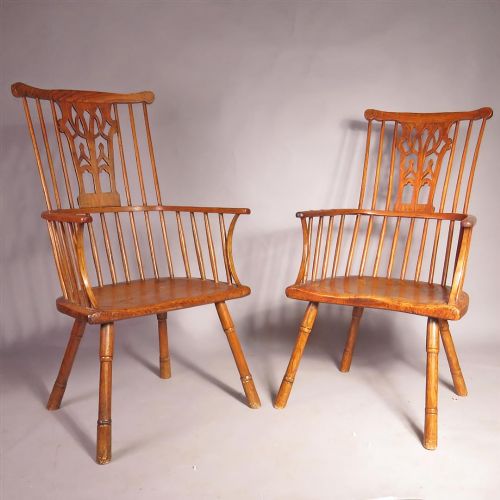
Buyers encounter various regional styles on this page, including Thames Valley comb-backs, Yorkshire broad-arm designs, and high-back or low-back hoop forms. Many examples incorporate elm seats paired with yew wood backs, sometimes supplemented by ash, beech, or fruitwood components.
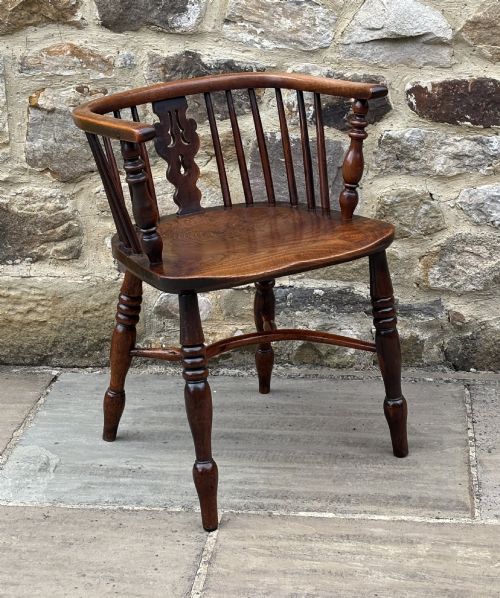
The selection ranges from individual carver chairs and children's models to matched sets of dining chairs. These sturdy items served working country houses and farmhouses before transitioning into collectable domestic furniture.
Materials and construction methods
Maker construction relied on a combination of contrasting native timbers, pairing durable yew wood for steam-bent hoops and arms with dense elm for sculpted solid seats. Additional supports often utilised ash for legs and spindles, or beech and fruitwood for minor turned elements.
Joinery depended on wedged through-tenons and drilled socket joints rather than metal fixings, allowing the timber to adapt to seasonal humidity changes. Complex forms required green wood working techniques, where steam-bent rails dried under tension to maintain their curved geometry.
Some chairs retain the marks of long-forgotten workshop tools, reminding us of the anonymous hands that shaped English timber centuries ago.
Markers of distinction
Quality rests upon the visual depth of the yew grain and the harmonious integration of multiple timber species within a single frame. Superior examples display bold turning on the undercarriage, crisp saddle-shaped seat carving, and intact original structural components like crinoline stretchers.
Proportion and stance dictate the visual success of the piece, distinguishing master provincial joinery from simpler utilitarian production. Well-preserved surfaces retain patination that reveals decades of handling without obscuring the natural figure of the wood.
J Spencer·Gabbitass Worksop·John Brand of Sleaford
The Yew Country Chair Glossary
- Windsor chair
- A chair built with a solid wooden seat into which the legs and back spindles are separately inserted. This construction method defines the primary form found across these listings.
- Crinoline stretcher
- An arched wooden brace linking the legs of a chair to provide rigidity. This curved support frequently appears on Georgian and Victorian Windsor examples.
- Comb back
- A Windsor chair back design featuring a low horizontal crest rail supported by vertical spindles that resemble the teeth of a comb. These often date to the 18th century.
- Hoop back
- A continuous steam-bent rail that forms the arms and back of the chair in a single curved sweep. This shape provides enclosed seating comfort.
- Vernacular
- Furniture made by local regional craftsmen using traditional methods and native materials rather than adhering to formal academic design styles. This category encompasses most country seating.
Yew Country Chair: Frequently Asked Questions
What is a yew country chair?
A yew country chair is a traditional wooden seat, usually built in the Windsor pattern, utilising native British timber like yew and elm. These items were produced by regional makers during the Georgian and Victorian periods for domestic use.
They combine a sculpted solid wooden seat with steam-bent backs and turned legs. The resulting forms serve as both practical seating and decorative historical objects.
How do I identify an 18th century piece?
Eighteenth-century examples often feature comb-back designs, deep saddle seats, and early regional characteristics such as Thames Valley or vernacular styling. The wood patination typically shows deeper maturity and wear patterns developed over centuries.
Examination of the underside reveals traditional tool marks and assembly methods distinct from later mass-produced Victorian alternatives. Grain patterns in yew and elm also display the unhurried growth of older timber stocks.
Where were these chairs made?
Makers constructed these chairs across various English regions, with notable production centres in the Thames Valley, Yorkshire, and workshops associated with places like Worksop and Sleaford. Local craftsmen utilised the specific hardwoods accessible in their surrounding woodlands.
Regional variations in turning, arm shape, and back construction often point back to these specific geographical origins. The choice of secondary woods like ash, fruitwood, or beech further reflects local material availability.
How should I care for yew furniture?
Maintain these chairs by keeping them away from direct heat sources and sudden humidity shifts, which can stress antique wooden joints and timber. Regular dusting with a soft cloth preserves the surface without requiring heavy polishes.
Allowing the wood to breathe naturally helps retain the historic patination accumulated across generations of use. Gentle beeswax application can occasionally nourish dry areas of the grain.