
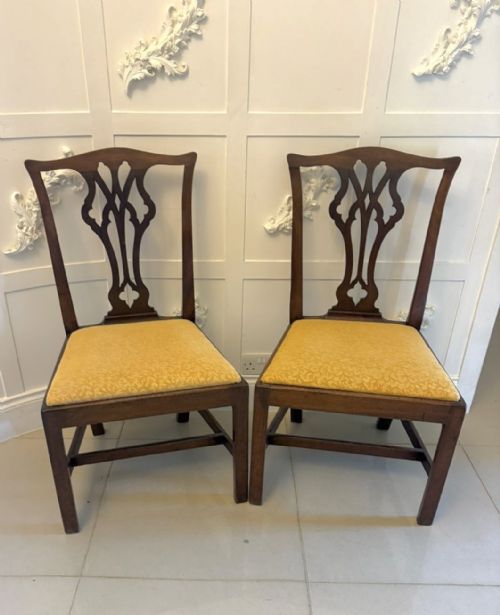


Yellow Upholstered Dining Chairs
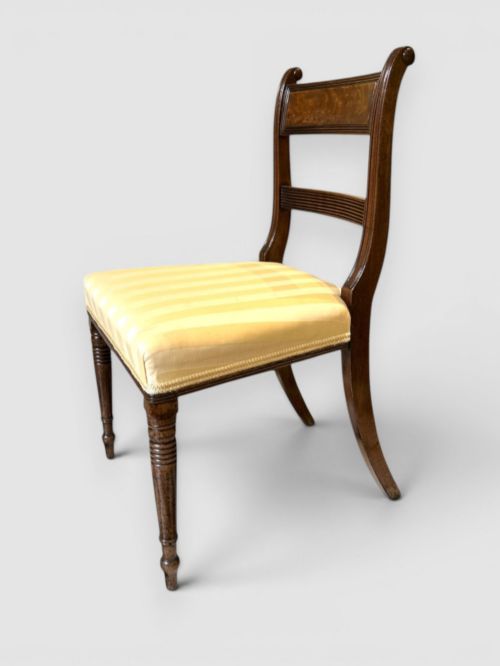
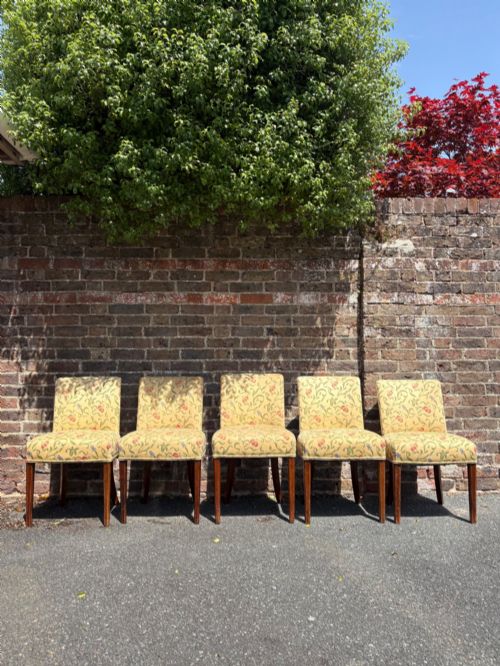
Yellow upholstered dining chairs bring warmth and tactile comfort to a room, uniting period timber frames with soft textile seats.
Yellow Upholstered Dining Chairs
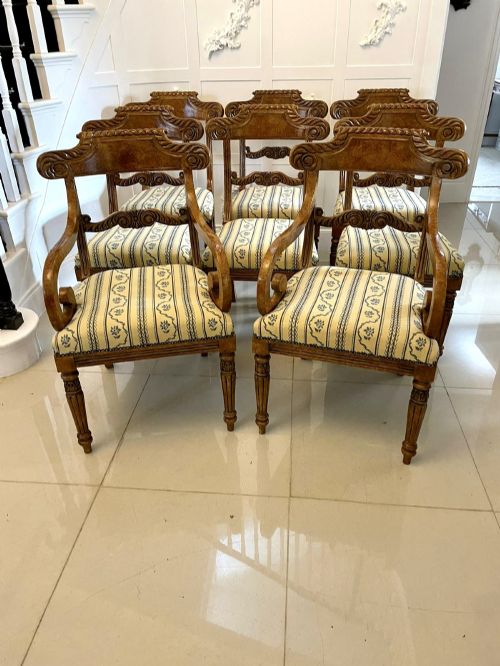
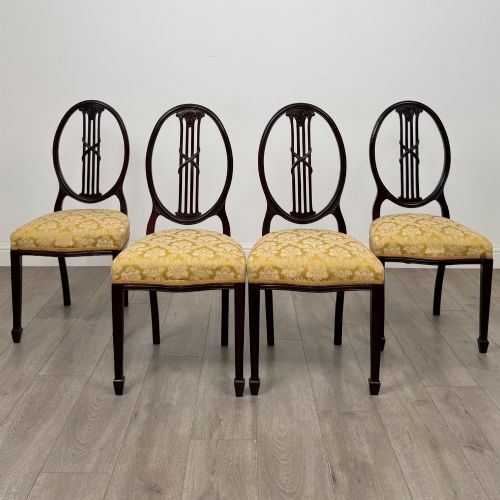
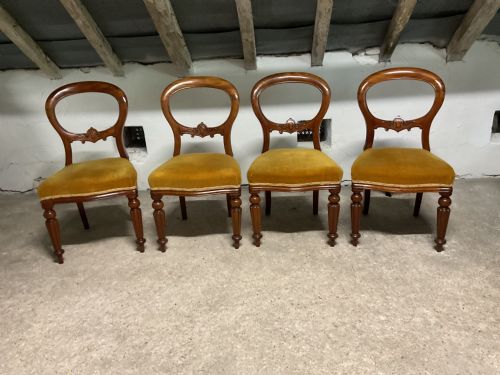
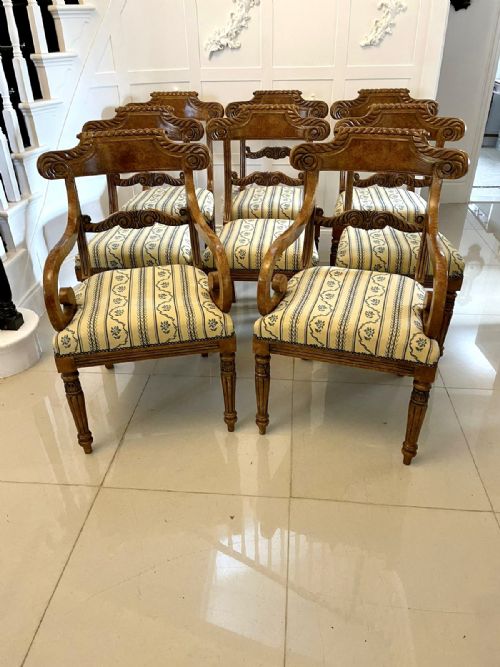
Yellow upholstered dining chairs comprise seating built from timber frames paired with textile covers, fulfilling practical seating needs around a dining table. When seeking yellow upholstered dining chairs, buyers encounter pieces originating from diverse eras spanning the eighteenth century through the twentieth century. These furnishings appear in forms such as side chairs, armchairs, and carver chairs.
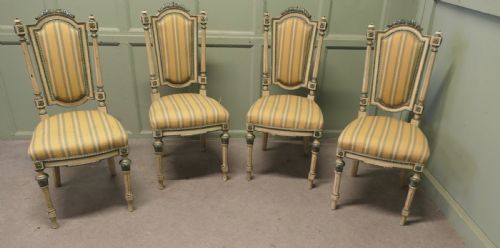
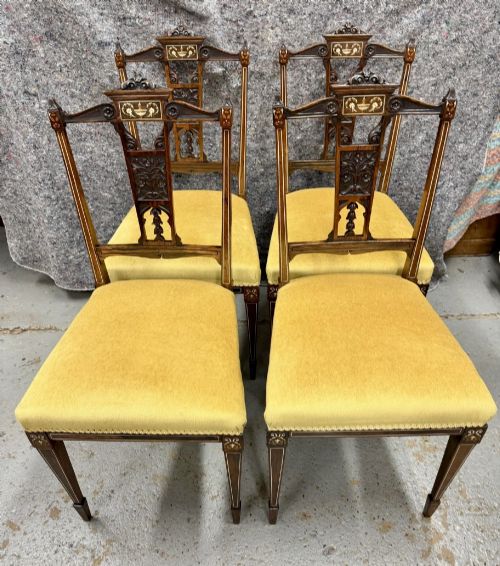
The assortment on this page reflects various historical revivals and original periods, including Regency, Victorian, Edwardian, and Georgian eras. Frames take shape in mahogany, walnut, rosewood, oak, and painted finishes, carrying upholstery in velvet, needlepoint, and general fabric. Such combinations provide seating solutions that bridge formal dining arrangements and decorative interior settings.
Materials and Construction Methods
Cabinet makers utilised dense hardwoods including mahogany, walnut, and rosewood for structural frames, ensuring long-term stability for daily seating use. Oak and faux maple also appear within specific stylistic traditions across the inventory.
Upholstery techniques involve securing textiles like velvet, needlepoint, and woven fabric over internal padding and webbing. Frames often display decorative carving, inlay work, painted surfaces, or simulated wood finishes.
Object forms span standard side chairs and formal armchairs alongside specialised salon and bedroom seating options.
Distinctions in Quality and Execution
The standard of a piece rests upon the precision of the timber joinery and the integrity of the structural frame. Superior examples demonstrate crisp carving, balanced proportions, and careful selection of figured woods like mahogany and walnut.
Execution of the upholstery and decorative detailing further differentiates the range. Finer items preserve original or sympathetic textile coverings alongside meticulous inlay, brass accents, or painted decorative motifs.
Blyth & Sons·James Shoolbred
The Yellow Upholstered Dining Chairs Glossary
- Carver chair
- An armchair designed with open sides to accommodate formal dining attire or desk use. These pieces often match a larger set of side chairs.
- Balloon back
- A rounded, oval-shaped chair back design popular during the nineteenth century. This contour mimics the profile of a hot air balloon.
- Inlay
- A decorative technique where contrasting pieces of wood or metal are inserted into recesses within the primary timber surface.
- Regency
- A British design period spanning the early nineteenth century defined by classical restraint and archaeological revival motifs. Furniture from this time frequently draws inspiration from ancient Greek and Roman forms.
Yellow Upholstered Dining Chairs: Frequently Asked Questions
How do I date these chairs?
Dating relies upon examining the timber species, joinery methods, and characteristic stylistic traits of specific eras like the Regency or Victorian periods.
Secondary indicators include the wear patterns on the frame and the historical construction techniques used within the seat foundations.
Can I mix these with modern tables?
Period timber chairs integrate effectively with contemporary dining tables through contrasting textures and shared wood tones.
Their varied historical forms allow them to function as statement seating within minimalist or eclectic modern dining spaces.
What is a carver chair?
A carver chair is an armchair traditionally placed at the head of a dining table for the host. These pieces feature integrated armrests designed to match the surrounding side chairs.
They offer additional seating comfort while maintaining the stylistic uniformity of a dining set.
How do I care for antique upholstery?
Maintenance involves gentle vacuuming with a soft brush attachment to remove surface dust without damaging delicate textile fibres. Professional cleaning is recommended for deeper treatments to preserve the integrity of vintage fabrics.
Protecting the chairs from direct sunlight prevents the textile colours from fading over time.