


Carved Wood Dining Set
A carved wood dining set brings together matching antique seating, often accompanied by extension tables, fashioned from rich timbers like mahogany and rosewood.
Carved Wood Dining Set
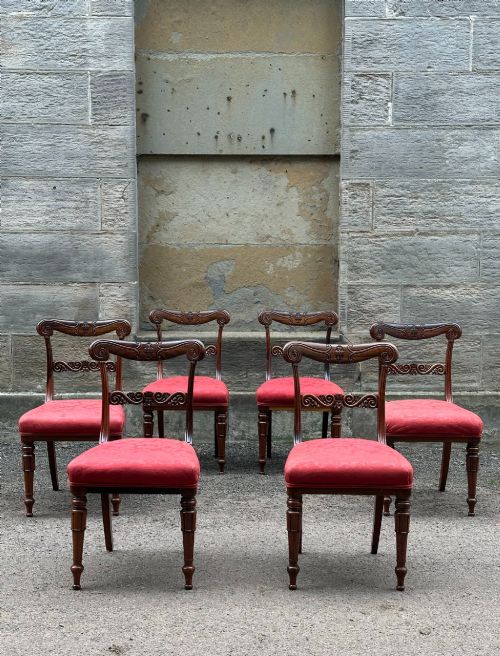
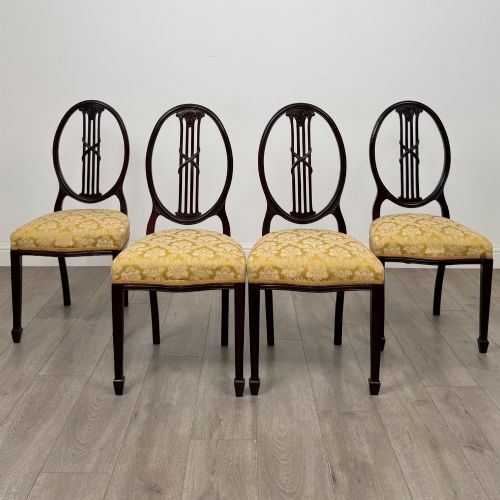
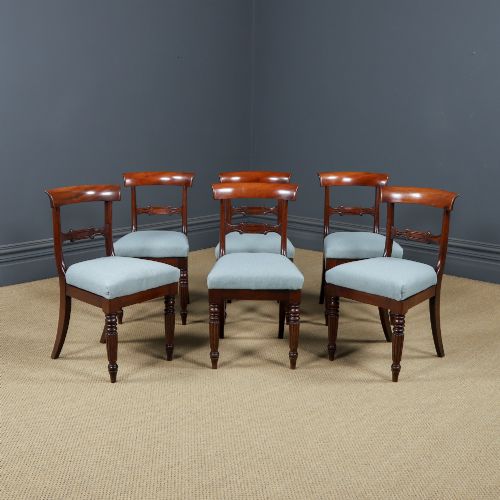
A carved wood dining set typically comprises multiple matching chairs, occasionally paired with a dining table, originating predominantly from the eighteenth, nineteenth, and early twentieth centuries. These collections reflect historical design movements such as Regency, Victorian, and Georgian styles, demonstrating intricate woodworking executed by period cabinetmakers.
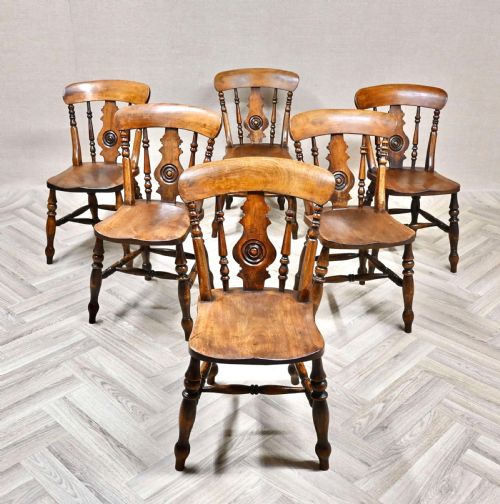
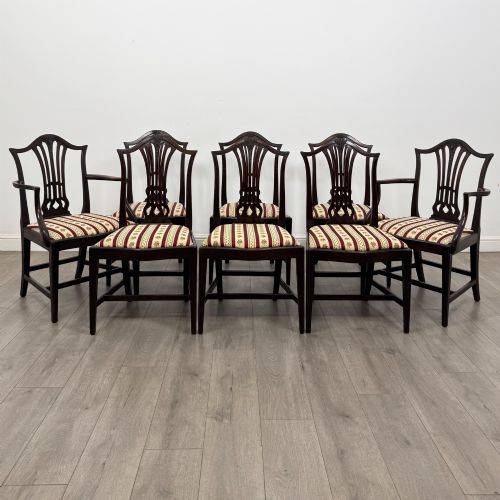
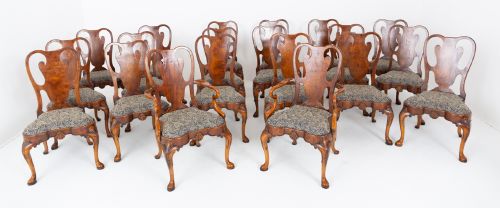
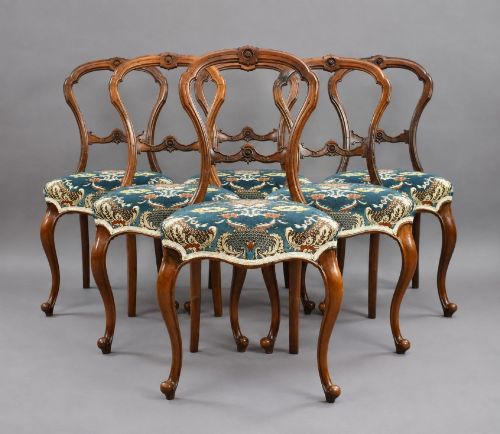
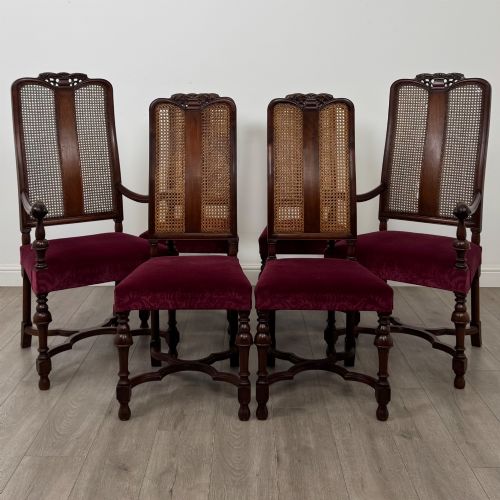
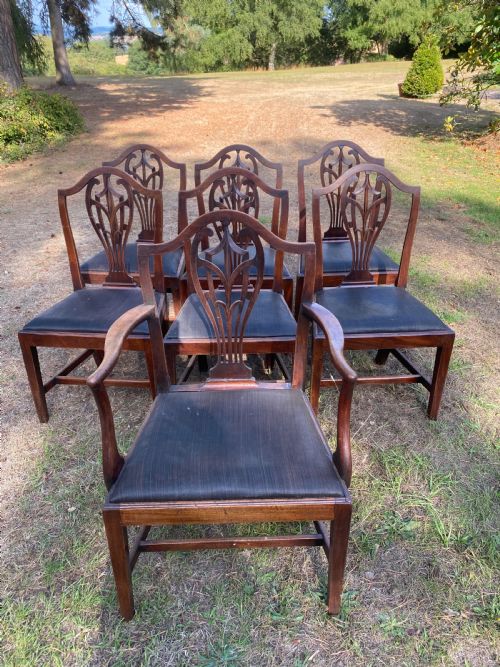
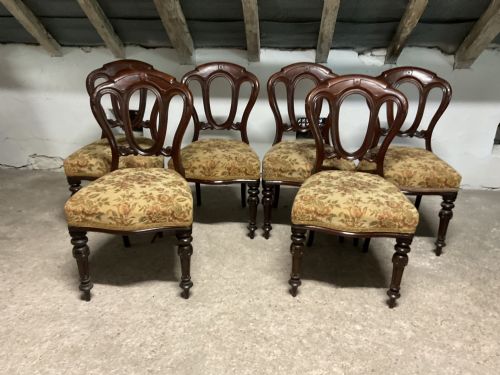
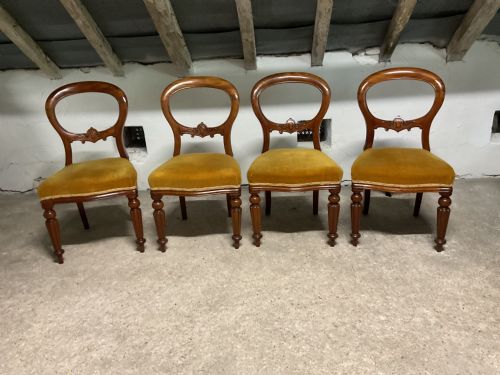
Buyers browsing this selection will most frequently encounter sets of mahogany or rosewood chairs, numbering anywhere from four to twenty pieces. These assemblies often include armless side chairs alongside matching carvers with armrests, designed around classic backrest motifs including shield backs, balloon backs, and wheel backs.
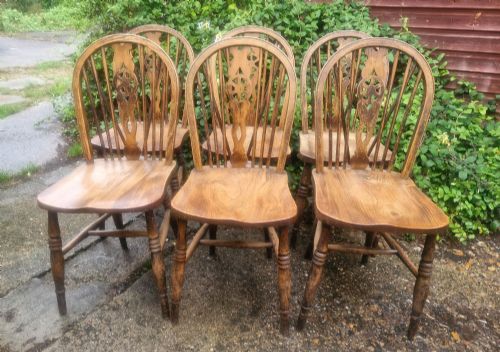
The practical function of these dining sets remains unchanged from their original creation, offering structured seating for formal meals or gatherings. Surviving examples range from country kitchen windsor chairs to formal dining suites reflecting the grand aesthetics of the grand regency and chippendale traditions.
How They Were Made
Cabinetmakers constructed these dining sets primarily using dense hardwoods, with solid mahogany and rosewood forming the structural framework for formal pieces, while beech, elm, and oak served utilitarian seating. Woodworkers utilised traditional joinery methods, incorporating tenons and dowels to ensure structural integrity across frames subjected to regular use.
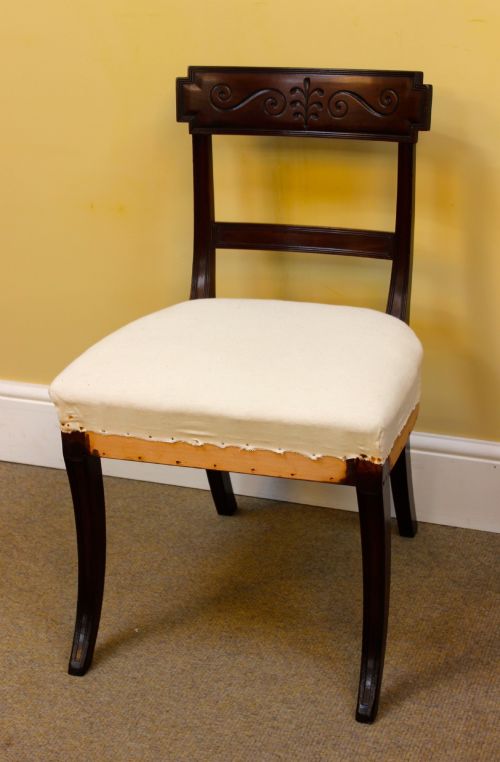
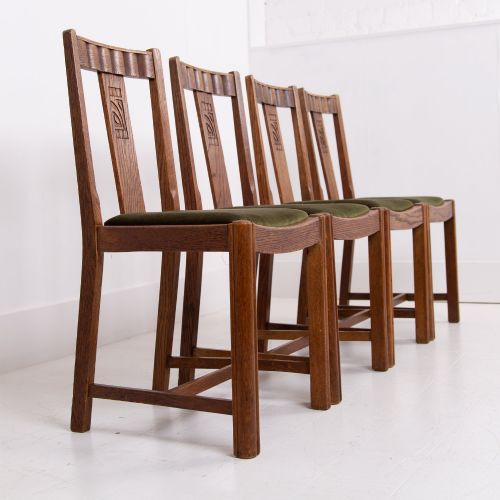
Ornamentation relied heavily on manual woodworking techniques, where artisans carved foliage, crests, and fluting directly into the solid timber frames. Surfaces were frequently hand-finished with oils, waxes, or shellac to highlight the natural grain patterns of the primary woods.
Upholstered components incorporated traditional stuffing materials layered over webbing or squab bases, secured using brass tacks or studs. Fabric choices varied widely from period silk and velvet to durable upholstery fabric intended to withstand heavy domestic dining.
Several Victorian dining sets proudly display heraldic crested backs, letting you host dinner parties as though you rule a small medieval fiefdom.
What Varies in Quality
The calibre of a carved wood dining set depends significantly on the depth and crispness of the timber carving. Superior examples exhibit hand-carved details with sharp, well-defined edges, whereas lesser pieces display softer, shallower ornamentation that lacks distinct relief.
Timber selection and grain matching across an entire set dictate overall visual cohesion and value. Sets featuring consistent, highly figured wood veneers or uniformly dense solid mahogany command greater appreciation than those assembled from mismatched boards or lesser secondary timbers.
The integrity of the original joinery and the survival of matching components across a full suite determine structural longevity. Sets retaining their original finish, uniform colour, and complete sets of matching carvers and side chairs represent the highest tier of historical craftsmanship.
Gillows·Alfred Allen of Birmingham
The Carved Wood Dining Set Glossary
- Carver
- An armchair designed with armrests, traditionally placed at the heads of a dining table. These pieces usually match the smaller side chairs in a larger dining set.
- Balloon back
- A rounded, oval-shaped chair back design popular during the Victorian period. This profile resembles the shape of a floating balloon.
- Windsor
- A traditional wooden chair construction featuring turned legs and spindles inserted directly into a solid sculpted seat. These sturdy pieces are frequently found in kitchen and country dining settings.
- Splat
- The vertical wooden strip positioned down the centre of a chair back, connecting the seat to the top rail. Carved variations often define the stylistic period of the seating.
Carved Wood Dining Set: Frequently Asked Questions
What is a carver chair?
A carver is an armchair designed to match the smaller side chairs in a dining set, traditionally placed at the head and foot of the table.
These chairs feature supportive armrests and often share identical carved back designs and leg styles with the rest of the seating collection.
How do I care for antique dining chairs?
Maintaining antique wooden chairs involves keeping them away from direct sunlight and extreme temperature fluctuations, which can cause the timber to split. Regular dusting with a soft cloth and occasional application of appropriate furniture wax preserves the finish.
Upholstered sections require gentle vacuuming with a brush attachment to prevent dust accumulation without damaging the historic fabric or underlying stuffing.
How can I tell the period of a dining set?
Dating a dining set relies on identifying stylistic markers, such as the curved lines of Regency pieces or the rounded forms typical of Victorian balloon backs. Construction methods and wood types also provide clear chronological indicators.
Examining the underside of the seats and the joinery reveals tool marks and assembly techniques consistent with specific manufacturing eras.
Were all dining sets made with matching tables?
Many historic dining sets originally consisted solely of chairs intended to accompany a separate dining table of a compatible wood and period. Tables and chairs were frequently commissioned or acquired independently rather than as a single unified package.
Surviving complete suites featuring both an extending table and matching chairs from the same workshop are considerably less common.