
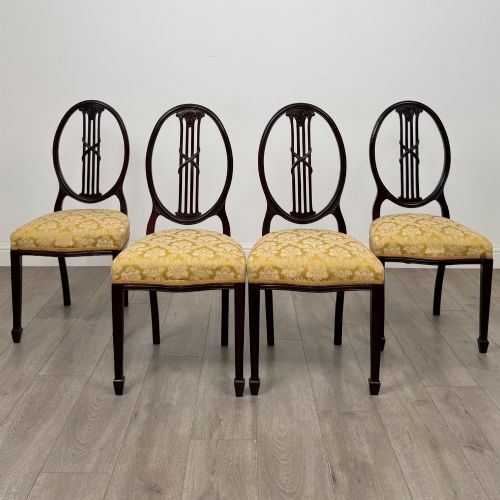
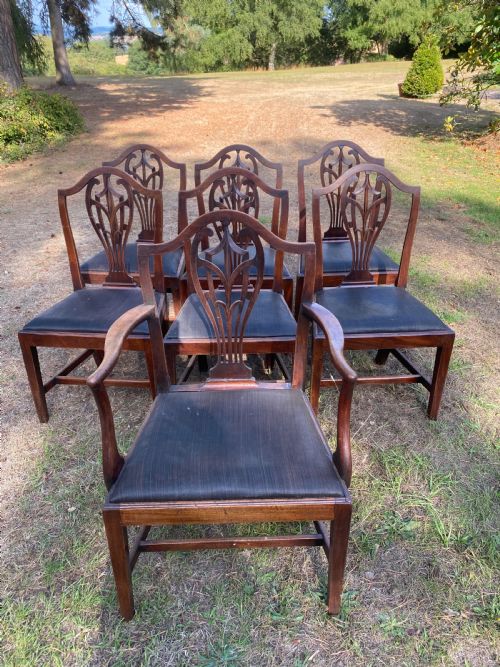
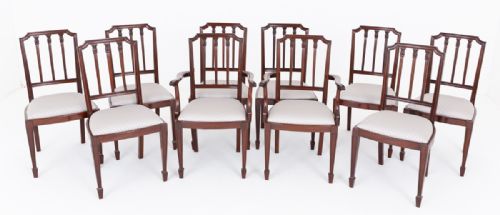
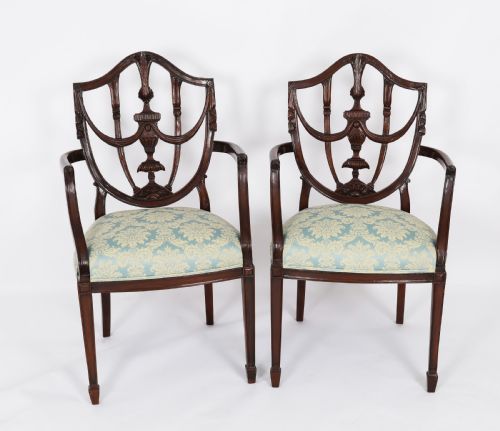



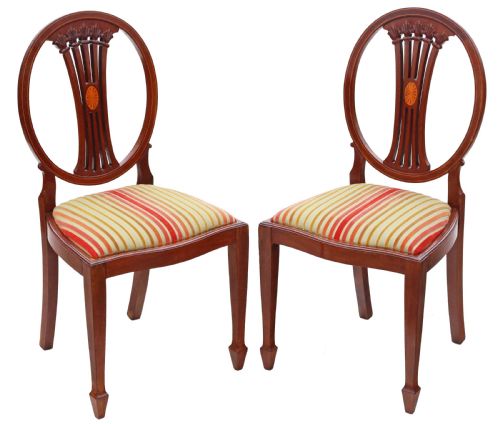
Hepplewhite Revival Side Chairs
These hepplewhite revival side chairs are classical seating designed to bring 18th-century elegance into later dining rooms.
Hepplewhite Revival Side Chairs
Hepplewhite revival side chairs draw on the graceful, light-framed designs originally popular in the Georgian era. When searching for hepplewhite revival side chairs, buyers encounter pieces primarily from the Victorian and Edwardian periods, alongside later 20th-century revivals.
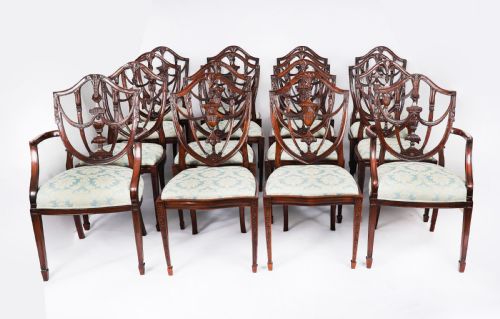
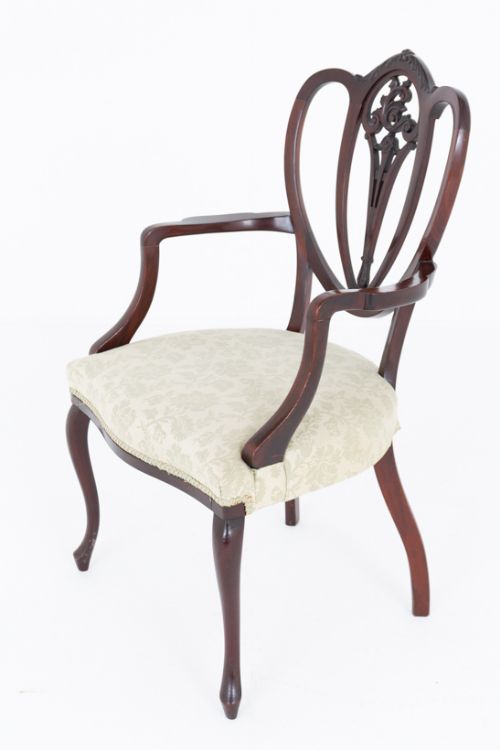
These chairs appear frequently as sets of dining chairs, ranging from pairs to large sets of sixteen, as well as occasional open armchairs. The forms often incorporate characteristic shield backs alongside upholstered seats designed for formal dining rooms.
How They Were Made
Makers utilised solid timbers such as mahogany and occasional satinwood to construct the frames, applying traditional cabinetmaking techniques for strength and stability. Decorative detailing often included inlaid woodwork and carved motifs across the shield backs and frame rails.
Upholstered elements were built up using textile coverings, damask fabric, and specialised upholstery fabric secured over padded foundations. Brass components occasionally featured on castors or structural supports depending on the specific period of manufacture.
Some dining sets managed to survive intact with sixteen matching shield back chairs, ready for an enormous feast.
What Varies in Quality
Quality in these revival pieces rests upon the crispness of the timber carving and the fidelity of the period proportions. Heavier, clumsier frames lack the lightness characteristic of the original style.
The choice of primary timber and secondary woods dictates the finish and overall presence of the chair. Superior examples display carefully selected mahogany grain and precise joinery that holds firm through generations of use.
The Hepplewhite Revival Side Chairs Glossary
- Shield back
- A chair back shaped like a heraldic shield, forming the principal design feature of this seating style. It provides both structural support and a surface for carved decoration.
- Satinwood
- A pale, hard timber utilised for contrasting inlay and decorative banding on cabinet furniture. It brings a bright golden tone to mahogany frames.
- Damask fabric
- A reversible figured textile woven on a jacquard loom, frequently chosen for traditional seat upholstery. Its pattern reflects light differently across the surface.
- Federal revival
- An American decorative style drawing on neoclassical motifs from the late 18th century. Pieces in this style share common lineage with British Hepplewhite designs.
- Open armchair
- A chair featuring armrests that remain unpadded and open beneath, maintaining a lighter visual profile. These often accompany sets of side chairs for the heads of a dining table.
Hepplewhite Revival Side Chairs: Frequently Asked Questions
What is a hepplewhite revival side chair?
These are chairs produced during the 19th and 20th centuries that imitate the light, elegant furniture designs of the 18th-century designer George Hepplewhite. They typically feature shield-shaped backs and straight or tapered legs.
Buyers primarily find them in mahogany, often configured as matched sets for dining rooms or as individual decorative halls chairs.
How do I tell an 18th-century original from a revival?
Revival pieces generally date from the Victorian, Edwardian, and early 20th-century periods rather than the 1700s. Examination of the timber dryness, tool marks, and secondary woods helps clarify the actual manufacturing date.
Construction methods changed over time, with later revival pieces utilising standardised machine joinery alongside hand finishing.
Are these chairs suitable for daily dining?
Most of these chairs were built for formal dining use and remain sturdy enough for regular seating if the frame joints are sound. The upholstered drop-in or fixed seats can also be recovered in modern fabrics to suit contemporary interiors.
Checking the stability of the leg joints and back supports ensures they handle daily use safely.
Why do some sets include armchairs?
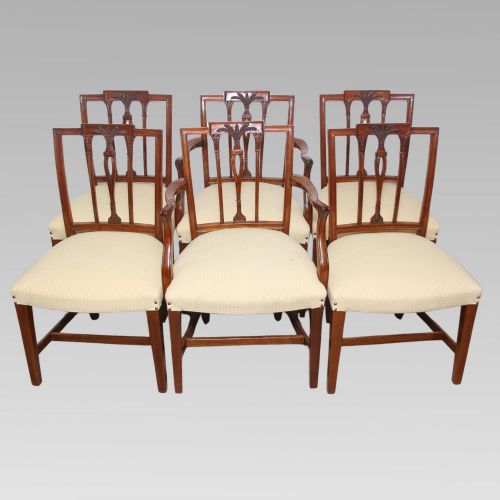
Dining sets traditionally included two armchairs alongside a larger number of armless side chairs. The armchairs were designated for the host and hostess at the ends of the table.
These matching armchairs share the same shield back and leg design as the accompanying side chairs.