



Yellow Upholstered Accent Chair
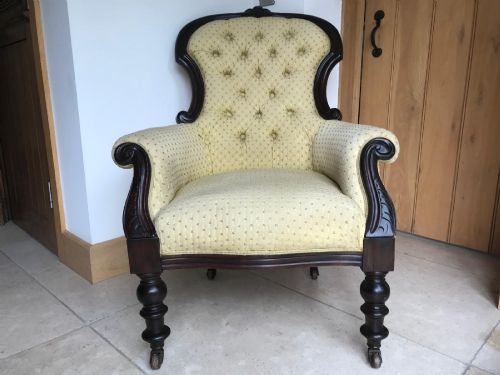
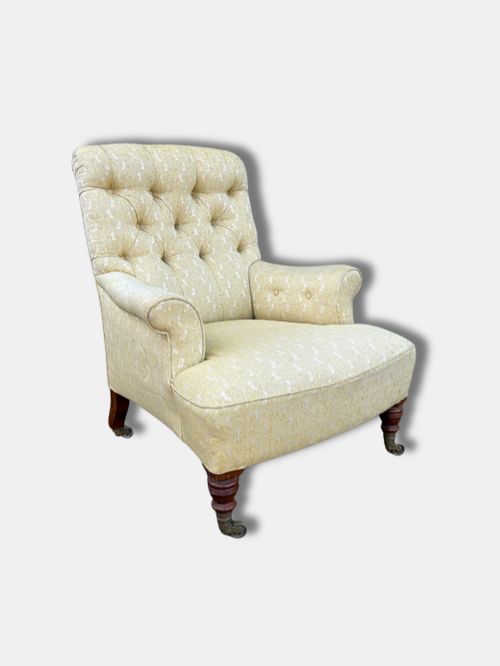
A yellow upholstered accent chair brings warmth and tactile depth to a room, drawing on centuries of fine timber frames and rich textile coverings.
Yellow Upholstered Accent Chair
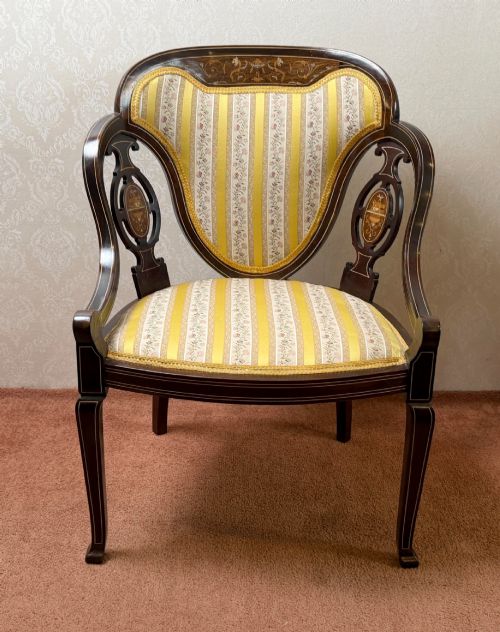
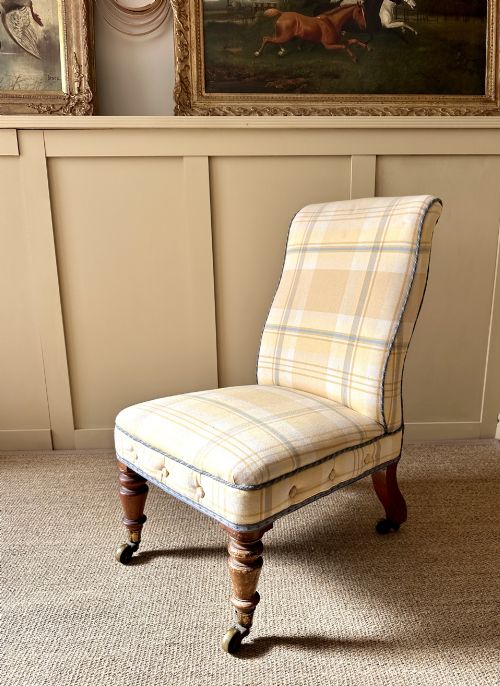
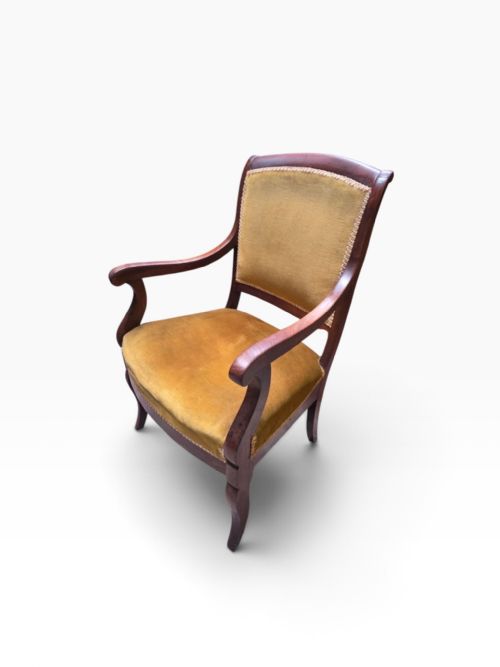
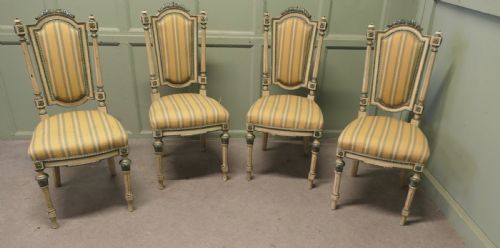
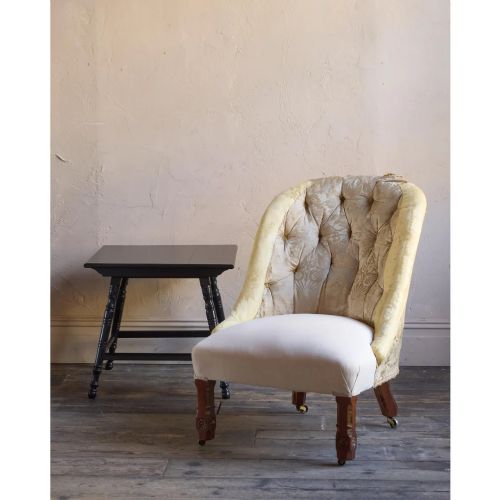
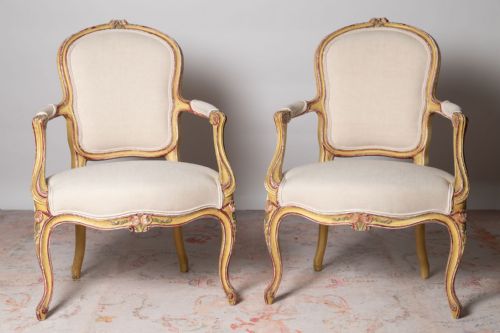
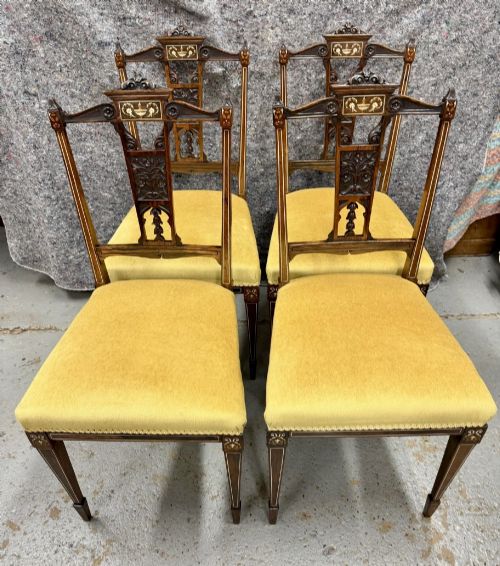
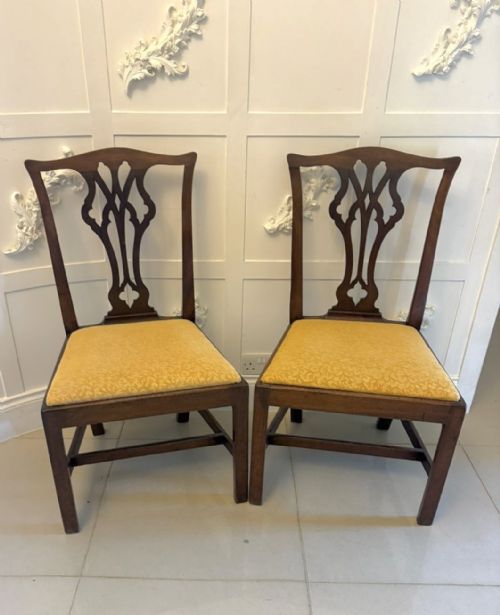
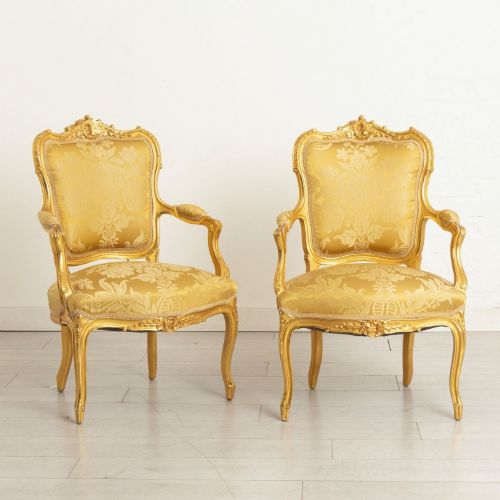
A yellow upholstered accent chair encompasses a variety of seating forms designed to provide a focal point within a domestic interior, spanning centuries of craftsmanship. When examining the selection here, buyers will encounter diverse historical iterations ranging from Victorian nursing chairs and Edwardian armchairs to earlier Georgian forms and French fauteuils.
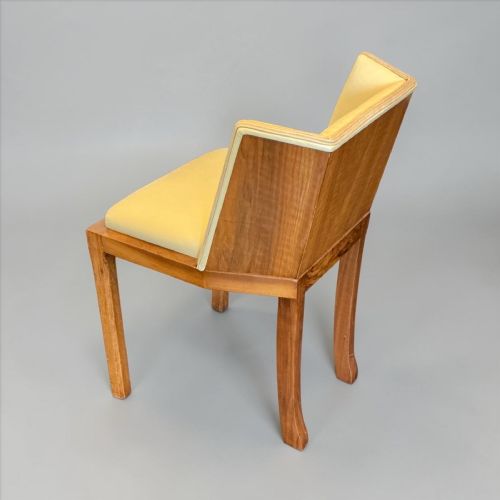
The frames supporting these textile covers utilise traditional timbers such as mahogany, walnut, rosewood, and giltwood, reflecting the prevailing aesthetics of their respective eras. These pieces frequently manifest as parlour chairs, salon chairs, or library armchairs, offering distinct silhouettes defined by the cabinetmakers and joiners of the eighteenth, nineteenth, and early twentieth centuries.
While specific historic seating was rarely produced in bright yellow originally, surviving frames have been paired with contemporary and period-appropriate textiles including velvet, damask, silk, and linen in various yellow hues. Buyers meeting these items today benefit from a combination of historic structural integrity and refreshed upholstery schemes that suit modern decorative schemes.
Materials and construction methods
The structural integrity of these seats relies on dense hardwoods like mahogany, walnut, and rosewood, which were selected for their strength and ability to accept intricate carving and turning. Joinery techniques such as mortise and tenon ensure the longevity of the frames, while applied elements like brass castors, intricate inlay, and gilt finishings denote specific periods of design ambition.
Upholstery relies on traditional textiles layered over supportive internal stuffing, historically utilising materials like horsehair, wool, and webbed foundations. Modern interventions often replace worn covers with new velvet, silk, damask, or plain fabric, marrying the original timber framework with updated tactile surfaces.
Venetian gondola chairs offer a surprising maritime silhouette for your sitting room.
Assessing quality in period seating
The standard of a piece is primarily determined by the crispness of the timber carving, the integrity of the frame's joinery, and the authenticity of its period materials. Higher quality examples exhibit refined proportions, well-seasoned hardwoods, and hand-turned or carved details executed with deliberate precision rather than mass-produced uniformity.
The execution of the upholstery also dictates the refinement of the piece, where hand-stitched edges, traditional stuffing methods, and the choice of complementary textile quality elevate the visual and physical comfort. Retaining original structural components while maintaining a clean, professional finish separates superior examples from standard utilitarian seating.
Howard and Sons
The Yellow Upholstered Accent Chair Glossary
- Fauteuil
- An open-arm armchair with an exposed wooden frame originating from French design traditions. These chairs typically feature upholstered backrests and arm pads supported by carved woodwork.
- Nursing chair
- A low-seated chair designed during the nineteenth century to facilitate comfortable infant feeding or sewing tasks. They often feature spoon backs or low profiles tailored for domestic interiors.
- Needlepoint
- A form of counted thread embroidery stitched onto a stiff open-weave canvas foundation. It frequently appears on historic seat panels, displaying intricate floral or geometric patterns.
- Giltwood
- Timber that has been coated with a thin layer of gold leaf or gilt powder. This decorative technique highlights carved details on formal nineteenth-century and earlier European salon seating.
Yellow Upholstered Accent Chair: Frequently Asked Questions
How do I date an antique armchair?
Dating relies on examining the timber species, the turning or carving style on the legs, and the internal construction methods of the frame. Secondary details such as screw types and webbing also offer clues to the era of manufacture.
Comparing the silhouette against documented styles from periods like the Victorian, Edwardian, or Georgian eras helps narrow down the decade in which the wood was shaped and assembled.
Are these chairs suitable for daily use?
Most historic frames are robustly constructed from hardwoods like mahogany and walnut, making them well-suited for regular sitting when properly maintained. Frames that have undergone professional restoration will easily handle everyday domestic environments.
It remains wise to check the stability of the joints and the internal webbing to ensure the seating can accommodate daily habitation without compromising the historic timber.
How should I care for antique upholstery?
Maintaining fabric and velvet upholstery involves regular, gentle vacuuming with a soft brush attachment to prevent dust accumulation within the weave. Keeping the textile away from direct sunlight protects the yellow dye from fading over time.
For deeper cleaning, professional textile conservation methods are recommended to avoid damaging the underlying historic stuffing or the wooden frame surrounding the fabric.