


Yellow Shade Table Lamp
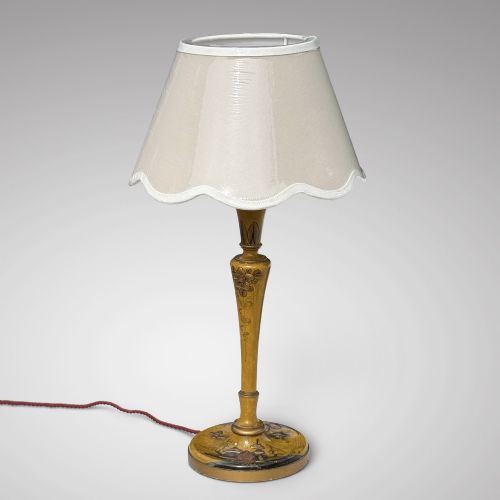
A yellow shade table lamp brings a warm, amber glow to a room, uniting period brass and glass with coloured light.
Yellow Shade Table Lamp
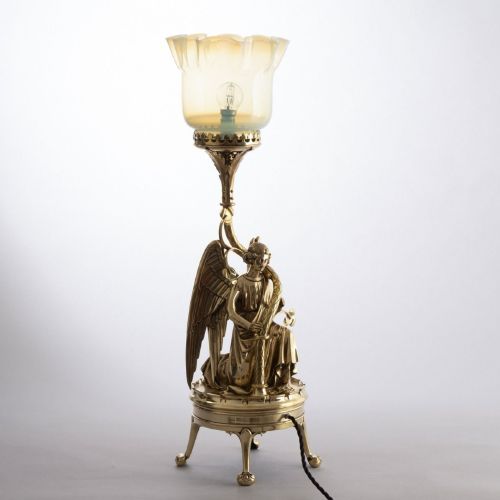
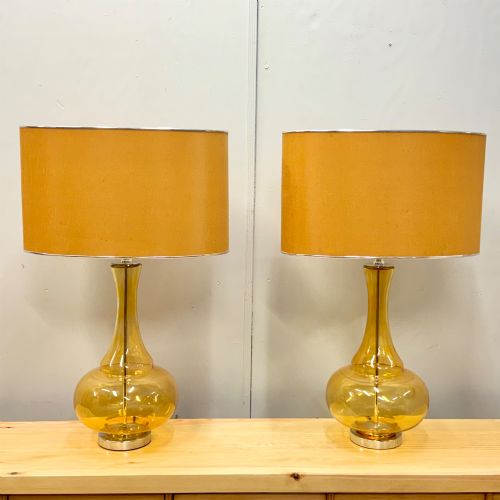
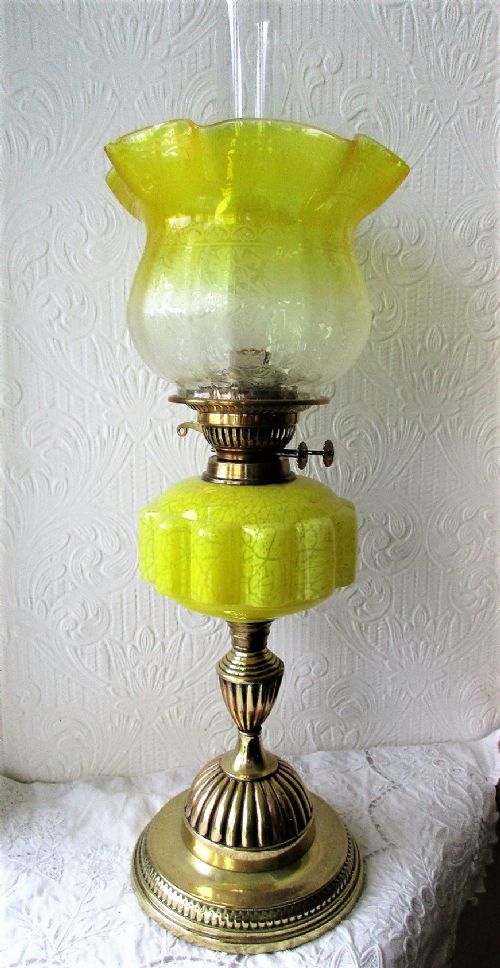
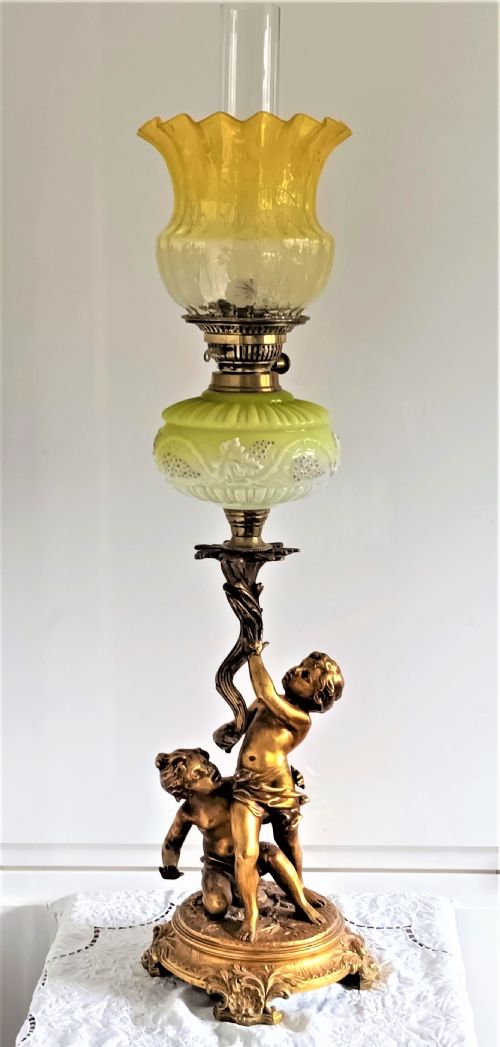
A yellow shade table lamp combines period lighting bases with warm coloured shades, bringing a distinctive glow to interiors. When searching for a yellow shade table lamp, buyers encounter pieces ranging from heavy Victorian brass oil lamps to sleek Art Deco glass fixtures.
The selections span the nineteenth century through the early twentieth century, incorporating styles such as Gothic Revival, Chinoiserie, and Rococo Revival. Converted oil lamps sit alongside early electrical forms in brass, porcelain, and amber glass.
Mid-century modern and Chinese export vases converted into lamps also appear, demonstrating how varied these domestic lighting fixtures remain. Most examples rely on historic bases paired with fabric or tinted glass shades to create their characteristic illumination.
How they were made
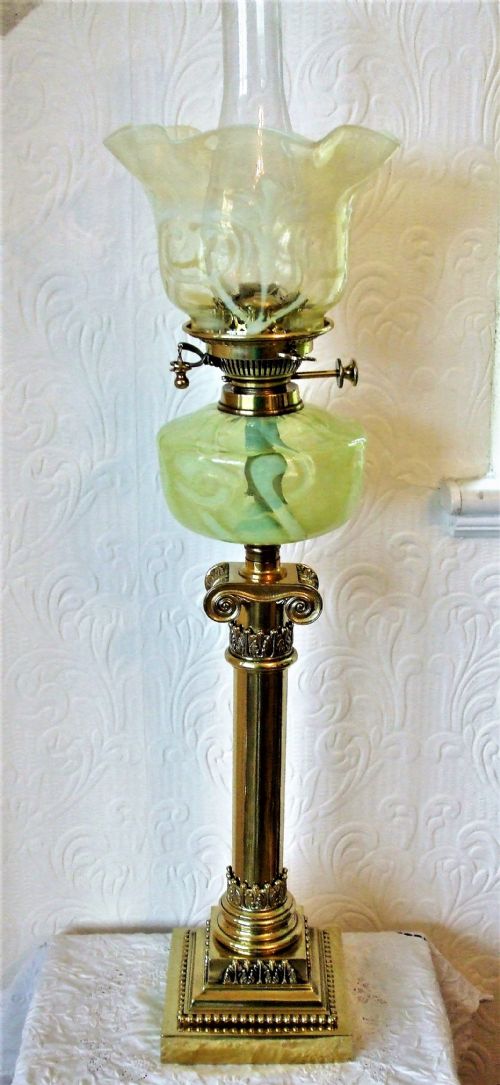
Maker workshops utilised heavy metals like brass, ormolu, and silver plating to cast robust columns and urn bases, often incorporating structural elements such as ionic capitals. Glass working techniques produced Vaseline glass, satin glass, and amber glass reservoirs designed to catch and reflect light.
Ceramic production involved porcelain bodies decorated with gilt accents, alongside hand-painted Chinese Famille Verte and Famille Rose enamel designs. Lacquered timber frames and wrought iron structures further expanded the repertoire of materials employed by period artisans.
Some converted oil lamps retain their original snuffers, ready to extinguish flames that went out of fashion a century ago.
What varies in quality
The standard of a lamp rests upon the weight of its cast metal components, the crispness of its chasing, and the clarity of its glass reservoirs. Fine mouldings on brass columns and hand-painted details on porcelain bodies distinguish superior pieces from standard workshop output.
Integration of conversion elements affects overall harmony, where skilled adaptations preserve the original proportions of the vessel. The integrity of coloured glass components and the retention of original gilding significantly elevate the character of an individual lamp.
Hinks·Degue·Meissen
The Yellow Shade Table Lamp Glossary
- Vaseline glass
- A type of glass coloured with uranium dioxide that produces a distinct yellow-green hue under normal light and glows brightly under ultraviolet illumination. It frequently appears in nineteenth-century lamp reservoirs.
- Ormolu
- Gilded bronze applied to decorative mounts and lamp bases, providing a rich metallic lustre that contrasts with glass and ceramic bodies. Skilled artisans chased the cast surfaces by hand.
- Famille Verte
- A Chinese porcelain palette dominated by green enamels, used on vases that were subsequently converted into table lamps. The style originates from the Qing Dynasty.
- Peg lamp
- A small oil lamp fitted with a metal peg at the base designed to drop directly into the top socket of a larger candlestick or column. This clever design united separate lighting elements.
- Ionic column
- An architectural order featuring scrolled capitals, frequently utilised in nineteenth-century brass oil lamp pillars to lend classical dignity to domestic lighting.
Yellow Shade Table Lamp: Frequently Asked Questions
How do I clean a brass lamp base?
Use a soft, dry cloth to remove dust from metal surfaces without disturbing aged patination. Avoid harsh chemical polishes that strip historical finish from antique brass.
Gentle care preserves the subtle oxidation accumulated over centuries of domestic use.
Were these lamps originally electric?
Most nineteenth-century and early twentieth-century examples started life as oil lamps or decorative vases before undergoing later conversion to electricity. The original burners and reservoirs were adapted to house modern wiring.
This evolutionary process is standard for period lighting found in current collections.
How do I date an antique lamp?
Examine the manufacturing methods visible in the metal casting, the formula of the glass, and the ceramic painting style. Marks on the base or burner mechanisms often point to specific decades.
Comparing structural forms like ionic columns helps place the piece within the Victorian or Art Deco eras.
Can I replace the fabric shade safely?
Selecting a replacement shade requires matching the scale of the base and ensuring proper heat clearance for modern bulbs. Fabric shades complement amber and Vaseline glass reservoirs effectively.
Proportion remains the key consideration when pairing contemporary shades with historic lamp bodies.