
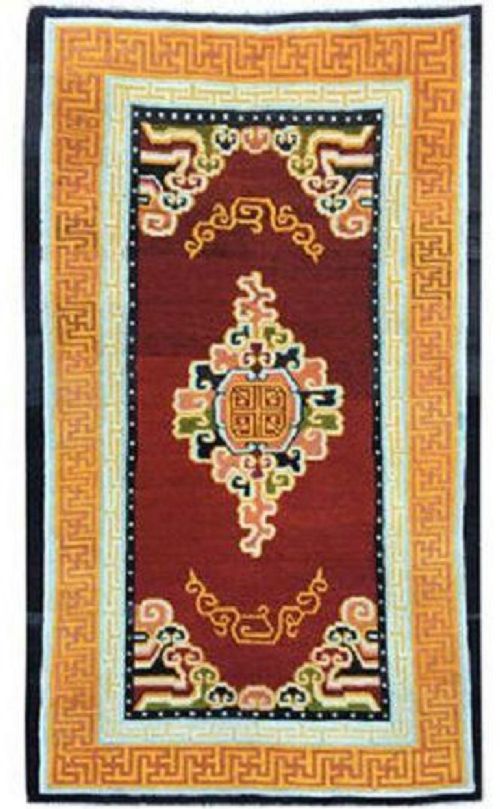
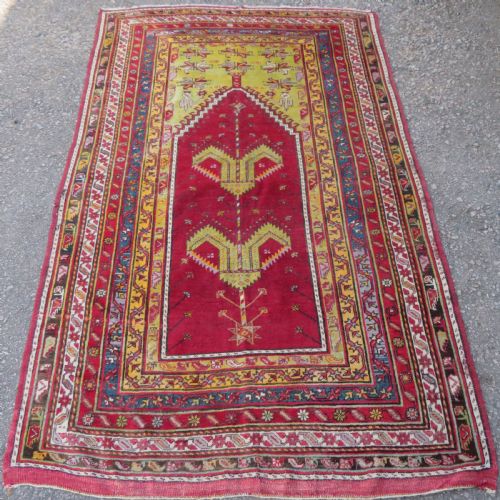


Yellow Oriental Runner
These yellow oriental runner pieces bring warmth and distinct regional character to a hallway, drawing on traditions from Anatolia, the Caucasus, Persia, China and Tibet.
Yellow Oriental Runner
A yellow oriental runner spans diverse weaving traditions, including Caucasian, Afghan tribal, traditional Tibetan, Anatolian traditional, Ottoman, and Chinese Qing Dynasty styles. These floor coverings function primarily as long, narrow formats suited for hallways, corridors, and specific interior spaces.
The pieces appearing on this page date from the nineteenth century through the early twentieth century, specifically across periods from 1860 to 1930. Buyers encounter formats categorised as rug runners, runner rugs, hallway runners, and long rugs with distinctive yellow ground designs.
Origins range across Central Asia, the Caucasus, Turkey, China, and Tibet, bringing together varied regional knotting techniques and cultural motifs. The selection encompasses smaller mats alongside substantial carpets designed for long, narrow floor spaces.
Materials and Construction
The physical construction of these textiles relies principally on wool, cotton, and hand-spun wool foundations and pile yarns. Weavers utilised these natural fibres to achieve durable surfaces capable of withstanding heavy daily use in corridors and halls.
Weaving traditions across these regions employed local dying methods and hand-knotting or flat-weaving techniques particular to each origin. The combination of sturdy cotton or wool warp and weft threads with thick wool pile ensures structural longevity.
Several pieces preserve subtle wool shade shifts where the weaver ran out of one dye batch and simply mixed another.
Factors That Determine Quality
The primary distinction in quality rests upon the fineness of the weave, the integrity of the foundation, and the resilience of the wool pile. Tighter knot counts and precise execution of intricate lattice or floral designs indicate superior workshop or tribal production.
Preservation of the original edges, ends, and pile depth distinguishes well-maintained examples from those with extensive restoration or wear. The clarity and saturation of the yellow ground, achieved through natural dye processes, mark the distinction between standard and exceptional pieces.
The Yellow Oriental Runner Glossary
- Ground
- The background field colour of a rug upon which the primary motifs and medallions sit. In these pieces, the ground frequently appears in shades of yellow.
- Kelleh
- A large format rectangular carpet, traditionally longer than it is wide, often produced in Persian workshops such as Senneh.
- Khaden
- A traditional Tibetan sleeping rug or seat mat, characterised by smaller proportions and distinctive pictorial or geometric layouts.
- Kilim
- A flat-woven carpet or rug produced without a pile, created by tightly interlocking warp and weft threads.
- Kazak
- A style of Caucasian rug known for bold geometric patterns, bright primary colours, and sturdy wool construction.
Yellow Oriental Runner: Frequently Asked Questions
How are yellow oriental runners used in a home?
These long formats suit narrow spaces such as hallways, corridors, and entryways where foot traffic is frequent. They provide warmth underfoot while introducing historical pattern and colour to transitional architectural areas.
Positioning them away from direct, continuous moisture helps preserve the natural wool fibres and dyes over decades of daily domestic use.
What regions produced these rugs?
Production spans several distinct geographical areas, including the Caucasus, Anatolia, Persia, Afghanistan, China, and Tibet. Each region imparts specific cultural motifs, structural weaves, and colour palettes to the finished textile.
Recognising these regional differences helps collectors identify the particular weaving traditions behind individual hallway runners and carpets.
How do I care for antique wool runners?
Gentle regular vacuuming without a rotating brush roll keeps dust from settling deep into the wool pile. Professional cleaning tailored for antique textiles ensures the natural lanolin remains intact within the fibres.
Using a quality rug underlay prevents slipping and reduces friction between the foundation and the floorboards during everyday walking.
How can I tell the age of a runner?
Dating relies on observing structural materials, dye characteristics, wear patterns, and stylistic conventions typical of specific decades. Nineteenth-century examples often display hand-spun wool and natural dye variations that differ from later twentieth-century production.
Comparing knot structure and design motifs against documented regional types provides clear indicators of a piece's historical period.