
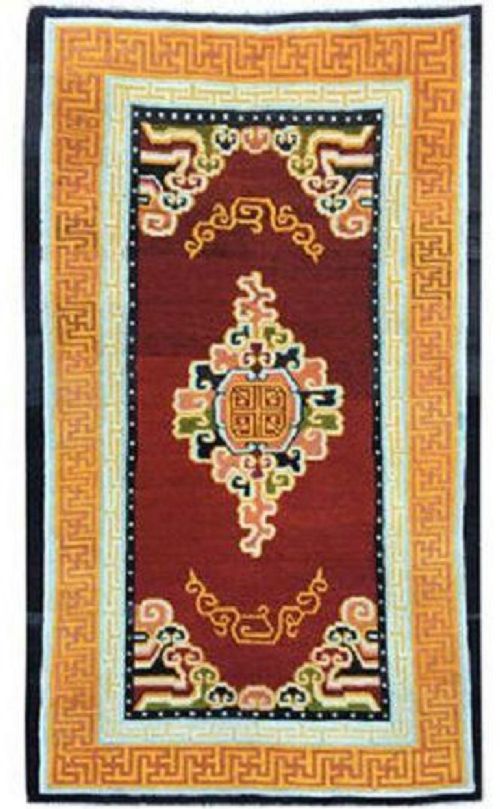
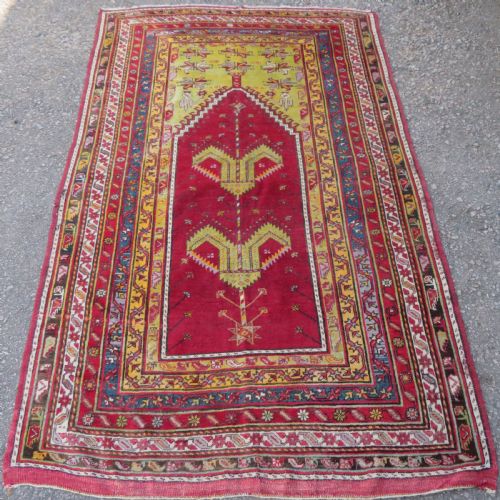


Yellow Oriental Carpet
A yellow oriental carpet brings warmth and striking ground colour to a room, drawn from nineteenth and early twentieth century traditions.
Yellow Oriental Carpet
A yellow oriental carpet encompasses floor coverings originating from Turkey, the Caucasus, Persia, China, and Tibet, dating from the nineteenth and early twentieth centuries. Buyers encounter formats ranging from square seating mats and prayer rugs to room-sized carpets and long hallway runners.
The selection includes specific regional styles such as Oushak, Bidjar, Gendje, Ningxia, and Caucasian weaves. These pieces display diverse patterns including floral lattices, prayer designs, medallions, and shrub motifs set against yellow grounds.
Materials and construction
The pieces listed utilise wool, cotton, and hand-spun wool as primary materials for pile and foundation construction. Weavers knotted these natural fibres on traditional upright looms, employing structural techniques specific to their regional workshops and tribal traditions.
Dyeing methods utilise natural colourants to achieve the characteristic yellow grounds and secondary tones seen across the surviving carpets and rugs. The interaction of wool quality and dye absorption dictates the texture and visual depth of each woven surface.
Some nineteenth-century weavers managed to capture lemon and golden hues that stubbornly refuse to fade into total quiet.
Distinctions in quality
Quality rests on the integrity of the weave, the handling of the pile, and the survival of the original materials over time. Finer knots per square inch and robust foundations separate exceptional carpet production from standard utility weaving.
The stability of the yellow ground dye and the preservation of secondary design details heavily influence the standing of an individual piece. Condition variations, from intact borders to worn remnants, reflect the active history of each rug.
The Yellow Oriental Carpet Glossary
- Prayer rug
- A small rug featuring a mihrab or niche design, traditionally used for daily Islamic prayer. These pieces often display directional motifs orienting towards Mecca.
- Ground
- The main background colour field of a carpet upon which the primary medallions and secondary patterns are placed. In this selection, yellow grounds dominate.
- Soumak
- A flat-weave technique where coloured weft threads wrap over and under the warp threads without producing a cut pile. This method creates a sturdy structure with a textured surface.
- Medallion
- A central ornamental design motif placed in the middle of the carpet field. It serves as the primary focal point of the composition.
- Kelleh
- A long, narrow format of Persian carpet traditionally used in domestic interiors. These formats fit specific architectural spaces like long rooms and halls.
Yellow Oriental Carpet: Frequently Asked Questions
Where were these yellow carpets made?
The pieces originate from traditional weaving centres across Turkey, the Caucasus, Persia, China, and Tibet. Each region developed distinct structural methods and design vocabularies.
Production spans from the mid-nineteenth century through the early twentieth century, reflecting local cultural aesthetics and material availability.
How do I care for an antique rug?
Protect the wool pile by placing the rug in low-traffic areas or utilising appropriate underlays to prevent sliding and excessive wear. Regular gentle vacuuming without a rotating brush bar keeps dust from settling into the foundation.
Professional cleaning tailored for antique textiles ensures the natural wool and dyes remain preserved for years to come.
What defines a prayer rug?
Prayer rugs feature a distinctive architectural niche or arch shape known as a mihrab at one end of the field. This design indicates the direction the rug should face during use.
These smaller formats were woven across Anatolia and the Caucasus for personal devotion rather than general floor covering.
How do I identify regional rug styles?
Regional attribution relies on examining the specific border patterns, knotting techniques, and colour palettes unique to areas like Oushak, Bidjar, or the Caucasus. Structural characteristics in the foundation often confirm the origin.
Comparing motif arrangements helps distinguish between Turkish prayer rugs, Chinese Ningxia mats, and Persian tribal weaves.