


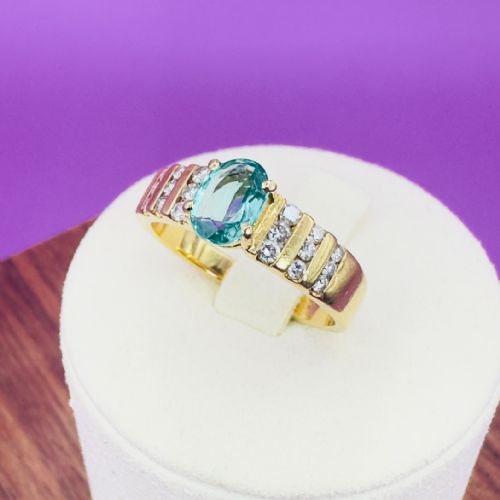


Yellow Gold Solitaire Band
A yellow gold solitaire band carries a single stone on a precious shank, combining classic simplicity with enduring substance.
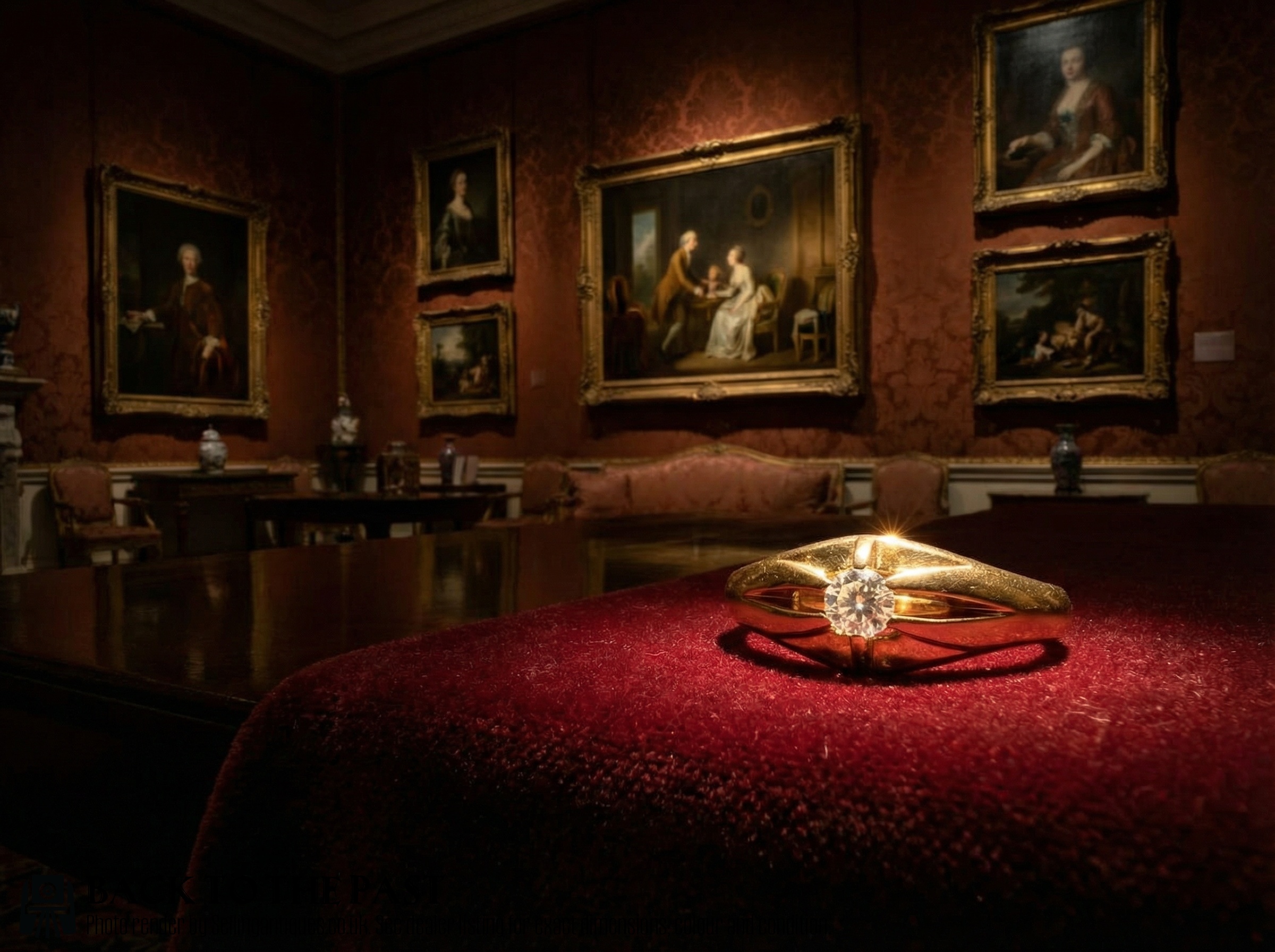
Yellow Gold Solitaire Band
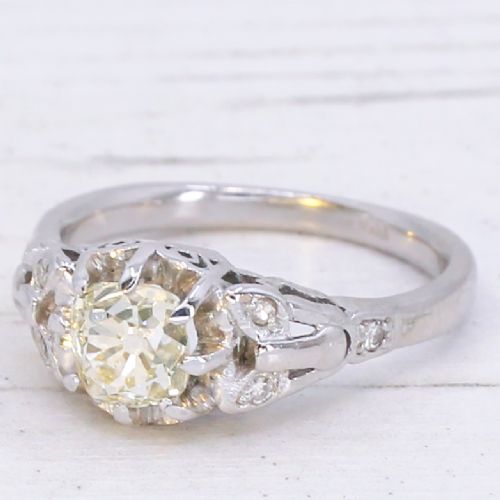
A yellow gold solitaire band focuses attention on a single central gem, most commonly a diamond held by precious metal. These rings span periods from the Victorian era through the Edwardian years and Art Deco times into the mid-century decades.
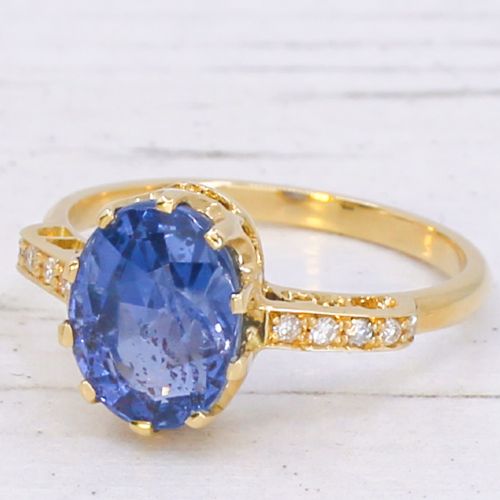
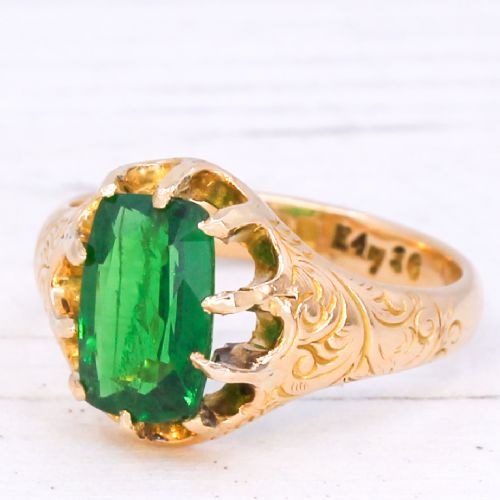
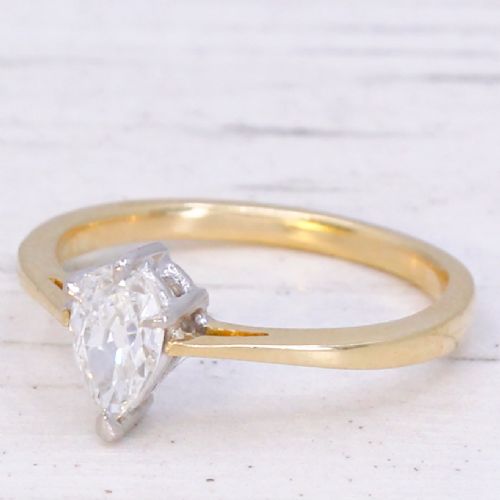
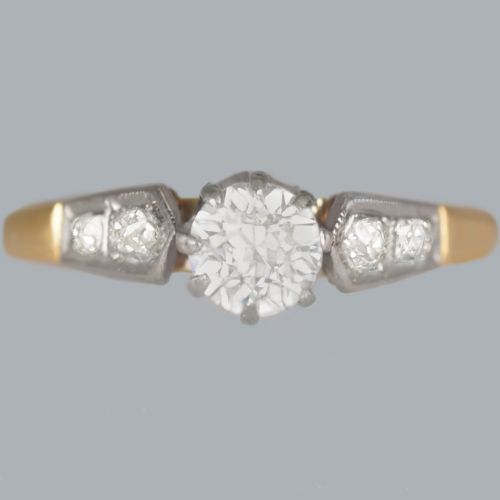
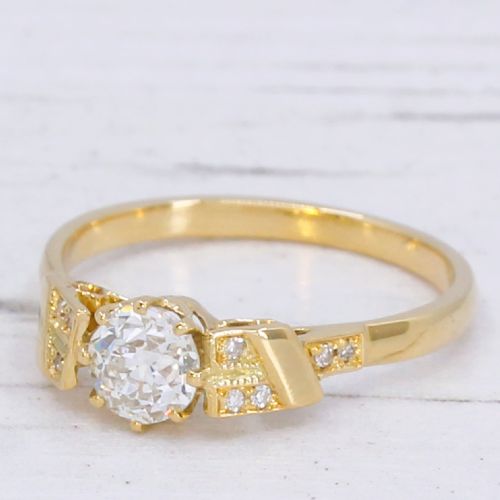
The yellow gold solitaire band appears in forms ranging from slim Edwardian mountings in 18ct gold and platinum to heavier 1950s interpretations and gypsy-set Victorian designs. Most examples found here combine warm yellow gold shanks with securely mounted stones.
Buyers seeking a yellow gold solitaire band encounter variations in carat weight, stone cut, and metal purity, including 9ct, 15ct, and 18ct gold. Each period imparts distinct geometric or organic character to the shoulders and setting.
How they were made
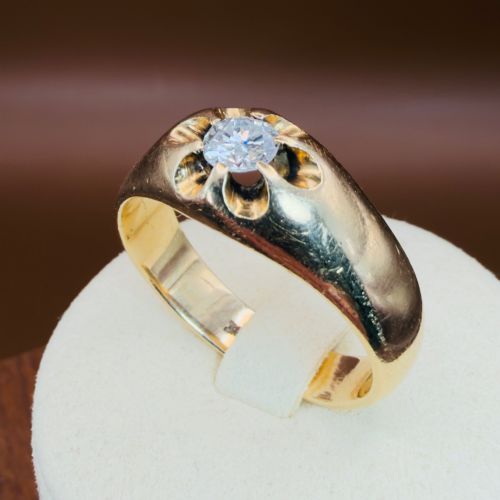
Goldsmiths constructed the yellow gold solitaire band by casting or forging gold alloys into durable shanks, frequently combining yellow gold with platinum for secure claw settings during the Edwardian and Art Deco periods. Gypsy settings embedded the diamond flush into the heavy gold band, a method favoured by Victorian makers for everyday strength.
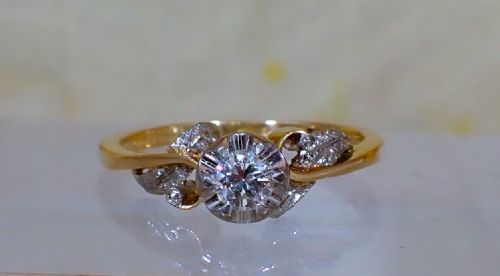
Gemstones were shaped by hand using antique cuts such as old European, old mine, and rose cuts, which produce broader facets than modern brilliant cuts. Master jewellers set each stone individually, often integrating subtle millegrain edging or pierced gallery work into the metal.
Some Victorian owners relied on gypsy-set diamond rings to safely wear precious stones while working with their hands.
What varies in quality
The quality of a yellow gold solitaire band rests upon the optical life of the central stone and the structural integrity of its mounting. Superior examples display harmonious proportions between the weight of the gold band and the presence of the gem.
Handwork precision distinguishes finer pieces, visible in the crispness of gallery piercing, the neatness of claw work, and the original thickness retained by the gold shank over decades of wear.
Piaget
The Yellow Gold Solitaire Band Glossary
- Solitaire
- A ring featuring a single set gemstone. This design style places emphasis entirely on the central diamond or coloured stone.
- Old European cut
- An early round diamond cut characterised by a small table, high crown, and large culet. It preceded the modern brilliant cut and displays broad, romantic light reflections.
- Gypsy setting
- A mounting style where the gemstone is flush-set directly into the thick metal band. This technique protected the stone edges during active daily wear in the Victorian period.
- Millegrain
- A decorative technique featuring a line of tiny raised metal beads along the edge of a setting. It adds a refined texture typical of Edwardian and Art Deco jewellery.
- Old mine cut
- A cushion-shaped antique diamond cut with a near-square girdle and high crown. Craftsmen cut these stones by hand under candlelight.
Yellow Gold Solitaire Band: Frequently Asked Questions
What is a yellow gold solitaire band?
A yellow gold solitaire band is a finger ring featuring a single gemstone mounted on a warm yellow gold shank. These pieces range from delicate Edwardian mountings to substantial mid-century designs.
They serve primarily as engagement rings or ceremonial bands, highlighting the individual character of antique diamonds and coloured stones.
How do I date my ring?
Dating a yellow gold solitaire band involves examining the cut of the diamond, the alloy purity, and the structural style of the setting. Victorian examples often feature gypsy settings or deep gold work, while Edwardian and Art Deco pieces combine yellow gold with platinum.
Maker marks, hallmarks, and stylistic clues such as millegrain borders further narrow down the manufacturing decade from the nineteenth century onward.
What is an old cut diamond?
An old cut diamond is a historically shaped stone hand-faceted before the invention of modern automated cutting machinery. These gems possess distinctive optical traits, including smaller tables and deeper pavilions that capture candlelight beautifully.
Such cuts give antique solitaire rings an authentic warmth and individual personality distinct from modern brilliant cuts.