




Yellow Gold Signet
Yellow gold signet rings carry centuries of personal heraldry and quiet authority on the hand, ranging from heavy mid-century seals to delicate Edwardian monograms.
Yellow Gold Signet
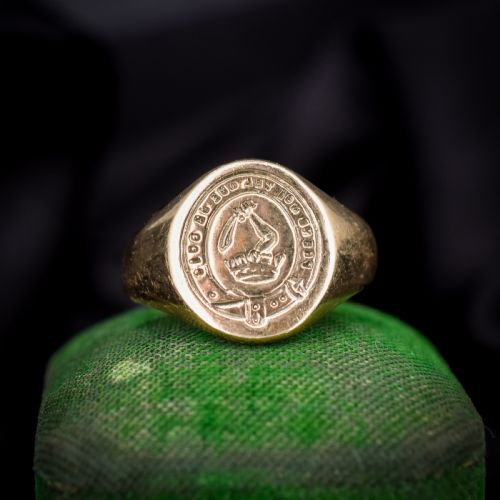
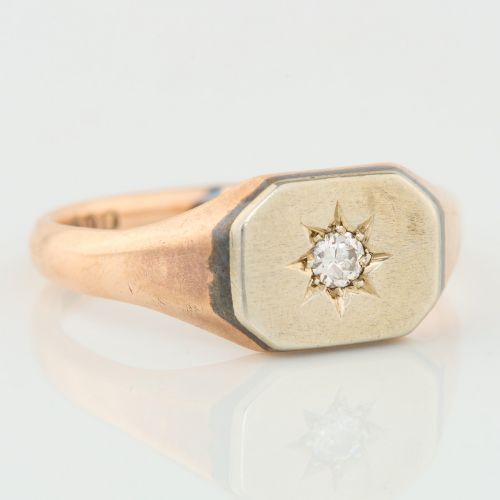
A yellow gold signet search brings up substantial finger rings cast in nine, fourteen, or eighteen carat gold, often carrying an intaglio, a crest, or a flat top ready for a monogram. These pieces span from the nineteenth century through the Edwardian era and into the nineteen-fifties and sixties, reflecting shifting tastes in personal adornment.
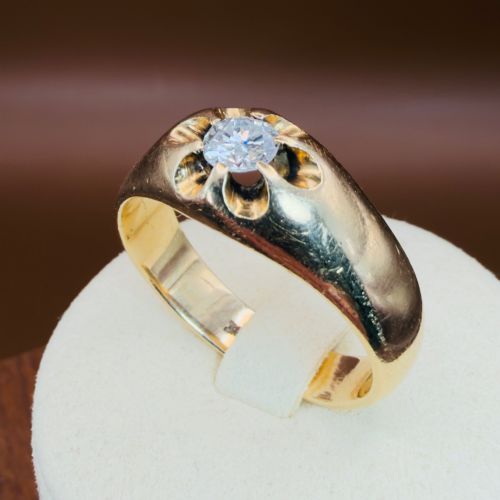
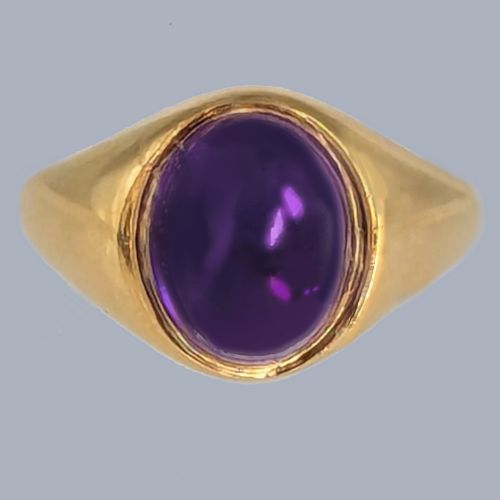
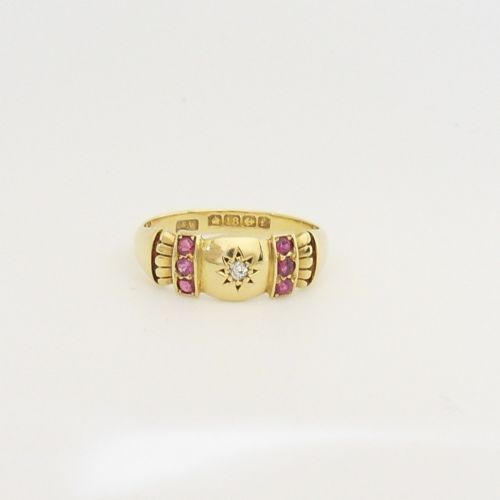
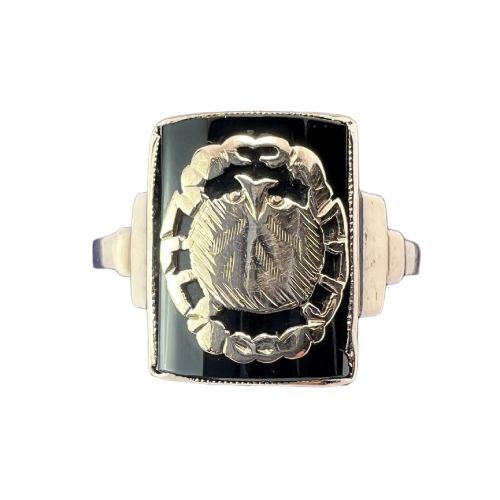
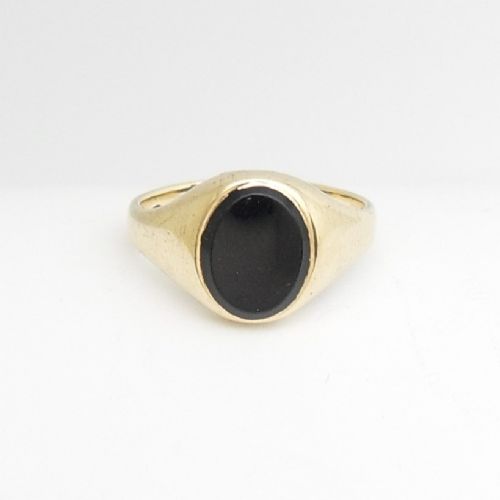
The most common examples on this page are mid-century nine-carat and eighteen-carat yellow gold rings, alongside Edwardian heart-shaped signets and Victorian hardstone pieces. Collectors also encounter bloodstone, onyx, and amethyst inserts set directly into the heavy yellow gold shoulders.
How they were made
These rings rely on traditional casting and hand-carving techniques executed in yellow gold, paired with hardstones such as bloodstone, agate, and black onyx. Goldsmiths secured stones using flush gypsy settings or bezel mounts, while intaglios were painstakingly carved into the face of the stone to leave a raised impression when pressed into wax.
Makers utilised nine carat and eighteen carat yellow gold alloys, occasionally incorporating diamonds, rubies, or emeralds as accents. Hallmarks stamped inside the shanks record the assay office, metal purity, and year of manufacture, linking the piece directly to its British or continental workshop.
Listings feature yellow gold signet rings spanning from the early nineteenth century through to nineteen sixty.
What varies in quality
Quality rests in the weight of the gold and the crispness of the carving, whether in the metal itself or the hardstone intaglio. Substantial gauge metal prevents the hoop from thinning over decades of wear, separating robust gentleman's rings from lighter souvenir pieces.
The precision of the engraving and the quality of inset gems define the upper tier of these pieces. Clear hallmarks and undamaged bezels indicate an item preserved through active use without heavy alterations.
William Griffiths And Son
The Yellow Gold Signet Glossary
- Signet ring
- A finger ring bearing a crest, monogram, or flat surface historically used for sealing documents with hot wax.
- Intaglio
- A gem or metal surface carved with a sunken design so that a impression raised in relief is produced when pressed into sealing wax.
- Hardstone
- A semi-precious stone such as agate, bloodstone, onyx, or sardonyx used for carving cameos and intaglios.
- Gypsy setting
- A mounting style where the gemstone is flush with the surrounding metal surface, secured by pushing the gold over the stone's edge.
- Hallmark
- An official stamp applied to precious metals indicating the purity, maker, and year of assay.
Yellow Gold Signet: Frequently Asked Questions
How do I date a gold signet ring?
Dating relies on the assay hallmarks stamped inside the band, which denote specific years, towns, and metal standards.
Stylistic shifts, such as the heavy geometric shoulders of mid-century pieces or the delicate engraving of Edwardian examples, also point to specific eras.
What are hardstone signet rings?
Hardstone signet rings feature durable semi-precious stones like bloodstone, onyx, or agate mounted directly into the gold bezel.
These stones often display carved intaglios or family crests that contrast sharply against the warm tones of the surrounding yellow gold.
How do I care for an antique signet ring?
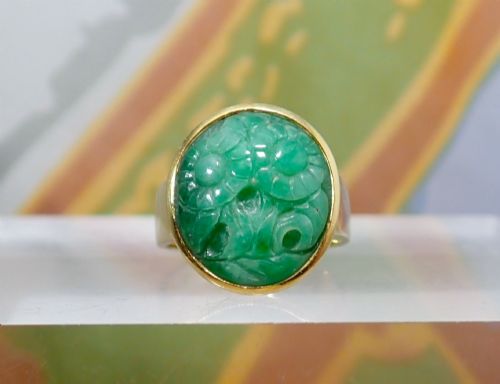
Antique signet rings require gentle cleaning with warm soapy water and a soft cloth to protect softer hardstones like amethyst or jade.
Regular checks by a jeweller ensure the claws or bezels holding any inset stones or hardstone faces remain secure during daily wear.