
Gold Cabochon Ring
A gold cabochon ring brings together smooth, polished gemstones and warm precious metal across Victorian, Edwardian, and mid-century designs.
Gold Cabochon Ring
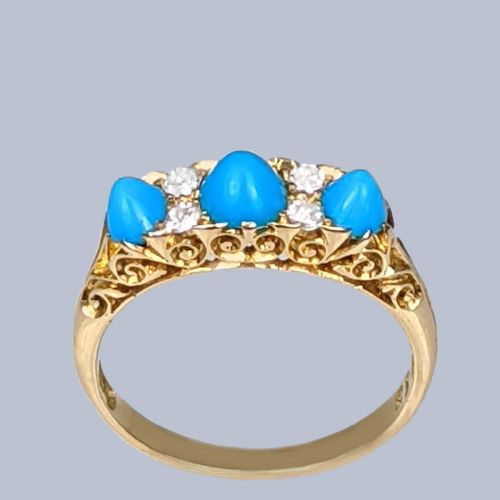
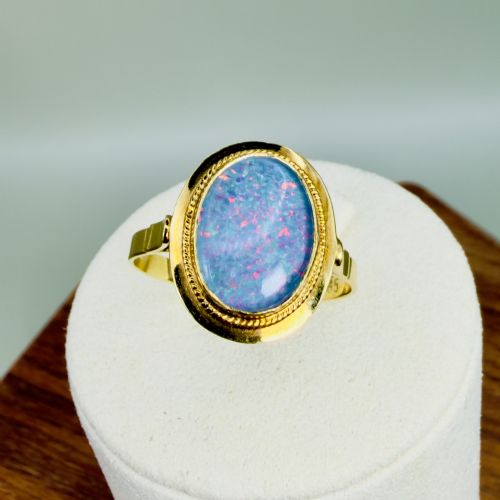
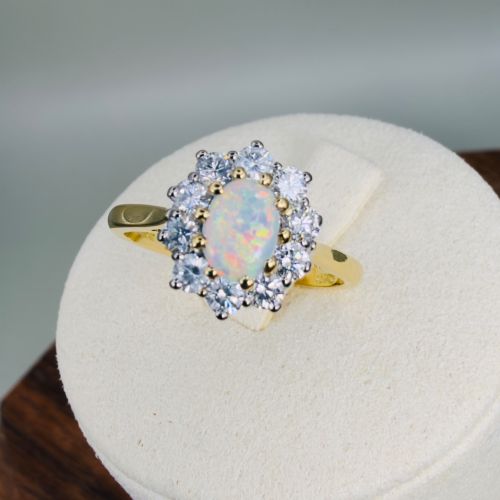
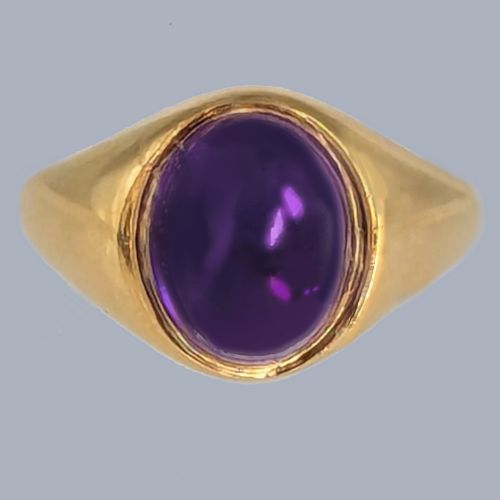
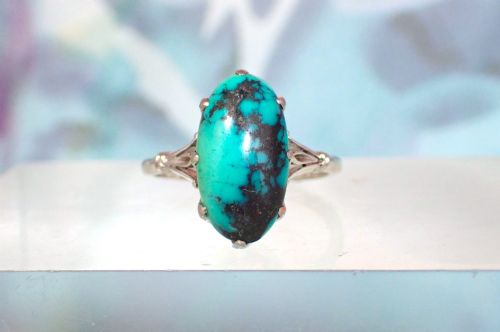
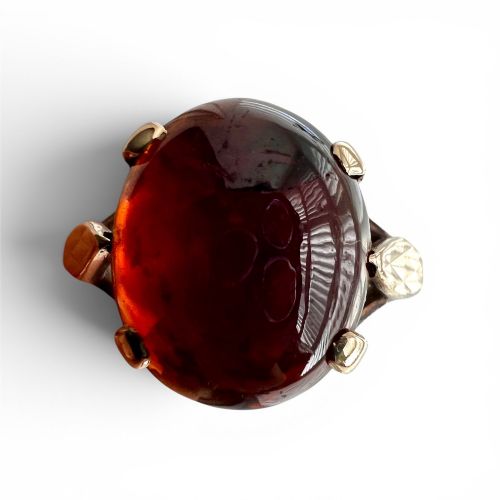
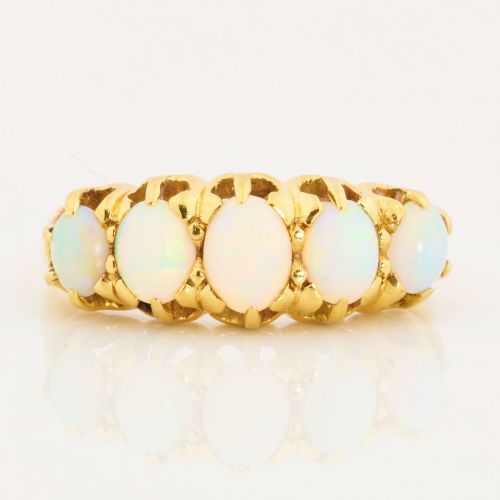
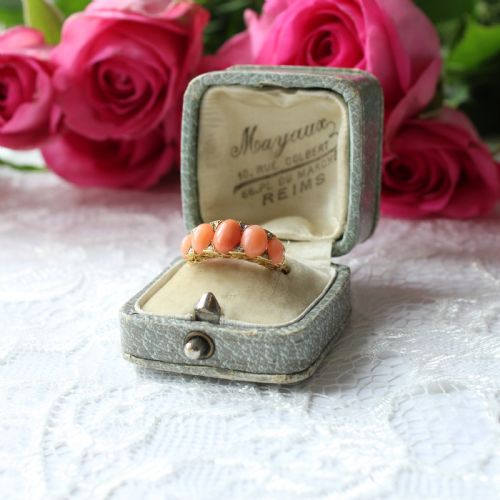
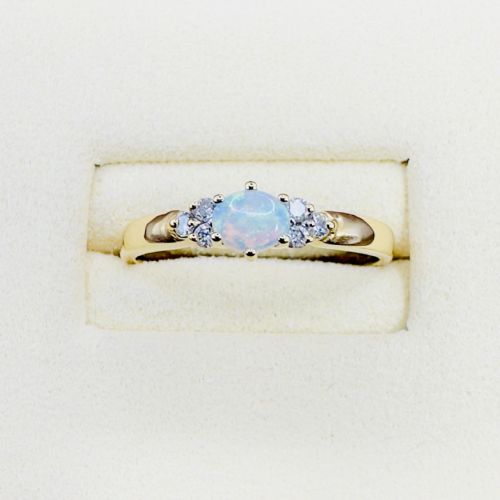
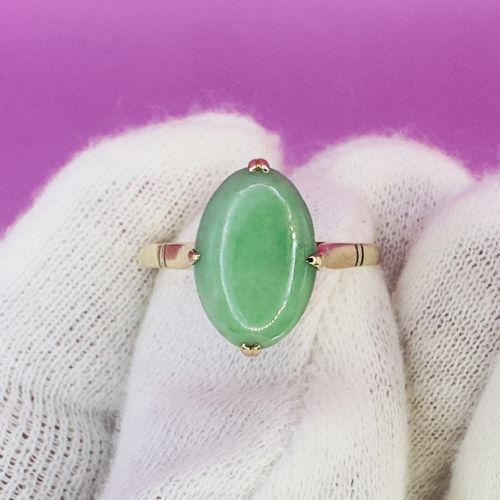
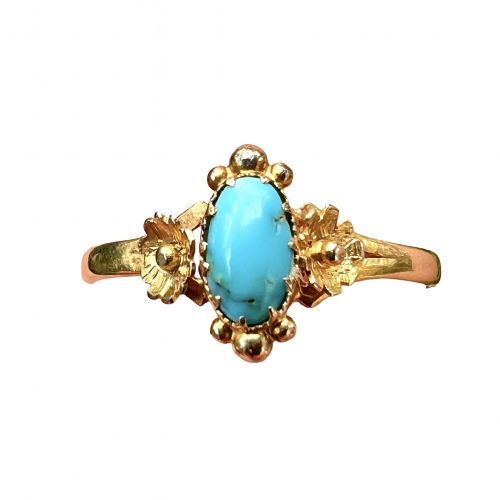
The selection ranges from simple solitaire designs to elaborate clusters framed by diamonds. Opal, garnet, turquoise, and jade appear frequently alongside amethyst, sapphire, and bloodstone.
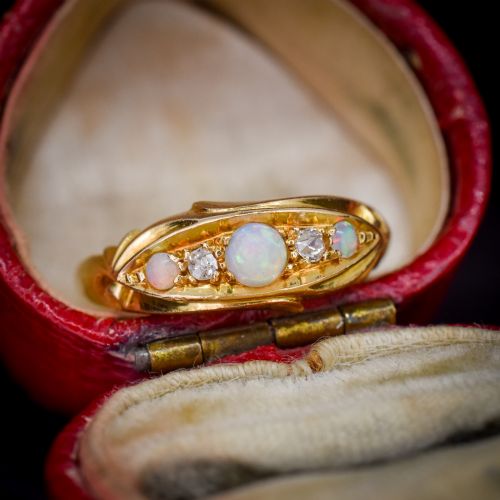
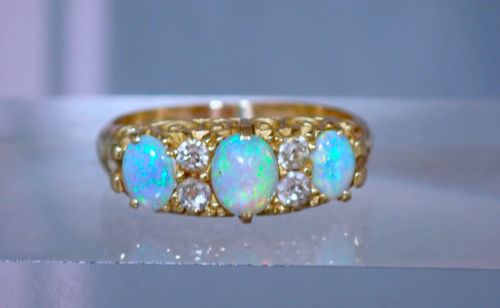
Solitaire and cluster configurations dominate the available forms, often utilising boat-shaped settings or trilogy arrangements. Pieces originating from the Edwardian period and Art Deco decades show distinct geometric or flowing metalwork.
How they were made
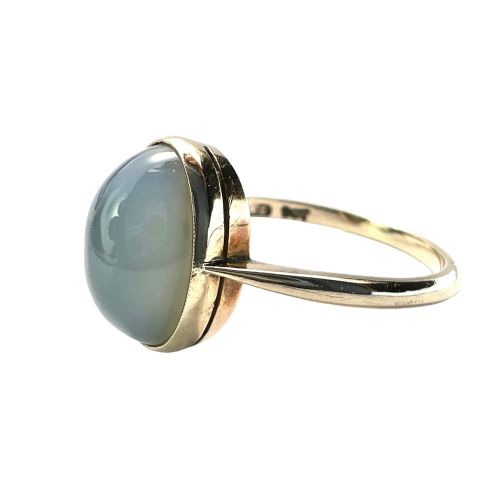
Goldsmiths shaped mounts in nine-carat and eighteen-carat yellow, white, and rose gold using casting, bezel settings, and claw configurations. Stones were carefully shaped and polished into smooth domes rather than faceted profiles.
Cluster and trilogy designs incorporated supporting diamonds, pearls, or emeralds to accent the central cabochon. Hallmarks and assay marks stamped into the metal bands record the origin and year of creation.
Certain Edwardian pieces tuck secret ruby eyes into miniature golden snakes coiled around the finger.
What varies in quality
The weight and purity of the gold band determine part of the value, with heavier eighteen-carat mountings sitting above lighter nine-carat settings. The natural quality, size, and optical play of the central cabochon stone dictate the prominence of the piece.
The integrity of the setting and the precision of the stone's fit within the bezel or claws reflect the standard of craftsmanship. Age and period-specific design details, such as hand-cut diamond accents or intricate gallery work, elevate individual examples.
The Gold Cabochon Ring Glossary
- Cabochon
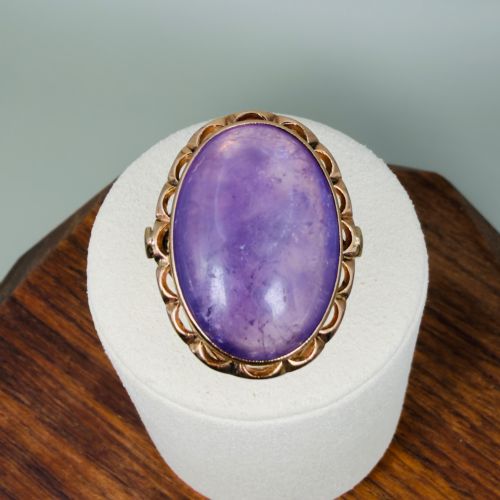
- A gemstone shaped to have a smooth, rounded surface with a flat or curved base instead of facets. This traditional cutting style highlights the natural colour and internal characteristics of stones like opal, jade, and star sapphire.
- Bezel setting
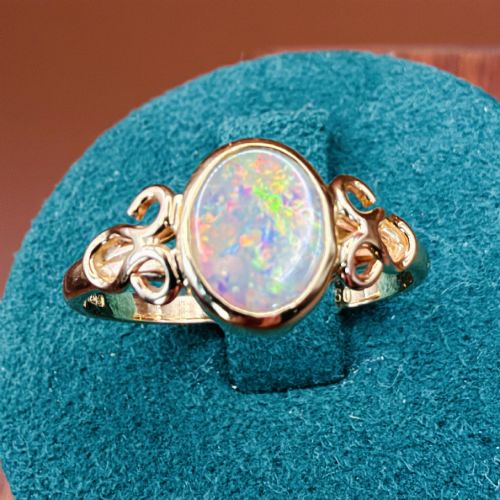
- A method of securing a gemstone by surrounding it with a thin metal collar that overlaps the edge of the stone. This technique protects the girdle of the gem and appears frequently in antique rings.
- Trilogy ring
- A ring featuring three main gemstones set in a row, traditionally symbolising the past, present, and future. These frequently combine a central cabochon stone with flanking diamonds.
- Boat ring
- A ring featuring a long, curved setting reminiscent of a boat hull, often mounting a cluster of stones across the finger. This silhouette is common in Victorian and Edwardian jewellery.
- Solitaire
- A piece of jewellery featuring a single mounted gemstone without secondary flanking stones. In these listings, solitaire cabochons let the material of the main gem stand alone.
Gold Cabochon Ring: Frequently Asked Questions
What is a cabochon cut?
A cabochon cut is a gemstone shaping technique that produces a smooth, rounded dome without flat facets. This style highlights stones with internal phenomena like opalescence or star effects.
Craftsmen have used this method for centuries to display materials that do not take a traditional faceted polish well, such as jade, turquoise, and star sapphire.
How do I care for antique gold rings?
Antique gold rings require gentle cleaning with warm soapy water and a soft cloth, avoiding harsh ultrasonic cleaners that can damage softer gems like opals. Store them individually to prevent the gold and stones from scratching against other pieces.
Regular checks by a jeweller ensure the claws and bezels holding the cabochon stones remain secure.
How can I date my ring?
Hallmarks stamped inside the band provide the most reliable evidence for dating, often indicating the assay office and year of manufacture. Stylistic clues such as Edwardian filigree, Victorian cluster arrangements, or mid-century modernist lines also help narrow down the period.
Comparing the gemstone combinations and metal types to documented pieces from similar decades offers further context.
Are opals fragile?
Opals contain water within their structure and score lower on the hardness scale than diamonds, making them more susceptible to scratching and thermal shock. Wearing them with care prevents impacts that could chip the polished dome.
Choosing bezel settings helps shield the edges of the opal from daily wear.