


Yellow Gold Padlock Jewellery
Yellow gold padlock jewellery comprises historic charms, bracelets and rings secured with miniature locks, prized for sentimental symbolism and mechanical charm.
Yellow Gold Padlock Jewellery
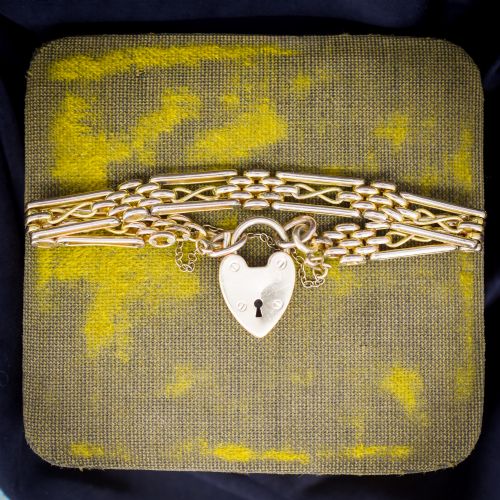
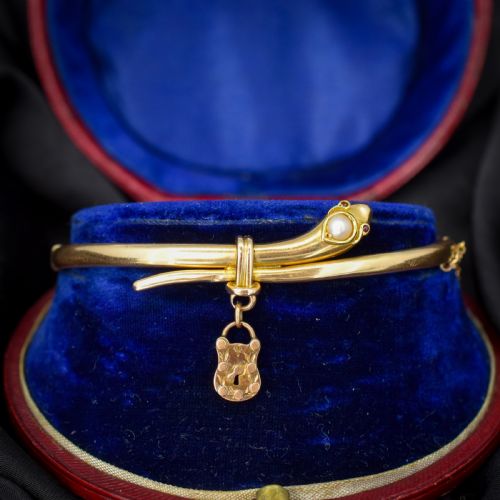
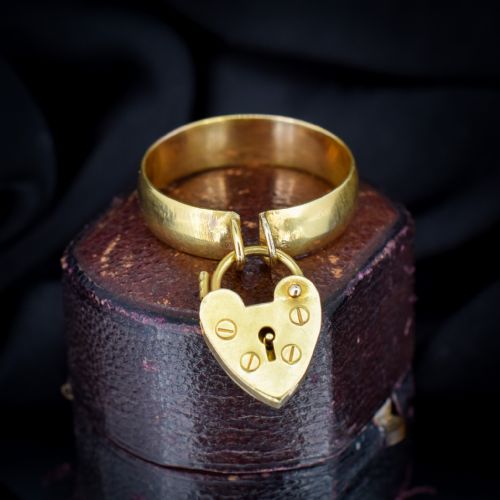
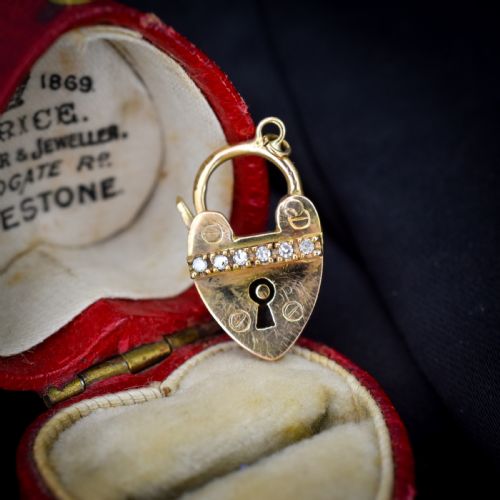
Yellow gold padlock jewellery centres on functional or decorative miniature padlocks attached to bracelets, pendants and rings. These pieces emerge predominantly in Victorian, Edwardian and early twentieth-century designs, reflecting a long history of romantic and commemorative adornment.
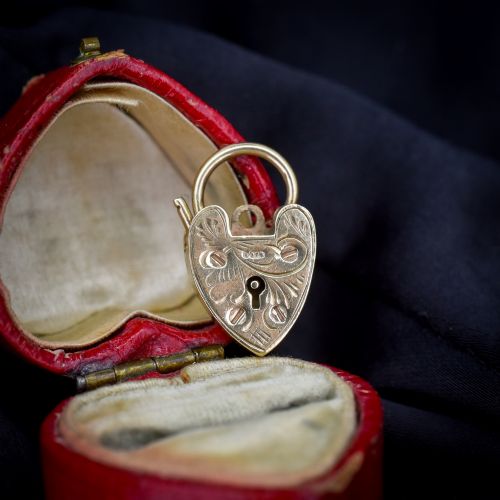
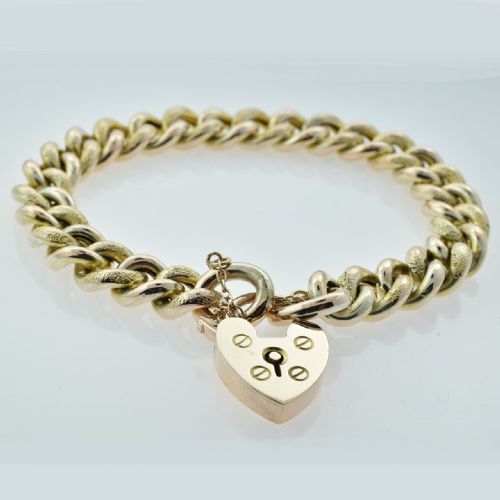
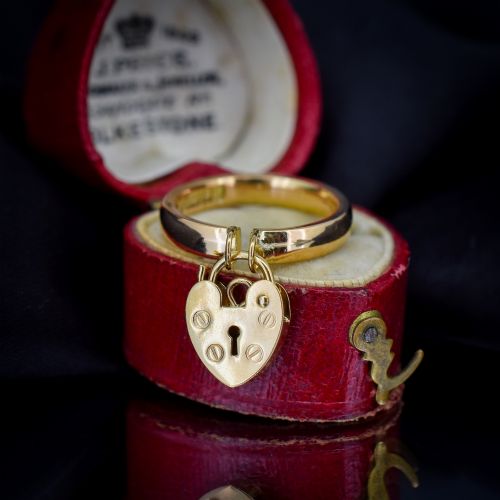
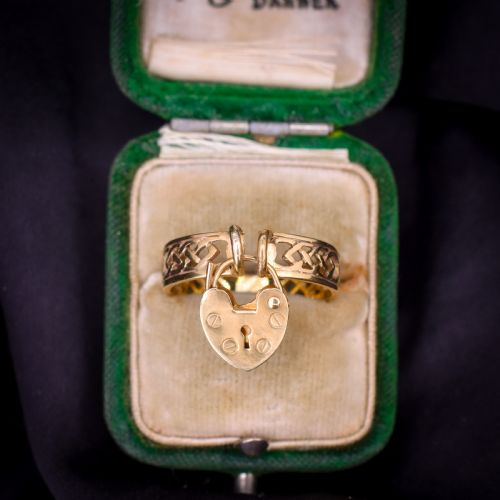
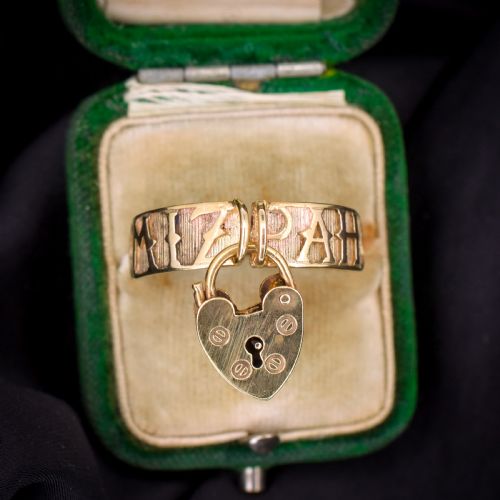
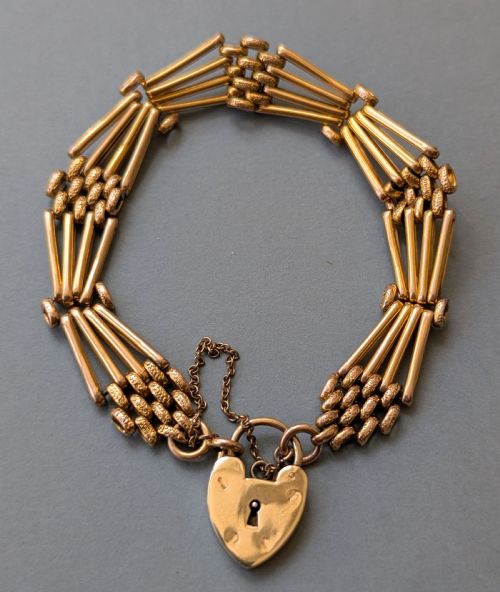
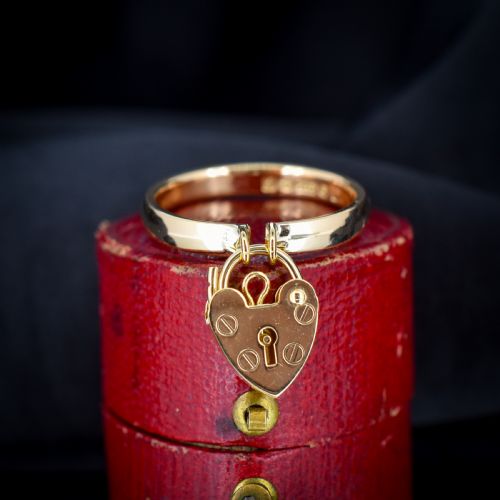
Bracelets form a core group within yellow gold padlock jewellery, frequently appearing as curb link, gate link or fancy link chains fitted with heart-shaped padlock clasps. Rings and charms complete the selection, often incorporating engraved surfaces or drop padlock motifs.
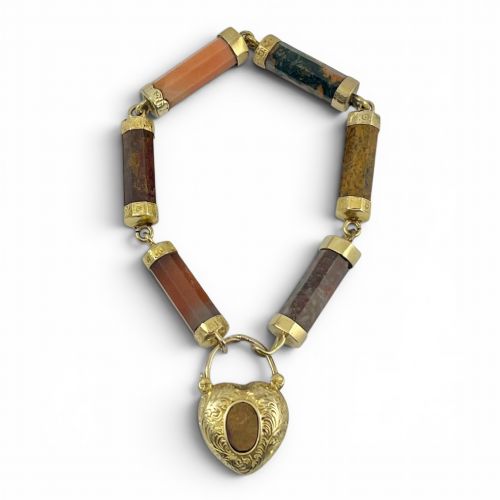
The aesthetic spans classic Victorian and Edwardian periods through to later revivals, alongside distinct cultural expressions such as Scottish agate pieces and Celtic revival styles. Buyers encounter both solid gold variations and rolled gold alternatives across these historic categories.
How yellow gold padlock jewellery was made
Craftsmen utilised various gold purities, predominantly 9ct gold and 15ct gold, alongside rolled gold for accessible alternatives. These metals were shaped into robust curb links, intricate gate links and solid bands to support the working padlocks.
Goldsmiths integrated decorative elements like hand engraving, repoussé work and channel settings to adorn the metal surfaces. Gemstones including pearls, diamonds, rubies, chrysoberyl and agate were then flush or prong set into the gold frames.
The padlocks themselves required precise mechanical construction, featuring functional internal springs and hinged bails that allowed them to open and secure. Many incorporate subtle hinges or pivoting components, particularly on charm pendants and opening purse designs.
Some miniature padlocks double as tiny opening purses, guarding microscopic secrets inside their hinged gold compartments.
What varies in quality
Quality diverges notably between solid gold compositions and rolled gold substitutes, with higher carat thresholds like 15ct gold representing finer historic standards. The weight and gauge of the underlying chain links also dictate the structural integrity and substantial feel of a bracelet.
The finesse of the hand engraving and the complexity of the link construction differentiate standard production from superior craftsmanship. Pieces featuring matched gemstones, such as well-matched pearls or vibrant rubies and agate, demonstrate greater initial investment by the maker.
Condition and operational longevity of the padlock mechanism remain central to assessment. A clasp that snaps shut securely and retains its original spring tension preserves the historic integrity of the item.
The Yellow Gold Padlock Jewellery Glossary
- Padlock
- A miniature mechanical lock used as a clasp on bracelets or worn as a pendant. These often take a heart shape and symbolise security or affection.
- Gate link
- A style of linked bracelet constructed from parallel bars connected by vertical links, frequently paired with a padlock clasp. This design originated in the Victorian era and remained popular into the twentieth century.
- Curb link
- A chain pattern composed of uniform, interlocking links that lie flat. It provides a sturdy foundation for heavy padlock charms.
- Rolled gold
- A material formed by bonding a thin sheet of gold to a base metal core. This technique offered the appearance of solid gold at a lower cost.
- Mizpah
- A sentimental inscription derived from the Hebrew Bible meaning an emotional bond between people who are separated. It frequently appears on rings and charms from the Victorian period.
Yellow Gold Padlock Jewellery: Frequently Asked Questions
What is yellow gold padlock jewellery?
Yellow gold padlock jewellery consists of historic wearable items featuring small working or decorative padlocks, most notably heart-shaped charms attached to curb or gate link bracelets. These pieces date from the nineteenth and early twentieth centuries.
They combine decorative metalwork with functional elements, serving historically as tokens of attachment or commitment between loved ones.
How do you wear a padlock bracelet?
Padlock bracelets fasten around the wrist using the miniature padlock as the primary clasp. The shackle lifts to hook through a jump ring or directly onto a link.
Because many historic clasps rely on original internal springs, wearers often add a safety chain or handle the mechanism with care during daily use.
What periods do these pieces come from?
The selection spans the Victorian and Edwardian eras, extending into the 1920s, 1930s and mid-century modern revivals. Victorian examples often feature rich 15ct gold or detailed hand engraving.
Later pieces from the 1920s and 1930s frequently utilise 9ct yellow gold and incorporate geometric or Celtic revival motifs.
Are the padlock charms functional?
Many of the padlocks are fully functional, featuring working springs and miniature keys or push-release mechanisms. They open to allow removal from the bracelet or chain.
Some variations are decorative pendants cast as solid lock shapes that do not open, serving purely as ornamental charms.
What materials are used besides gold?
Historic pieces frequently incorporate gemstones such as seed pearls, diamonds, rubies, chrysoberyl and Scottish agate. Rolled gold is also found as an alternative to solid 9ct or 15ct gold.
These materials were chosen to enhance the visual appeal of the engraved surfaces and coloured metal links.