

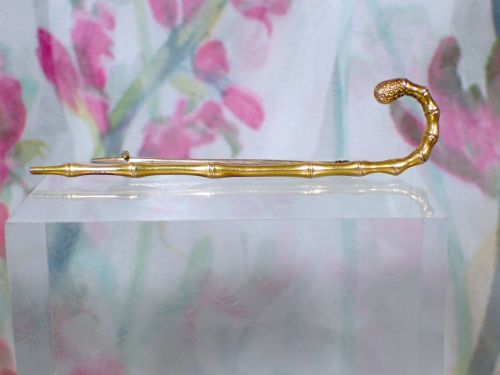
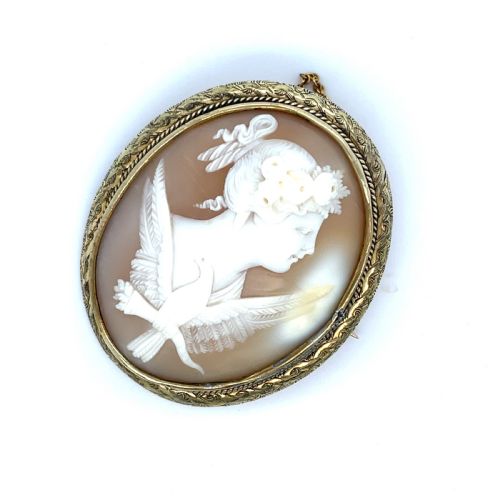
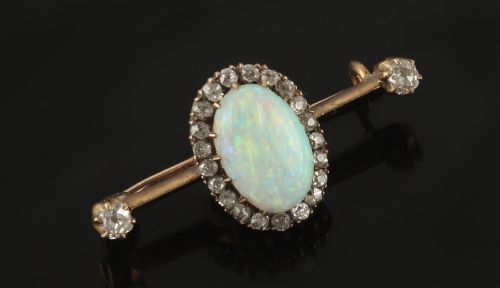


Yellow Gold Lapel Pin
A yellow gold lapel pin secures a fold or fastens a lapel while bringing a touch of period personality to your attire.
Yellow Gold Lapel Pin
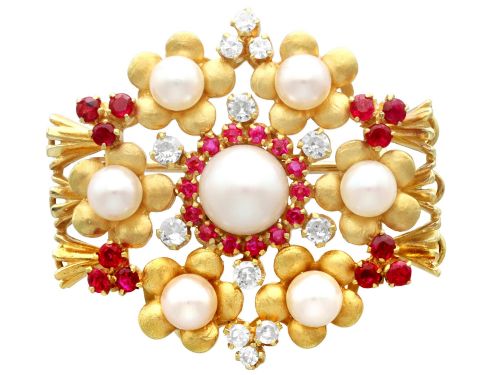
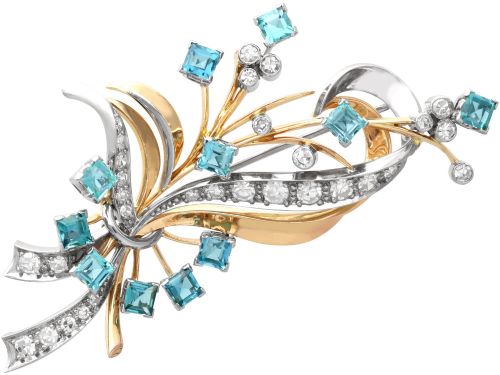
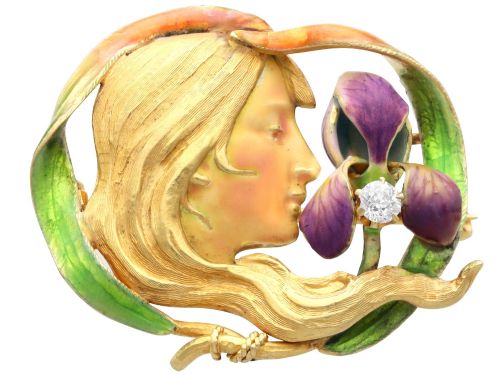
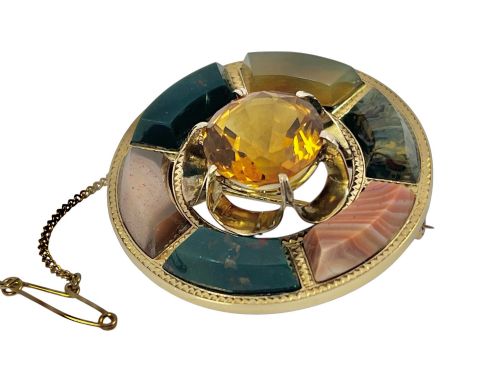
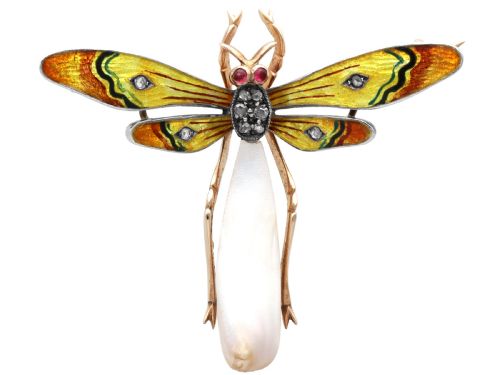
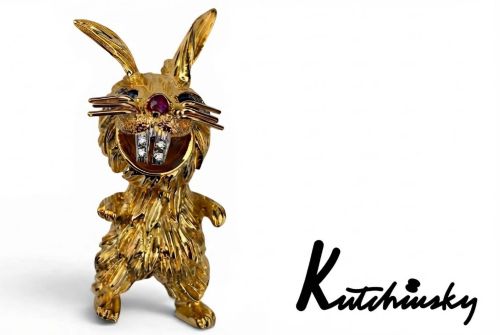
A yellow gold lapel pin encompasses a variety of antique forms, including bar brooches, stick pins, jabot pins, and figural designs such as birds, bugs, and hunting motifs. These pieces span from the Victorian and Edwardian eras through the Art Nouveau and Art Deco periods, extending into mid-century vintage creations.
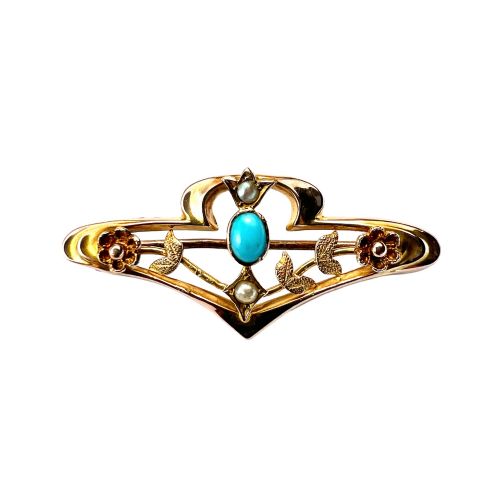
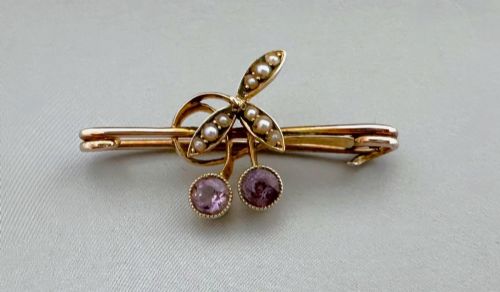
The version most commonly met on this page is the gold bar brooch or stick pin, frequently set with small diamonds, pearls, rubies, or garnets. These items originate from British and European workshops, reflecting the prevailing ornamental tastes of their respective decades.
Materials and Technique
These pieces are constructed primarily from varying purities of gold, ranging from nine-carat up to eighteen-carat yellow gold, shaped into wire frames, solid bars, or cast figural subjects. Metals are often combined with surface techniques such as cannetille work or piercing to create intricate decorative details.
Gemstones including diamonds, sapphires, rubies, turquoise, and pearls are flush-set, bezel-set, or mounted in clusters using traditional jeweler's techniques of the period. Hand-carved elements, such as cameos and Essex crystals, are integrated directly into the gold mounts.
The listings span multiple eras, encompassing Victorian, Edwardian, Art Deco, and mid-century vintage periods in various gold purities.
Craftsmanship and Proportion
Quality varies significantly in the precision of the stone setting and the crispness of the metalwork, where finer examples display secure flush settings and well-balanced proportions. Hand-carved or pierced details require a higher degree of artisan skill, distinguishing mass-produced items from superior bench-made pieces.
The choice and matching of gemstones, such as uniform old-cut diamonds or well-matched natural pearls, elevate the standard of the jewel. Signed pieces by established makers or those retaining fitted original boxes represent the upper tier of manufacture.
Kutchinsky·Ben Rosenfeld·Charles de Temple
The Yellow Gold Lapel Pin Glossary
- Bar brooch
- A slender metal pin featuring a decorative central motif or stone alignment, designed to fasten horizontally across fabric.
- Stick pin
- A long pin topped with an ornamental head, originally used to secure neckties or lapels in place.
- Cannetille
- A delicate wirework technique resembling gold embroidery, popular in nineteenth-century jewellery manufacture.
- Essex crystal
- A reverse-intaglio rock crystal cabochon hand-painted with a miniature subject that appears three-dimensional.
- Jabot pin
- A long ornamental pin historically used to secure the lace jabot on eighteenth and nineteenth-century garments.
Yellow Gold Lapel Pin: Frequently Asked Questions
How were lapel pins originally worn?
Victorian and Edwardian gentlemen and ladies utilised these pins to fasten neckwear, secure lapels, or ornament hats and scarves. They served both a functional purpose in holding garments together and a decorative one as personal adornment.
Over time, shifting fashions moved these pieces from everyday utility wear to purely decorative collectibles worn on jackets, lapels, and knitwear.
How can I date my gold pin?
Dating relies heavily on the overall style, the cut of any set gemstones, and the manufacturing techniques employed. Victorian pieces often feature detailed hand-piercing and cannetille work, while Edwardian designs favor lighter floral motifs and pearls.
Later mid-century and vintage pieces from the nineteen-fifties and sixties introduce abstract forms and distinct modernist styling that contrast with nineteenth-century ornamentation.
Are these pins suitable for daily wear?
Most antique gold pins are robust enough for occasional modern wear, provided they are handled with care and secured with a reliable clasp or pin protector. Heavier stones and delicate wirework require gentler handling than modern manufactured equivalents.
Sturdier bar brooches and heavier gold figural pins generally withstand regular use better than exceptionally fragile Art Nouveau filigree designs.