


Vintage Gold Dress Pin
A vintage gold dress pin fastens a lapel or secures a scarf, bringing the polished warmth of gold and precious stones to everyday wear.
Vintage Gold Dress Pin
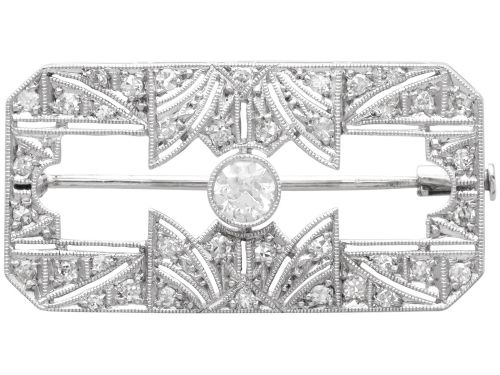
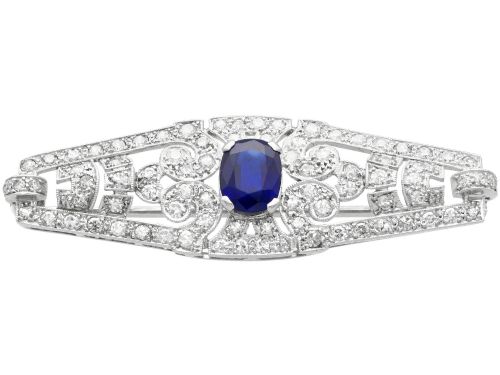
A vintage gold dress pin is typically encountered as a bar brooch or cluster design, drawing from Victorian, Edwardian, and Art Deco periods. These pieces serve as decorative fastenings, often incorporating yellow gold, white gold, or platinum set with diamonds, rubies, pearls, and garnets.
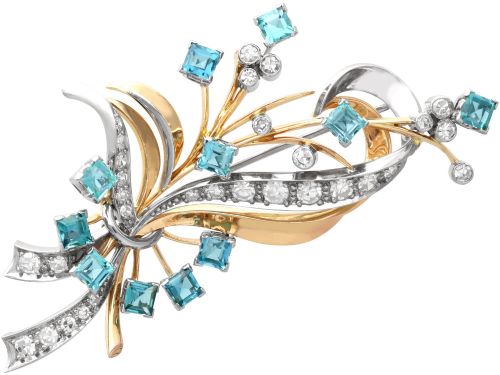
The selection ranges from delicate nineteenth-century garnet and pearl designs to geometric white gold and platinum creations from the nineteen-twenties. Mid-century examples also appear, featuring large step-cut stones such as citrine, aquamarine, and amethyst paired with textured yellow gold.
Materials and construction
Goldsmiths utilised fifteen-carat and eighteen-carat yellow and rose gold for early Victorian pieces, later incorporating platinum alongside white gold to mount diamonds securely in linear Art Deco frameworks. Stones including rubies, sapphires, emeralds, and pearls are flush-set, claw-set, or bead-set into the precious metal.
Techniques evolved from closed-back foil settings in the nineteenth century to open-back mountings that allowed light to pass through old-cut diamonds and coloured gemstones. Metalwork styles shifted from organic floral and bird motifs to sharp geometric lines and openwork leaf patterns.
Victorian jewellers occasionally turned real bird anatomy into wearable art, setting ruby eyes into gold and silver feathered forms.
Assessing quality
Quality rests upon the proportion and calibre of the set stones, such as well-matched diamonds and clean rubies, alongside the crispness of the metal fabrication. Pieces that maintain original pin mechanisms and secure clasps demonstrate superior original manufacture.
The distinction between standard production and finer work lies in the intricacy of the piercing, the weight of the gold or platinum, and the integration of contrasting materials like black onyx, rock crystal quartz, or chrysoprase.
The Vintage Gold Dress Pin Glossary
- Bar brooch
- A slender horizontal pin featuring central gemstones or decorative motifs, popular across the Victorian and Edwardian periods.
- Old cut diamond
- A hand-faceted diamond shape characteristic of nineteenth and early twentieth-century jewellery, featuring a smaller table and higher crown.
- Platinum
- A dense, durable white metal utilised in Edwardian and Art Deco mountings to hold delicate stone settings securely.
- Step cut
- A gemstone cutting style with rectangular facets arranged parallel to the girdle, frequently seen on large mid-century aquamarines and citrines.
- Cluster brooch
- A central focal grouping of stones surrounded by smaller accent gems, creating a concentrated display of colour and sparkle.
Vintage Gold Dress Pin: Frequently Asked Questions
How do I wear a dress pin?
These pieces pin securely through heavy fabrics like wool coats, jacket lapels, or thick scarves where the weight of the gold and gemstones is properly supported.
Avoid pinning them to delicate silks or loose knits that might stretch under the weight of the metal and stones.
How do I date a brooch?
Dating relies on the combination of metal purity marks, stone cuts, and prevailing design styles such as geometric Art Deco lines or organic Victorian motifs.
Examining the pin mechanism and the reverse of the setting also provides clear indicators of the period of manufacture.
What is the difference between gold and platinum settings?
Yellow and rose gold dominate Victorian and mid-century designs, offering a warm tone that complements garnets, rubies, and citrines.
Platinum and white gold emerged during the Edwardian and Art Deco eras to provide a bright, neutral backdrop for diamonds and pearls.
Are these pins suitable for daily use?
Sturdy eighteenth and nineteenth-century constructions in higher-carat gold handle regular wear well when the pin stem remains strong and springy.
Care should be taken with pieces containing softer stones like pearls or opals, which require gentle handling and protection from harsh impacts.