
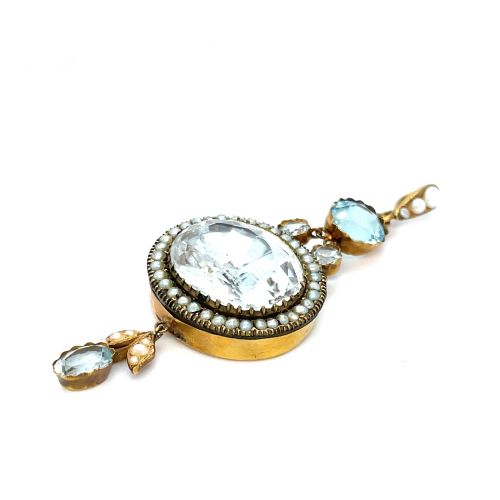
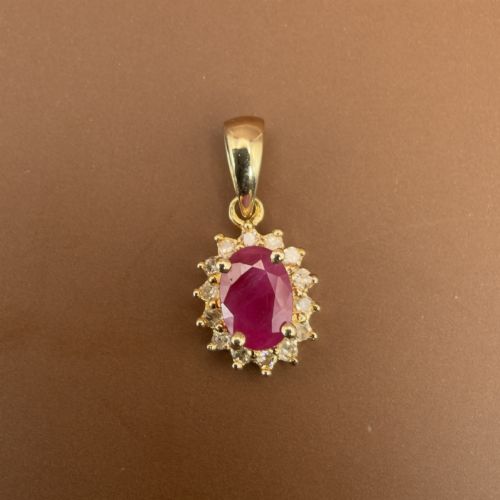
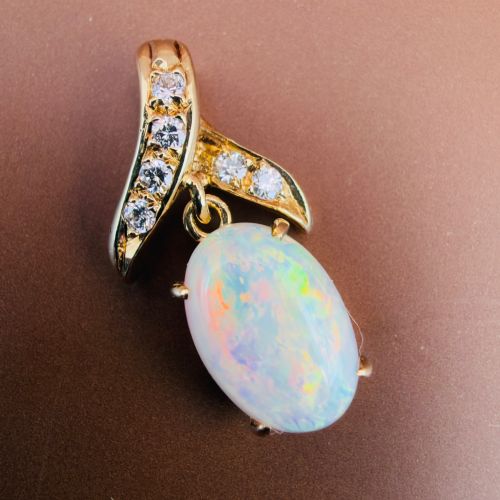
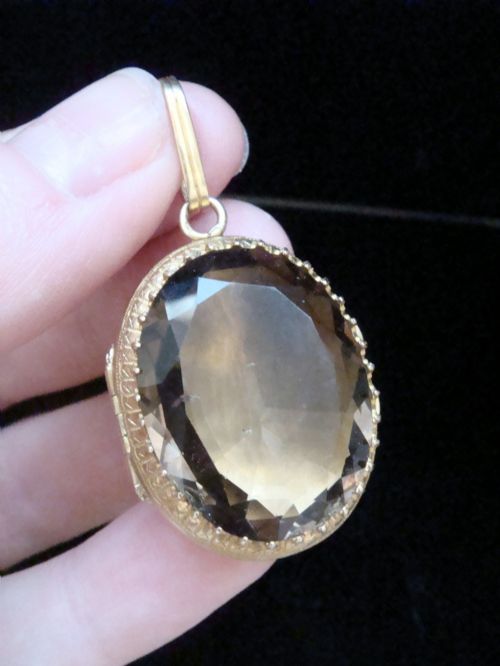



Yellow Gold Gemstone Charm
A yellow gold gemstone charm brings together warm metal and coloured stones in small, wearable forms spanning the Victorian era to the mid-twentieth century.
Yellow Gold Gemstone Charm
When searching for a yellow gold gemstone charm, you encounter pieces primarily configured as pendants, fobs, seals, and lockets. The selections span periods from the late nineteenth century through Victorian, Edwardian, and Art Deco phases up to the 1950s and 1960s.
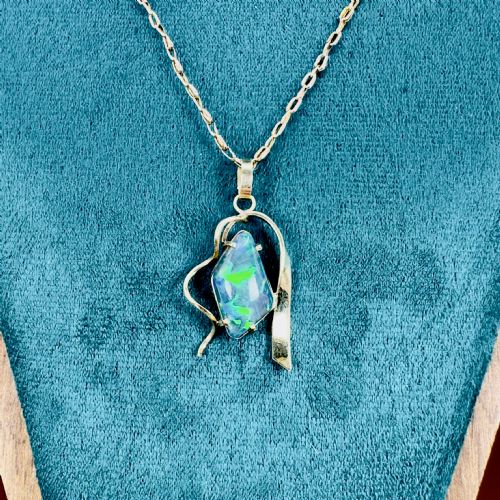
Victorian and Edwardian examples frequently incorporate amethyst, garnet, seed pearl, and aquamarine set in gold frames, sometimes shaped as hearts, crosses, or swivel fobs. Mid-century items often showcase larger opals, citrines, and multi-stone clusters set in nine-carat or fourteen-carat yellow gold.
Materials and Technique
Gold carat weights vary across the pieces from nine-carat up to twenty-two-carat yellow gold, alongside silver-gilt or specific continental markings, providing the structural mount for each item. Stones are secured via claw settings, bezel mounts, or delicate filigree wirework.
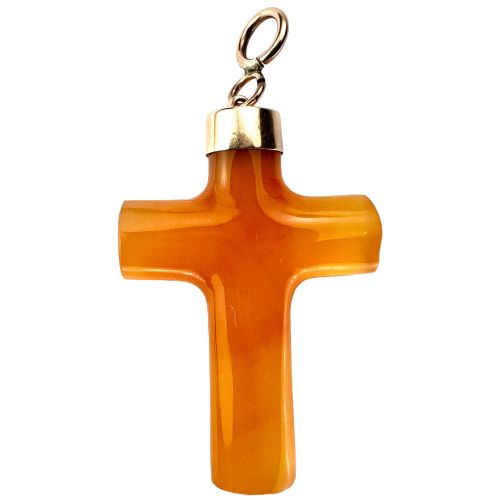
Lapidary techniques visible in the inventory include cabochon cuts for opals and moonstones, faceted cuts for aquamarines, citrines, and garnets, and detailed carving seen in agate crosses and bloodstone intaglios.
Listings feature yellow gold gemstone charm items from the Victorian, Edwardian, Art Deco, and mid-century periods, utilising opals, amethysts, garnets, and aquamarines.
Qualities of Construction
Distinctions in quality rest upon the stone weight, the depth of colour in gems like rubies and emeralds, and the precision of hand-carved details or engraving on fobs and lockets. Solid construction with substantial gold weight, such as heavy eight-gram mounts, separates robust pieces from lighter alternatives.
The integrity of gemstone settings, the presence of original foil backs in antique aquamarines, and intricate filigree or spinner mechanisms define the finer items in this category.
The Yellow Gold Gemstone Charm Glossary
- Fob
- A short chain or pendant attached to a pocket watch or worn separately as a charm, often featuring a hardstone seal or revolving swivel centre.
- Intaglio
- A gemstone carved with a sunken design so that an impression can be made in wax, commonly utilised in seals and fobs.
- Cabochon
- A gemstone shaped and polished with a smooth, rounded convex surface rather than faceted edges.
- Cluster
- A grouping of smaller gemstones arranged closely around a central stone to create a unified floral or geometric pattern.
- Filigree
- Delicate ornamental work consisting of fine gold wire twisted and soldered into intricate patterns.
- Witch's Heart
- A pendant shaped like a curved, asymmetrical heart associated with traditional sentiment and protection charms.
Yellow Gold Gemstone Charm: Frequently Asked Questions
What is a gold fob?
A gold fob is a small decorative ornament designed to hang from a pocket watch chain or charm bracelet. These pieces frequently incorporate swivel mechanisms, hardstone seals, or engraved panels.
In historical use, they functioned as personal signets or daily accessories. Today, they serve as pendants worn on neck chains.
How do I date an antique charm?
Dating relies on hallmark stamps, gold carat standards, gemstone cuts, and the overarching stylistic period. Victorian and Edwardian items often feature seed pearls, closed-back settings, and hand-engraved details.
Mid-century pieces from the 1950s and 1960s tend to utilise heavier nine-carat or fourteen-carat mountings with prominent cabochon opals or large faceted aquamarines.
Are these charms solid gold?
The items are fashioned from various gold purities, recorded as nine-carat, fourteen-carat, fifteen-carat, eighteen-carat, and twenty-two-carat yellow gold. Each piece utilises solid precious metal standards appropriate to its manufacturing era.
Maker marks and metal stamps often appear on the jump rings, bails, or reverse sides of the charms.
How should I wear an antique pendant?
Antique pendants and charms pair well with fine or medium gold chains that match the carat colour of the pendant mount. Ensuring the jump ring or bail is secure protects the piece during daily wear.
Removing the jewellery before swimming, sleeping, or applying cosmetics preserves the integrity of softer stones like opals and pearls.