
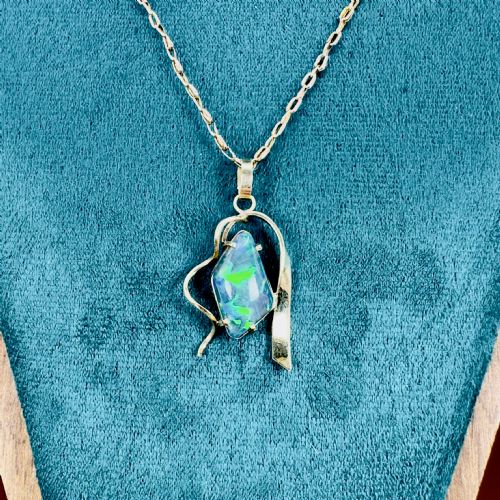


Gold Opal Pendant Necklace
A gold opal pendant necklace brings together shimmering play-of-colour stones and precious metalwork across multiple historic eras.
Gold Opal Pendant Necklace
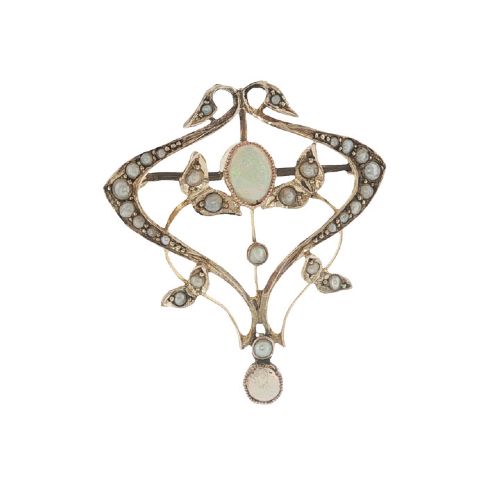
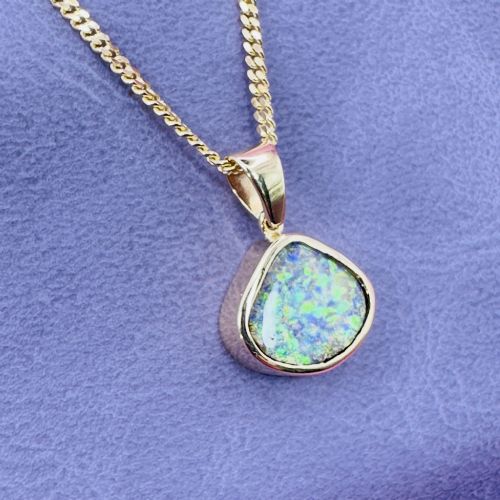
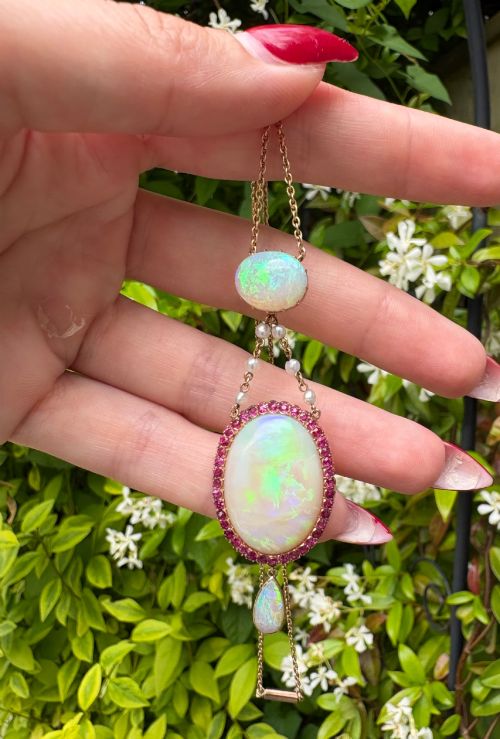
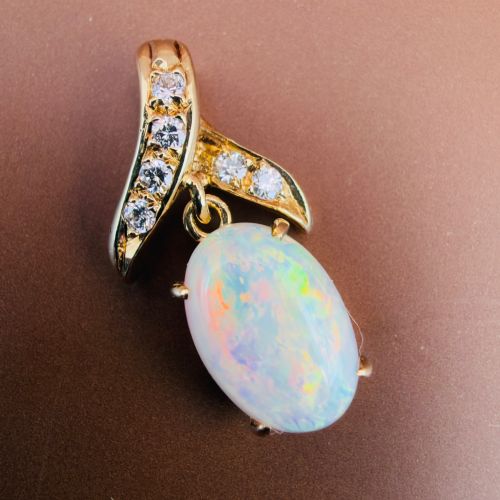
A gold opal pendant necklace combines a central opalescent gemstone suspended from a chain, frequently appearing alongside accent stones like diamonds, pearls, or rubies. Pieces matching this search phrase span Victorian, Edwardian, Art Deco, and mid-century periods, showing diverse forms from simple solitaires to elaborate clusters.
The most common versions met on this page are mounted in 9ct or 15ct gold, often taking the shape of oval cabochons, teardrops, or distinctive hearts. Many designs incorporate seed pearls or small diamonds framing the main opal, reflecting the aesthetic preferences of their respective decades.
Earlier examples typically originate from the late nineteenth and early twentieth centuries, whilst later mid-century creations utilise abstract shapes or heavier gold mountings. These items function both as standalone pendants and versatile pendant brooches capable of dual wear.
How they were made
Metalsmiths constructed these pieces primarily in yellow and white gold of varying carats, alongside occasional silver settings and platinum accents. Stones were secured using traditional claw settings, bezels, or flush mounts designed to highlight the natural play-of-colour within each cabochon or doublet.
Intricate wirework, filigree details, and millegrain edges frequently define the mounting techniques seen in Edwardian and Art Deco specimens. Gemstones such as diamonds, rubies, and seed pearls were meticulously arranged around the central opals to create balanced cluster and drop formations.
What varies in quality
The visual intensity and spectral play-of-colour within the opal heavily dictate the overall character of the piece, with vibrant flashes of red, green, and blue commanding greater visual presence. Stone weight and structural integrity, such as choosing solid natural stones over doublets, also differentiate examples across the collection.
The complexity of the metalwork, including hand-formed filigree, substantial gold weight, and the careful integration of supporting diamonds or pearls, reflects the artisan skill invested in the construction. Preservation of original mounts and secure stone settings further establish the standing of individual items.
Murrle Bennett
The Gold Opal Pendant Necklace Glossary
- Cabochon
- A gemstone shaped and polished with a smooth, rounded surface rather than faceted. This style is especially common for displaying the optical phenomena in opals.
- Doublet
- A composite gemstone consisting of a thin slice of natural opal glued to a darker backing material like ironstone to enhance colour appearance. It offers the look of a solid black opal at a different scale.
- Millegrain
- A jewellery technique featuring a line of tiny metal beads along the edges of a setting. It adds a delicate texture popular in Edwardian and Art Deco design.
- Seed pearl
- A very small, naturally occurring pearl often used as delicate accent decoration. These tiny pearls frequently border Victorian and Edwardian opal clusters.
- Play-of-colour
- The optical phenomenon where a gemstone displays shifting flashes of spectral colours as it moves in the light. This is the defining visual characteristic of quality opals.
Gold Opal Pendant Necklace: Frequently Asked Questions
How do I date an opal necklace?
Dating relies on examining the metal hallmarks, setting styles, and overall design motifs present in the piece. Victorian and Edwardian examples often feature intricate filigree or seed pearl clusters, whereas mid-century items tend toward heavier gold weights and abstract forms.
Specific clues like platinum-topped gold or particular clasp types help narrow down the decade of production. Comparing the gemstone cut and mounting technique against established historical periods provides a reliable timeline.
What is a boulder opal?
A boulder opal is a type of gemstone where the precious opal forms naturally within its host rock matrix, such as ironstone. This leaves a natural backing of ironstone attached to the back of the opal.
These stones often display striking, unusual shapes and deep colour play against the dark background matrix. They appear frequently in mid-century and later jewellery designs.
How should I care for antique opals?
Opals contain natural water content and possess a softer Mohs hardness than diamonds, requiring gentle handling to prevent damage. Avoid exposing them to harsh chemicals, ultrasonic cleaners, extreme temperature changes, or prolonged dryness.
Cleaning should be done simply with a soft, damp cloth without soaking the jewellery. Storing the piece in a dedicated lined box protects the softer stones from scratching against harder gems.
Can these pendants be worn as brooches?
Several historical examples in this category were manufactured with dual-purpose mountings incorporating hidden bails and pin stems. This engineering allowed Victorian and Edwardian owners to transition the item from a lapel pin to a neck pendant.
Examining the reverse side of the piece reveals whether a hinged pin and safety catch accompany the hanging loop. Such convertible designs offer versatile styling options for contemporary wearers.