


Yellow Gold Cross
A yellow gold cross brings together devotional form and enduring precious metal, spanning Victorian engraving to mid-century French design.
Yellow Gold Cross
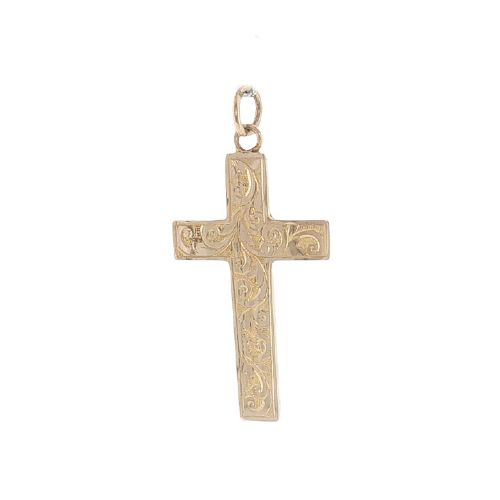
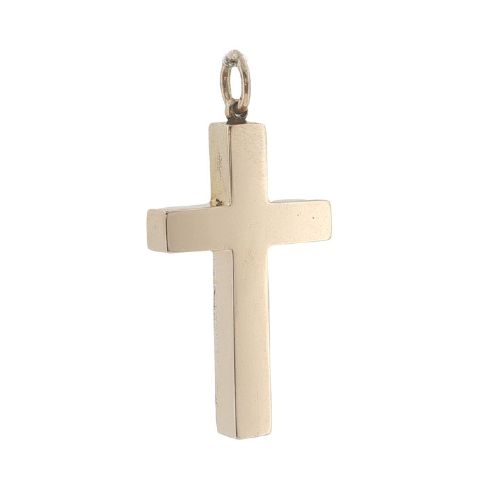
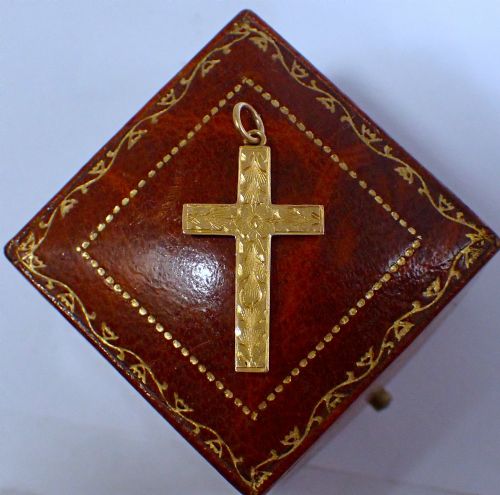
A yellow gold cross spans several distinct centuries of jewellery production, appearing most frequently on this page as pendants, charms, and rings from the Victorian, Edwardian, and mid-century periods. These pieces range from simple engraved 9ct gold designs to elaborate 18ct versions set with diamonds, garnets, pearls, and enamel.
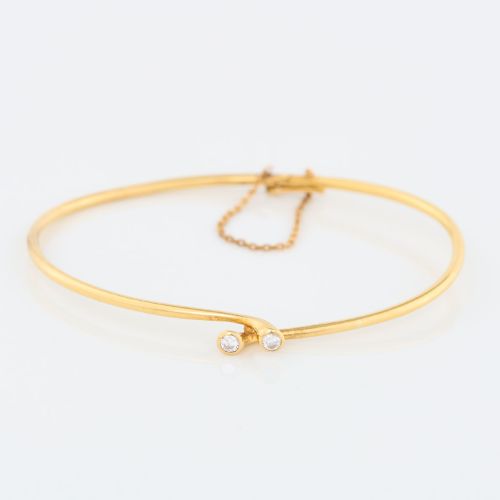
The form adapts across eras, taking shape as solid engraved pendants, Maltese crosses with red enamel, radiant sunburst medals, and crossover rings set with gemstones. While some pieces serve a primarily religious function, others function as decorative charms or personal statements of style originating from Britain, France, and Italy.
Victorian and Edwardian examples lean towards hand-engraved surface details and lower or higher carat gold alloys like 9ct and 15ct, whereas mid-century designs often utilise 18ct yellow gold paired with brilliant cut diamonds, sapphires, rubies, or blue topaz.
Materials and construction
Goldsmiths constructed these pieces using varying carats of gold, predominantly 9ct, 15ct, and 18ct yellow gold, shaped into hollow or solid forms depending on the era. Surface decoration often involved manual hand-engraving, creating crisp foliate or geometric patterns across the metal face.
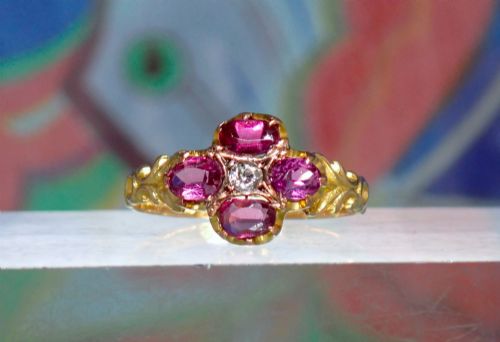
Gemstones including rose cut and brilliant cut diamonds, almandine garnets, pearls, rubies, and sapphires were flush-set, bezel-set, or secured with tiny claws into the gold framework. Enamel work, particularly in red and blue hues, added permanent colour through kiln-fired vitrification directly onto the yellow gold base.
Distinctions in craftsmanship
Quality rests upon the crispness of the hand-engraving and the structural integrity of the gold work, distinguishing finely chased Victorian pieces from simpler mass-produced items. The depth of the metal and the weight of the piece dictate how well it withstands daily wear over the decades.
The selection and setting of gemstones dictate the upper tier of these pieces, where matched diamonds or vibrant natural sapphires are secured with precise, even claw or flush settings. Superior examples display clean integration between the precious stones and the yellow gold structure without excess solder or clumsy repairs.
The Yellow Gold Cross Glossary
- Carat
- A unit measuring the purity of gold used in jewellery, with 9ct, 15ct, and 18ct representing different proportions of pure gold alloyed with other metals. Higher carat figures indicate a richer yellow hue and a higher percentage of pure gold.
- Maltese cross
- An eight-pointed cross configuration with V-shaped arms converging at the centre, frequently seen in vintage French enamel and gold medal pendants. This specific heraldic form dates back centuries before appearing in Victorian and mid-century personal adornment.
- Crossover
- A ring or pendant design where two bands or arms sweep past one another, often referred to as a toi et moi style when two principal stones meet. This flowing configuration gained popularity across Edwardian and mid-century jewellery.
- Rose cut
- An antique gemstone cutting style featuring a flat base and a domed crown faceted with triangular shapes resembling an unopened rosebud. This cut produces a softer, more subtle gleam than modern brilliant cuts.
- Hallmark
- An official stamp or series of marks applied to precious metal items indicating the purity of the gold, the assay office of origin, and often the year of manufacture. These small stamped symbols provide secure evidence of a piece's age and provenance.
Yellow Gold Cross: Frequently Asked Questions
How do I care for antique gold jewellery?
Clean yellow gold and gemstone pieces gently using warm water, mild soap, and a soft brush to remove everyday oils. Avoid harsh chemical dips, especially on pieces set with pearls, soft stones, or delicate enamel.
Store each piece separately in a fabric-lined box or pouch to prevent scratching between items. Take off rings and pendants before engaging in heavy manual work or swimming.
Are these crosses strictly religious items?
While many crosses originated as devotional objects or christening gifts, a significant number functioned purely as decorative charms, lockets, or fashion statements. Victorian and Edwardian examples often blurred the line between religious symbolism and sentimental keepsake.
Mid-century Italian and French variations frequently treated the cross purely as a striking geometric motif, incorporating sunburst rays, coloured enamel, and precious gemstones for purely aesthetic appeal.
How can I tell the period of a gold cross?
Examine the piece for official hallmarks, maker's marks, and assay office symbols, which provide direct clues to the year of manufacture. Birmingham and other assay offices stamped precise date letters on British items.
Stylistic indicators also help determine the era, such as hand-engraved foliate patterns typical of the Victorian period versus clean lines or sunburst motifs associated with mid-century French design.
What is the difference between 9ct and 18ct gold?
Nine carat gold contains a lower proportion of pure gold alloyed with metals like silver and copper, resulting in a slightly paler yellow tone and increased durability. Eighteen carat gold contains a higher percentage of pure gold, offering a richer, warmer colour.
Both purities were used across different eras, with 9ct common in British antique pieces and 18ct frequently chosen for finer gem-set creations and French vintage designs.