
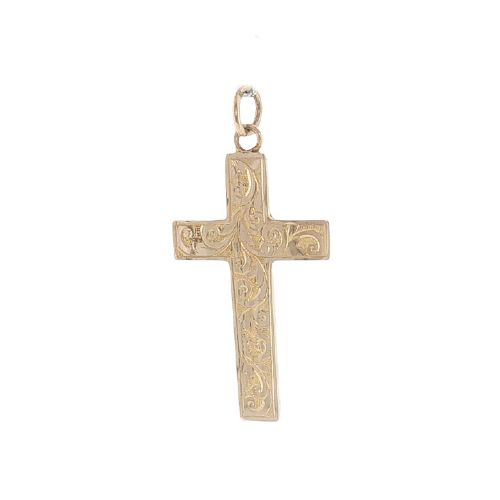
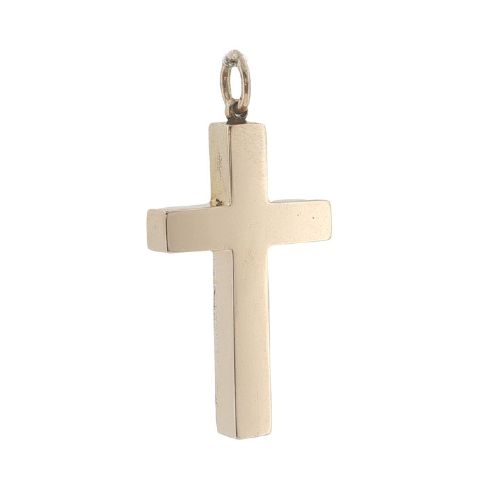
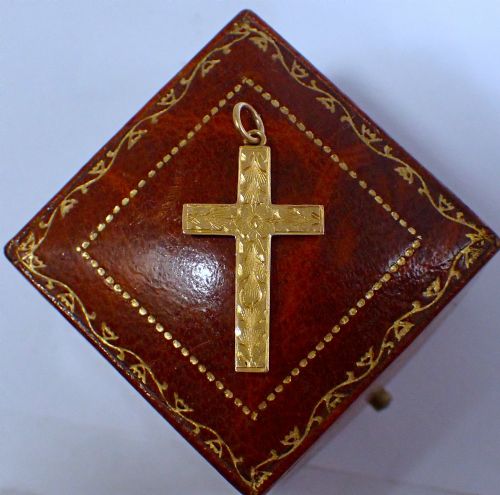
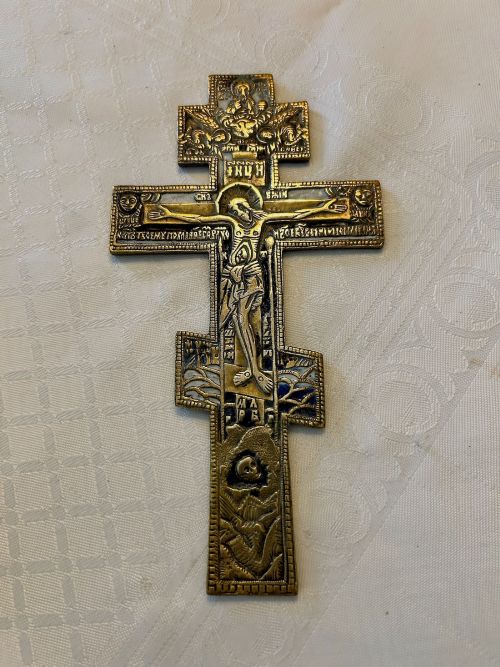


Antique Cross Pendant
An antique cross pendant carries centuries of devotion and design, and here you find pieces ranging from Georgian paste work to Edwardian gold engraving.
How they were made
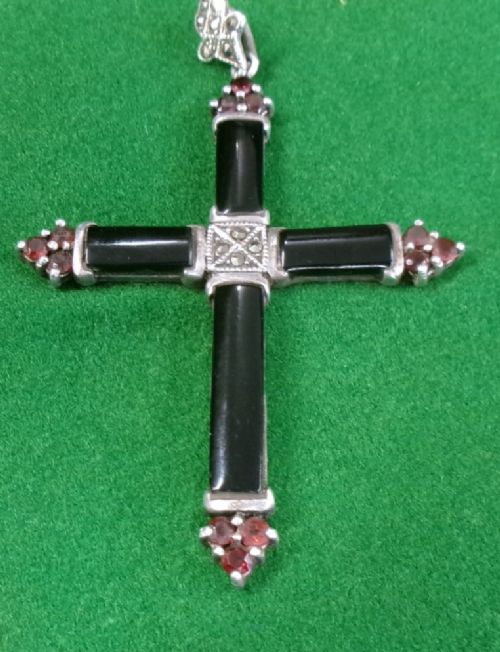
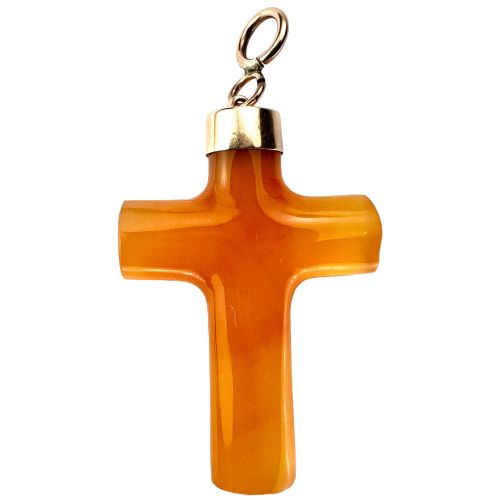
Maker's hands shaped these pieces using yellow, rose, and white gold alongside sterling and continental silver. Stones like turquoise, seed pearl, diamond, agate, and coloured paste were flush-set, bezel-set, or mounted over foils to catch the light.
Engraving, piercing, and enamel work added intricate surface detail to the metal bases. Many examples incorporate mixed metals, pairing silver on gold to heighten the contrast of the gemstones.
What varies in quality
Quality rests upon the crispness of the hand-engraving and the precision of the stone-setting. Finer examples display balanced proportions, secure flush-settings, and harmonious integration of gems such as split pearls or foiled amethysts.
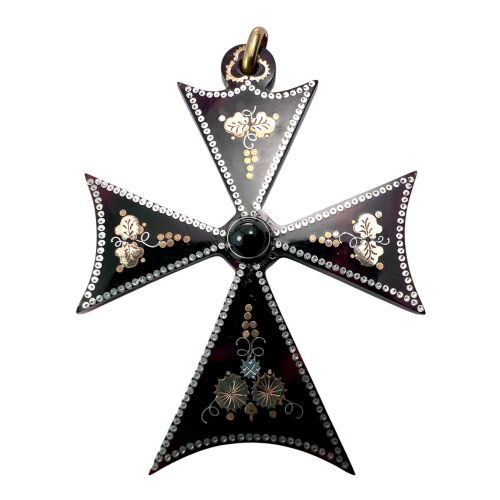
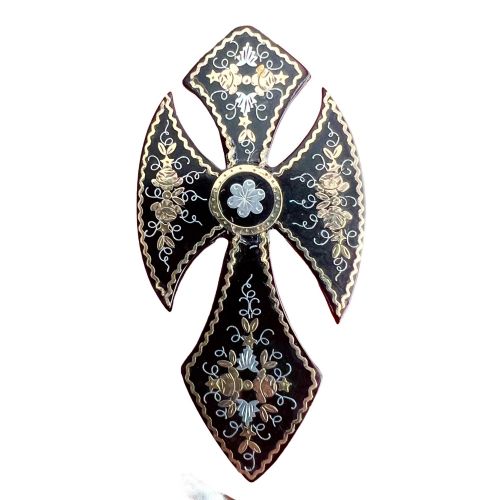
The depth of historical craftsmanship defines the upper tier, where maker's marks, well-preserved enamel, and specialised techniques like pique or micro mosaic distinguish workshop pieces from mass production.
The site listings feature silver, 9ct gold, 18ct gold, and 22ct gold alongside tortoiseshell and enamel materials.
Omar Ramsden and Alwyn Carr·Henry Cook
The Antique Cross Pendant Glossary
- Paste
- Hand-cut glass used as a gemstone substitute in Georgian and Victorian jewellery. It was often foiled at the back to intensify the colour.
- Pique
- A decorative technique involving inlaying tiny points of gold or silver into tortoiseshell or other dark organic materials. This method appeared frequently on Victorian decorative items.
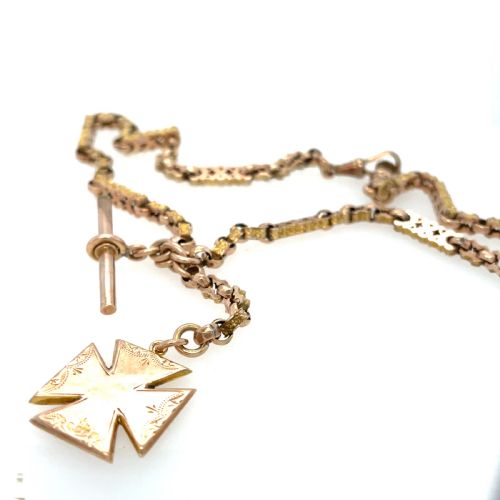
- Albert Chain
- A short pocket watch chain named after Prince Albert, often worn with a T-bar and fob. These chains frequently share materials and design motifs with contemporary cross pendants.
- Rivière Necklace
- A necklace composed of a continuous line of gemstones of identical or gradually decreasing size. Some examples in the archive were paired directly with matching cross pendants.
- Crucifix
- A cross bearing the figure of the corpus or body of Christ. They appear in silver, gold, and bronze across nineteenth-century manufacturing.
Antique Cross Pendant: Frequently Asked Questions
How do I date an antique cross pendant?
Dating relies on hallmarks, metal purity standards, and gemstone cuts. British pieces often carry assay office marks and date letters that pinpoint the exact year of creation.
Stylistic cues such as the heavy geometric forms of the Arts and Crafts movement or the delicate seed pearl clusters of the Victorian period also anchor the piece in time.
Were these always worn as necklaces?
Not every piece started life suspended from a neck chain. Many crosses functioned interchangeably as brooches or pendant lockets, featuring secure pin mechanisms alongside suspension loops.
Others served as charms on chatelaines or pocket watch chains before being adapted for modern necklace wear.
What is the difference between a cross and a crucifix?
A cross is strictly the geometric intersection of two bars without figures. A crucifix specifically incorporates the corpus, representing the physical body of Christ upon the structure.
Both forms were executed in precious metals and gemstones across the Georgian and Victorian eras for personal devotion.
How should I care for antique gold and silver?
Precious metals and historical settings require gentle handling to preserve patination and fragile materials like seed pearls or enamel. Avoid harsh chemical dips and ultrasonic cleaners.
Store pieces individually in soft pouches away from moisture, and use a dry microfiber cloth to remove surface dust.