


Gold Crucifix Pendant
A gold crucifix pendant carries centuries of devotional craftsmanship, offering wearable history through delicate metalwork and precious gemstones.
Gold Crucifix Pendant
The pieces listed range from simple engraved Edwardian designs to elaborate Victorian works set with diamonds, pearls, turquoise, and coral. Formats frequently include convertible brooch-pendant combinations alongside traditional neck pendants and necklaces.
Materials and construction methods
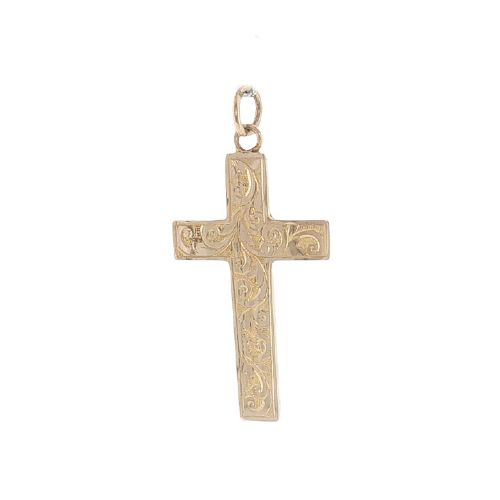
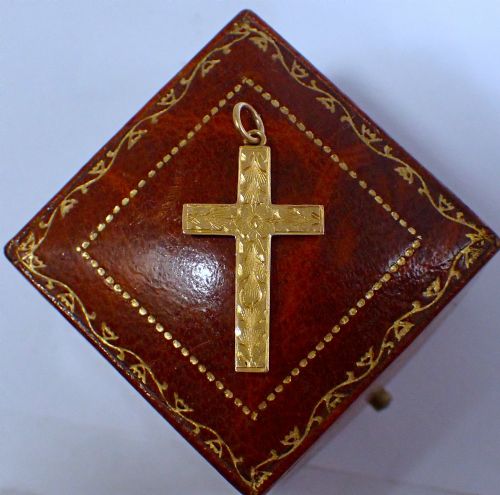
Goldsmiths utilised varying purities of gold, including 9ct, 15ct, 18ct, and occasionally higher purities, paired with silver settings for gemstones in earlier pieces. Surface ornamentation relied heavily on hand engraving, repoussé, and detailed chasing.
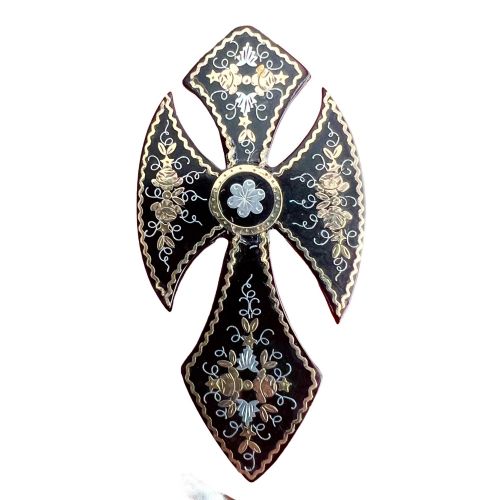
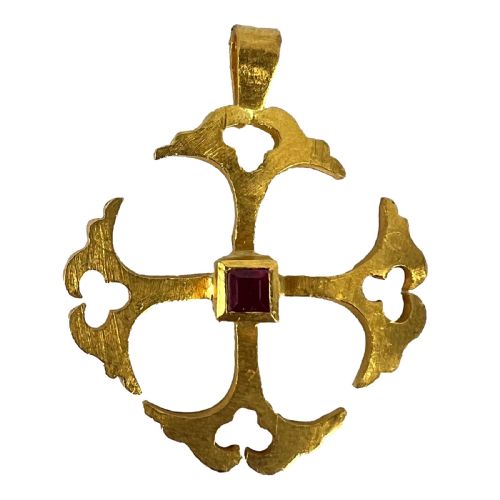
Gemstone mounting involved bead-setting and collet-setting for diamonds, sapphires, rubies, and seed pearls, alongside enamel work and pique techniques using materials like tortoise shell and precious metals.
Listings feature pieces spanning multiple eras, from Georgian coral designs to mid-century Italian modernist gold work.
Distinguishing quality across periods
Quality rests in the crispness of the hand engraving and the structural integrity of the mounting, where superior pieces retain sharp relief and secure stone settings. The integration of high-grade materials, such as well-matched natural pearls, clean diamonds, and rich enamel, elevates an example above standard production.
Artisanal execution dictates distinction, separating mass-produced items from signed or bespoke studio pieces created by notable workshops. Proportion, balance, and the preservation of original components further define the hierarchy among surviving examples.
Omar Ramsden & Alwyn Carr
The Gold Crucifix Pendant Glossary
- Crucifix
- A cross bearing the figure of the corpus or body of Christ. This form distinguishes devotional pieces from plain Latin crosses.
- Repoussé
- A metalworking technique where the metal is hammered from the reverse side to form a raised design in relief. This method was widely used in Victorian and Edwardian metal ornamentation.
- Seed pearl
- A very small, naturally occurring pearl, often drilled and strung or set en masse. These tiny pearls form delicate floral and geometric patterns on late Victorian and Edwardian jewellery.
- Pique
- The technique of inlaying tiny pins of gold or silver into a dark organic material such as tortoiseshell or horn. This decorative method appears on distinctive Victorian combination brooches.
- Collet setting
- A collar of metal that encircles the girdle of a gemstone, holding it securely in place with a polished rim. It represents a traditional stone-setting method found in antique jewellery.
Gold Crucifix Pendant: Frequently Asked Questions
How do I date a gold crucifix pendant?
Dating relies on hallmark stamps, stylistic markers, and the type of gemstone settings used in the construction. Pieces from the Georgian and Victorian eras often exhibit hand engraving and closed-back settings.
Later Edwardian and mid-century items display lighter wirework or modern brilliant-cut diamonds. Comparing the construction methods against known period styles provides an accurate timeframe.
Can these pendants be worn daily?
Most gold crucifix pendants are robust enough for regular wear, provided the chain and jump rings remain secure. Solid gold constructions handle daily use well, though pieces set with seed pearls or soft stones require additional care.
Antique items with enamel or delicate pique work benefit from removal during physical activities to prevent surface damage.
What is the difference between a cross and a crucifix?
A plain cross consists solely of intersecting bars without additional symbolic ornamentation. A crucifix specifically incorporates the corpus, representing the figure of Christ upon the cross.
Both forms appear frequently across antique jewellery categories, serving different devotional and decorative functions.
How should I clean antique gold jewellery?
Gentle cleaning involves warm water, mild soap, and a soft-bristled brush to remove dust from crevices. Harsh chemical dips and ultrasonic cleaners can damage fragile organic gems like pearls, coral, and turquoise.
Professional inspection is advisable for pieces with historic gemstone settings to ensure the stones remain tight.