
Yellow Gold Albert
A yellow gold albert is a classic pocket watch chain turned wearable necklace, prized for its substantial links and historic charm.
Yellow Gold Albert
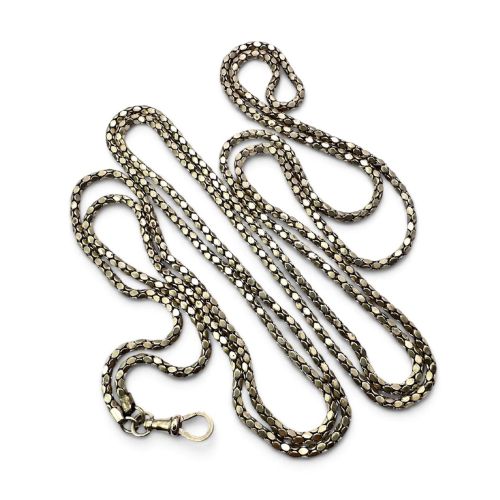
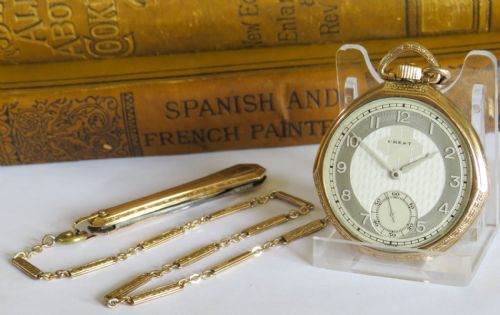
When you search for a yellow gold albert, you encounter historic pocket watch chains repurposed as necklaces or bracelets, alongside a small selection of rings and pocket watches. These pieces originate predominantly from the Victorian and Edwardian eras, extending through the 1920s and 1930s into later decades.
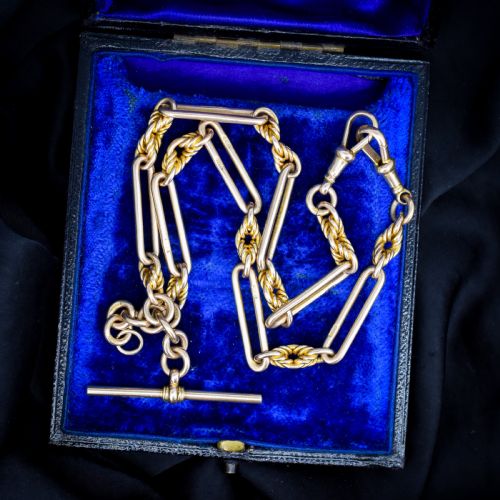
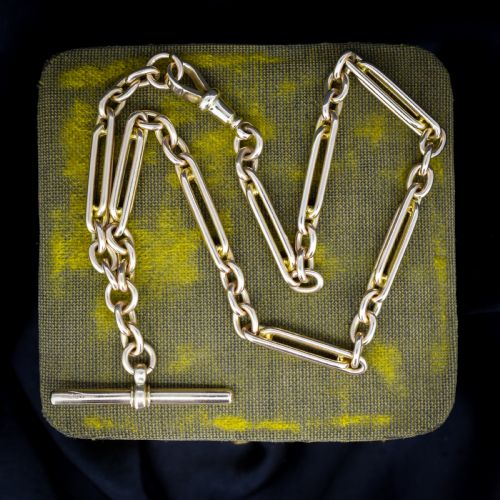
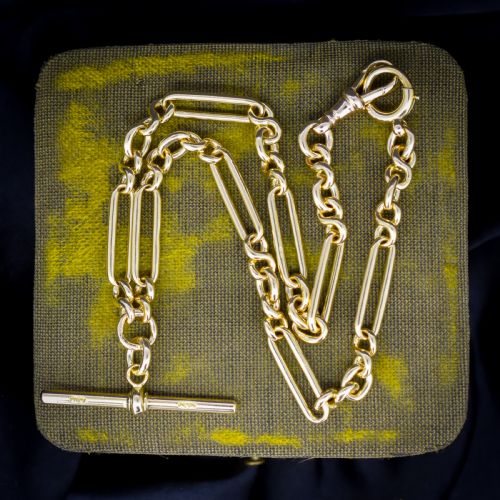
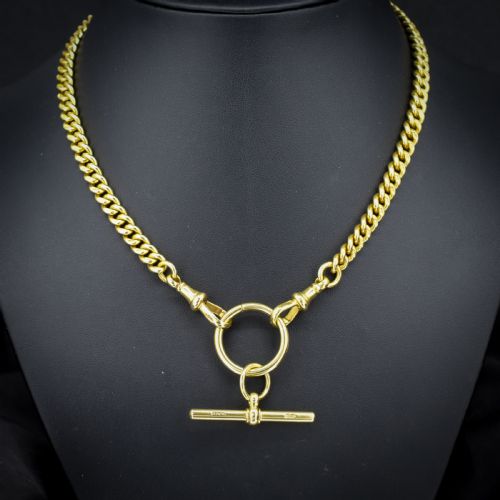
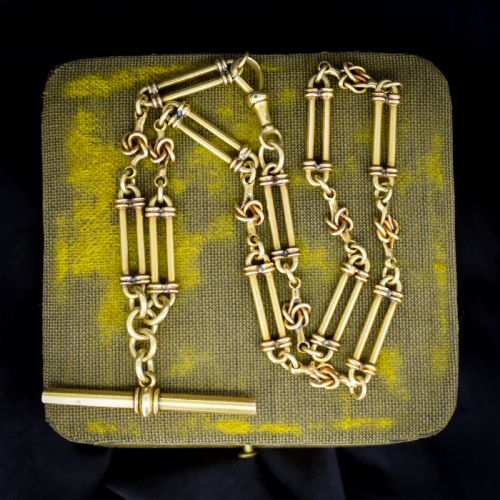
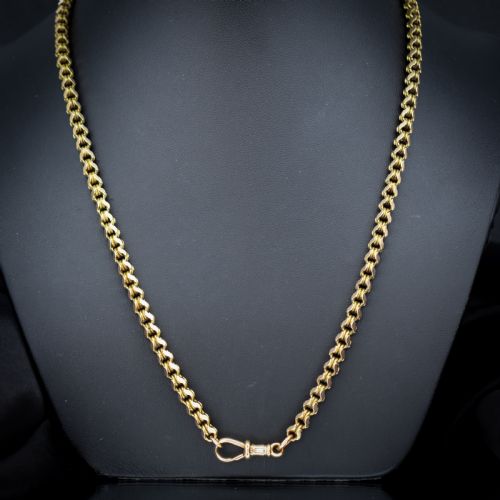
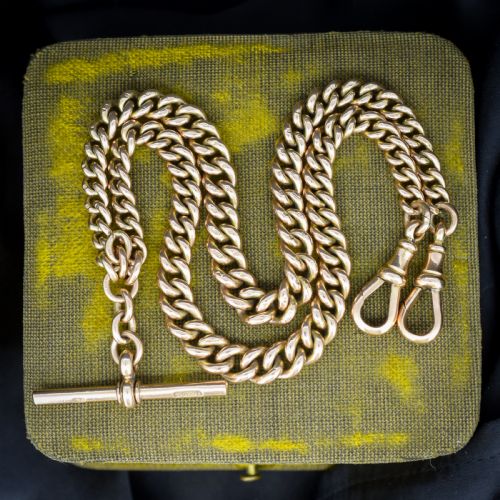
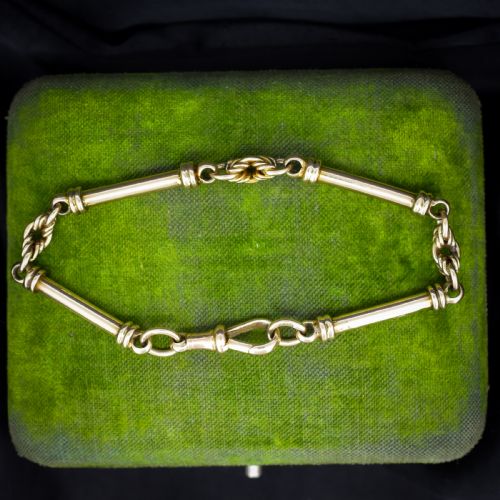
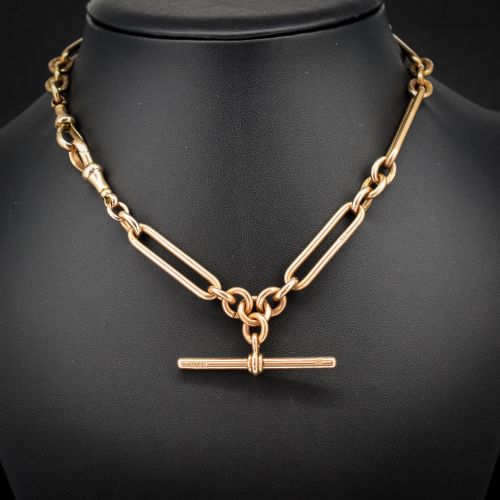
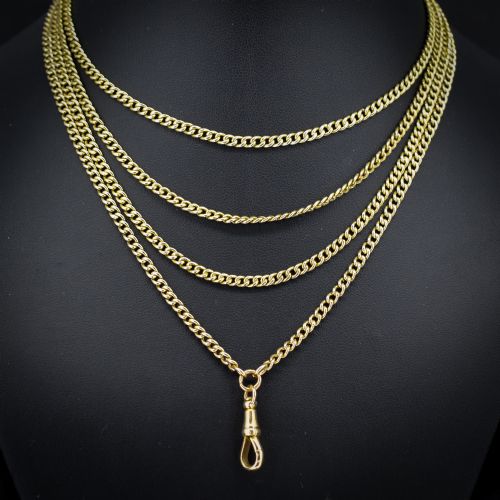
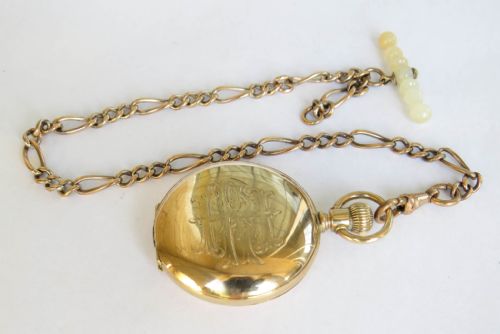
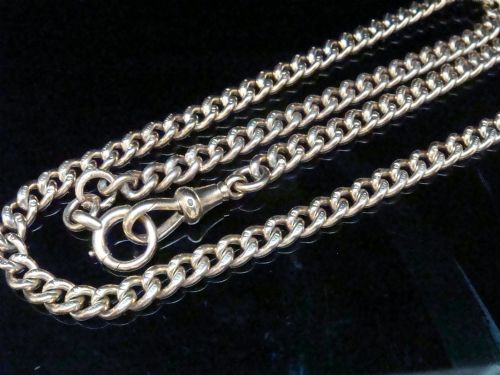
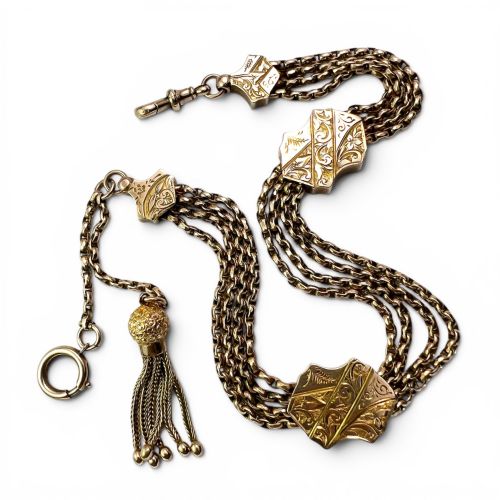
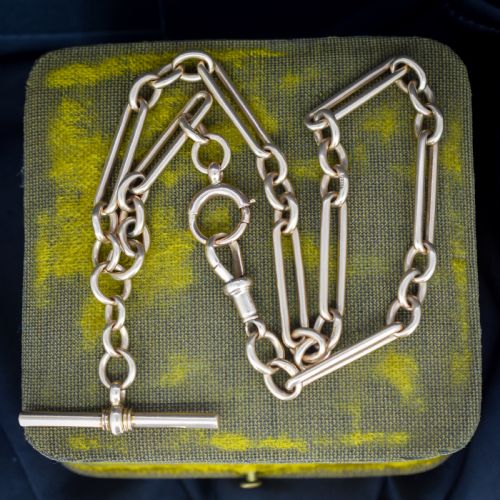
The most common forms on this page include curb link, trombone link, and fancy link chains, frequently fitted with functional dog clips, T-bars, or bolt rings. Many examples retain hallmarks from assay offices such as Chester and Birmingham, indicating specific dates of manufacture in the early 20th century.
How they were made
The materials span solid yellow gold in various carat weights - principally 9ct, 15ct, and 18ct - alongside rolled gold, gold plate, and base metal. Goldsmiths constructed these chains from individual links, sometimes hallmarking every single link on Edwardian pieces to guarantee metal purity.
Link configurations vary from uniform and graduated curb patterns to specialised trombone, love knot, figaro, and paperclip designs. Master makers incorporated sturdy fastenings like swivel dog clips and T-bars originally intended to secure pocket watches to waistcoats.
Materials utilised include 9ct gold, 15ct gold, 18ct yellow gold, metal, gold plate, and rolled gold.
What varies in quality
Quality in these chains is determined by the purity of the gold and the complexity of the link construction. Solid gold pieces carrying full hallmarks command greater regard than rolled gold or plated alternatives.
Substantial weight, intact original components like dog clips and T-bars, and whether every link bears a hallmark elevate an albert chain. Finer craftsmanship shows in intricate fancy links, such as love knots or faceted curbs, executed with precision.
Gilbert Albert·Tavannes·Elgin·Record Trenton
The Yellow Gold Albert Glossary
- Albert chain
- A type of watch chain designed to attach a pocket watch to a gentleman's waistcoat, named after Prince Albert.
- Dog clip
- A small, spring-loaded swivel clasp attached to the end of a watch chain, used to secure a pocket watch or fob.
- T-bar
- A transverse bar of metal attached to the centre of an albert chain, passed through a buttonhole to anchor the chain.
- Trombone link
- A watch chain link shape featuring elongated rectangular outer sections connected by smaller circular or oval links.
- Hallmark
- An official stamp applied to precious metals indicating purity, origin, and often the year of manufacture.
Yellow Gold Albert: Frequently Asked Questions
What is an albert chain used for?
Originally, an albert chain secured a pocket watch to a waistcoat or garment using a T-bar and a dog clip. Today, collectors and wearers repurpose these chains to wear them as necklaces or bracelets.
Their sturdy construction and distinctive links make them versatile items of jewellery for daily wear.
How do I tell Victorian from Edwardian pieces?
Victorian pieces date from the 19th century and often feature heavier gold weights, varied fancy link designs, and distinct regional assay markings. Edwardian pieces, made during the reign of Edward VII, frequently show refined uniformity and detailed link hallmarking.
Examining the specific hallmarks and style characteristics helps determine the exact period of manufacture.
Can I wear a pocket watch chain as a necklace?
Yes, many watch chains are worn directly around the neck as necklaces or wrapped as multi-strand bracelets. The inclusion of dog clips and bolt rings makes fastening them simple and secure.
Lengths vary widely, from shorter 14-inch pieces to very long guard chains exceeding 50 inches.
What does solid gold mean compared to rolled gold?
Solid gold chains consist entirely of gold alloy throughout the metal, graded by carat weight such as 9ct, 15ct, or 18ct. Rolled gold pieces have a layer of solid gold mechanically bonded to a base metal core.
Solid gold pieces retain their intrinsic material value and durability over centuries of use.