

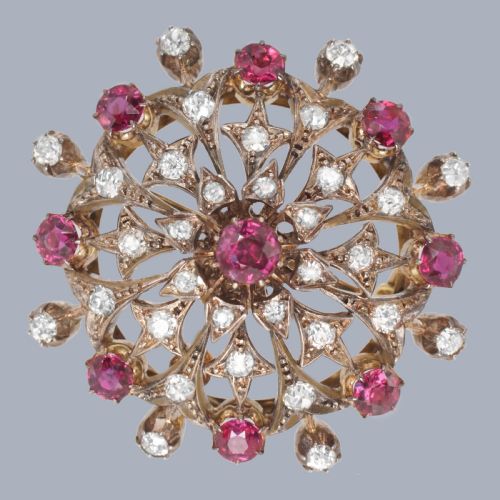


Yellow Gemstone Brooch
A yellow gemstone brooch brings warmth and colour to a lapel, spanning Victorian grandeur and mid-century design.
Yellow Gemstone Brooch
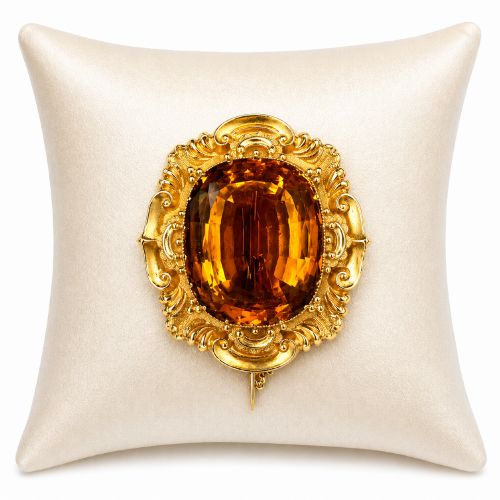
A yellow gemstone brooch encompasses pieces fashioned primarily around golden-hued stones set within precious metals, appearing across Victorian, Edwardian, and mid-century periods. The selections available here frequently highlight citrine, topaz, and chrysoberyl alongside pearls and diamonds.
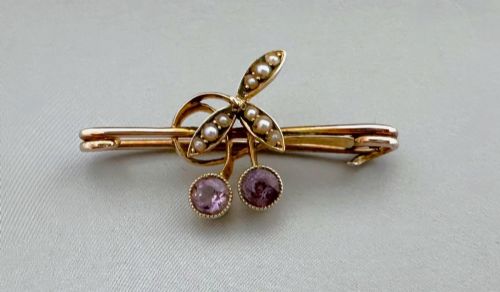
Makers often configured these jewels into distinct motifs including bar brooches, starbursts, floral clusters, and convertible pendant brooches. These dual-purpose items served both as pinned chest ornaments and suspended neckpieces.
Materials and construction methods
Goldsmiths utilised varying purities of yellow gold, ranging from nine carat up to twenty-one carat, alongside fifteen carat variants typical of the late nineteenth and early twentieth centuries. Stones were secured using collet settings, grain settings, or claw mounts tailored to the geometry of each mineral.
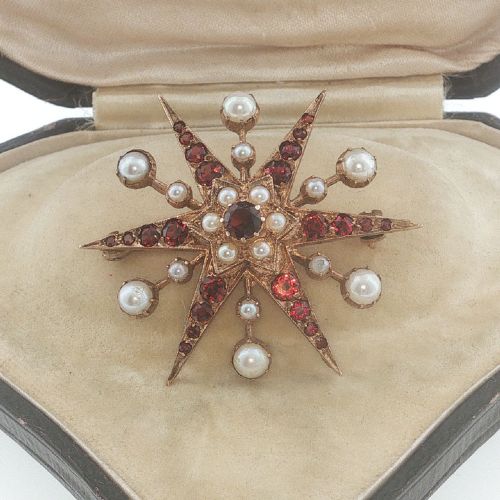
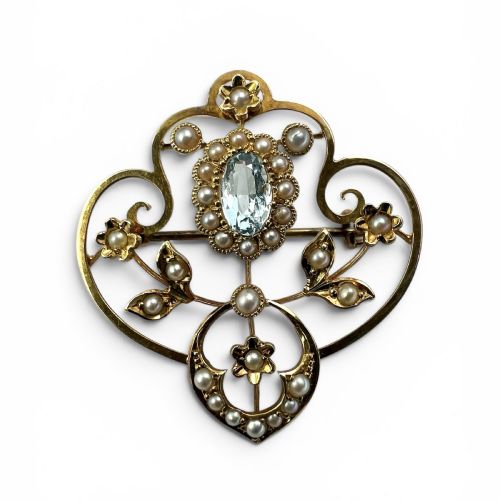
Accompanying gems such as diamonds, rubies, and seed pearls were integrated to frame the central yellow stones, utilising hand-pierced gallery work and soldered pin stems with traditional C-clasps or safety catches.
Listings feature yellow gold purities spanning nine, fifteen, and eighteen carats across Victorian and mid-century periods.
Evaluating distinction in manufacture
The standard of a piece rests upon the clarity and saturation of the primary yellow gemstone, alongside the precision of the metalwork surrounding it. Finer examples display symmetrical claw work, crisp engraving, and harmonious integration of secondary stones like diamonds or natural pearls.
Structural integrity also dictates quality, where robust pin mechanisms, well-balanced weight distribution, and secure stone settings separate master workshop output from simpler commercial production.
The Yellow Gemstone Brooch Glossary
- Bar brooch
- A slender horizontal metal rod serving as the structural base for mounted gemstones. These linear pieces gained widespread favour during the late Victorian and Edwardian eras.
- Pendant brooch
- A versatile piece featuring a concealed or articulated loop that permits it to function interchangeably as a breast jewel or a necklace pendant.
- Collet setting
- A band of metal that encircles the girdle of a gemstone to hold it securely in place. This technique provides a clean, tailored outline around the stone.
- Seed pearl
- A very small, naturally occurring or cultured pearl, frequently drilled and strung or clustered in floral and starburst configurations. They provide delicate white contrast to yellow stones.
- Demiparure
- A matched set of jewellery typically consisting of two or three complementary pieces, such as a brooch accompanied by matching earrings.
Yellow Gemstone Brooch: Frequently Asked Questions
How do I wear an antique brooch today?
These pieces pin securely onto heavy knitwear, lapels, or scarves using their original pin stems and safety catches. Many examples feature integrated loops that allow the piece to suspend from a chain as a pendant.
Positioning the jewel on a structured coat or blazer distributes the weight evenly across the fabric. Ensure the clasp is fully engaged before daily wear.
What periods do these brooches come from?
The inventory spans the Victorian and Edwardian periods, stretching into Art Deco and mid-century designs. Victorian pieces often display robust gold work and large central topazes or garnets.
Edwardian items lean towards lighter, garland-style mounts featuring peridots and seed pearls. Mid-century examples frequently showcase large emerald-cut citrines set in heavier gold frames.
Can these brooches be worn as necklaces?
Many items catalogued here are classed as pendant brooches, equipped with a hidden bail or loop on the reverse. This design allows the wearer to thread a chain through the back and suspend the jewel around the neck.
When worn as a brooch, the loop remains hidden against the clothing. This dual functionality was particularly popular among makers in the late nineteenth and early twentieth centuries.
How do I distinguish Edwardian from Victorian styles?
Victorian pieces generally utilise heavier gold settings with deep-toned garnets, topazes, or amethysts framed by substantial metal galleries. The aesthetic tends toward robust romanticism and sentimental motifs.
Edwardian jewellery introduces lighter, lace-like platinum or yellow gold frameworks with peridots, aquamarines, and seed pearls. The overall impression shifts from heavy opulence to airy lightness.