


Yellow Floral Still Life
A yellow floral still life brings warmth and colour into a room, capturing the fleeting brilliance of cut blooms through the enduring permanence of paint.
Yellow Floral Still Life
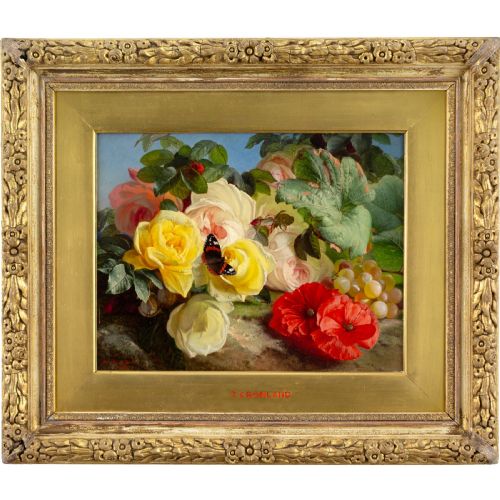
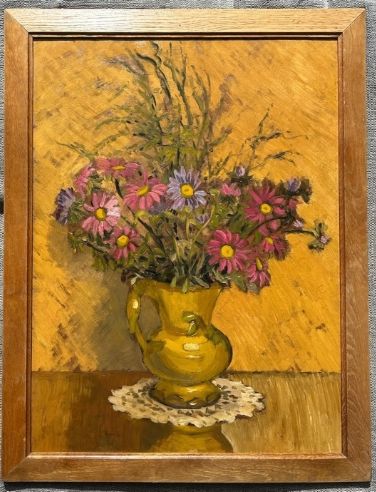
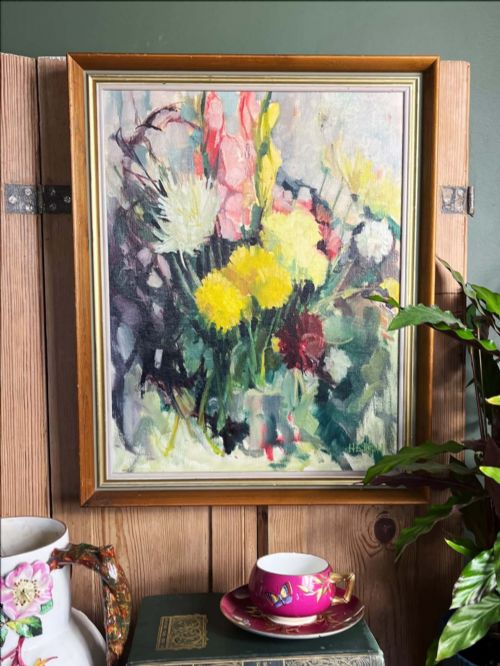
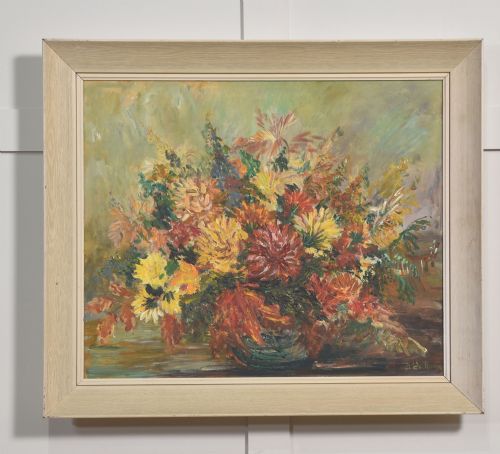
A yellow floral still life concentrates the eye on domestic arrangements of blooms, often gathered in vases, bowls or baskets alongside fruit and objects. The works span from the Victorian period through to mid-century modernism, reflecting changing artistic approaches to everyday subjects.
Buyers encounter oil paintings on canvas and board as well as delicate watercolours on paper. The examples range from nineteenth-century realism to mid-century impressionism, showing how different generations interpreted botanical forms.
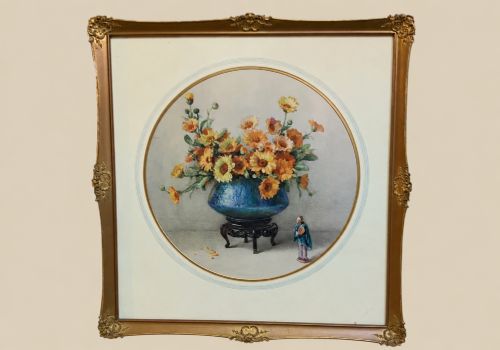
The compositions vary from simple studies of garden flowers to complex arrangements involving Chinese objects or mossy banks. These pieces serve as focal points for interior spaces, bringing botanical colour indoors.
Materials and methods
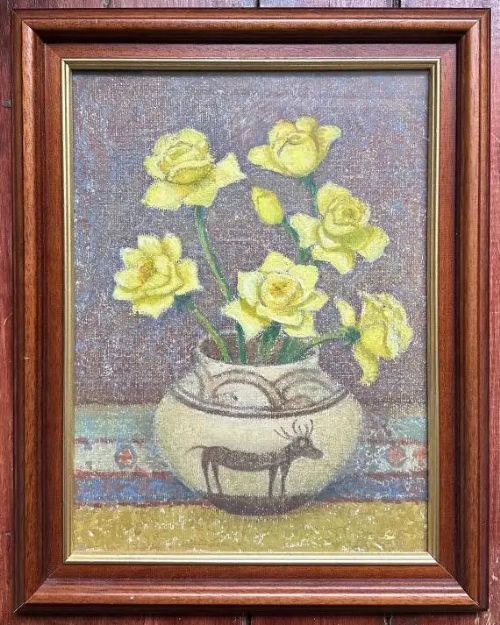
Artists painted these subjects using oil paint on canvas, wood panels and board, building up rich textures and deep tones. Watercolours on paper offer a lighter, more translucent approach to petals and leaves, often mounted behind glass.
Frames play a significant part in the presentation, with original gilt wood surrounds providing structure and contrast to the painted surfaces.
Some arrangements cleverly tuck butterflies and bird's nests among the yellow petals.
Assessing the work
Quality rests in the handling of light and the confidence of the brushwork, where masterly application brings petals and foliage to life. Weaker examples rely on rigid symmetry and flat colour, lacking the vitality seen in superior works.
The depth of the composition and the harmony of the palette distinguish accomplished artists from amateur recorders. Balance between the central floral subject and the surrounding space dictates the visual success of the piece.
Theude Grönland·Kenneth Cozens·D. L. Williams·Emma Fordyce MacRae·Henrietta Creswell·Amile Coppieters·Sir Matthew Smith·Eloise Harriet Stannard·Robin MacKertich·Freda Marston·Rowland Henry Hill·Phyllis I Hibbert·Marian Chase·Alice Macallan Swan·James Stuart Park·Ernest Higgins Rigg·John Sherrin·Julien Stappers·Bertoldo Taubert·Louisa Mary Bancroft·Owen Bowen
The Yellow Floral Still Life Glossary
- Canvas
- A heavy woven fabric stretched across a wooden frame to serve as a support for oil paintings. It provides a flexible yet durable surface that accepts multiple layers of pigment.
- Watercolour
- A painting method where fine pigment is suspended in a water-soluble binder, typically applied to paper. This technique creates translucent washes of colour that rely on the white of the paper for luminosity.
- Gilt
- A thin layer of gold leaf applied to wood or other materials to ornament frames and decorative objects. It adds a reflective metallic edge that enhances the artwork.
- Impressionism
- An art movement focusing on the visual impression of the moment, marked by visible brushstrokes and an emphasis on light. Practitioners sought to capture atmospheric effects rather than meticulous detail.
- Still life
- A work of art depicting mostly inanimate subject matter, typically commonplace objects which may be either natural or man-made. Floral arrangements form a distinct subgenre within this tradition.
Yellow Floral Still Life: Frequently Asked Questions
What periods do these paintings come from?
The works span from the nineteenth century through the Edwardian era into the mid-twentieth century. Artists worked across Victorian, modernist and impressionist idioms during these decades.
This broad timeline means buyers find everything from traditional nineteenth-century realism to vibrant mid-century interpretations of floral subjects.
How should I hang a floral still life?
These pieces suit spaces where natural light can illuminate the brushwork and colour palette. Placing them at eye level in living rooms or studies allows the details of the arrangement to be appreciated.
Consider the existing tones in the room to ensure the gilt frames and yellow floral hues complement the surrounding interior.
What is the difference between oil and watercolour versions?
Oil paintings on canvas or board offer robust textures, thick pigment application and deep, saturated colours. They usually feature heavier wooden or gilt frames.
Watercolours on paper present a softer, more delicate appearance with translucent washes of colour. These works require glass protection to preserve the paper and pigment over time.
Are these works signed by the artists?
Many examples carry signatures or attributions to named painters, while others remain anonymous studies from the period. Signatures often appear in the corners of the canvas or within the watercolour paper margin.
Documentation and attribution help connect the pieces to known artistic groups and regional schools of painting.