
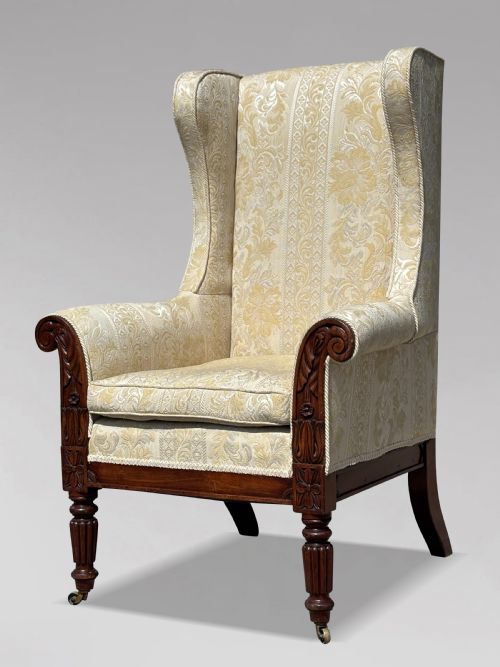


Yellow Fireside Chair
A yellow fireside chair offers deep comfort and warmth, bringing character and colour to a traditional room through upholstered seating.
Yellow Fireside Chair
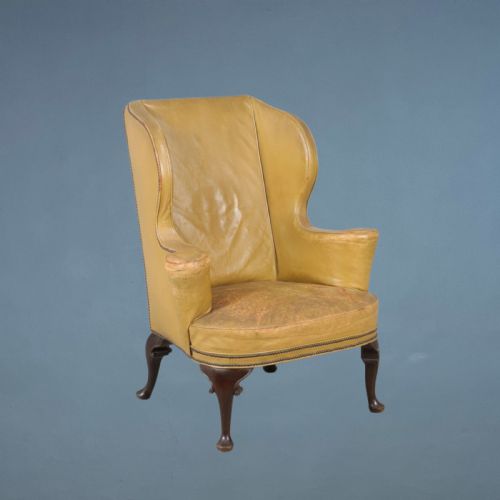
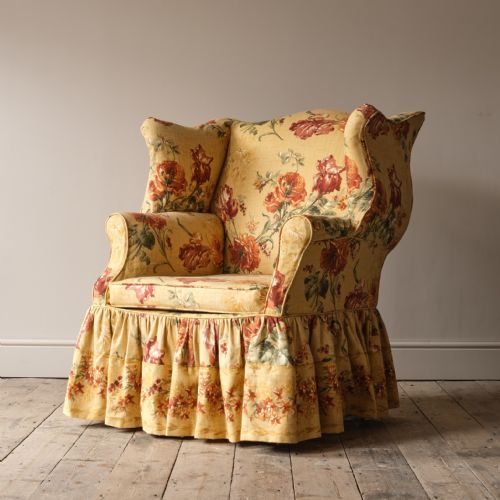
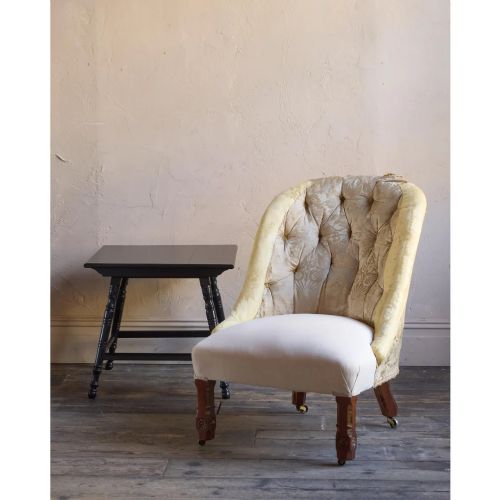
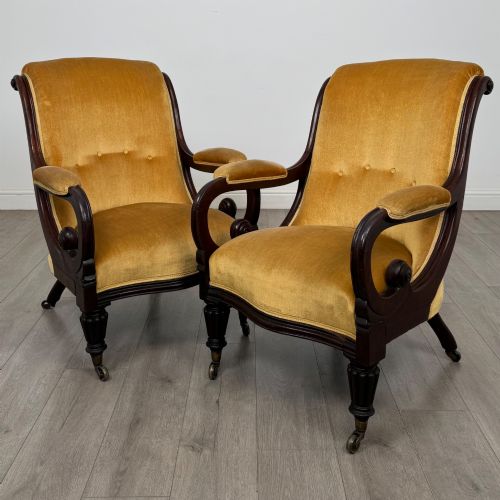
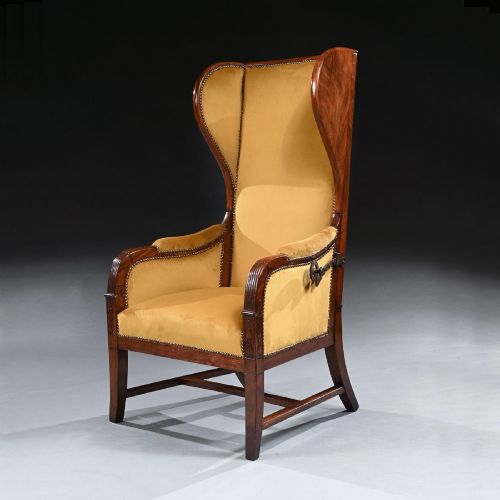
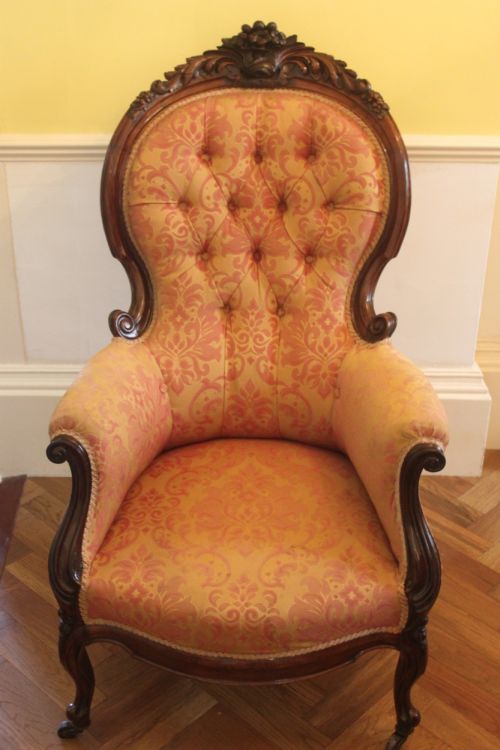
A yellow fireside chair is typically a wingback armchair, library chair or nursing chair designed for domestic comfort near a hearth. These seats span periods from the 18th century through the Victorian and Edwardian eras, encompassing Georgian and William IV designs.
The selections available here range from deep-seated country house armchairs to buttoned tub chairs and parlour seats. They are substantial pieces meant for daily use, combining upholstered frames with supportive backrests.
Buyers will encounter various interpretations of classic forms, including Queen Anne Revival styles and George III proportions. Each piece reflects the seating requirements and aesthetic tastes of its specific period.
Materials and construction
Frames are constructed from sturdy timbers such as mahogany, walnut and pollard oak, providing the structural skeleton for the upholstery. Wood is often carved or shaped to form arms, legs and structural supports.
Upholstery relies on traditional fabrics including velvet, damask, leather and cotton, fixed over internal stuffing to shape the seat and back. Brass elements occasionally accent the woodwork or castors.
Cabinetmakers and upholsterers employed traditional joinery and spring or stuffing assemblies to ensure long-term durability and support.
What separates the finest examples
Quality rests upon the integrity of the timber frame, the depth and proportions of the seating, and the precision of the carving. Maker attribution and original structural condition elevate a piece significantly.
The execution of the upholstery and the choice of covering material dictate the visual impact and tactile finish. Finer examples retain balanced proportions, superior wood grain and authoritative period styling.
Howard and Sons·Cornelius V Smith·Johnstone and Jeanes
The Yellow Fireside Chair Glossary
- Wingback
- An armchair with side panels attached to the arms and rising to the back, designed to shield the sitter from drafts. These protective wings define many traditional fireside chairs.
- Nursing chair
- A low-seated chair designed originally for nursing infants, often featuring a spoon back or upholstered frame. They are compact yet comfortable additions to domestic spaces.
- Library chair
- A substantial, deeply padded armchair made for reading rooms and studies, offering extended comfort. These pieces usually feature generous proportions and supportive armrests.
- Spoon back
- A padded chair back shaped like the bowl of a spoon, providing ergonomic support for the spine. This form is common in Victorian nursing and parlour chairs.
- Damask
- A reversible figured fabric woven on a loom, frequently used for upholstery in period seating. Its patterned surface catches the light and adds texture to the chair.
Yellow Fireside Chair: Frequently Asked Questions
How do I identify a Victorian fireside chair?
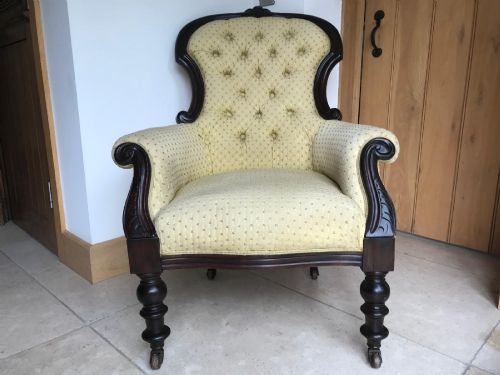
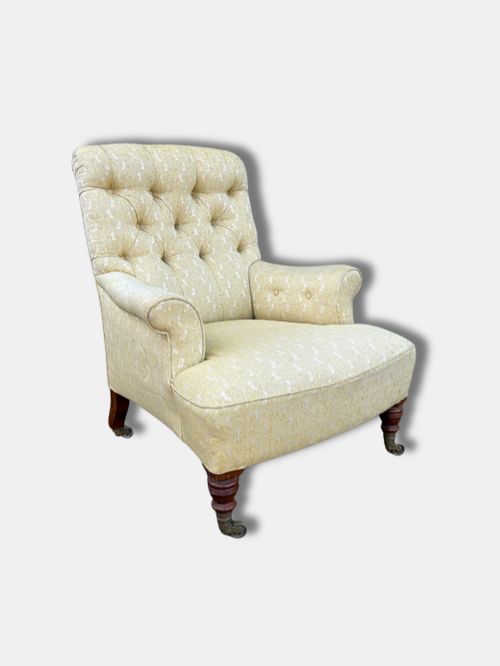
Victorian chairs often feature dark hardwoods like walnut or mahogany, deep buttoning, and spoon-backed or tub-shaped designs. Upholstery materials from this era commonly include velvet or heavy cotton.
Examine the frame construction and legs for stylistic markers of the nineteenth century, such as turned wooden supports and substantial proportions.
Were these chairs used only by the fireside?
While the wingback design was originally conceived to block drafts near open hearths, these armchairs served across libraries, parlours and bedrooms. Their robust construction made them versatile seating for multiple rooms.
Different forms evolved for specific domestic tasks, from low nursing chairs to grand library armchairs.
What wood types should I expect to find?
Mahogany and walnut predominate across eighteenth and nineteenth-century frames, offering strong structural support and attractive grain patterns. Pollard oak also appears on select Victorian seating.
Timber was chosen for its durability and suitability for carved details on the legs and arm supports.
How do Georgian and Edwardian styles differ?
Georgian chairs display classic proportions, fine mahogany frames, and influences such as the Irish manner or Queen Anne Revival. They emphasise structural elegance and restrained carving.
Edwardian pieces often embrace lighter woods, comfortable barrel-backed forms, and refined upholstery suited to early twentieth-century interiors.