


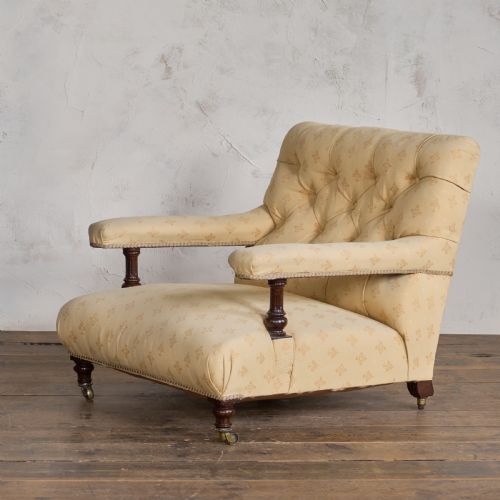
Yellow Button Back Armchair
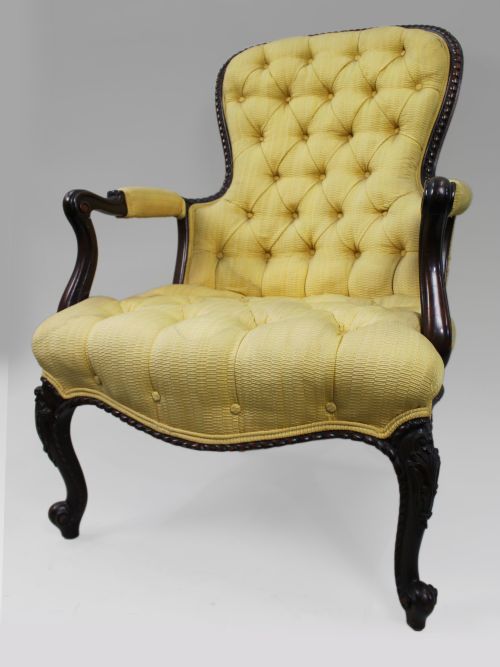
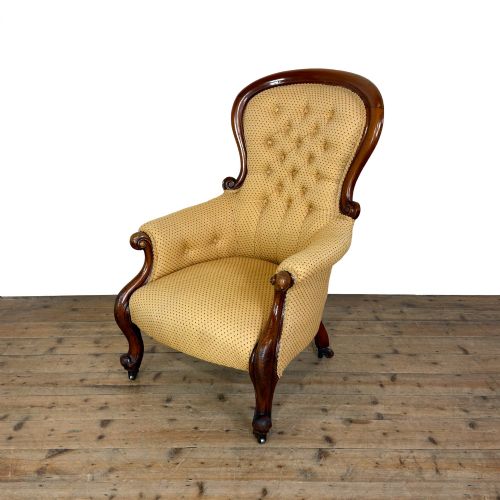
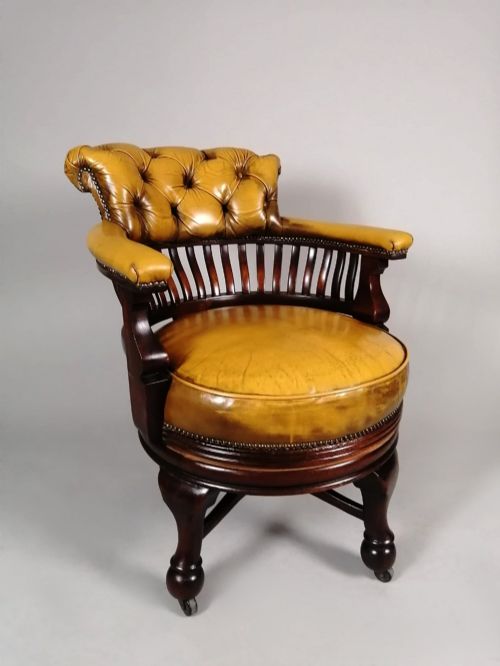
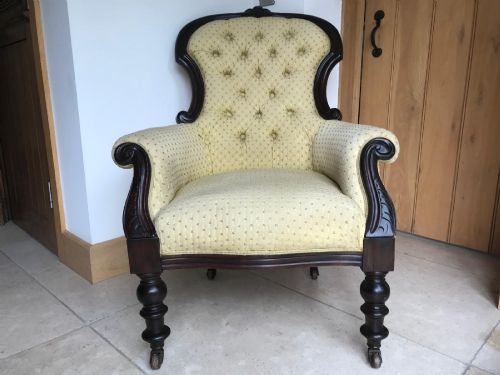
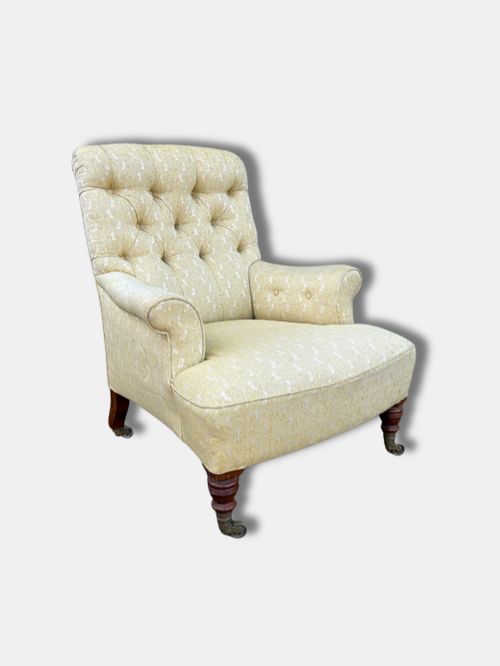
A yellow button back armchair brings deep-buttoned upholstery and period timber frames into a modern room.
Yellow Button Back Armchair
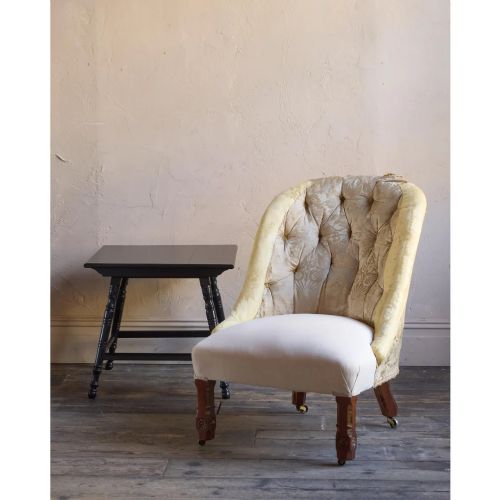
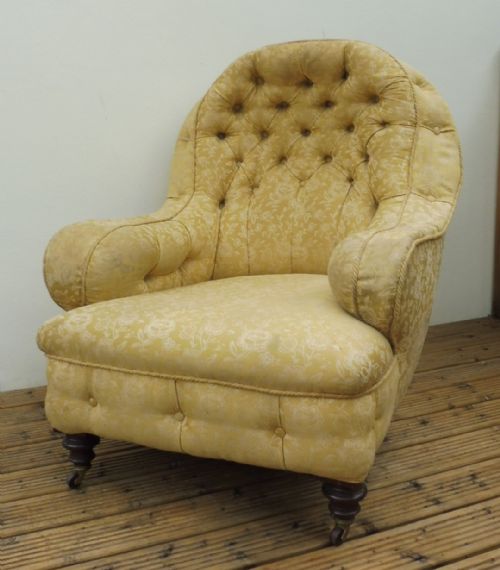
A yellow button back armchair is a low-slung or deep-seated seat featuring prominent tufted upholstery across the backrest. The pieces appearing here span the Victorian era, the nineteenth century, and the Edwardian period, capturing various forms from gentleman's chairs to nursing chairs.
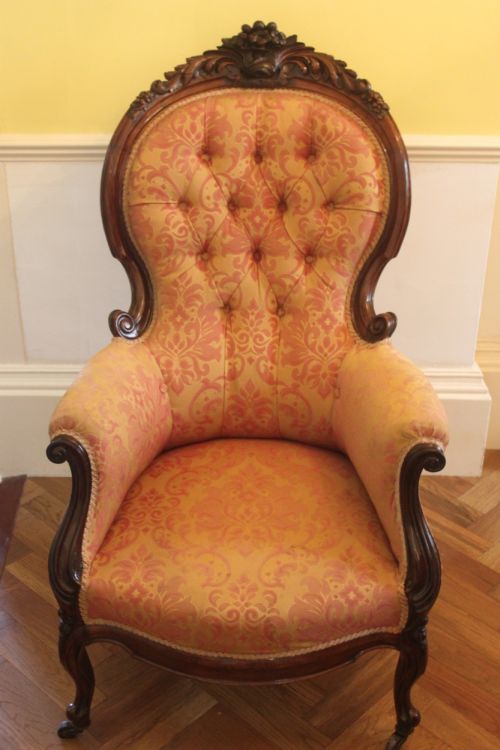
The timber frames underpinning these chairs utilise mahogany and walnut, often shaped with carved show-wood details. Many examples reflect revivalist movements, including Victorian Rococo Revival and Louis XVI Revival aesthetics.
Buyers encounter diverse configurations, ranging from library chairs and open armchairs to fireside seats and salon suites. The upholstery fabrics vary across velvet, damask, linen, cotton, leather, and ivory textiles.
Markers of quality and craftsmanship
Quality rests in the crispness of the timber carving on show-wood frames and the structural integrity of the mahogany or walnut structure. Superior examples maintain firm joinery and well-balanced proportions across gentleman's and ladies' seating.
The execution of the button-backed upholstery dictates the finish, where even tension and precise pleating show the upholsterer's skill. The choice and condition of the textile, whether velvet, damask, or cotton, influence the overall character.
Mahogany and walnut dominate the timber frames across these listings, paired with velvet, damask, cotton, and leather upholstery.
Howard and Sons·Cornelius V Smith·Johnstone and Jeanes
The Yellow Button Back Armchair Glossary
- Button-back
- An upholstery technique where buttons are pulled deep into the padding to form a diamond pattern. This method keeps the internal stuffing firmly in place.
- Show-wood
- Exposed timber framing on an upholstered chair where polished mahogany or walnut remains visible. It frames the upholstered sections rather than being entirely covered in fabric.
- Spoon-back
- A curved chair back shaped distinctly like the bowl of a spoon, popular during the Victorian era. This contour matches the natural curve of the human spine.
- Nursing chair
- A low-seated Victorian chair designed originally for feeding infants or sewing near the hearth. The reduced height allows for relaxed posture.
- Revival
- A design style that resurrects historical motifs from earlier centuries, such as Louis XVI or Rococo forms. These pieces reinterpret older aesthetics through nineteenth-century craftsmanship.
Yellow Button Back Armchair: Frequently Asked Questions
How do I date a yellow button back armchair?
Examine the timber species, frame contours, and upholstery style to determine the age of the piece. Victorian examples often feature mahogany frames with deep spoon-backed profiles, while Edwardian pieces introduce lighter inlay work.
Look closely at the construction methods of the underframe and any maker's stamps on the wood or castors. These physical markers help distinguish mid-nineteenth-century items from later revival pieces.
Where should I place an armchair in a modern room?
Position the seat as a focal point in a living room, bedroom, or study where its vibrant upholstery can stand out. The deep proportions of library and gentleman's chairs suit quiet reading corners.
Pair the chair with neutral walls to let the timber frame and yellow textile command attention. Smaller nursing or bedroom variants fit comfortably in narrower alcoves.
What is the difference between a gentleman's and a ladies' chair?
Gentleman's chairs are typically broader and higher in proportion, designed with substantial armrests for male sitters of the period. Ladies' chairs are frequently smaller, often lacking arms entirely to accommodate voluminous Victorian dresses.
Both types share the characteristic buttoned upholstery and walnut or mahogany frames. Scale remains the most reliable indicator when comparing the two forms side by side.
How do I care for antique velvet or damask upholstery?
Protect the fabric from direct sunlight to prevent the yellow tone from fading over time. Gentle brushing removes surface dust without crushing the pile of velvet or snagging damask threads.
Consult a professional textile conservator for deep cleaning rather than using domestic chemical treatments. Regular, light maintenance preserves the integrity of both the fabric and the internal buttoning.