
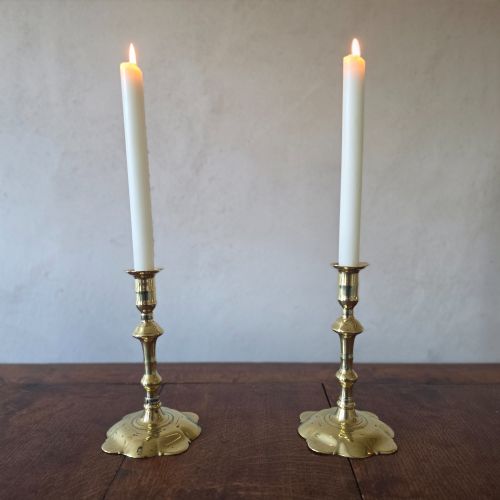


Yellow Brass Candlestick Pair
A yellow brass candlestick pair brings a warm, heavy gleam to a room, offering functional candlelight shaped by centuries of stylistic revival.
Yellow Brass Candlestick Pair
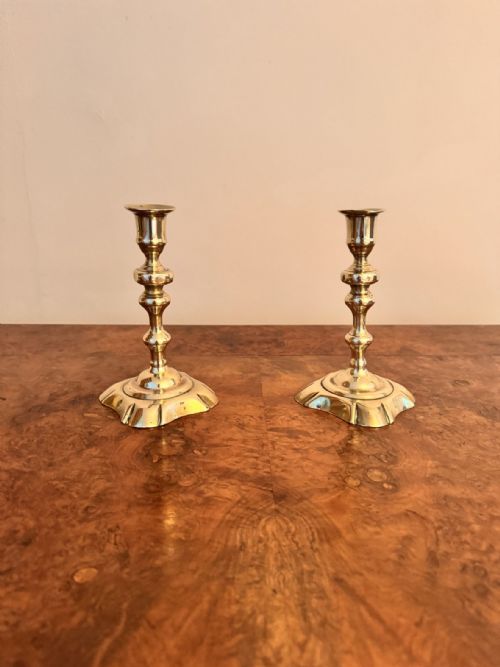
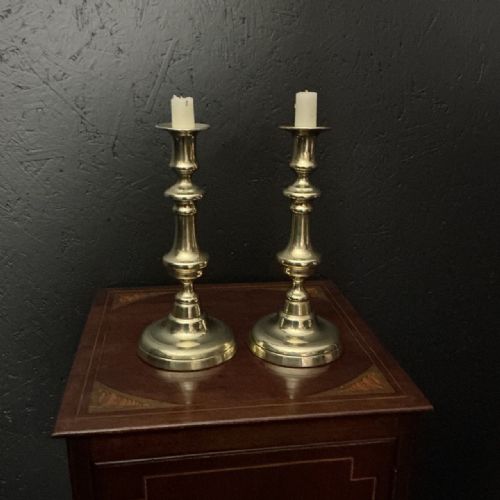
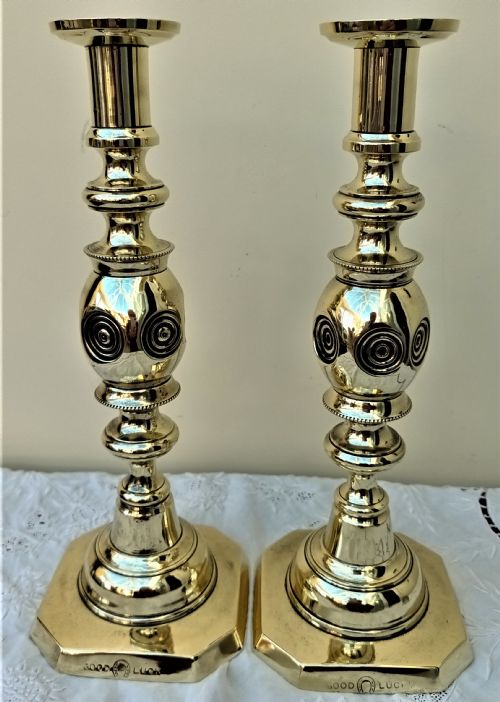
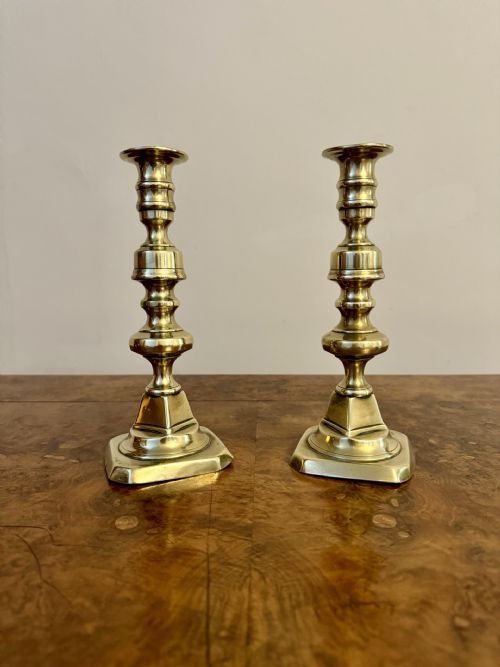
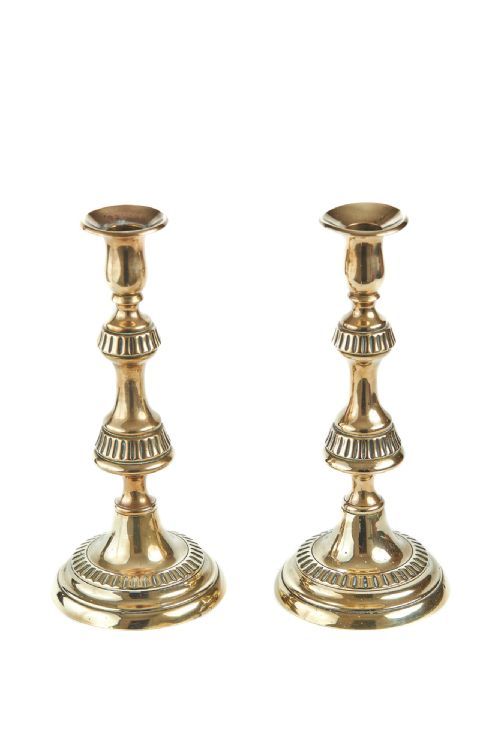
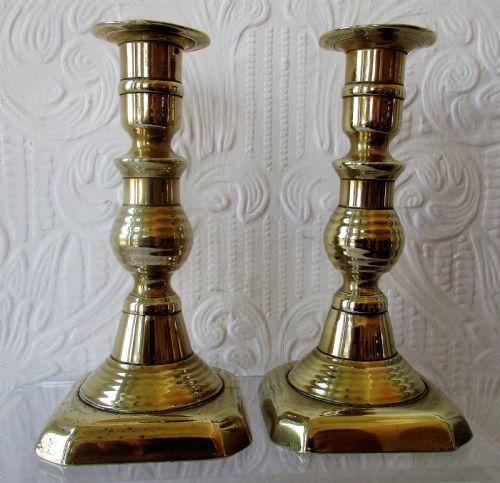
A yellow brass candlestick pair consists of matched lighting supports designed to hold wax or tallow tapers securely on a table, mantel or altar. You will most frequently encounter Victorian examples alongside Georgian and Edwardian pairs across these listings.
The selection spans domestic chambersticks and tall table forms, featuring styles from plain utilitarian designs to ornate French Empire and Arts and Crafts interpretations. These pieces reflect the evolving interior tastes of the eighteenth, nineteenth and early twentieth centuries.
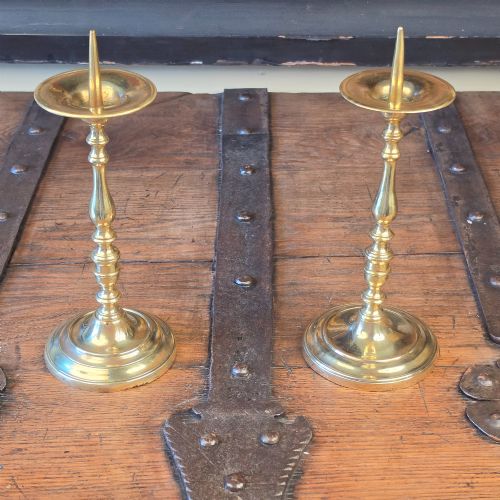
Makers utilised various column shapes, including vase-shaped profiles and pricket configurations, to suit both everyday lighting needs and formal decorative settings. Each matched pair demonstrates the consistency required for symmetrical placement in period rooms.
Materials and construction methods
Brass serves as the primary metal, shaped through casting techniques that produced both solid proportions and components assembled for domestic illumination. Some finer examples incorporate auxiliary materials such as marble bases and gilt bronze finishes.
Earlier production often employed ejector mechanisms within the shaft to push out spent wax remnants, while travelling chambersticks utilised compact designs for portability. Metalworking traditions ensured durable joints and stable bases capable of supporting heavy candles safely.
Travel-friendly Brighton buns kept travellers from setting fire to their bedsheets while navigating dimly lit coaching inns.
Distinctions in craftsmanship and form
The degree of crispness in cast ornamentation separates standard production from superior examples, particularly where decorative motifs and mouldings are sharp and well-defined. Heavier gauge metal and substantial weight indicate higher grade material utilisation.
Proportion and balance dictate the visual success of a pair, with finer pieces maintaining exact symmetry and harmonious height relationships between the nozzle, stem and base.
Frederick J Smith & Co·T Thomason & Co
The Yellow Brass Candlestick Pair Glossary
- Chamberstick
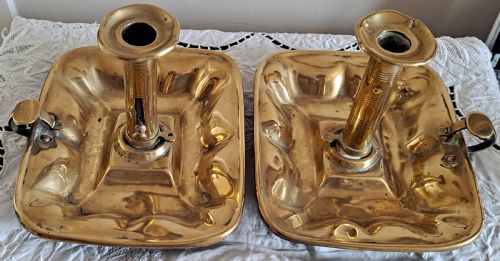
- A low candlestick fitted with a pan to catch dripping wax and a loop handle for carrying from room to room. These portable pieces were essential for lighting bedchambers before household gas and electricity.
- Ejector candlestick
- A type containing an internal mechanism with a sliding button to push out the remaining candle stump. This clever addition prevented wax from becoming wedged inside the socket.
- Pricket candlestick
- A lighting support featuring a vertical metal spike upon which a candle is impaled rather than dropped into a socket. This medieval form saw revivals in later centuries for ecclesiastical and decorative use.
- Brighton bun
- A compact, domed chamberstick resembling a small loaf of bread, designed for travelling. Their low centre of gravity made them stable on uneven surfaces.
- Gilt bronze
- Copper alloy treated with a layer of gold wash to produce a rich, luminous surface finish. It appears on high-status decorative pairs.
Yellow Brass Candlestick Pair: Frequently Asked Questions
How do I date a brass candlestick pair?
Dating relies on observing manufacturing techniques, base construction, and prevailing stylistic influences such as Georgian proportions or Victorian ornamentation. Component parts assembled from multiple cast sections often point to specific nineteenth-century periods.
Examining wear patterns and the method used to join the base to the stem provides further clues regarding age. Comparing the form against documented examples helps narrow down the decade of production.
What is an ejector mechanism?
An ejector mechanism is a small sliding internal lever that pushes out leftover wax from the candle socket. It is typically found on mid-eighteenth to nineteenth-century domestic pieces.
This practical addition made cleaning the holder much easier after the candle had burned down. Finding a functioning mechanism adds considerable interest for collectors.
Were these pairs always used on dining tables?
While dining tables frequently held matching lights for evening meals, pairs were placed across various rooms including hallways, drawing rooms and bedrooms. Chambersticks specifically served a portable lighting function in corridors and bedchambers.
Symmetrical placement on mantelpieces above fireplaces was also a common domestic arrangement. Their versatility meant they moved around the house as needed.
How should I clean antique brass?
Gentle dusting with a soft cloth is usually sufficient to maintain the surface without removing the accumulated history of the metal. Aggressive chemical polishes strip away desirable patination and soften crisp cast details.
If cleaning is necessary, mild soapy water and careful drying preserve the warm tone of the alloy. True collectors prefer a mellow, undisturbed surface over a bright, mirror-like shine.