


Wrought Iron Fireplace Screen
A wrought iron fireplace screen stands before a hearth to stop sparks, joining iron with copper, brass, and stained glass across Victorian, Edwardian, and Regency rooms.
Wrought Iron Fireplace Screen
When you search for a wrought iron fireplace screen, you encounter sturdy guards built to protect a room from stray embers while adding a decorative focal point to the hearth. These pieces serve as both practical spark guards and significant decorative elements within a domestic interior.
The versions most commonly met on this page span the nineteenth century into the early decades of the twentieth century, with strong representations of Arts and Crafts, Gothic Revival, and Art Nouveau aesthetics. Makers shaped iron into folding frames, tall guards, and heavy stands designed to frame an open fire safely.
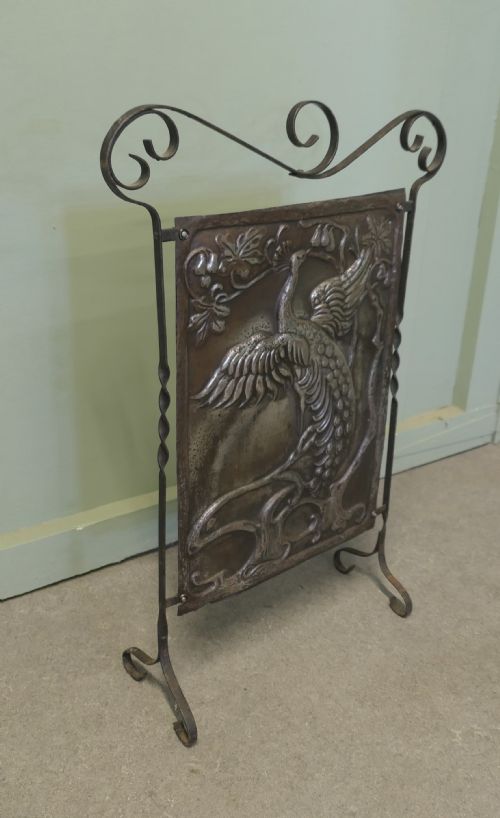
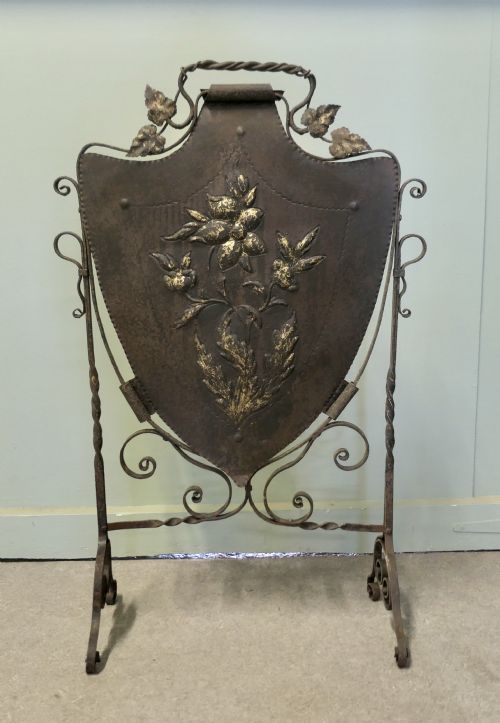
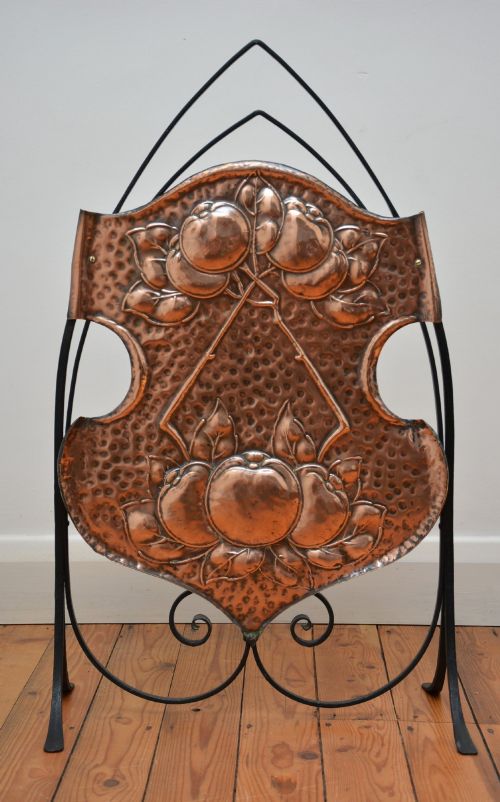
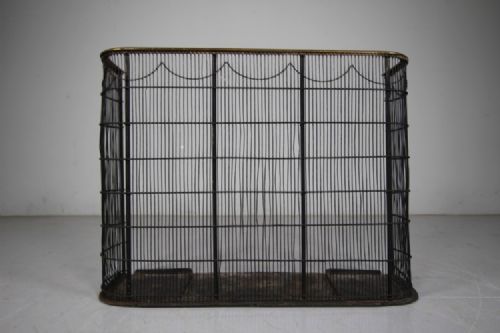
Many examples incorporate secondary materials such as copper panels, brass details, wire mesh, or stained glass panels, moving the object from a purely functional barrier into a piece of decorative metalwork. They range from simple wirework fenders to elaborate panels featuring peacock motifs or heraldic shields.
Materials and Construction
The primary construction relies on forged iron and wrought iron, hammered and shaped to form rigid frames, supporting legs, and protective mesh or solid panels. Blacksmiths utilised traditional joining techniques such as riveted joints and scrollwork to ensure the framework could withstand the heat of the hearth.
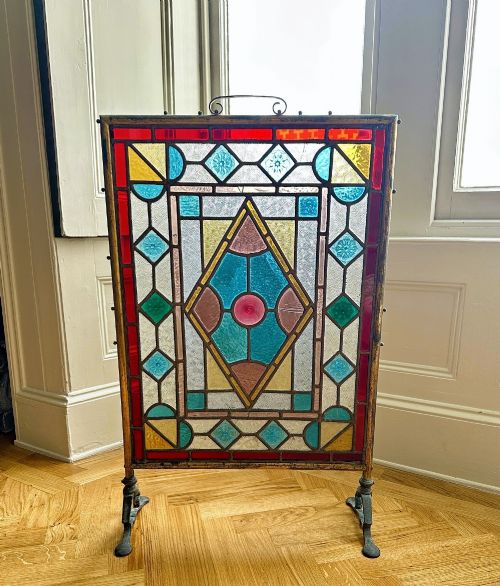
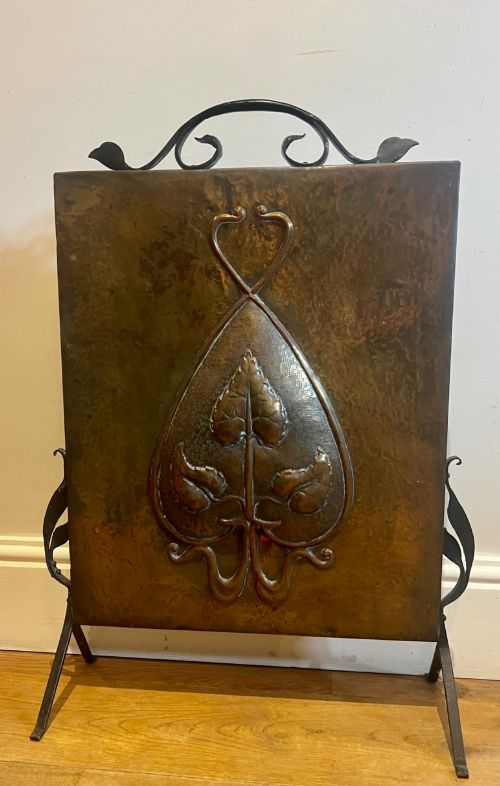
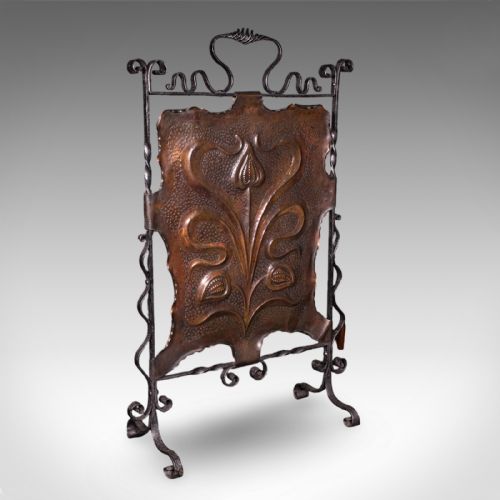
Many screens integrate beaten copper or brass sheets, often embellished with repoussé work, riveted directly to the iron structure. Stained glass and wire mesh appear frequently, held within iron frameworks to provide varied levels of transparency and colour reflection when the fire burns behind them.
Listings feature periods spanning from the Regency era through the Victorian period, Edwardian years, and into the 1930s, utilising iron, copper, wire mesh, and stained glass.
Judging Quality and Craftsmanship
Quality in these pieces rests upon the heaviness of the ironwork, the precision of the hand-beating on copper or brass panels, and the integrity of the structural joints. Finer examples display careful hand-forging with considered attention to decorative motifs like peacock designs or Gothic shields.
The integration of materials also marks the division between standard utility items and ambitious decorative works. Screens featuring intact stained glass panels, well-executed Art Nouveau tendrils, or substantial cast and wrought elements demonstrate superior workshop output.
The Wrought Iron Fireplace Screen Glossary
- Wrought iron
- Iron that has been heated and shaped with hand tools by a blacksmith. This material provides the strong, fibrous structure seen in traditional fire screens.
- Repoussé
- A metalworking technique where the metal is beaten from the reverse side to form a raised design in relief. Copper fire screens frequently employ this method for pictorial motifs.
- Spark guard
- A protective barrier of fine wire mesh or iron mesh designed to catch flying embers from an open fire. Many screens incorporate this functional element into their main design.
- Nursery fender
- A low metal barrier enclosing a hearth to keep young children at a safe distance from the fire. Some examples include integrated rails for airing clothes.
Wrought Iron Fireplace Screen: Frequently Asked Questions
How do I clean a wrought iron screen?
Dust the iron framework regularly with a soft cloth and apply a light coat of microcrystalline wax to protect the metal from moisture. Avoid harsh chemical cleaners that can strip historic finishes from iron or copper.
For copper panels, gentle cleaning preserves the natural patina without removing the aged character built up over decades of use near the hearth.
Can I use these screens with a modern fire?
Most antique screens function effectively with modern open hearths and gas fire baskets, provided the dimensions match your fireplace opening. Measure both height and width carefully to ensure the screen covers the entire hearth area.
Keep in mind that vintage wire mesh and folding frames are built for traditional hearth spaces and should be positioned securely on a flat surface.
How do I identify an Arts and Crafts screen?
Arts and Crafts screens emphasise visible hand-craftsmanship, featuring hammered copper surfaces, exposed rivets, and stylized natural motifs like peacocks or floral tendrils. The ironwork often displays a dark, polished, or natural forged finish rather than heavy painted decoration.
These pieces typically date from the late nineteenth or early twentieth century and prioritize honest materials over mass-produced ornamentation.
What is the difference between a fender and a screen?
A fender is a low barrier that sits directly on the floor around the hearth perimeter, sometimes incorporating a seat or a clothes rail. A screen is a taller upright panel designed to stand in front of the fireplace opening to block radiant heat and sparks.
Many listings combine these terms when describing multi-functional guards that offer both perimeter protection and an upright barrier.