




Wrought Iron Ceiling Lamp
A wrought iron ceiling lamp brings robust metalwork and period character to overhead spaces, from French hall lanterns to Arts and Crafts chandeliers.
Wrought Iron Ceiling Lamp
When you search for a wrought iron ceiling lamp, you encounter robust overhead lighting fixtures spanning the late nineteenth century through the early twentieth century. The selection ranges from Victorian billiard lights and Edwardian porch lanterns to French gothic hall lanterns.
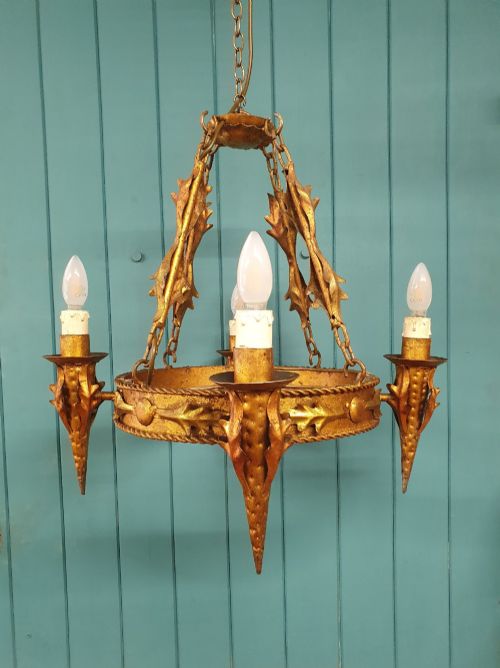
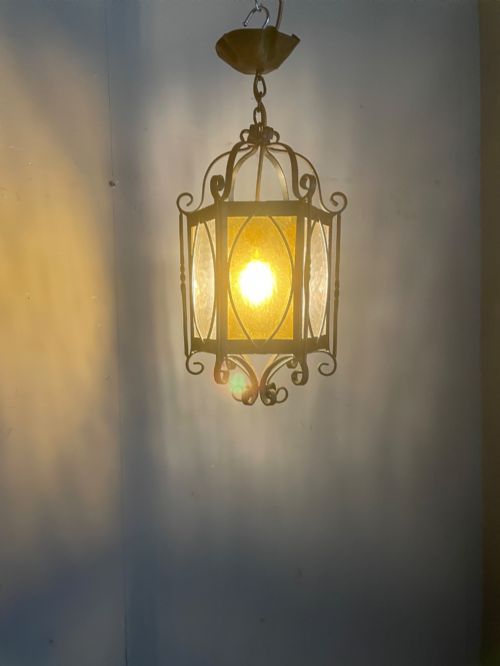
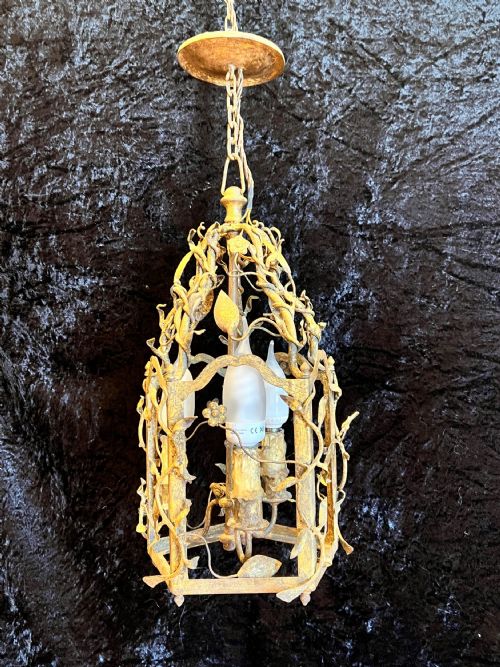
You are most likely to meet French wrought iron designs paired with glass, whether glazed, frosted, stained, or pate de verre. Forms vary from single pendant hall lanterns to multi-light coronet and wagon wheel chandeliers.
The styles crossing this category reflect regional and aesthetic movements including Art Nouveau, Arts and Crafts Gothic, and French Rococo Revival. These fixtures served practical illumination roles in grand halls, porches, and billiard rooms.
How they were made
The primary construction relies on hand-forged wrought iron and cast iron, shaped by blacksmiths into structural frames, scrollwork, and suspension chains. This metal framework is frequently combined with secondary elements of brass, copper, and gilt metal.
Glass components form an integral part of the fabrication, utilising leaded, frosted, coloured, or stained panels housed within the iron armature. Specialised glassmaking techniques such as pate de verre appear in specific Art Nouveau examples, secured alongside crystal drops or fabric elements.
Listings feature wrought iron lighting spanning from the Victorian era through the 1930s Art Deco period.
What varies in quality
Quality separates standard production lighting from exceptional studio or blacksmith-made pieces through the fluidity and precision of the ironwork. Master smiths achieved finer detail in scrollwork and structural integration of the metal frame.
The caliber of the accompanying glass elements defines the upper tier of the range, particularly where signed art glass or intricate stained and leaded panels are present. Harmonious proportions between the heavy iron armature and the delicate glass or crystal components dictate overall visual success.
Verrerie Des Vosges·Muller Freres
The Wrought Iron Ceiling Lamp Glossary
- Wrought iron
- A tough, malleable form of iron suitable for hand-forging into decorative and structural shapes. Blacksmiths heat and hammer the metal to create brackets, frames, and scrollwork.
- Pate de verre
- A glass-forming technique involving crushed glass packed into a mould and fused in a kiln. This process yields richly coloured, textured art glass shades.
- Hall lantern
- An enclosed ceiling-hung light fixture designed specifically for entranceways and corridors. These pieces typically feature glass panels held within a metal frame.
- Coronet chandelier
- A circular ceiling light fixture resembling an open crown. The design suspends illumination sources from a central metal coronet ring.
- Lead-light
- Glass panels held together by grooved lead cames. This technique creates geometric or pictorial designs within lanterns and windows.
Wrought Iron Ceiling Lamp: Frequently Asked Questions
How do I hang a heavy iron lamp safely?
Suspension of heavy wrought iron fixtures requires direct anchoring into ceiling joists or the use of suitable structural toggle bolts. Professional electrical installation ensures the weight is supported independently of the electrical wiring.
Weight distribution matters significantly for larger wagon wheel or multi-light chandeliers found in this category. Consulting a qualified electrician guarantees compliance with safety standards for antique ceiling loads.
Where should I place a hall lantern?
Hall lanterns suit entranceways, stairwells, and corridors where vertical clearance allows for pendant suspension. Their enclosed design protects the light source while casting atmospheric illumination across transitional spaces.
Placing these fixtures at the correct height ensures adequate clearance for movement beneath them. They function effectively as focal points in high-ceilinged period properties.
How do I clean antique wrought iron?
Dust wrought iron surfaces regularly with a soft, dry cloth to prevent grime accumulation. Avoid harsh chemical cleaners that can strip patinated finishes from the metal.
Glass panels can be removed carefully for washing with mild soap and water before re-securing. Ensuring the lamp is disconnected from power before maintenance is essential.
What is the difference between Arts and Crafts and Art Nouveau lamps?
Arts and Crafts lighting emphasises visible hand-craftsmanship, structural honesty, and Gothic-inspired utility. The ironwork tends to be straightforward and robust, prioritizing function and honest materials.
Art Nouveau pieces showcase organic, flowing lines inspired by natural forms with whiplash curves. These designs frequently incorporate specialised art glass or pate de verre elements.