


Stepped Glass Shade
A stepped glass shade brings architectural form and diffused light to a room, which is why collectors seek out these striking period fixtures.
Stepped Glass Shade
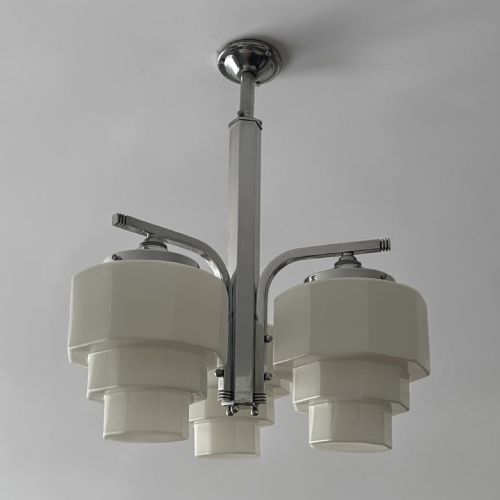
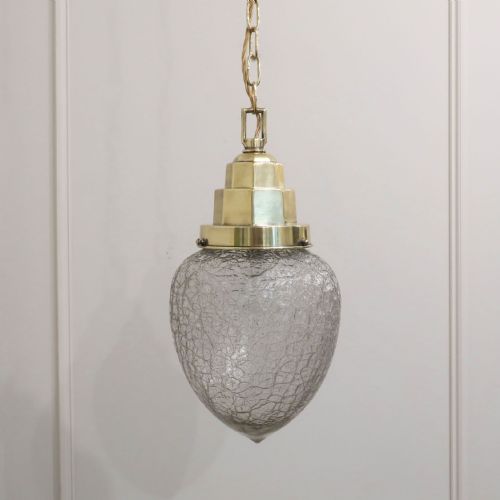
A stepped glass shade appears across various lighting forms, most notably in Art Deco pendants, ceiling lights, and table lamps from the nineteen thirties. These pieces combine tiered glass geometry with metal mounts to create distinct vertical interest in interior spaces.
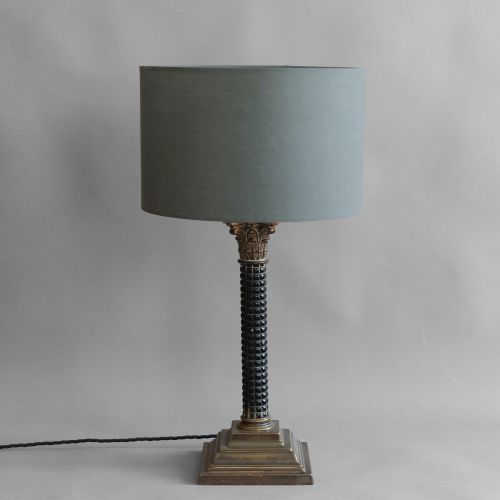
The selection ranges from Victorian oil lamps with reeded columns up to nineteen twenties opaline pendants and nineteen thirties Art Deco carriage and wall sconces. Table lamps and desk lamps also incorporate these tiered glass elements alongside brass, chrome, and marble bases.
Materials and Construction
Makers fashioned the shades using moulded glass, including frosted, opaline, crackle, and pink variants, which soften the illumination. These glass components are paired with structural elements in brass, chrome, wrought iron, and fabric.
Older Victorian examples utilise heavy brass and reeded columns, while later Art Deco designs favour streamlined chrome and tiered geometric glass formations to achieve their characteristic silhouette.
Dining carriage lamps once lit railway journeys before finding new life illuminating modern dining rooms.
Judging Quality
Quality rests in the weight and clarity of the glass, alongside the integrity of the supporting metalwork such as brass and chrome. Superior examples display crisp moulding steps and harmonious integration between the shade and the base or suspension.
Finer items maintain their original matching components and retain the intended surface finishes across both the glass body and the metal mounts, whereas lesser pieces often show replacement fittings or mismatched elements.
The Stepped Glass Shade Glossary
- Opaline glass
- A milky, semi-translucent glass that diffuses light evenly. It was widely utilised in pendants and shades during the early twentieth century.
- Art Deco
- A design style emerging in the nineteen twenties and nineteen thirties characterised by geometric shapes, streamlined forms, and modern industrial materials.
- Reeded
- A decorative moulding consisting of parallel convex projections resembling parallel reeds. This texture frequently appears on columns and lamp stems.
- Sconce
- A wall-mounted light fixture designed to direct illumination upwards or outwards. Period examples often feature matched glass shades secured to metal brackets.
Stepped Glass Shade: Frequently Asked Questions
What periods do these lights come from?
The available lighting spans from Victorian models dating to eighteen sixty up through nineteen twenties opaline designs and nineteen thirties Art Deco pieces. Each era brings distinct manufacturing methods and material combinations.
Victorian pieces often lean towards heavy brass and reeded columns, whereas later decades favour geometric stepped glass and chrome.
How were stepped glass shades used originally?
These shades functioned primarily to diffuse light while adding an architectural decorative element to domestic and commercial interiors. They appeared on ceiling pendants, dining carriage lights, and table lamps.
The tiered profile helped soften the glare from early electric bulbs or oil flames while directing illumination downward.
What metals accompany the glass shades?
Metal mounts and bases typically feature brass, chrome, or wrought iron depending on the manufacturing period. Victorian items rely heavily on brass, while nineteen thirties pieces introduce chrome and iron.
Certain table lamps also incorporate materials like green marble alongside the metal and glass components.
How do I identify an Art Deco shade?
Art Deco lighting is characterised by symmetrical stepped forms, geometric motifs, and the use of frosted, crackle, or coloured glass. These designs often pair with chrome or wrought iron frames.
The style emerged strongly by nineteen thirty and values streamlined architectural silhouettes over Victorian ornamentation.