
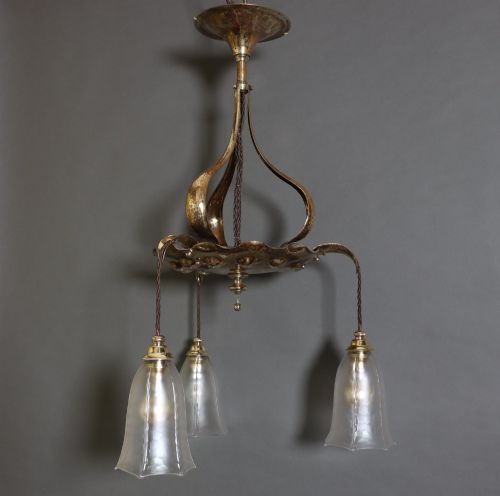
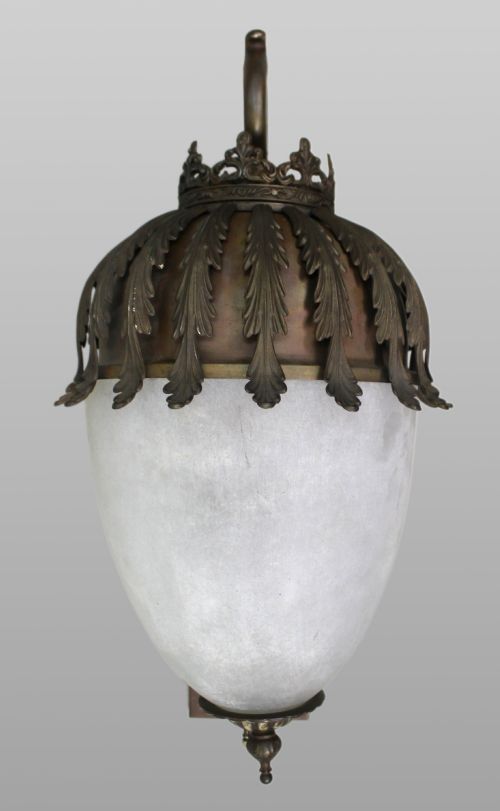
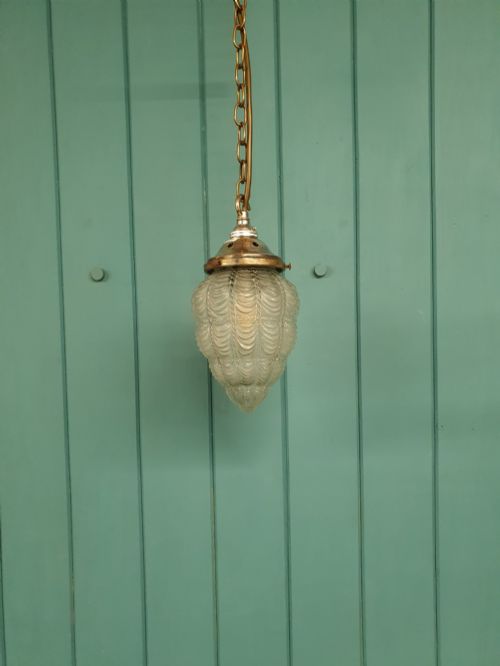


Frosted Glass Lantern Shade
A frosted glass lantern shade softens a harsh bulb with diffused light, bringing period character to a hallway or reception room.
Frosted Glass Lantern Shade
When you search for a frosted glass lantern shade, you are looking at light fittings and standalone shades spanning from the Victorian era through the Edwardian period and into the Art Deco style of the 1930s. The selection includes ceiling lights, wall sconces, and pendant lights designed to diffuse light evenly across a room.
You are most likely to meet pieces suspended in metal frames, such as brass hall lanterns or copper ceiling lights, alongside pendant bowls and oil lamp components. These items originate from domestic settings as well as notable locations like the Savoy Hotel.
The styles range from early Arts and Crafts interpretations and Italian Rococo Revival to geometric Art Deco designs. Each piece reflects the lighting technology and interior fashion of its respective decade.
Materials and construction
These fixtures combine glass components with metal frameworks of brass, copper, silver plate, and wrought iron. The glass itself appears in frosted, etched, pressed, and opalescent varieties to achieve different levels of translucency.
Metalwork frames are constructed to house the glass securely, utilising chains, brackets, and suspension mounts suitable for ceiling lights and wall sconces. Many pieces incorporate period wiring updates while retaining their original metal and glass bodies.
One exceptional brass wall lantern arrives with a documented stay at the Savoy Hotel in London.
Distinctions in quality
Quality in these lanterns rests upon the crispness of the metal casting and the weight of the glass shade. Finer examples display robust brass or copper mounts with well-defined decorative details rather than thin, pliable stamped metal.
The integrity of the glass also separates standard production from superior pieces. Thick frosted, etched, or opalescent panels that fit snugly within their original frames demonstrate careful original manufacture.
The Frosted Glass Lantern Shade Glossary
- Frosted glass
- Glass treated by acid-etching or sandblasting to create a textured, opaque surface that diffuses light. This treatment softens the glare of the internal bulb.
- Opalescent glass
- Glass that exhibits a milky, iridescent appearance with milky-white tones. It scatters light in a warm, glowing manner.
- Hall lantern
- A ceiling-hung light fixture designed specifically for entrance halls and corridors. These typically feature protective glass panels held within a metal framework.
- Pendant light
- A light fixture suspended from the ceiling by a cord, chain, or metal rod. The shade hangs downward to direct illumination into the space below.
Frosted Glass Lantern Shade: Frequently Asked Questions
How do I hang a heavy hall lantern?
These lanterns require secure anchorage to a ceiling joist using appropriate fixings to support the combined weight of the metal frame and glass shade. Consulting a qualified electrician ensures the ceiling box can bear the load safely.
Many period pieces have been rewired for modern electrical standards, but the suspension hardware must still be matched to the structural capacity of your ceiling.
Can I use modern LED bulbs in these shades?
Modern LED bulbs work well inside these glass shades because they emit less heat than traditional incandescent lamps. This protects fragile historical glass and older internal wiring components from thermal stress.
Select bulb shapes and colour temperatures that mimic the warm glow originally intended for these Edwardian and Art Deco fixtures.
How do I clean frosted glass safely?
Wash the glass shade using warm water and a mild detergent, supporting the piece carefully if removed from its metal frame. Avoid abrasive scourers that can scratch or alter the frosted surface texture.
Dry the glass thoroughly with a soft cloth before reassembling it into the brass or copper housing.
How do I identify an Art Deco shade?
Art Deco pieces from the 1920s and 1930s typically feature geometric lines, streamlined metalwork in brass or wrought iron, and symmetrical frosted glass panels. These designs reflect the modernist aesthetic of the interwar period.
Earlier Victorian and Edwardian examples tend to display more ornate scrolling metalwork or softer, organic opalescent forms.