




Art Deco Ceiling Lantern
An art deco ceiling lantern brings the geometric discipline of the early twentieth century directly to a hallway or entrance, offering focused illumination with architectural presence.
Art Deco Ceiling Lantern
When you search for an art deco ceiling lantern, you are looking at hanging light fixtures designed during the 1920s and 1930s alongside related early twentieth-century examples. These pieces combine utilitarian metal frames with decorative glass elements to light hallways, vestibules and principal rooms.
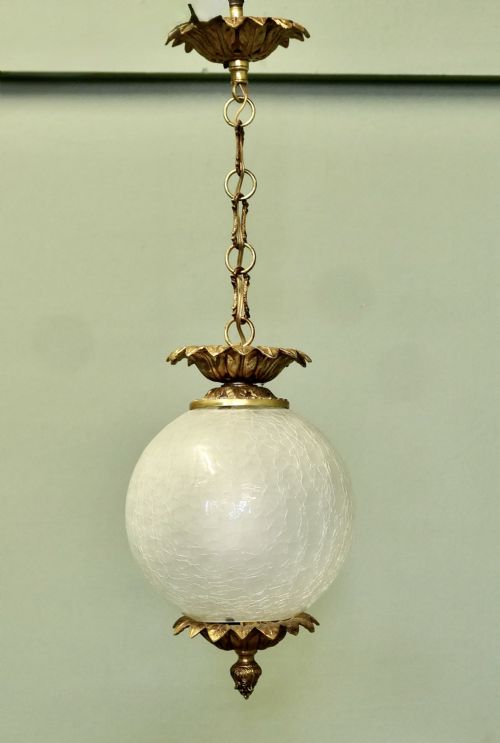
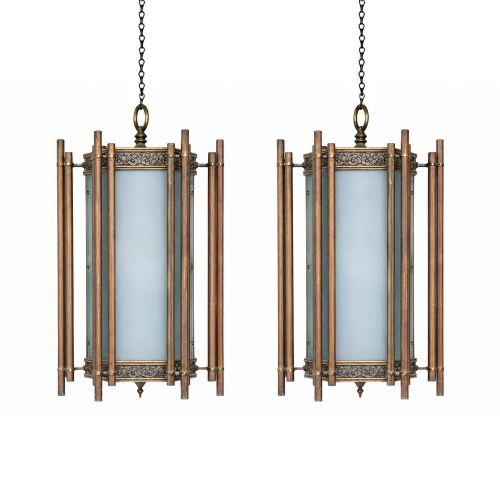
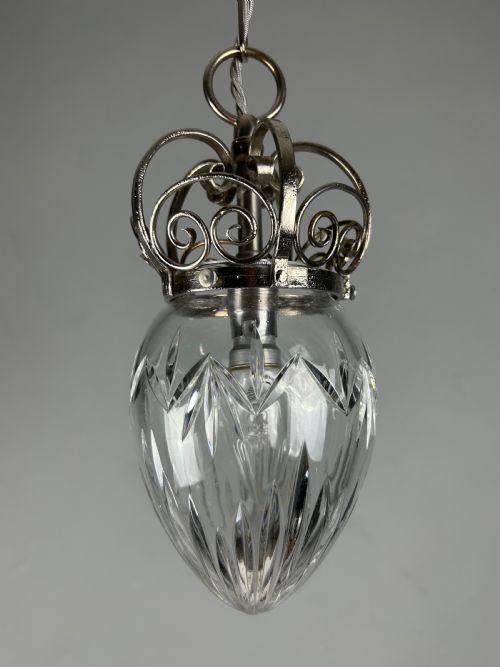
The versions you are most likely to meet on this page include brass and copper hall lanterns alongside pendant lights featuring frosted, cut, mirrored or crackle glass shades. Styles range from French glass globes to monumental American hanging lanterns and iron-framed designs.
Makers and designers from this era utilised industrial materials alongside traditional metalworking techniques to produce structured, symmetrical forms. The resulting fixtures serve as both functional overhead lighting and distinct decorative statements within period interiors.
Materials and construction methods
Makers constructed the framework of an art deco ceiling lantern using durable metals such as brass, bronze, copper, steel, chrome and wrought iron. These materials provided the structural rigidity needed to suspend heavy glass components safely from ceilings.
The enclosing shades and panels relied heavily on glasswork, encompassing frosted, cut, crackle and mirrored surfaces to diffuse light effectively. Such panels were securely fitted into metal collars, chains and bezels designed to withstand continuous heat from internal bulbs.
Art Deco Ceiling Lantern Retail Price Guide 2026
Typical asking prices for art deco ceiling lantern among the pieces listed under this phrase on Sellingantiques today, from the lower quarter to the upper quarter. They describe what is for sale here now, not the wider market.
Assessing quality and craftsmanship
The distinction between standard production and superior examples rests upon the weight of the metal and the clarity or cut of the glass. Heavier gauges of brass, bronze or iron indicate sturdier construction and more enduring structural integrity.
Finishing details also separate ordinary fixtures from exceptional ones, particularly in the hand-finishing of metalwork and the precision with which glass panels are bevelled, etched or fitted to the frame.
The Art Deco Ceiling Lantern Glossary
- Art Deco
- A design style spanning the 1920s and 1930s characterised by sleek geometric shapes, stylised motifs and industrial materials. It replaced the organic curves of the preceding Art Nouveau movement with clean lines and symmetry.
- Frosted Glass
- Glass treated to scatter light, producing a translucent surface that softens glare. This technique was widely utilised in period lighting to achieve even illumination.
- Hall Lantern
- A suspended overhead light fixture specifically proportioned for narrow spaces such as corridors and entrance halls. These pieces typically feature enclosed glass panels within a protective metal cage.
- Crackle Glass
- Glass intentionally subjected to thermal shock during manufacture to produce a fine network of internal fractures across the surface. This texture diffuses light while adding decorative visual complexity.
Art Deco Ceiling Lantern: Frequently Asked Questions
Where should I hang an art deco ceiling lantern?
These fixtures suit entrance halls, vestibules and stairwells where their vertical drop provides adequate clearance while casting direct illumination. Their decorative metal and glass construction also makes them effective in dining rooms or high-ceilinged landings.
Ensure the hanging height allows sufficient headroom for passage below, particularly in compact hallways or older properties with lower ceilings.
How do I identify a 1920s or 1930s lantern?
Examine the construction materials, metal patination and glass treatments characteristic of the early twentieth century. Look for specific combinations like brass frames paired with frosted or cut glass shades.
Construction methods often reveal the period through heavy cast metal components and traditional wiring channels distinct from modern reproductions.
Can these antique lanterns be rewired for modern use?
Many surviving fixtures are updated with modern electrical flex and lamp holders to comply with current safety standards while retaining their original metal and glass bodies. Rewiring preserves the historical exterior while ensuring safe domestic operation.
Consult a qualified electrician to install contemporary internal components without damaging fragile historic metalwork or original mounting points.
What metals were commonly used in these lanterns?
Manufacturers utilised brass, bronze, copper, steel, chrome and wrought iron to form the structural framework and decorative mounts. Each metal offers a distinct finish, from the warm tones of polished brass to the industrial weight of iron.
Over decades, these metals develop natural oxidation and patination that indicate age and authenticity.