
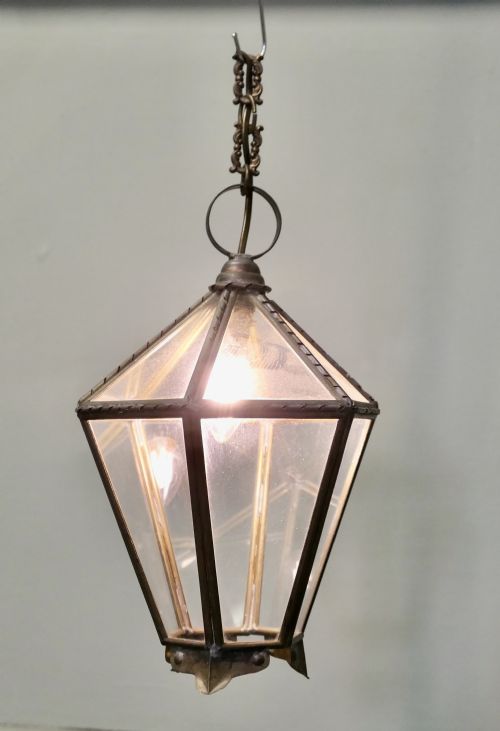


Faceted Glass Pendant Light
A faceted glass pendant light brings brilliant refraction and distinct period character to high ceilings and hallways.
Faceted Glass Pendant Light
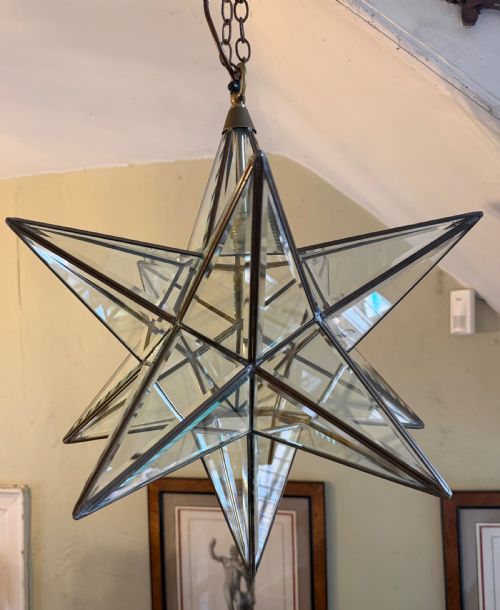
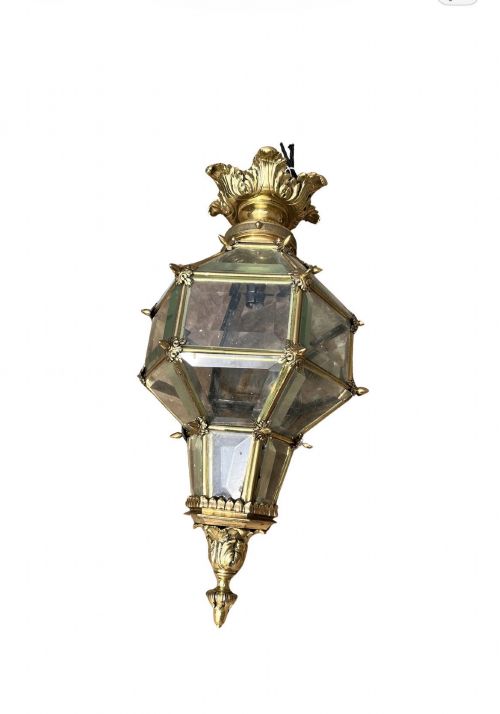
When you search for a faceted glass pendant light, you encounter hanging fixtures designed to catch and scatter light across a room. These pieces range from substantial star lanterns to dome top chandeliers and hall lights spanning the nineteenth century through the nineteen-thirties.
The examples most frequently met on this page belong to the Edwardian era and the early twentieth century, alongside distinct French Louis XVI style and Art Deco pieces. Their forms encompass multi-point stars, globe-like domes, and structured metal frames holding cut or bevelled glass panes.
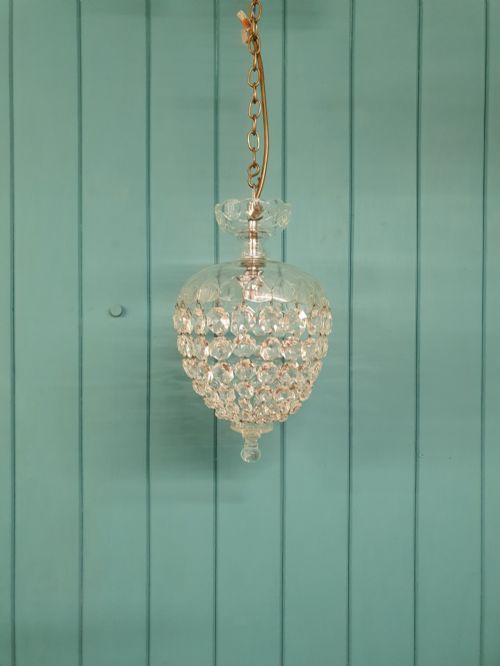
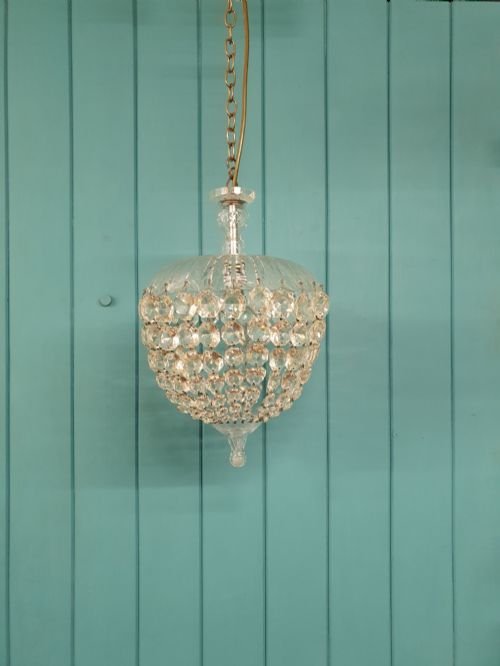
Makers and designers drew upon varied international traditions, producing Bohemian crystal fixtures, Italian Marie Theresa designs, and English cut glass tent and bag chandeliers. Each configuration serves to illuminate domestic spaces while offering strong decorative presence through precise glass cutting.
How they were made
Makers constructed the structural framework of these fixtures using durable metals including brass, bronze, chrome, and standard metal alloys. These secure frames hold the heavy glass components in place, ranging from solid cast brass rings to intricate soldered lead channels.
The optical elements rely on heavy lead crystal, cut glass, and bevelled glass that require meticulous hand-cutting and polishing to achieve sharp refractive edges. Frosted glass panels provide diffused illumination, while clear crystal prisms and tent and bag configurations use metal pins to suspend individual glass drops.
Listings feature brass, bronze, and chrome frames holding bevelled, frosted, and cut crystal glass across Edwardian and Art Deco periods.
What varies in quality
Quality separates fixtures by the depth and clarity of the glass cutting, where sharper facets yield superior light dispersion. Superior examples display dense lead crystal or precision bevels rather than simple pressed glass panes.
The substance of the metalwork defines the grade of the piece, distinguishing heavy cast brass and gilt bronze from lighter plated alternatives. Construction methods such as robust frame soldering and secure mechanical fixings indicate superior longevity and workshop capability.
The Faceted Glass Pendant Light Glossary
- Bevelled glass
- Glass with edges ground and polished at an angle to create decorative prismatic borders. This technique enhances light refraction along the perimeter of each panel.
- Cut glass
- Glass decorated by grinding designs into the surface using rotating wheels. The resulting deep incisions catch and split light into spectral colours.
- Lead crystal
- Glass containing metallic lead oxide to increase weight, brilliance, and softness for easier cutting. It remains the standard material for high-clarity historical chandeliers.
- Frosted glass
- Glass treated by acid-etching or sandblasting to diffuse light and reduce glare. It produces a soft, uniform glow across lanterns and dome lamps.
- Tent and bag chandelier
- A lighting form featuring strings of beads gathered into a tent shape above a bag-like lower basket. This construction creates a dense cascade of hanging crystal elements.
Faceted Glass Pendant Light: Frequently Asked Questions
How do I hang a heavy faceted glass pendant light?
Suspension requires adequate ceiling joist support and a metal hook capable of holding the substantial weight of brass and crystal. Professional installation ensures the electrical wiring safely carries the load of multi-bulb frames.
Chain length must be adjusted so the fixture clears normal walking traffic while sitting at the correct visual height in a room or hallway.
What periods do these pendant lights represent?
The selection spans the nineteenth century through the nineteen-thirties, covering Edwardian, Art Deco, and revival styles. Victorian and Edwardian examples often feature heavy brass frames and bevelled glass panels.
Later pieces from the nineteen-thirties introduce streamlined chrome and frosted glass. French and Bohemian influences appear across multiple decades through distinct crystal configurations.
How do I clean a crystal pendant light?
Cleaning involves using a mild solution of warm water and a gentle cleaning agent applied with a soft cloth. Individual glass drops and prisms can be wiped in place or removed if the metal pins allow.
Harsh chemical sprays should be avoided to protect the aged patinas on brass, bronze, and chrome metalwork.
Where should I place a star lantern?
Star lanterns suit high-ceilinged hallways, entryways, and landings where their geometric silhouette can be viewed from multiple angles. Their enclosed glass panels direct light outward to create patterned shadows on surrounding walls.
They also function effectively as focal points in large reception rooms needing a distinct architectural accent.