




Vintage Chrome Ceiling Fixture
A vintage chrome ceiling fixture brings clean lines and polished metal to a room, offering functional illumination rooted in early twentieth-century design.
Vintage Chrome Ceiling Fixture
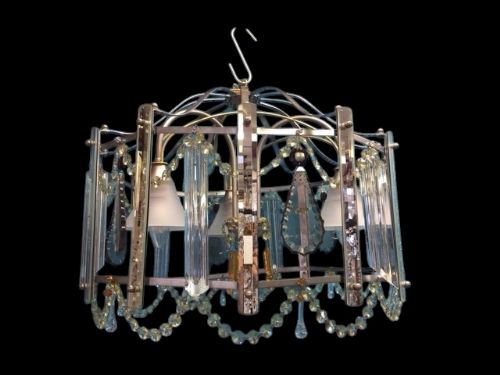
A vintage chrome ceiling fixture encompasses pendant lights, flush mount ceiling lights, lanterns, and bag chandeliers dating from the 1920s and 1930s. These pieces originate from Art Deco and industrial design movements, bringing functional illumination and distinct period character to domestic spaces.
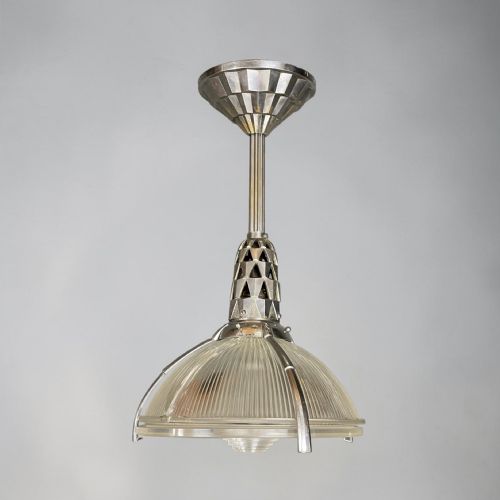
The most common examples on this page are Art Deco pendant lights and ceiling lamps pairing polished chrome or steel frames with glass shades. Forms range from simple reeded opaline shades to complex pressed satin glass and cut glass arrangements designed to diffuse light effectively.
How They Were Made
These fixtures combine metalworking techniques with moulded and pressed glass production typical of the interwar period. Chrome plating and steel provide the structural frames and galleries, offering durable support for heavy glass elements.
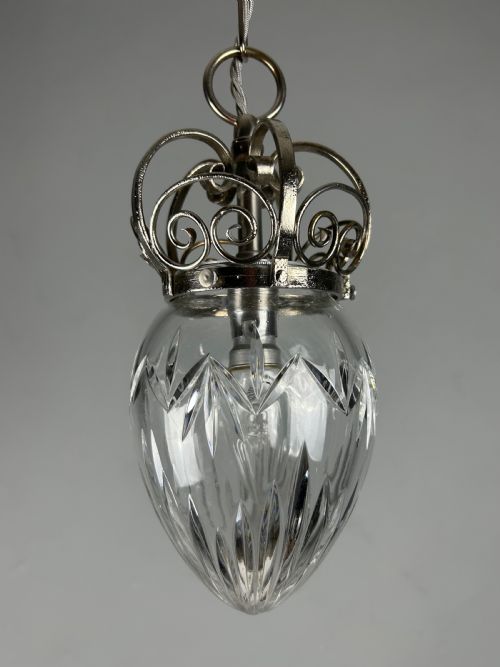
Glass components utilise various techniques, including pressed satin finishes, acid etching, and hand-cutting to create decorative light diffusion. Opaline and frosted glass options diffuse glare while highlighting the geometric and symmetrical motifs favoured in Art Deco design.
Some opaline shades utilise a fish scale pattern, proving that even interwar electricians occasionally fancied a bit of marine texture.
What Varies in Quality
Quality in a vintage chrome ceiling fixture rests upon the weight and clarity of the glass and the integrity of the metalwork. Substantial pressed or cut glass shades with crisp moulding stand apart from lighter, simpler alternatives.
The refinement of the metal components, such as the thickness of the chrome plating over steel or brass and the precision of the gallery fixings, distinguishes standard production pieces from finer design examples.
Émile-Jacques Ruhlmann
The Vintage Chrome Ceiling Fixture Glossary
- Chrome
- An electroplated metallic coating applied to steel or brass to provide a bright, corrosion-resistant finish. This process became widely utilised in interwar lighting design for its sleek appearance.
- Opaline glass
- A milky, semi-translucent glass that diffuses light evenly across its surface. It was frequently moulded into fish scale or reeded shapes during the 1920s.
- Pressed glass
- Molten glass shaped by being pressed into a metal mould using a plunger. This technique allowed manufacturers to produce decorative geometric patterns efficiently.
- Gallery
- The metal ring or collar that holds a glass shade in place on a pendant light. Galleries often feature decorative perforations or stepped Art Deco profiles.
- Bag chandelier
- A lighting fixture featuring a flattened, bag-like cascade of glass drops or crystals suspended from a metal frame. They direct light downward while sparkling across the cut surfaces.
Vintage Chrome Ceiling Fixture: Frequently Asked Questions
How do I clean a vintage chrome ceiling fixture?
Dust the chrome and glass components regularly with a soft, dry microfibre cloth to prevent grime buildup. Avoid abrasive cleaners or harsh chemicals that can strip the electroplated chrome finish or scratch delicate pressed glass.
For glass shades, remove them carefully if the fixings permit and wash them in warm, soapy water. Ensure all parts are completely dry before reassembling or restoring power to the light.
What rooms suit an Art Deco ceiling light?
These fixtures suit hallways, dining spaces, and bedrooms where compact pendant lighting or flush ceiling mounts provide adequate clearance. Their geometric forms complement period properties as well as modern interiors seeking a focal point with historic character.
Larger spaces benefit from multi-light chandeliers or pairs of lanterns, while smaller opaline pendants work well in kitchens or cloakrooms. The reflective chrome finish helps brighten smaller rooms by bouncing available light around the space.
How do I date a chrome ceiling light?
Dating relies on stylistic markers such as the symmetrical stepped motifs of Art Deco design and the prevalence of chrome plating introduced during the 1920s and 1930s. Materials like opaline glass, frosted satin glass, and heavy cut crystal point firmly to this interwar period.
Construction details, including screw thread types, heavy steel galleries, and maker signatures on the glass, help narrow down the decade of manufacture. Comparing the forms to documented catalogues from the period provides further confirmation.