
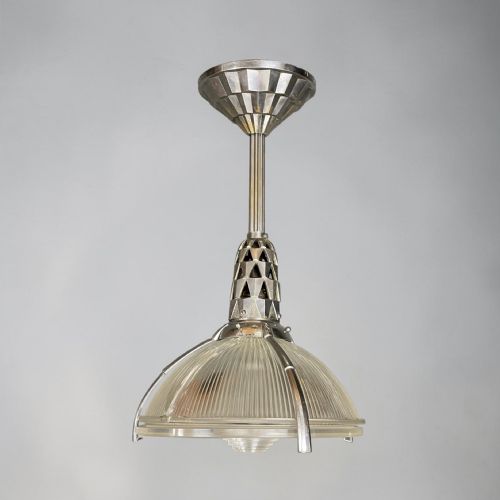


Geometric Glass Ceiling Lamp
A geometric glass ceiling lamp brings clean lines and diffused light into a room, capturing the distinct spirit of the early twentieth century.
Geometric Glass Ceiling Lamp
A geometric glass ceiling lamp represents the architectural and modernist ambitions of the 1920s and 1930s. These fixtures encompass pendant lights, plafonniers, and lanterns designed to cast functional yet stylish illumination from above.
The versions most commonly met on this page belong to the Art Deco movement and the broader twentieth century. They pair structured glass panels or moulded shades with metal frames to create strong silhouette lines in domestic interiors.
Materials and construction
Makers shaped frosted, opaque, and moulded glass to diffuse light evenly through strict geometric forms. These glass shades fit securely within metal frameworks made from brass, copper, chrome, nickel-plated metal, bronze, and wrought iron.
Craftsmen combined these industrial metals with architectural glass panels to build durable hanging lights and lanterns. The assembly relied on precise metalwork to hold heavy glass components safely against the ceiling or suspended by chains.
Materials recorded across the inventory include frosted glass, brass, chrome, copper, nickel-plated metal, and wrought iron.
Assessing quality and craftsmanship
Quality rests in the weight and clarity of the glass, alongside the integrity of the metal framing. Finer examples feature substantial frosted or moulded glass combined with robust bronze, brass, or chrome mounts that retain their structural balance.
The distinction between standard production and superior work lies in the precision of the geometric joints and the quality of the surface finishes. Better pieces demonstrate careful integration between the glass panels and the surrounding metalwork.
Émile-Jacques Ruhlmann
The Geometric Glass Ceiling Lamp Glossary
- Plafonnier
- A ceiling light designed to sit flush or very close to the ceiling surface. This French term is frequently used for shallow bowl or dome-shaped fixtures.
- Art Deco
- A design style spanning the 1920s and 1930s characterised by sleek geometric shapes, stylised motifs, and modern industrial materials. It dominates the lighting pieces found in this category.
- Frosted Glass
- Glass treated to scatter light and reduce glare, creating a soft, opaque glow. It is a defining characteristic of mid-century and interwar ceiling lighting.
- Lantern
- An enclosed lighting fixture, often framed in metal with glass panels, designed to hang securely from a ceiling chain or bracket.
Geometric Glass Ceiling Lamp: Frequently Asked Questions
What periods do these lamps come from?
These lamps originate primarily from the 1920s and 1930s, aligning closely with the height of the Art Deco movement.
Examples from the wider twentieth century also appear, maintaining similar industrial and modernist design principles.
How are these ceiling lights mounted?
Most of these fixtures attach directly as ceiling lights or hang downward as pendants supported by chains and metal rods.
Flush-mounted plafonniers sit tight against the ceiling plaster, while lanterns and pendants drop lower into the room space.
What metals frame the glass shades?
The frames utilise a variety of metals including brass, copper, chrome, nickel-plated metal, bronze, and wrought iron.
Each metal contributes a distinct finish, ranging from the bright shine of chrome to the darker, heavier presence of bronze and iron.
How does frosted glass affect the light?
Frosted glass diffuses the bulb's output to eliminate harsh glares and cast a smooth, even illumination across the room.
This material choice ensures the geometric patterns on the glass remain visible without revealing the bright light source within.