



Wrought Iron Candle Stand
A wrought iron candle stand brings industrial strength and historic warmth to a room, holding rushlights and prickets across centuries of domestic and altar use.
Wrought Iron Candle Stand
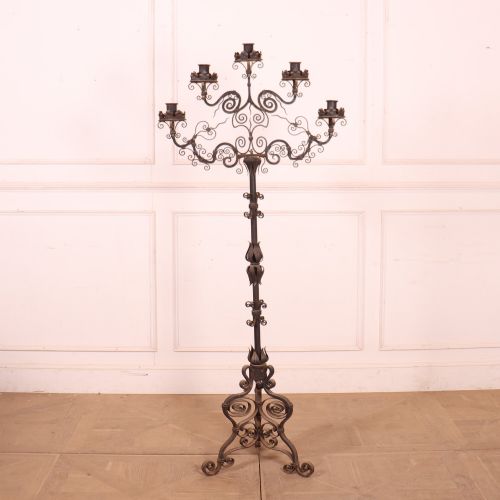
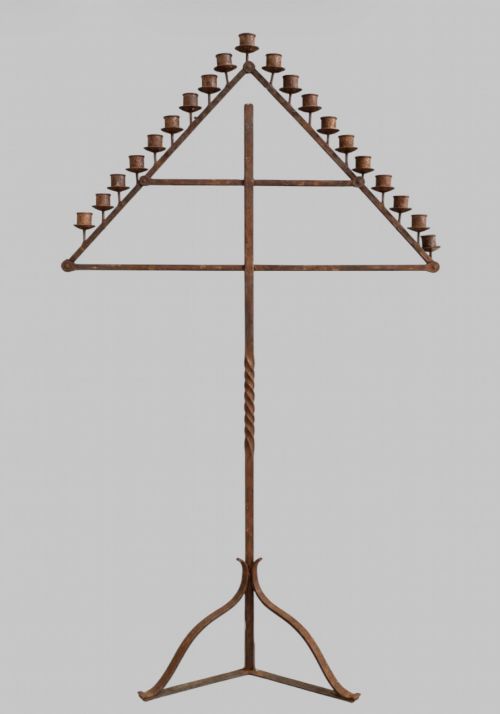
When you search for a wrought iron candle stand, you encounter heavy floor-standing torcheres, altar pieces, and diminutive rushlight holders spanning from the seventeenth century through the art deco era.
The domestic forms include rush nips and spiral candlesticks designed to hold tapers securely, alongside substantial architectural floor candelabras meant for larger spaces.
Continental and English origins dominate the selection, mixing vernacular ironwork with stylistic movements like the Amsterdam School and Gothic Revival.
What varies in quality
Quality rests in the fluidity of the smith's handwork, distinguishing a crisp, purposeful scroll from a rigid, heavy-handed modern imitation.
Integration of multi-media elements, such as brass fittings on iron frames, shows greater ambition in construction and design.
Originality of components, particularly the survival of the original spring mechanism in rushlight holders or untouched prickets, defines the historical integrity of each stand.
Design influences stretch across vernacular Welsh items, Gothic Revival, and Art Deco torcheres.
Hugo Berger Goberg
The Wrought Iron Candle Stand Glossary
- Pricket
- A sharp metal spike upon which a candle is impaled. This method of support precedes the socket candlestick in many ecclesiastical and domestic lighting forms.
- Rushlight
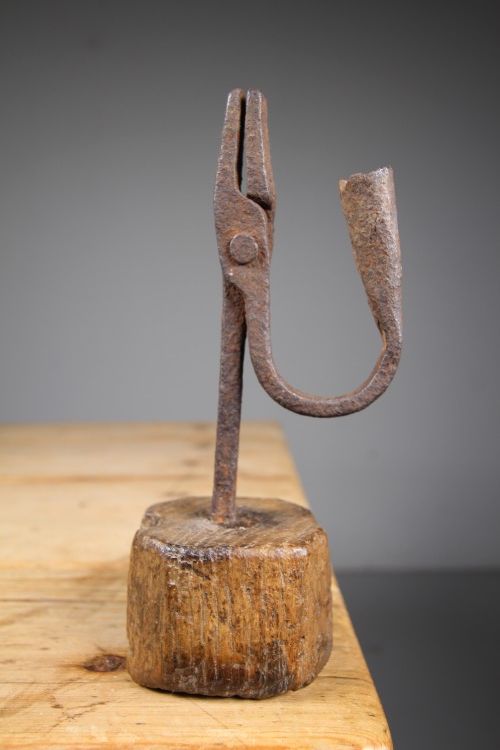
- A simple lighting device made by stripping the pith of a rush and soaking it in animal fat. The rush nip holds this combustible strip securely at an angle.
- Torchere
- A tall ornamental stand designed to support a candle or lamp. These elevated pieces often feature substantial floor-standing bases.
- Amsterdam School
- An early twentieth-century architectural and design movement characterised by expressive forms and brickwork-inspired styling. Pieces from this circle often combine iron with contrasting metals.
- Welsh Vernacular
- Regional domestic architecture and furniture-making traditions rooted in local materials and practical utility. Ironwork from this tradition prioritises functional ingenuity over ornament.
Wrought Iron Candle Stand: Frequently Asked Questions
How do I date a wrought iron candle stand?
Dating relies heavily on construction marks, tool signatures from the blacksmith, and the specific form of the base or rush nip. Seventeenth and eighteenth-century examples often display distinct hand-hammered textures absent in later revival pieces.
Context also helps narrow the period, as stylistic movements like Art Deco or the Amsterdam School introduce precise design markers from the early twentieth century.
Were these used in homes or churches?
Both environments utilised these pieces, depending entirely on the scale and form of the individual stand. Smaller rushlight holders and spiral candlesticks served domestic daily life, providing essential illumination before widespread artificial lighting.
Floor-standing prickets and architectural candelabras typically fulfilled ecclesiastical roles, such as Italian altar lighting, or illuminated large halls in substantial residences.
How should I clean rusted iron?
Active corrosion requires careful mechanical removal using fine wire wool and light oil to preserve the historic dark surface beneath. Aggressive chemical treatments strip away centuries of accumulated patination.
Keeping the metal in a dry environment prevents further oxidation without needing modern varnishes or synthetic sealants.
What is a rush nip?
A rush nip is a simple spring-loaded or counterweighted clamp designed to grip a dried rush dipped in grease. This mechanism allowed rural households to generate inexpensive light for chores.
Many surviving examples combine the nip with a heavy iron base or a candle socket, offering dual lighting options.