
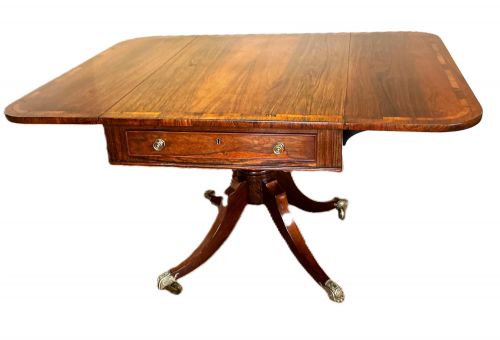
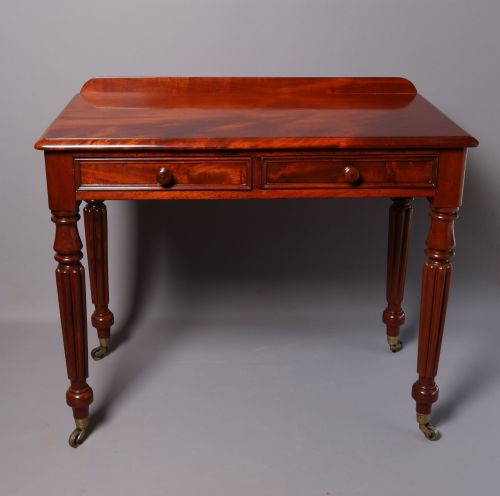
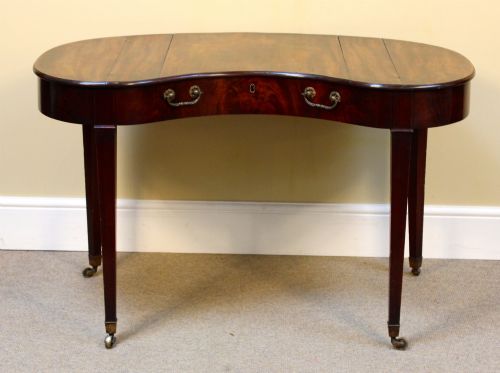
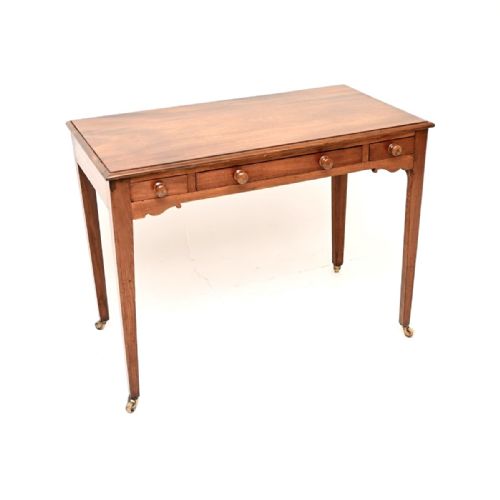
Writing Table on Castors
A writing table on castors provides a solid workspace that moves easily across the floor for room rearrangement.
Writing Table on Castors
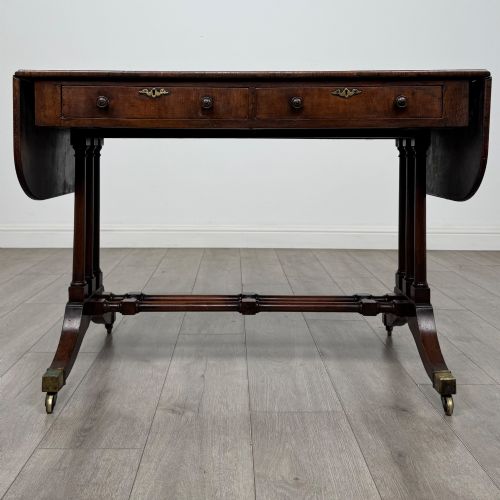
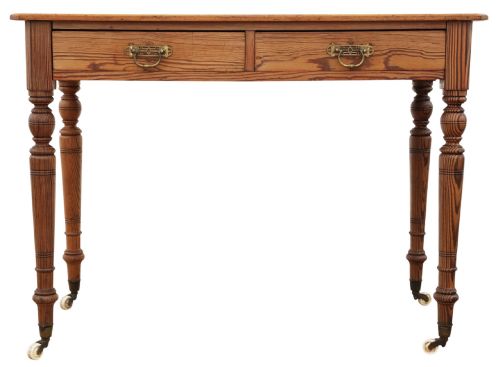
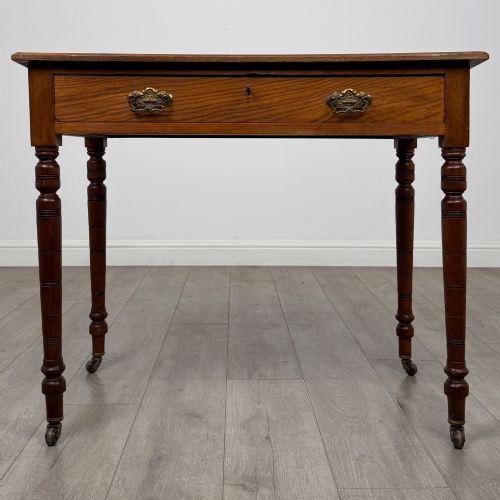
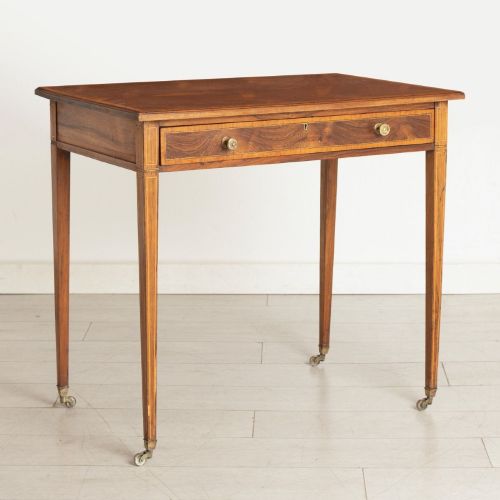
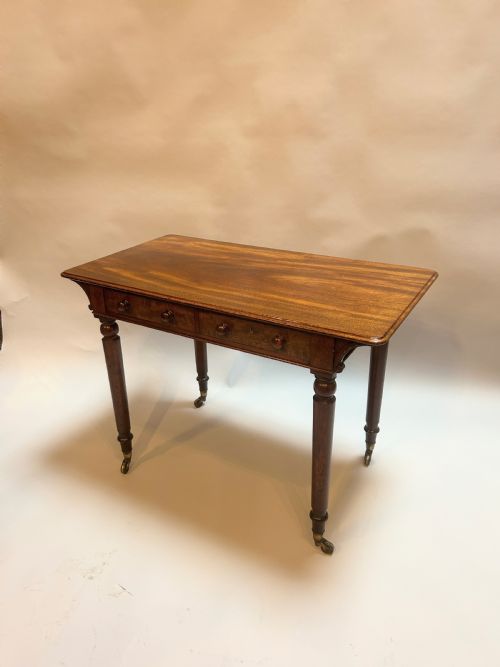
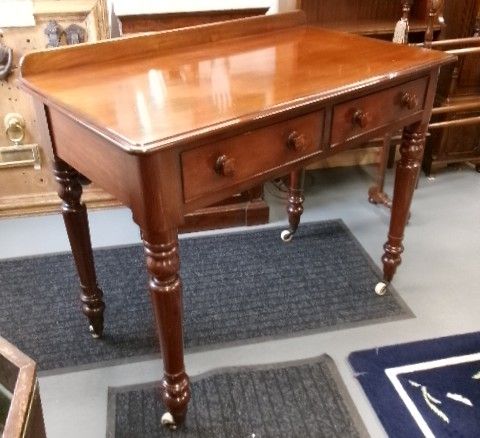
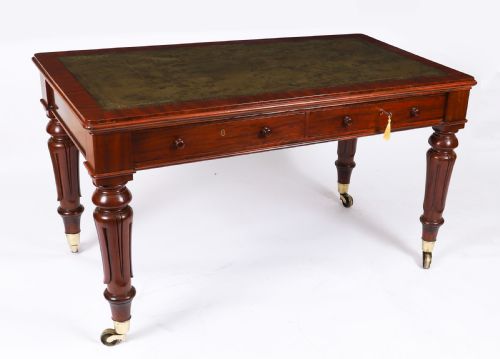
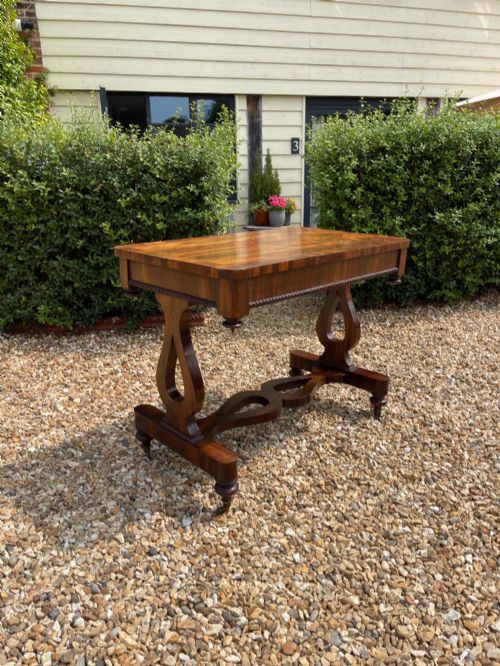
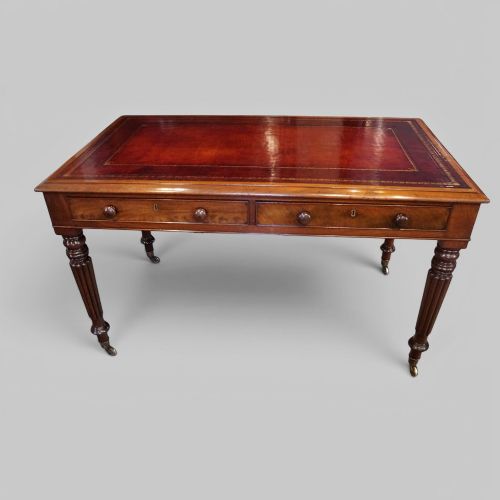
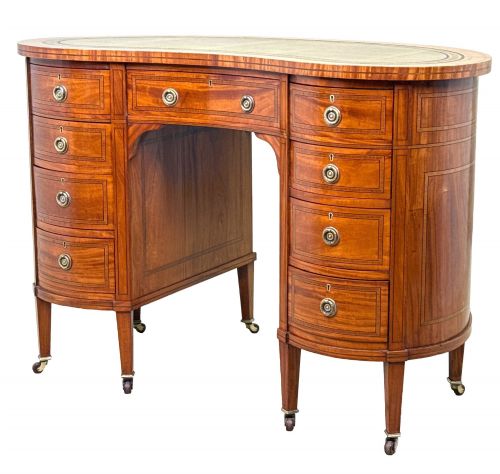
A writing table on castors is a functional desk designed for portability within a room, appearing frequently across the Georgian, Regency, Victorian and Edwardian periods. These pieces serve as practical workspaces or library tables, often featuring useful drawers for storage.
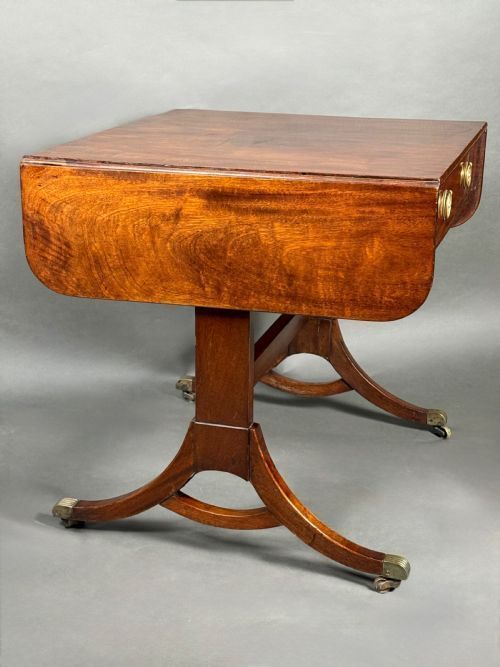
Makers fashioned these tables to stand freely in the centre of a room rather than against a wall, making finished backs and mobility essential attributes. The inclusion of brass castors allows the heavy timber frames to glide smoothly on carpets and floorboards.
How they were made
Makers utilised dense timbers such as mahogany, rosewood and oak for the primary carcases, often applying finer veneers like satinwood, partridgewood or burr walnut to visible surfaces. Wood inlay and brass mounts provide decorative contrast against the dark grains.
Writing surfaces frequently incorporate fitted panels of leather, providing a smooth texture for writing. Brass castors, sometimes fitted with ceramic wheels, support the legs and enable smooth movement across the floor.
Some nineteenth-century writers preferred tables on castors so they could chase the afternoon sun around the library.
What varies in quality
The selection of timber grain and the precision of the veneer work dictate the visual appeal of each piece, with figured flame mahogany and matched partridgewood sitting at the upper end of the scale. Cabinet makers exercised great skill in concealing joinery and ensuring drawers ran smoothly within their housings.
Hardware quality marks the distinction between standard production items and superior workshop output, visible in heavy cast brass handles and finely chased castor mounts. The integrity of the secondary timbers used inside drawer linings reveals the diligence applied during construction.
Gillows·J A Mein Edinburgh Cabinet Maker·W Williamson & Sons of Guildford
The Writing Table on Castors Glossary
- Castor
- A small wheel mounted on a swivel attached to the foot of a table, allowing easy movement. They are frequently cast in brass and occasionally feature ceramic roller wheels.
- Sofa table
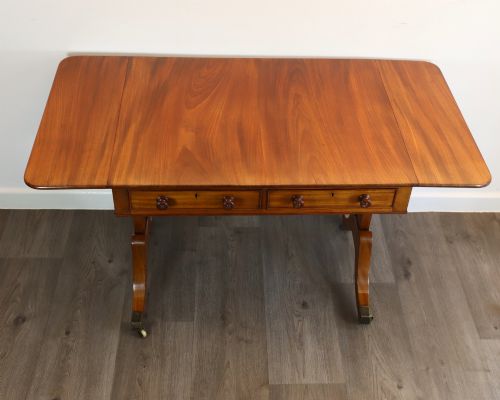
- A specific form of writing or occasional table designed to stand in front of a sofa, typically featuring drop flaps on either end. These pieces often incorporate two drawers and rise on trestle supports.
- Drum table
- A circular library table with a deep top containing a ring of drawers, revolving or stationary around a central pillar. They provide storage accessible from all sides of the room.
- Tambour
- A flexible sliding shutter formed of narrow strips of wood glued to canvas, used to enclose the writing compartments of desks. This mechanism conceals pigeonholes and small drawers.
- Partners desk
- A large double-sided writing table designed for two people to work opposite one another, featuring banks of drawers on both long sides.
Writing Table on Castors: Frequently Asked Questions
Can I use this as a daily desk?
These tables provide sturdy writing surfaces with adequate knee clearance and functional drawer storage for modern stationery.
Their mobility allows you to reposition the furniture easily to catch natural light throughout the day.
How do I identify a Regency table?
Regency pieces often display classical architectural influences, featuring rosewood or mahogany veneers with restrained brass inlay and gilt mounts.
Look for clean geometric lines and pillar supports resting on platform bases with brass castors.
Are the leather tops original?
Many writing tables retain their period leather inserts, though replacement leathers are common due to nineteenth-century wear and tear.
Original leathers usually exhibit natural patination, craquelure and gilt tooling along the borders.
Where should I place a freestanding table?
Because these tables feature finished backs and detailed timber grain all round, they suit placement in the middle of a study or library.
Ensure floor surfaces are even to prevent the castors from rolling unexpectedly.