
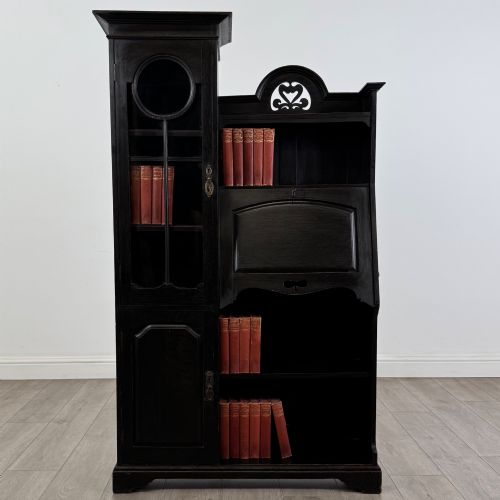
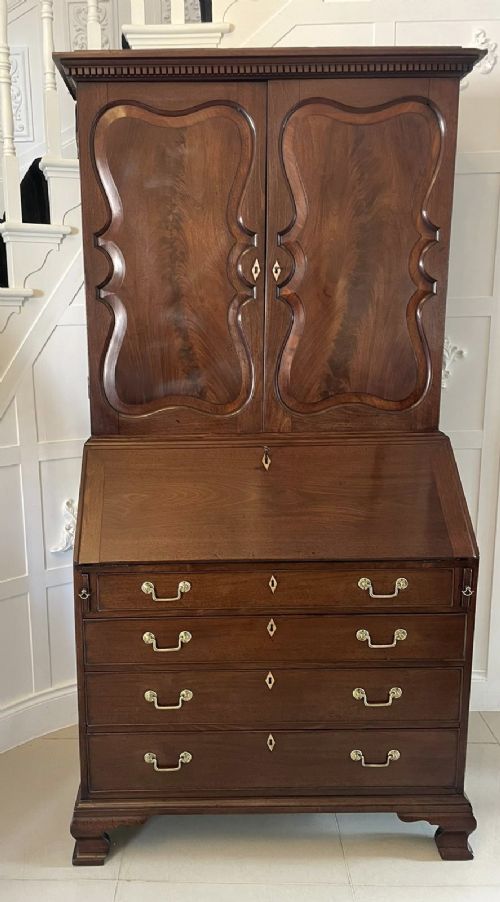
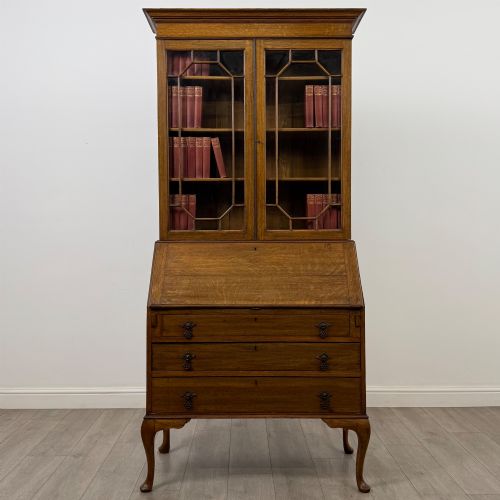
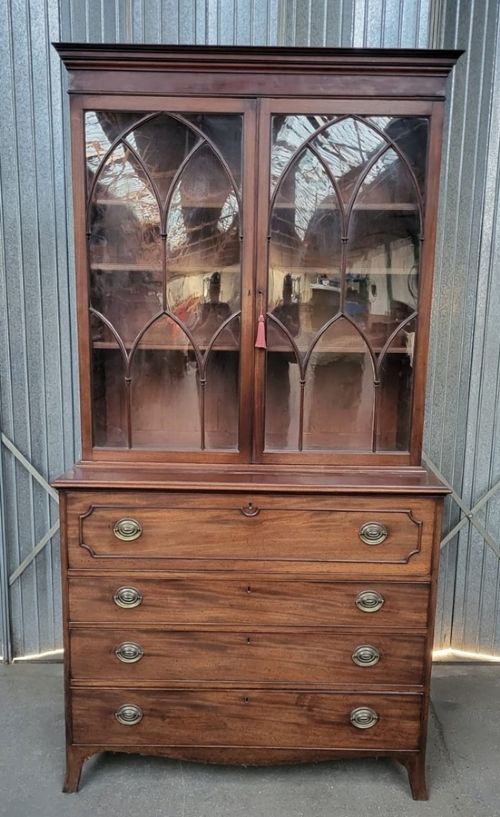


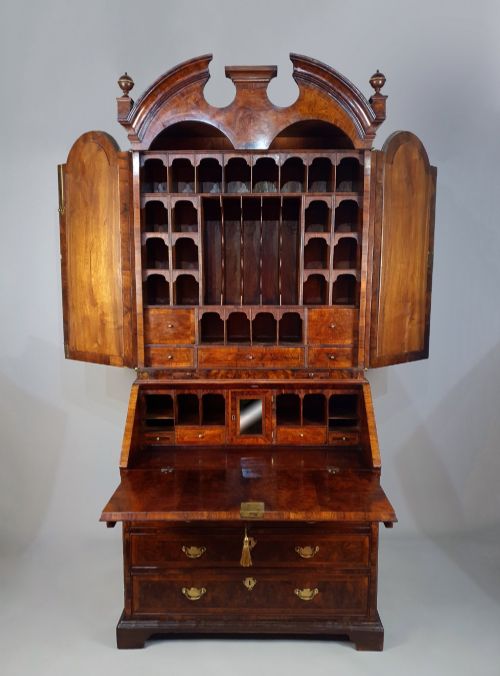
Writing Desk Bookcase
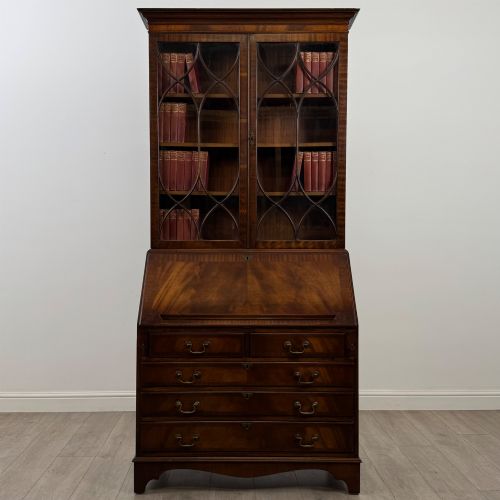
A writing desk bookcase combines a shelved upper cabinet with a drop-front fall or pull-out drawer writing surface, offering both storage and a dedicated workspace.
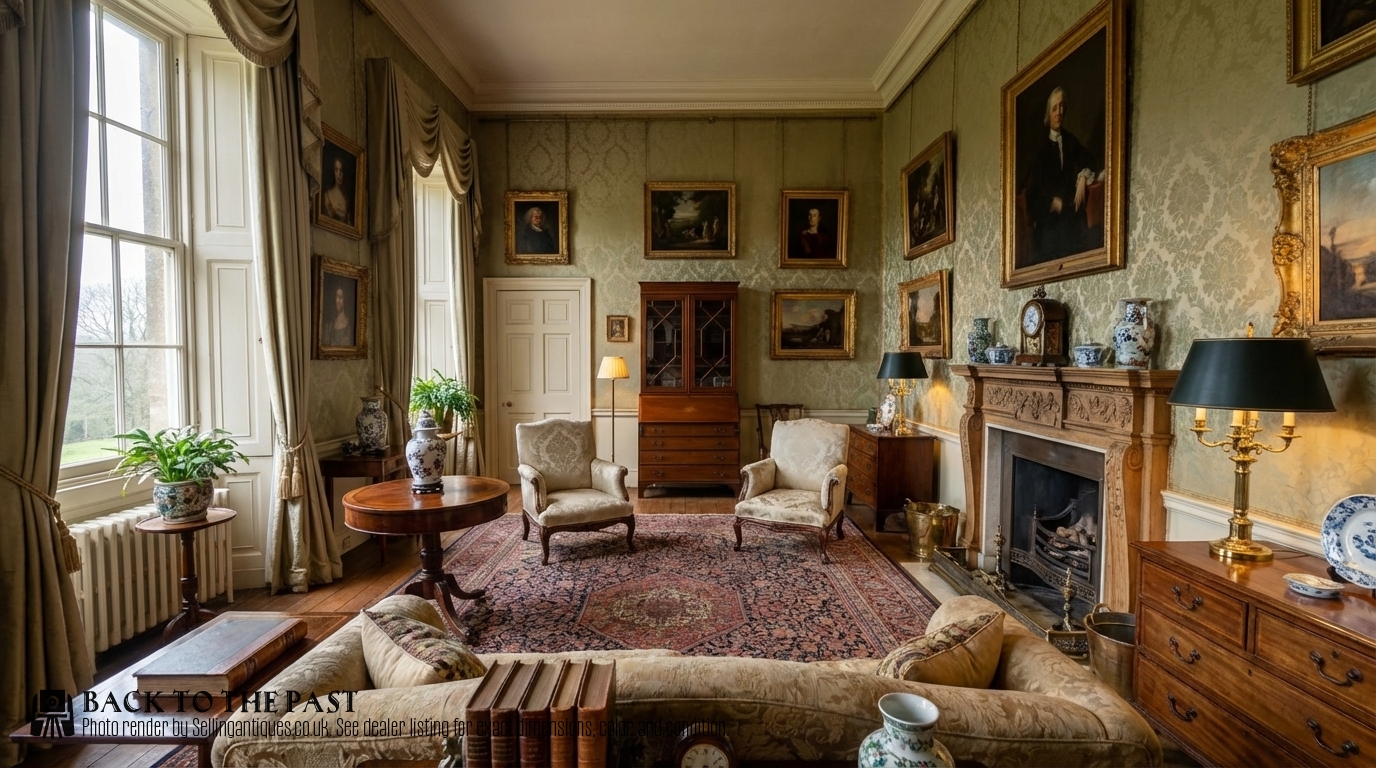
Writing Desk Bookcase
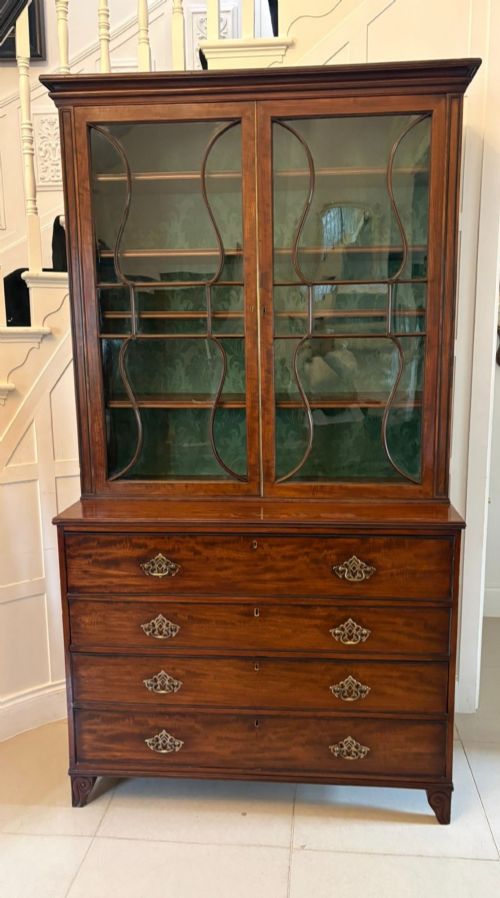
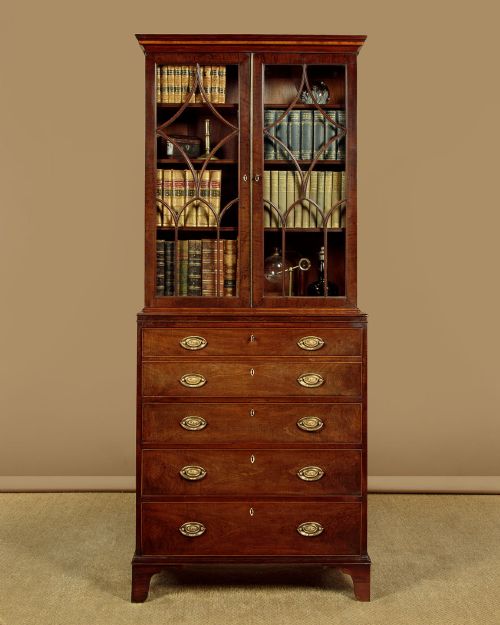
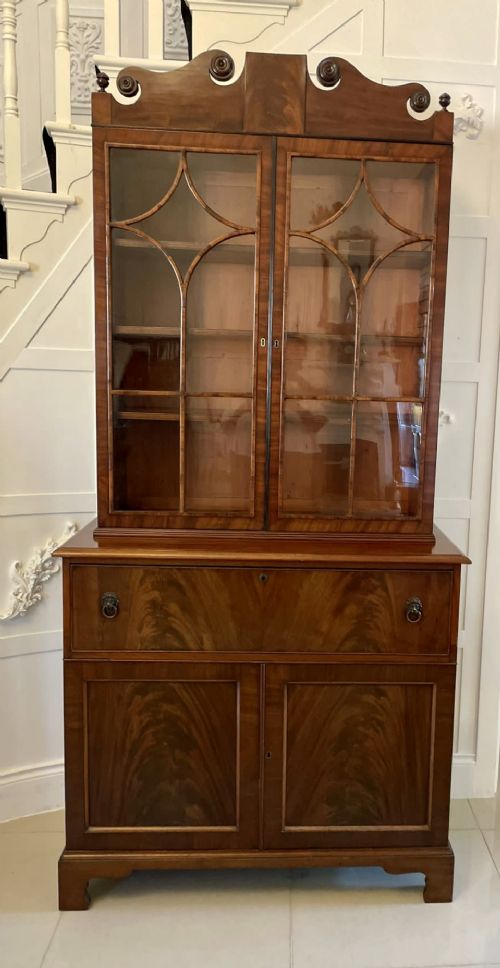
A writing desk bookcase unites a glazed or panelled upper bookcase section with a lower desk component, creating a dual-purpose piece for storage and correspondence. You will encounter these combinations across several periods, most notably in Georgian, Regency, and Edwardian examples.
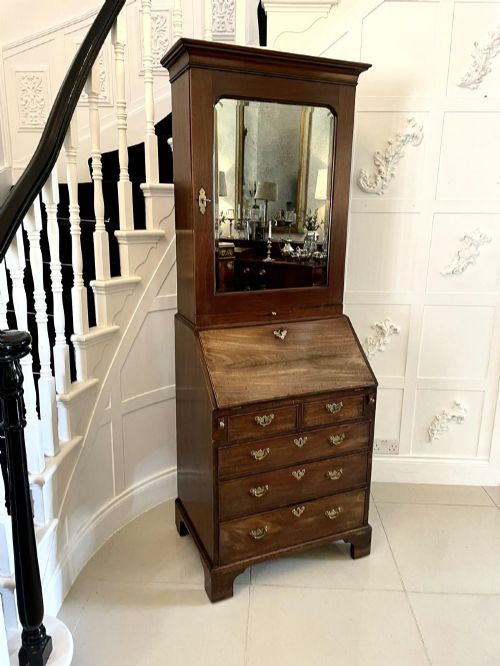
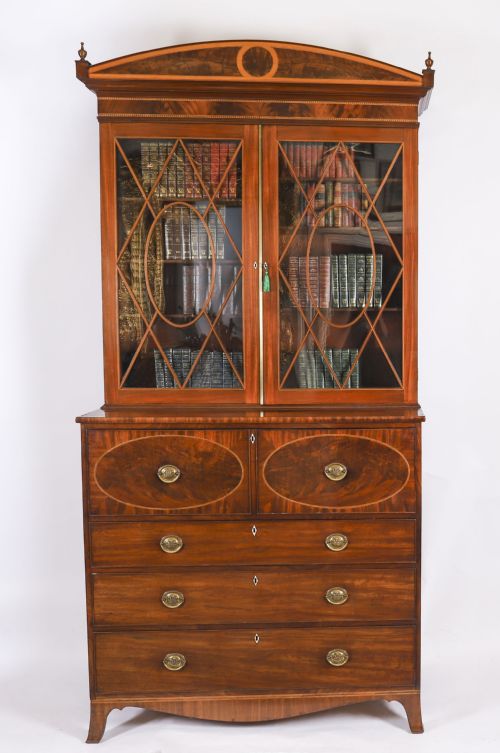
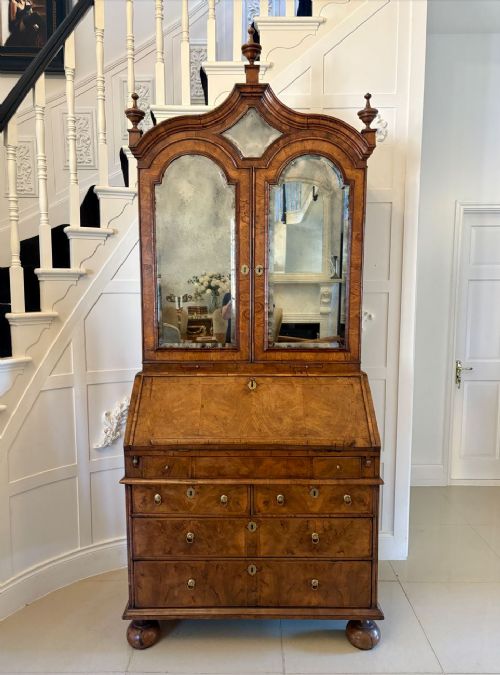
The lower section typically takes the form of a bureau with a fall-front flap or a secretaire drawer that pulls out to reveal a fitted interior of pigeonholes and small drawers. Oak and mahogany are the dominant woods seen across these formations, alongside walnut and burr walnut in earlier pieces.
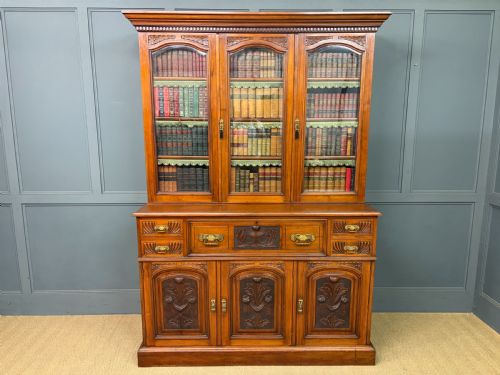
Upper compartments vary from simple wooden doors to glazed shelving designed for displaying volumes, sometimes framed with astragal bars. Pieces range from grand 18th-century walnut constructions to more compact Edwardian or 1920s oak variants.
Distinguishing quality factors
Quality rests in the choice of timber figure, the precision of the veneer matching, and the refinement of the interior joinery within the fitted desk section. Grain selection on drawer fronts and fall-front panels indicates the tier of craftsmanship invested in the piece.
Proportion and the integration of the upper bookcase with the lower desk dictate visual balance, while original glass, brasses, and fitted drawers elevate the integrity of earlier periods like the 18th century.
Listings feature woods including mahogany, oak, walnut, burr walnut, satinwood, and yew wood across periods spanning from the 17th century to the 1920s.
George Oakley·Gillows·Waring and Gillow
The Writing Desk Bookcase Glossary
- Secretaire
- A desk or writing drawer featuring a drop-front or pull-out writing surface that conceals small drawers and pigeonholes. This term frequently overlaps with bureau in period listings.
- Astragal glazed
- Glass cabinet doors divided into smaller panes by narrow wooden bars called astragals. This method provides structural support for larger glass areas while adding a decorative grid pattern.
- Featherbanding
- A delicate decorative banding inlay created by cutting veneers diagonally to form a herringbone pattern. It typically borders drawer fronts and fall-front writing flaps on walnut pieces.
- Burr walnut
- Timber taken from the warted excrescences of a walnut tree, yielding a swirling, highly figured grain pattern. Cabinetmakers used it for prominent surfaces on high-status 18th-century pieces.
- Candle slide
- A pull-out wooden shelf positioned just beneath the upper bookcase doors to hold lighting for the writing surface. These are characteristic of earlier Georgian walnut and mahogany desks.
Writing Desk Bookcase: Frequently Asked Questions
What is a writing desk bookcase?
A writing desk bookcase is a combined furniture form featuring a shelved upper section for books and a lower desk area with a writing surface.
Lower sections typically utilise a fall-front bureau flap or a pull-out secretaire drawer that opens to reveal internal compartments.
How do I date a piece?
Dating relies on observing timber choices, construction techniques, stylistic markers, and hardware such as brass handles and escutcheons.
Earlier pieces from the 17th and 18th centuries often feature oak or walnut with candle slides, whereas Edwardian and 1920s examples show lighter oak constructions or simpler satinwood stringing.
How were they used historically?
These pieces served as private study stations where owners could write letters, manage accounts, and store library collections in one unit.
The upper glass doors kept volumes free from dust, while the enclosed desk flap hid correspondence and writing implements when not in use.
Where do I place one in a room?
Because they combine vertical storage with a functional desk, these pieces work well against primary walls in studies, living rooms, or home offices.
Sufficient floor clearance is necessary to allow the fall-front flap to drop or the secretaire drawer to pull out fully for writing.