
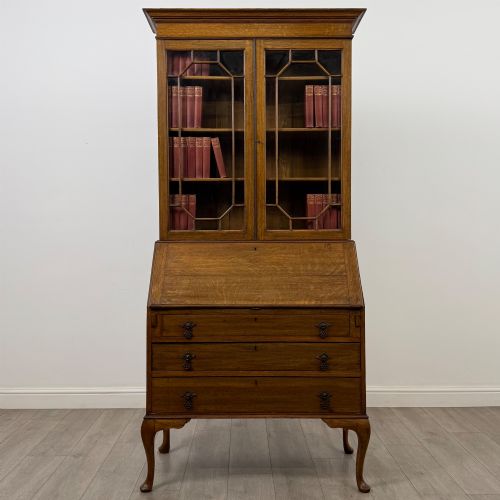
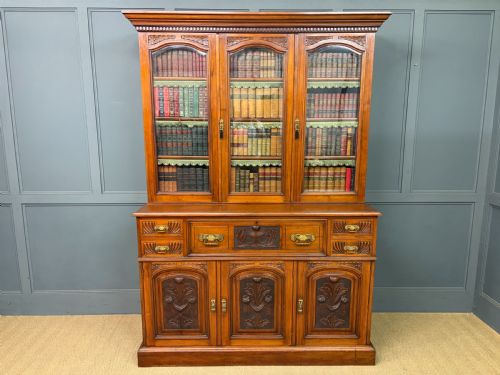
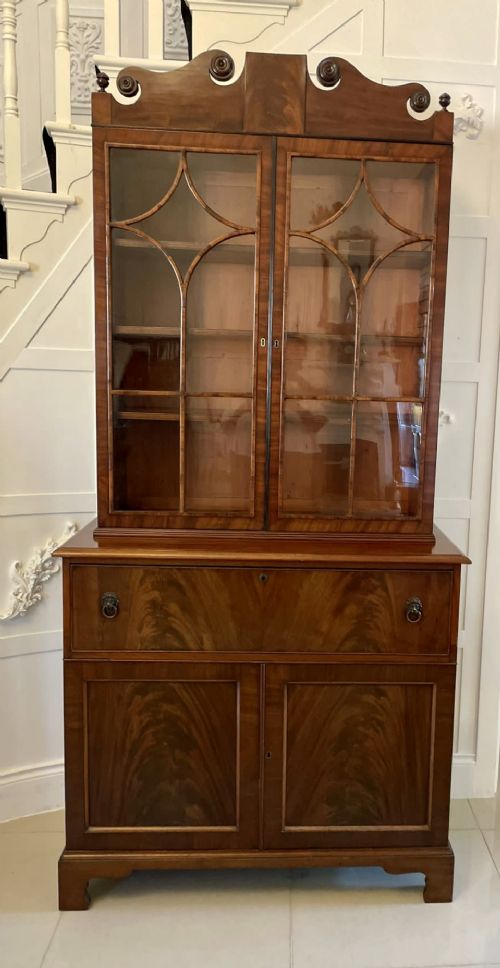
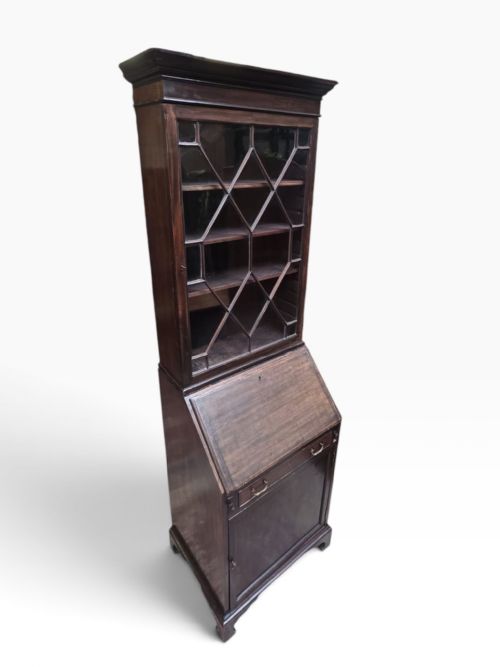




Edwardian Glazed Bureau
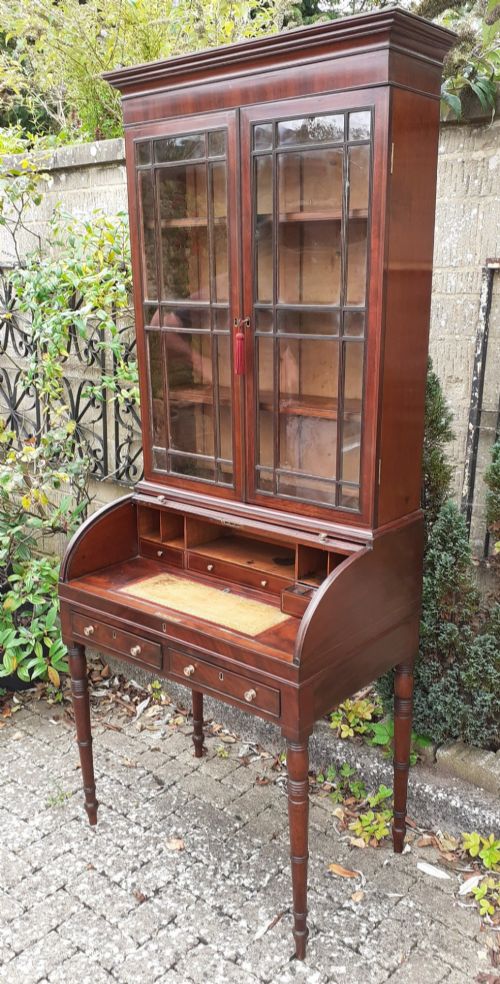
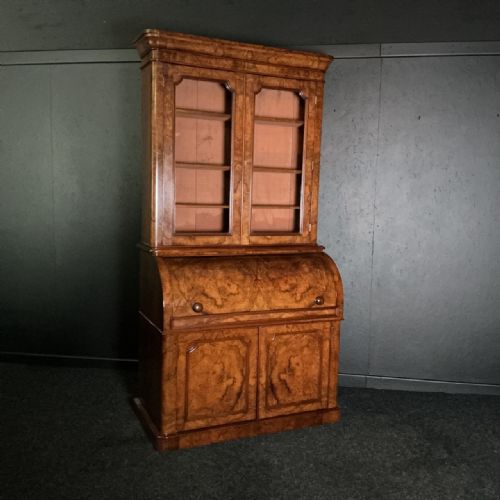
An edwardian glazed bureau combines a fitted writing desk with upper display shelving, offering practical storage and workspace.
Edwardian Glazed Bureau
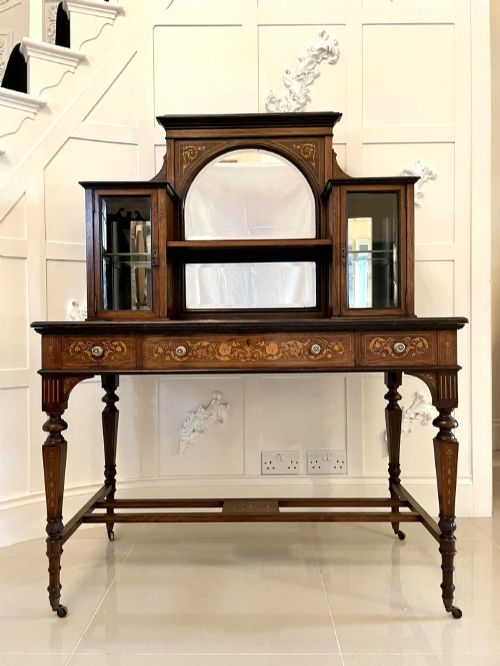
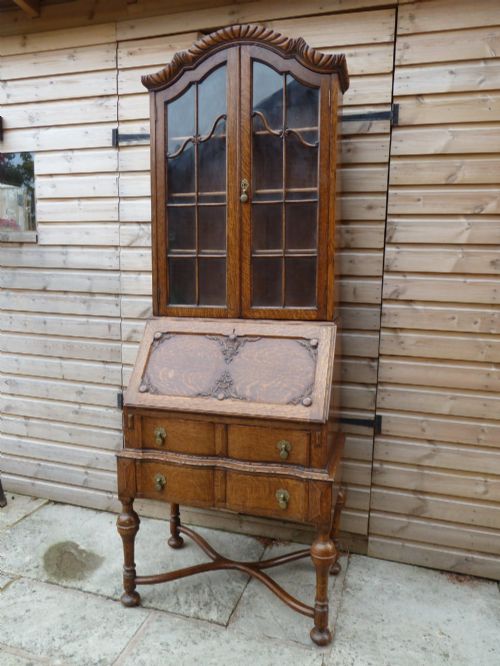
The edwardian glazed bureau combines a lower writing desk with an upper cabinet enclosed by glass doors. These dual-purpose pieces serve both as working desks and as bookcases or display cabinets for treasured volumes.
Most examples originate from the Edwardian period, though related forms extend from the eighteenth century through the Victorian era and into the early twentieth century. Makers construct them in variations such as bureau bookcases, secretaire bookcases, and cylinder desks.
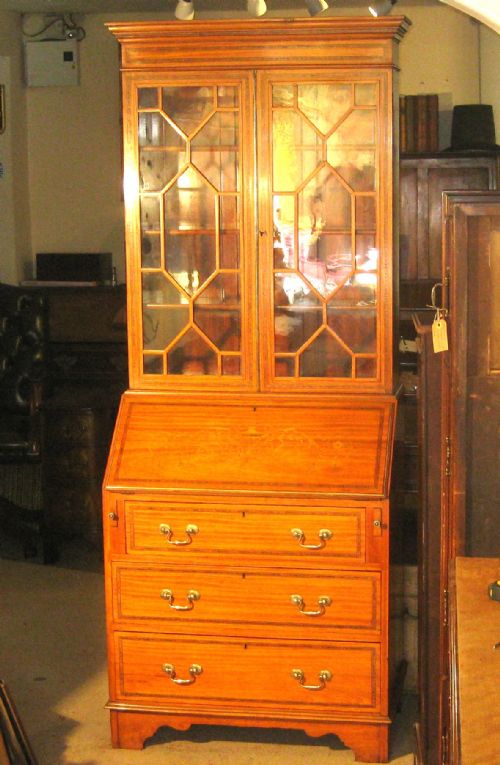
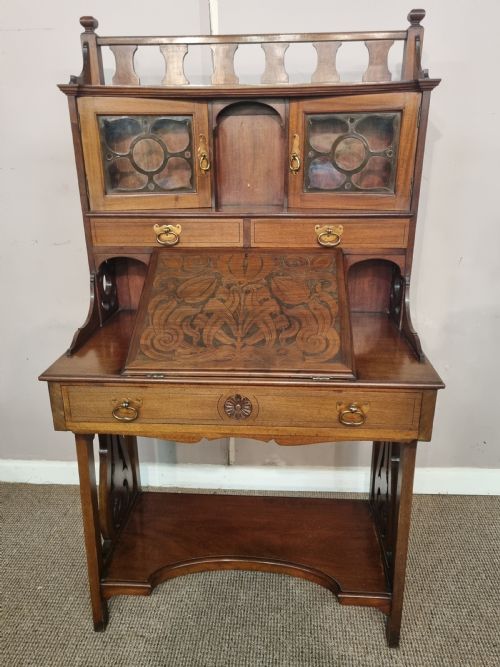
Stylistic influences range from straightforward Edwardian and Arts and Crafts designs to revivals of Sheraton, Regency, and Jacobean tastes. The upper section frequently utilises astragal glazing bars to divide the glass panes within the wooden framework.
Materials and Construction
Cabinet makers construct the primary carcase and shelving from timbers such as mahogany, oak, walnut, and satinwood, frequently employing burr walnut or rosewood for decorative impact. Glass panels enclose the upper bookcase section, sometimes held in place with lead cames.
Surface decoration relies on brass hardware alongside detailed marquetry and inlay work using contrasting woods. Cabinet makers integrate fall-front writing surfaces and cylinder mechanisms that conceal fitted interior compartments, small drawers, and pigeonholes.
Listings demonstrate that Edwardian examples frequently incorporate satinwood inlay and astragal glazed doors.
Craftsmanship and Proportion
The refinement of the timber selection dictates the overall standard of the piece, particularly where figured mahogany, satinwood, or burr walnut veneers are matched across the fall-front and drawer facades. Hand-cut inlay and intricate marquetry demonstrate superior cabinet work compared to simpler surfaces.
Structural integrity depends on the precise joining of the bureau carcase and the stability of the glazed upper doors. Well-executed interior fittings within the desk section, including secret compartments and small pigeonholes, mark out more ambitious commissions.
Tudor and Burrey·Maple and Co.·Gillows·Harris Lebus
The Edwardian Glazed Bureau Glossary
- Astragal glazed
- A method of framing glass in cabinet doors using slender wooden bars that divide the window into smaller panes. This technique is frequently seen on Edwardian and Georgian bookcases.
- Bureau bookcase
- A dual-purpose furniture form featuring a sloping fall-front writing desk positioned beneath an enclosed bookcase. The upper section typically contains adjustable wooden shelving behind glass doors.
- Secretaire
- A desk or cabinet containing a concealed writing drawer or a pull-down front that reveals a fitted interior. These often mimic the exterior appearance of a standard chest of drawers or a bookcase.
- Marquetry
- Decorative veneer work forming intricate patterns or pictures using various coloured woods. Craftsmen apply these veneers to the main carcase and fall-front surfaces of finer writing furniture.
- Fall-front
- A hinged writing flap that pulls down to a horizontal position to provide a writing surface. When closed, it conceals the inner compartments and small drawers of the bureau.
Edwardian Glazed Bureau: Frequently Asked Questions
How do I use a bureau daily?
The fall-front flap lowers to create a flat writing surface supported by wooden arms or brackets. Inside, small pigeonholes and drawers provide storage for writing materials and papers.
When writing is finished, the flap lifts and locks shut to conceal the desk interior. The upper glazed doors allow books or ceramics to remain visible and protected from dust.
How do I tell periods apart?
Eighteenth-century examples often display precise proportions and fine mahogany timbers influenced by Sheraton designs. Edwardian pieces tend to utilise lighter satinwood inlays and incorporate Sheraton Revival motifs.
Victorian variations generally exhibit heavier proportions and darker timbers such as walnut or oak. Arts and Crafts examples favour solid golden oak with simpler lines and minimal ornamentation.
Where should I place a bureau?
These tall combination pieces require adequate wall space and sufficient room in front for the fall-front flap to open fully. Placing them away from direct sunlight protects the timber finishes and interior veneers.
They function effectively in studies, living rooms, or hallways where both desk space and display shelving are useful. The upper glazed section serves well for displaying personal library collections.